Springs · New Hamburg
Garage Door Balance Adjustment in New Hamburg
The door has grown heavy so gradually you stopped noticing, until a visitor tried to lift it and could not.
In plain words
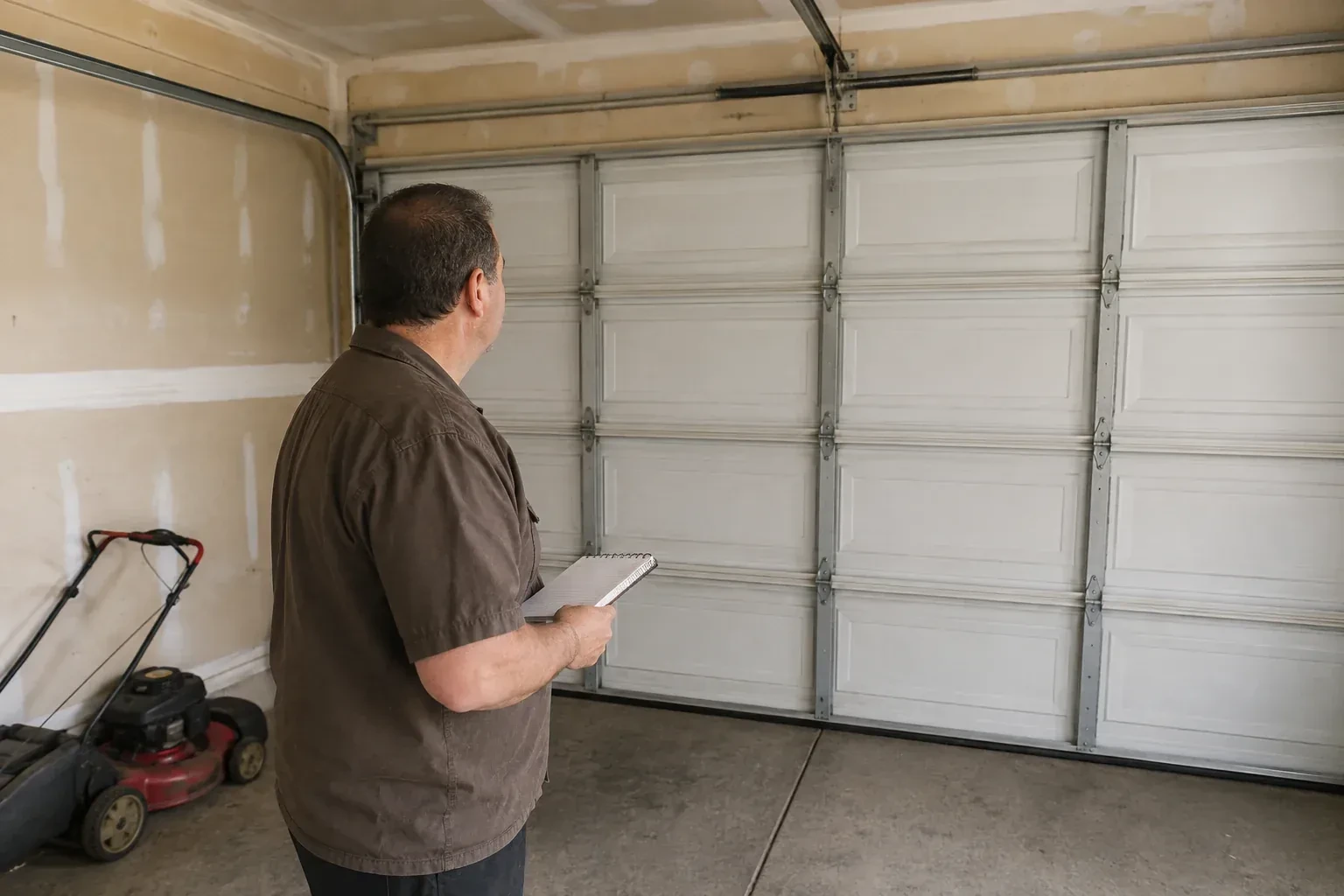
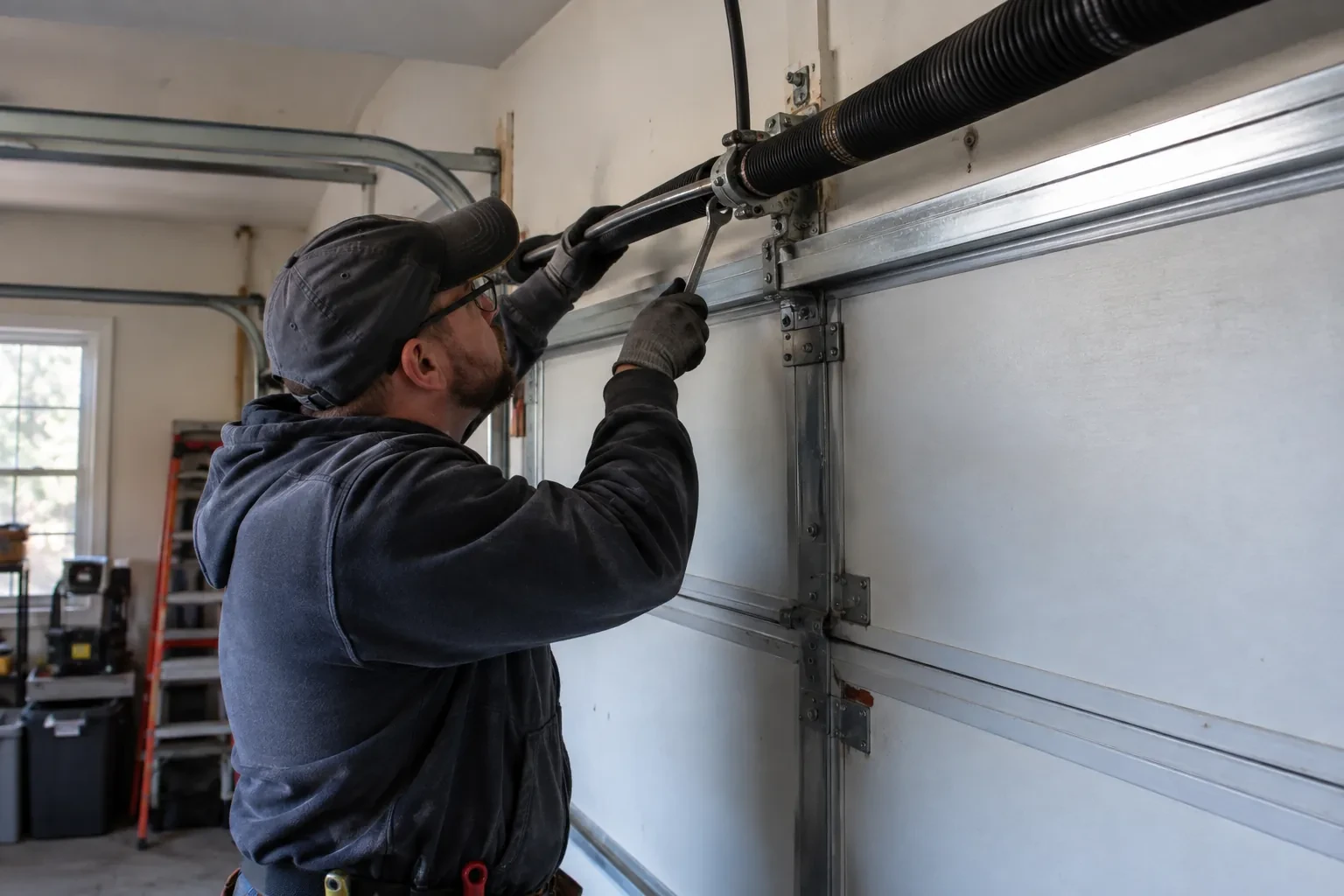
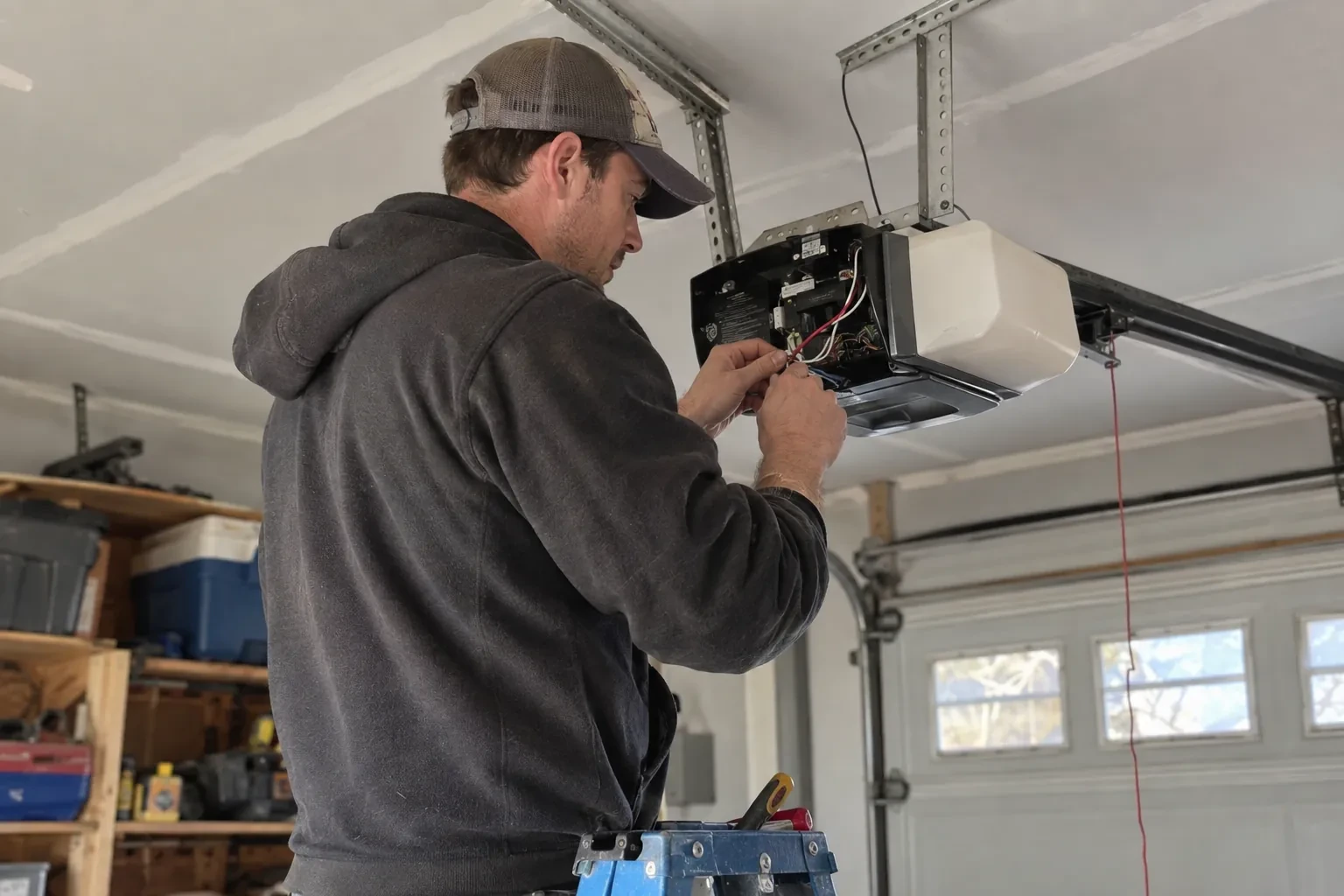
A garage door is balanced when its springs carry almost the whole weight of the door, so the door itself is nearly weightless in your hands and the opener only has to guide it. Balance adjustment is the service that restores that state. The technician disconnects the opener, moves the door by hand to see where it drifts or sinks, inspects the springs, cables and rollers, and then changes the spring tension in measured steps until the door holds still partly open, stays up when fully raised, and closes without slamming. The opener is then reconnected and its settings checked against the corrected door.
How the visit goesSomeone replaced the springs a while back and the door has bounced at the top ever since. It slams open against the stops, then creeps down a few inches, and the opener trolley rattles because the door is pushing where it should be resting.
Garage Door Balance Adjustment
How the visit goes
Talking through what you have noticed
Your own observations complete the picture, because you have watched this door every day and the technician has watched it for ten minutes. When did the heaviness start, gradually or all at once? Is it worse on frosty mornings and easier by afternoon? Has anyone worked on the springs, changed the opener or added panels? Does it reverse at a particular point, and did that begin after the last power cut or a bump from the car? Each answer narrows the cause, and together they decide whether the day's work is a straightforward tension adjustment, a cable reset, some friction to remove, or a conversation about springs that have done their years.
When adjustment gives way to replacement
Sometimes the hand test shows that the springs have given what they have to give. A torsion spring wound beyond its design turns loses its remaining life; an extension spring stretched to its last hook is at its limit. When the inspection or the door's weight shows the springs are undersized or near the end of their cycle life, the technician explains this and offers a matched replacement, with new springs specified from the door's weight, height, drum and track. The balance work then continues on the new springs, and the outcome is the same properly balanced door, with the added benefit of a fresh cycle count.
A record of the setting
Before leaving, the technician tells you how the door was set: the number of turns on each torsion spring or the hook position on each extension spring, the spring dimensions, the door's measured weight if it was weighed, and any parts that were replaced. Writing this on a card by the opener or inside the manual saves a future technician from starting from scratch, and it gives a reference point if the door ever starts to drift. Springs age gradually, so a note that says the door held at a certain number of turns tells a later visit how far things have moved.
Garage Door Balance Adjustment
In the van
Winding cone set screws
Garage-door lubricant
Cable drums
Extension springs and S-hooks
Track clamps or locking pliers
Garage Door Balance Adjustment
What affects the quote
Extension-spring containment and pulleys
On an extension door, a missing containment cable is added and worn pulleys are replaced with the adjustment. Each is a small parts line on the quote.
Torsion or extension springs
Winding a torsion spring with bars and moving an extension spring's hook are different procedures with different setup, and the type of counterbalance on your door is the first thing that shapes the quote.
Corroded or seized fasteners
Set screws and cone screws that have rusted solid take time to free, and badly corroded hardware is replaced rather than reused, which shows in the parts list.
What to have ready
- Did the heaviness come on gradually or all at once?
- When were the springs last replaced or adjusted, if you know?
- Is there storage or shelving near the spring shaft that needs moving?
Garage Door Balance Adjustment: questions
QuestionsI am getting a new opener. Should the door be balanced first?
Yes, and installers will usually insist on it. A new opener is set up against the door it meets on the day, so its travel and force settings are only right if the door is already balanced. Fitting a new motor to a heavy door shortens the motor's life and puts the safety reversal out of range. Balancing first means the new opener starts life doing the light work it was designed for.
Why does the door feel heavier in winter?
Cold stiffens the lubricant in the bearings and hinges and firms up the rubber seals, so the door drags a little more and the springs have slightly more to overcome. A bottom seal frozen to the slab adds to it, and this usually eases as temperatures rise. A door that stays heavy is worth a prompt check regardless of season, since persistent drag can come from binding, an obstructed track, rollers, hinges or cables as well as the spring balance.
Will I need new springs, or just an adjustment?
The inspection decides, and looks past appearance alone. A spring can look sound, with tight, evenly spaced coils, no rust pitting and no gap, and still be the wrong specification for the door or nearing the end of its service life. The technician checks the spring's specification against the door's weight and history: a spring that checks out is wound and left in service, while one that is undersized, stretched, corroded or close to its cycle life is better replaced. Either path ends in a balanced door.
Related services
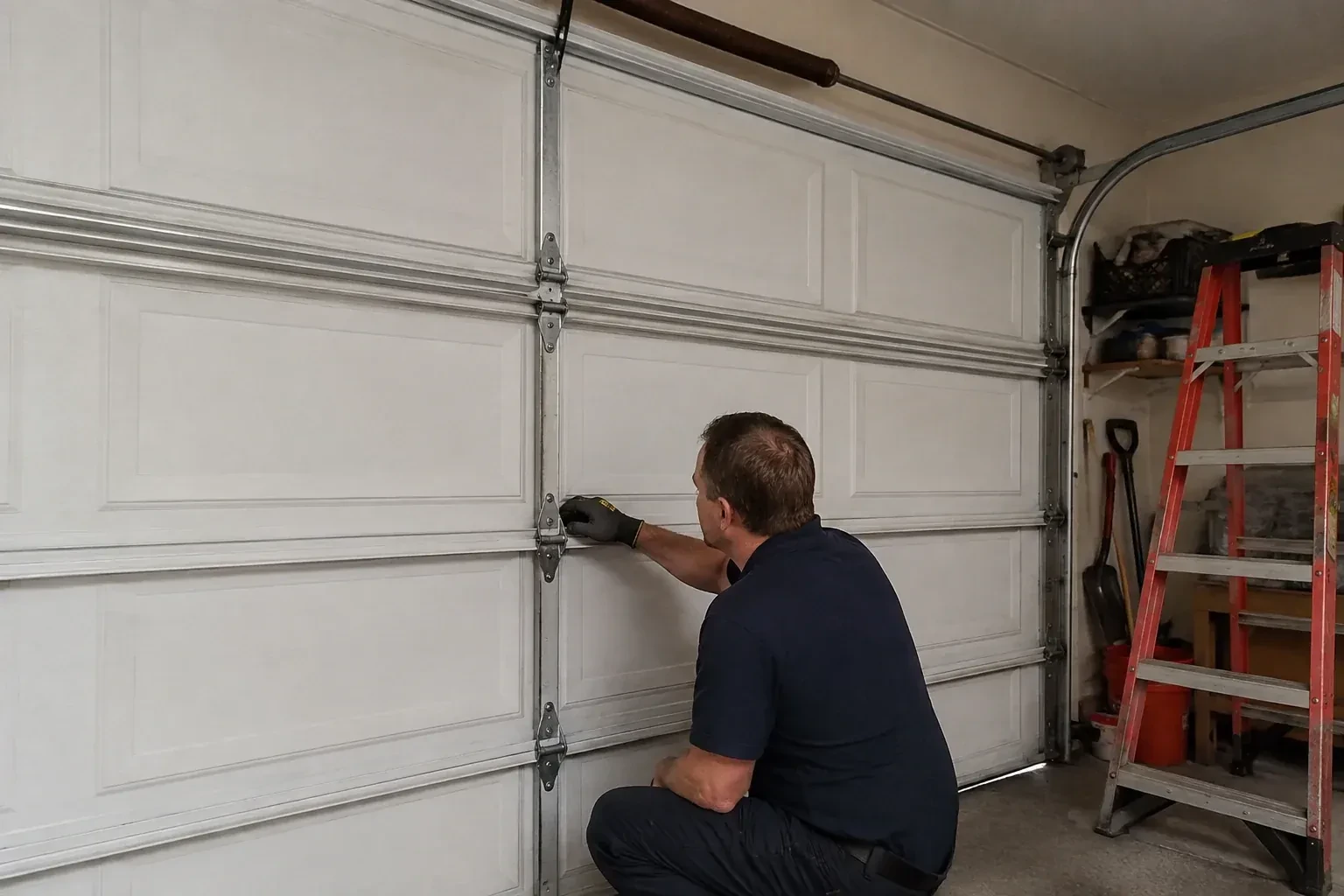
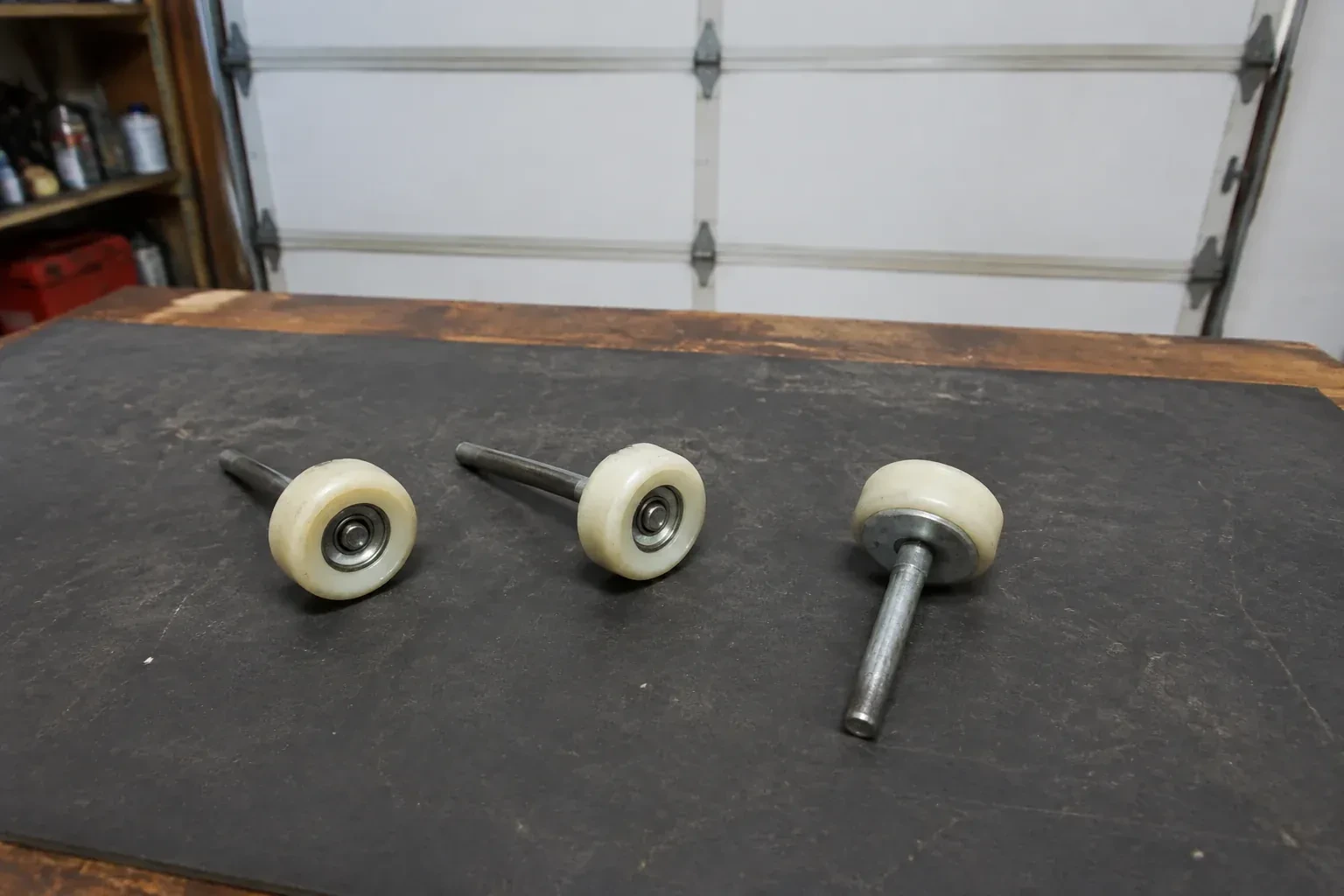
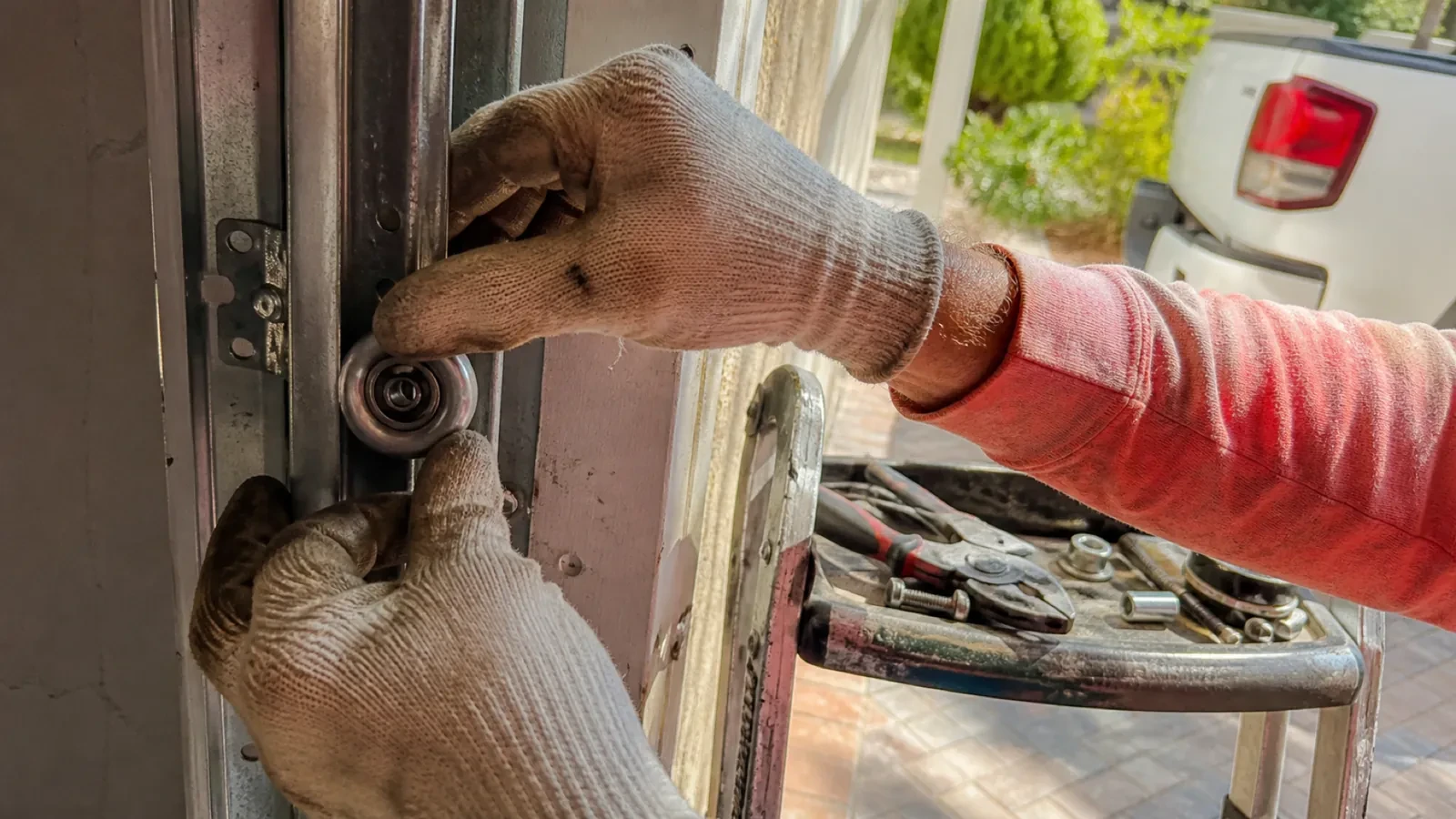
- Garage Door Hinge ReplacementThe roller at the top of the second panel is leaning outward and only half of the wheel is still in the track.
- Garage Door Track Repair or ReplacementHalfway up, the door lurches and one roller rides onto the lip of the channel.
- Garage Door Cable ReplacementThe cable has wrapped itself around the shaft above the door instead of sitting on its drum.