Garage Doors in Blandford-Blenheim, OntarioA new door,chosen with care.
Choosing a garage door for a house in Blandford-Blenheim means thinking about insulation, windows, colour, how the panel pattern breaks up the face of the home, and how the door will sound at dawn. We walk through each of those questions with you and measure the opening before anything is ordered. Calls from Bright, Drumbo and Wolverton are covered too.
Choosing a garage door for a house in Blandford-Blenheim means thinking about insulation, windows, colour, how the panel pattern breaks up the face of the home, and how the door will sound at dawn. We walk through each of those questions with you and measure the opening before anything is ordered. Calls from Bright, Drumbo and Wolverton are covered too.
The garage door people.
We are careful about what we recommend in Blandford-Blenheim. If a tune-up will do, that is what we suggest. If a spring is the problem, we replace the spring and check its partner. If the door is beyond repair, we say so plainly. Every recommendation is one you can watch us justify at the door.
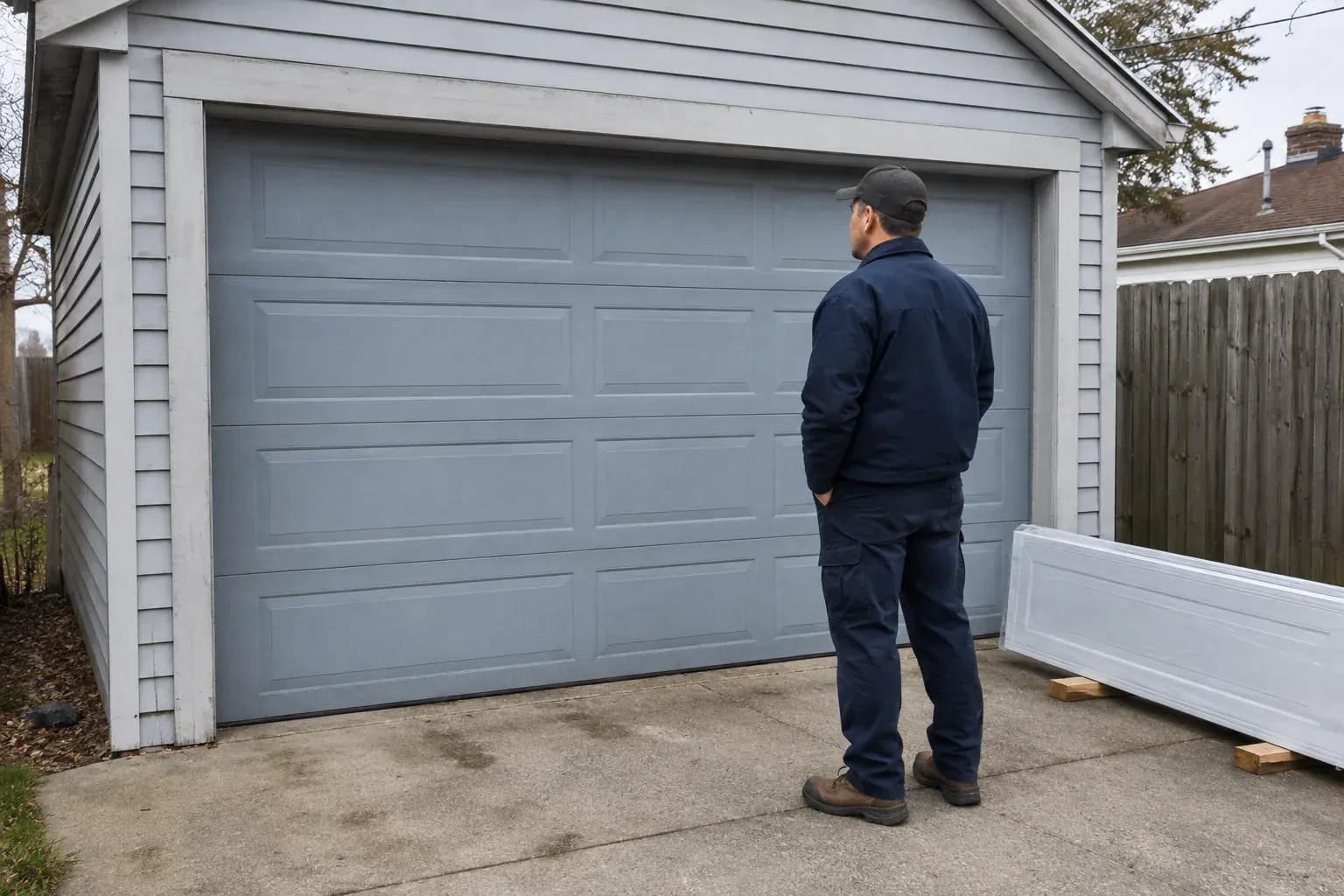
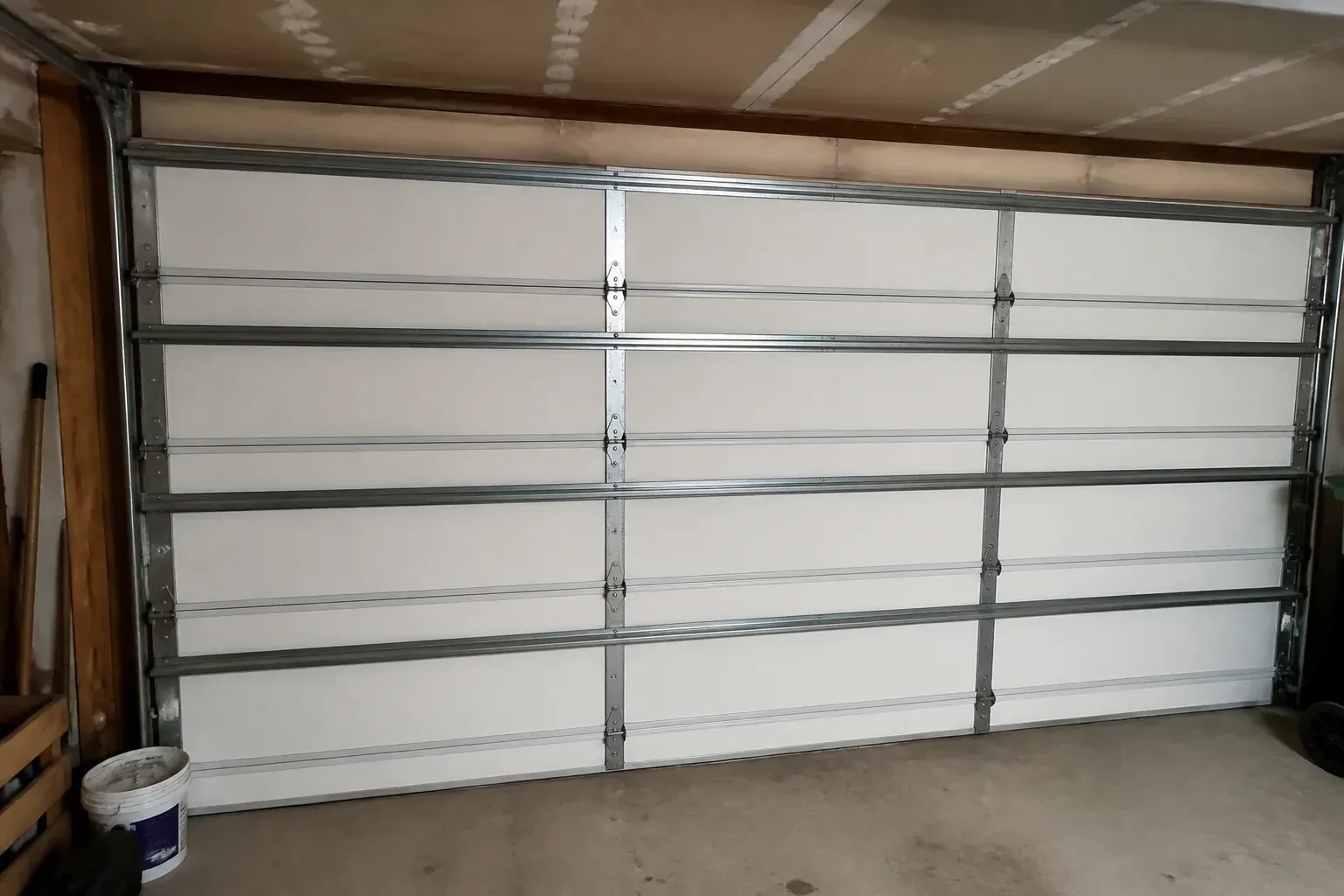
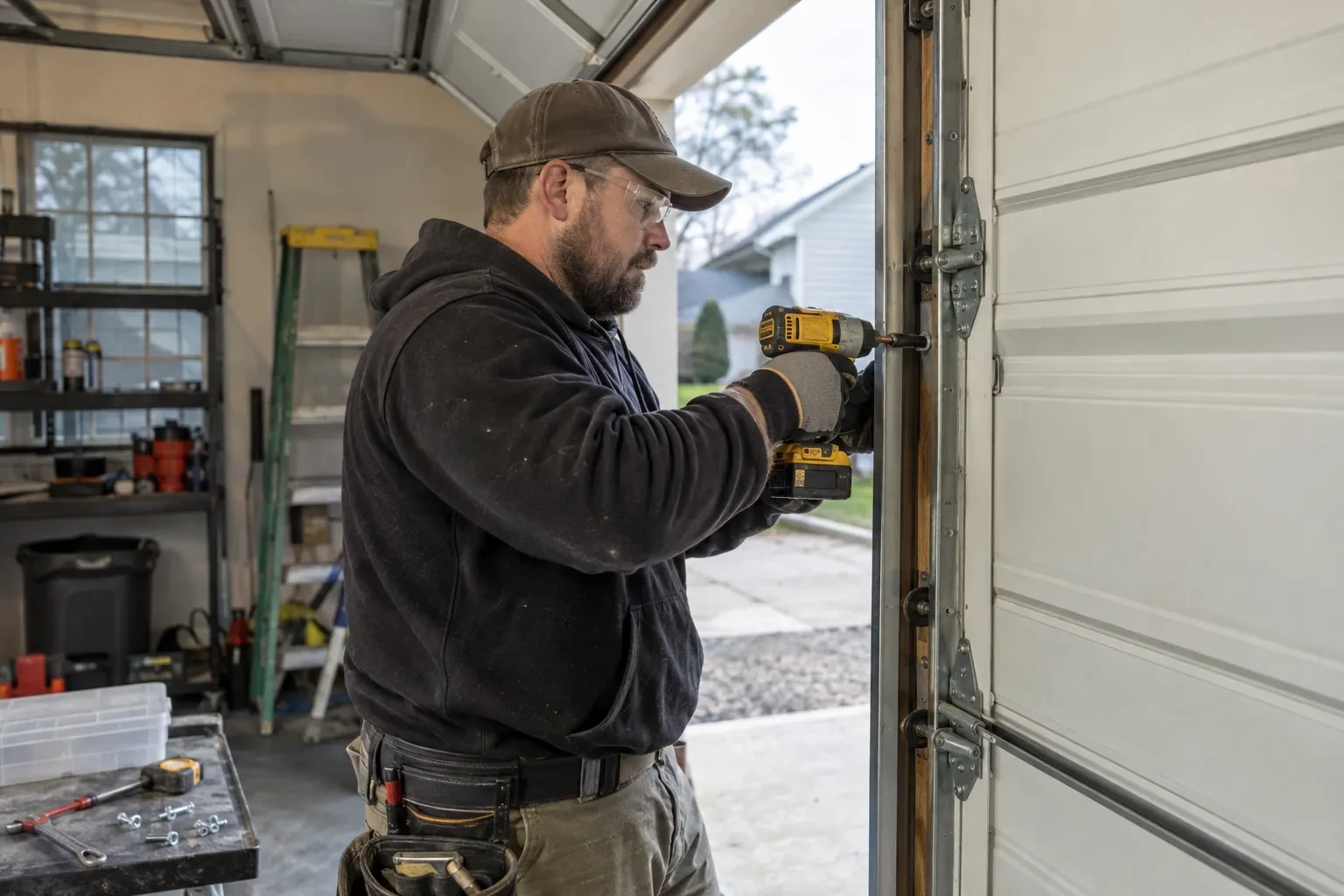
New builds and renovations in Blandford-Blenheim often need a garage door that suits the house as well as the garage. We measure the opening, check headroom and framing, and bring samples of insulated steel, carriage-house and full-view glass designs. The door is installed with care, balanced properly and set up with an opener that matches its weight and use.
11years in business
24/7open every day
Real explanations. Every recommendation comes with the reason behind it, in words that make sense to someone who has never opened an opener.
Care in your space. We work around bikes, tools and vehicles carefully, protect what needs protecting, and leave the garage clean.
No pushing. You hear the choices once, clearly. Whether to go ahead, wait or take a different route is yours to decide.
Ask about a new garage door for your Blandford-Blenheim home.
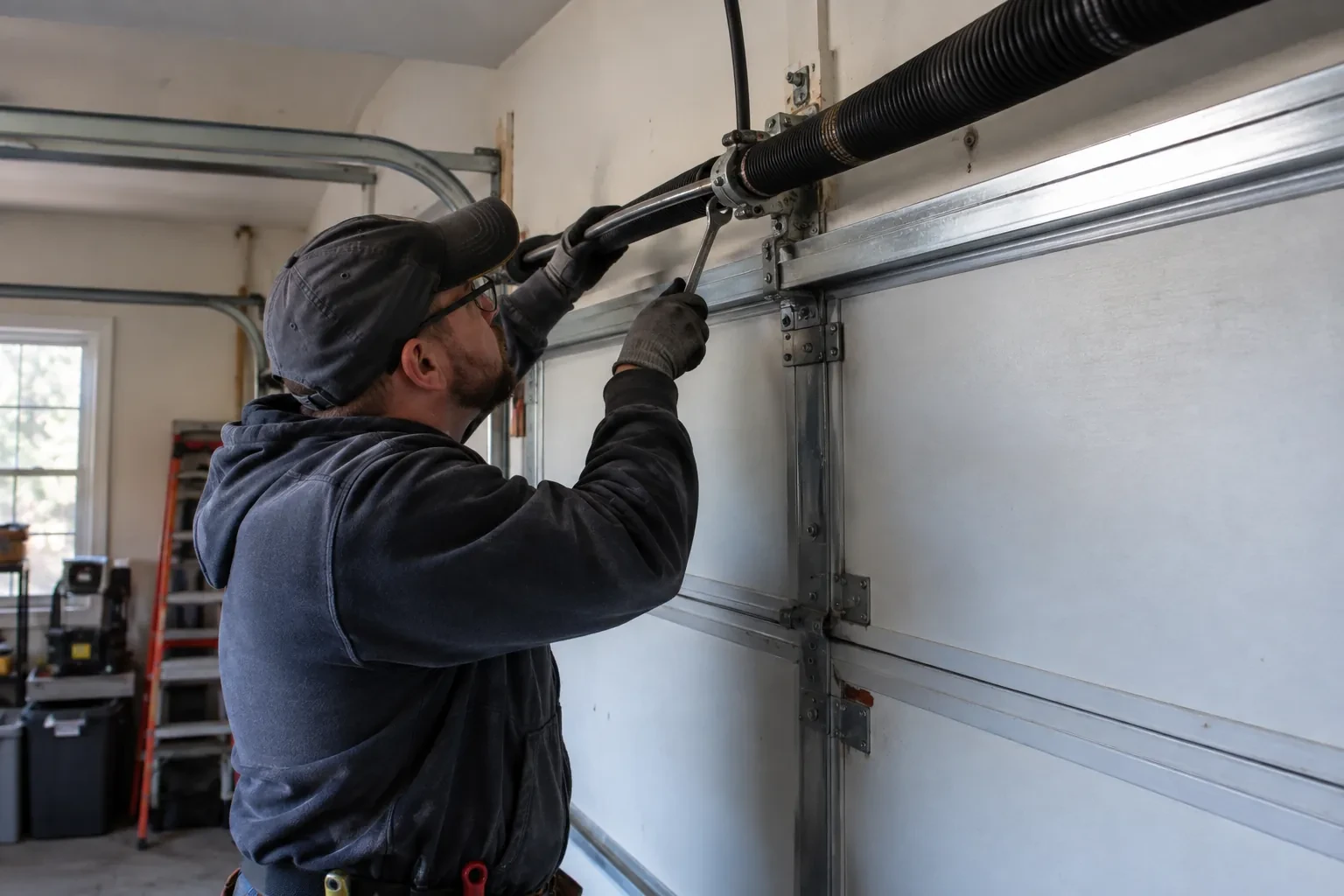
A door in Blandford-Blenheim that is lifting unevenly, dropping too far, screeching on the rails or refusing the remote is telling you which part is tired. Our services are grouped around those parts, springs and cables, tracks and rollers, openers and controls, so the fix is easy to identify.
About 63% of homes in Blandford-Blenheim were built in 1980 or earlier, according to the 2021 Census.
Older homes
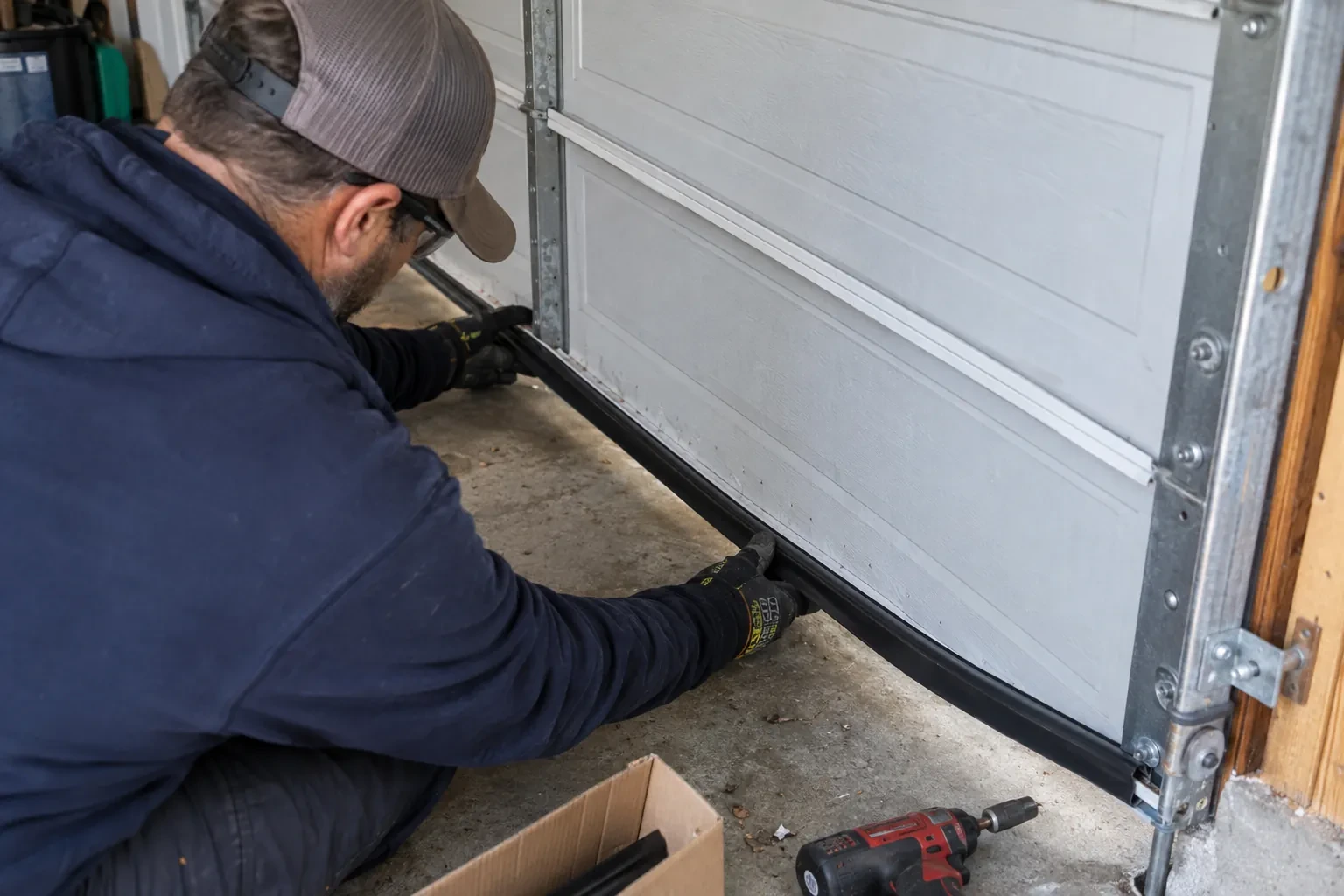
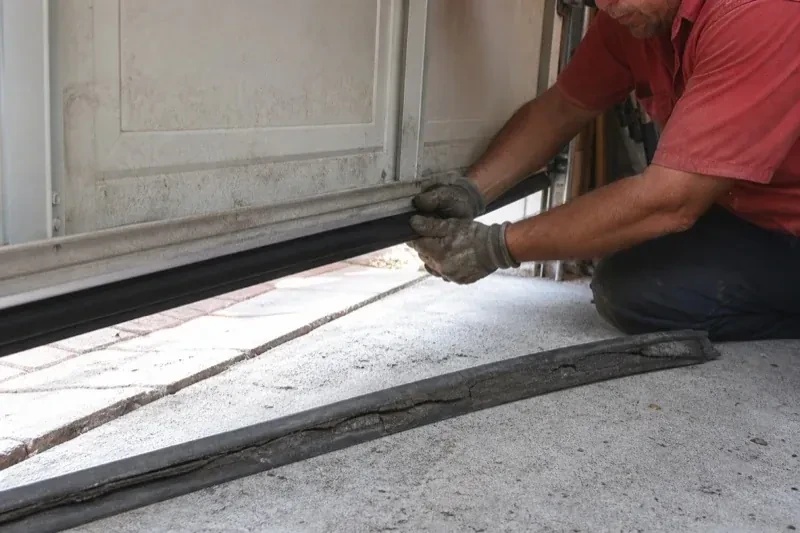
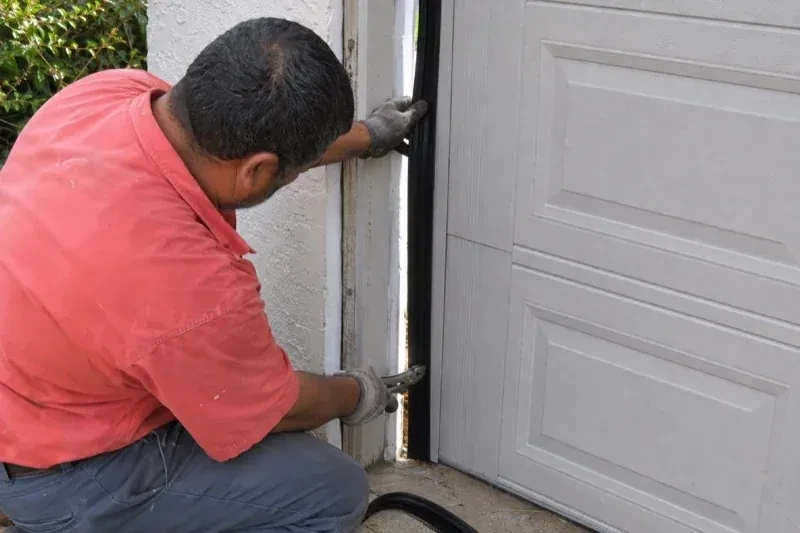
Decades of freeze and thaw work on the concrete apron in front of an older garage, and an uneven floor means the bottom seal meets a gap on one side. A thicker seal or an adjusted threshold closes it and keeps snow and cold air out.
Single-detached houses make up about 90% of homes in Blandford-Blenheim (2021 Census).
Mostly houses
Detached homes usually have their own driveway and apron, and years of freeze and thaw can leave the concrete uneven where the door meets it. A thicker bottom seal or a threshold strip closes the gap, keeping snow, leaves and cold air out of the garage.
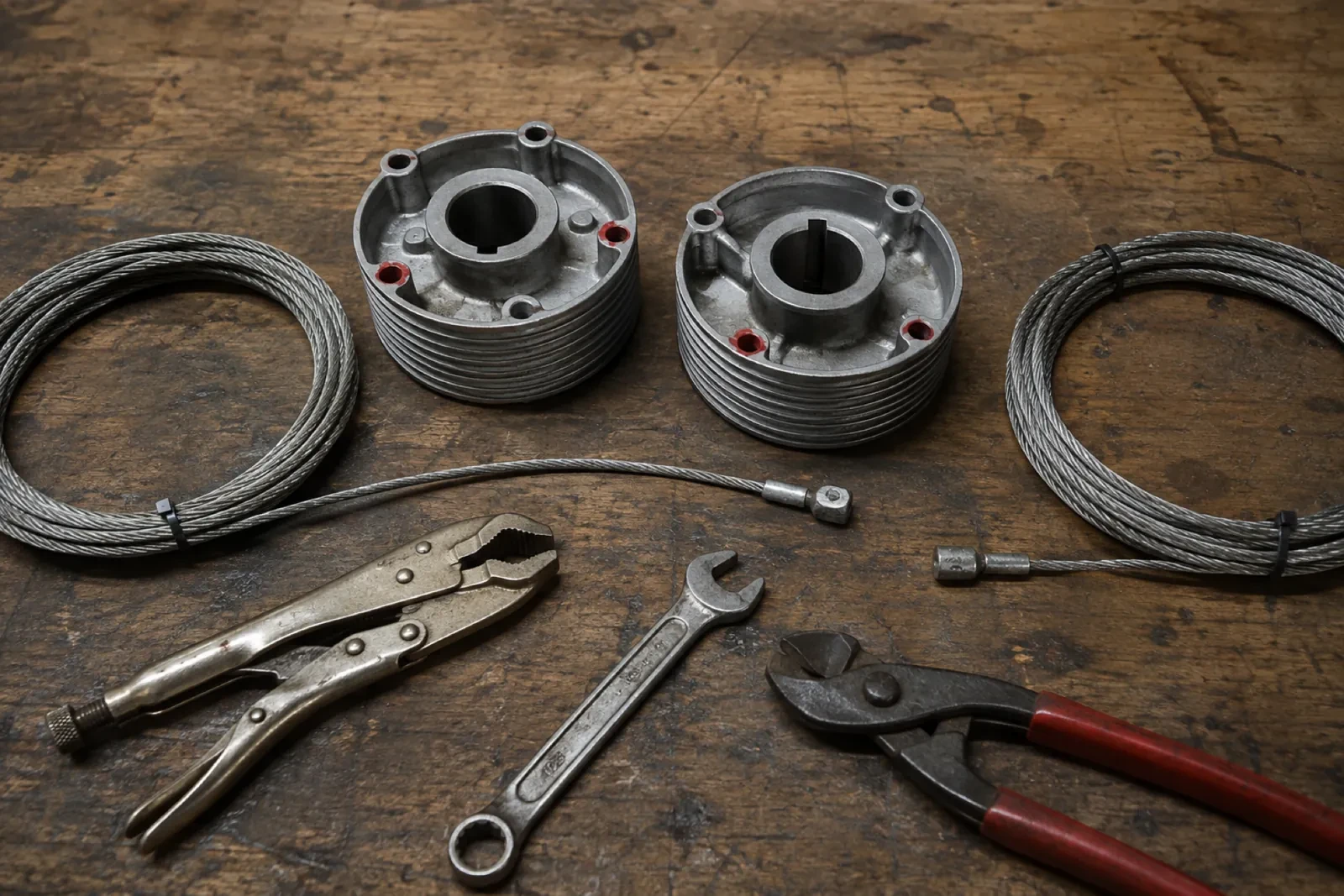
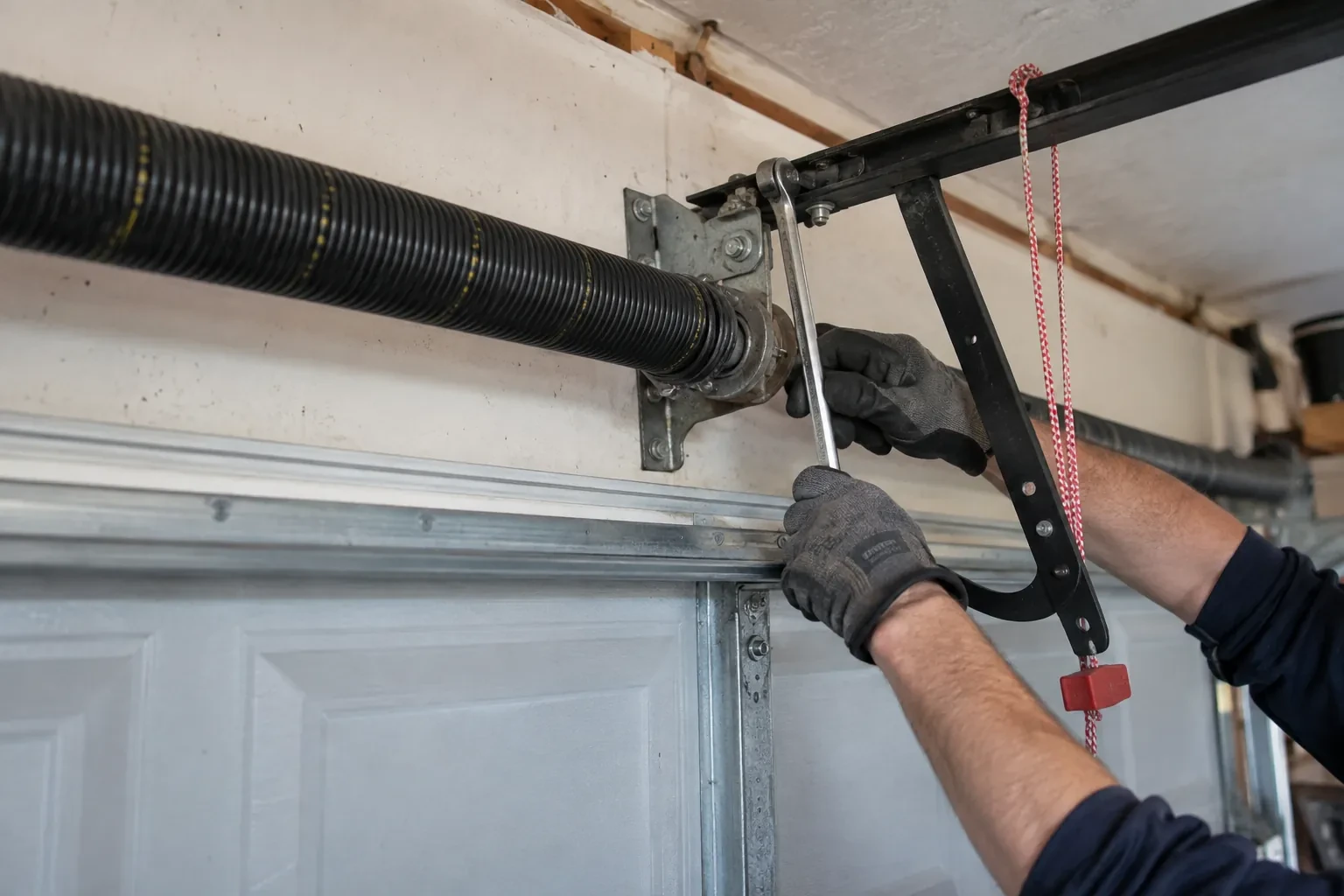
A crooked door is a hardware door. One cable has stretched or slipped, a drum has let go, or a spring on one side has weakened. These are the parts we look at first, and the services here put them right.
Some doors have given everything they had. When that is the case, a new one installed carefully, balanced properly and paired with a matching opener is the right investment, and this is how we do it.
The door goes up perfectly. Coming down is the trouble: partway to the floor it stops, climbs back to the top, and the light on the opener blinks at you.
It is minus twenty in the detached garage and the door climbs in jerks, the belt stiff as a board. By the afternoon, when the sun has been on the door, it runs almost normally again.
The bedroom above the garage shakes every morning at six when the chain drive fires up. Everyone in the house knows the moment someone leaves for work.
Since shelving went up along the garage wall, the door will not close and both sensor lights are dead. A screw or staple may have gone through the thin wire that runs from the opener to the sensors.
Since the new door went in, the red handle has hung just below the ceiling, a stepladder's height above anyone in the household. During last week's blackout your daughter stood under it with a broom, unable to hook it down.
WhyAn outdoor wireless keypad lets the household in without a remote, and programming it properly is more than typing a code.
The house came with a controller already screwed to the garage ceiling and a sensor on the door, but the app insists the device belongs to another account.
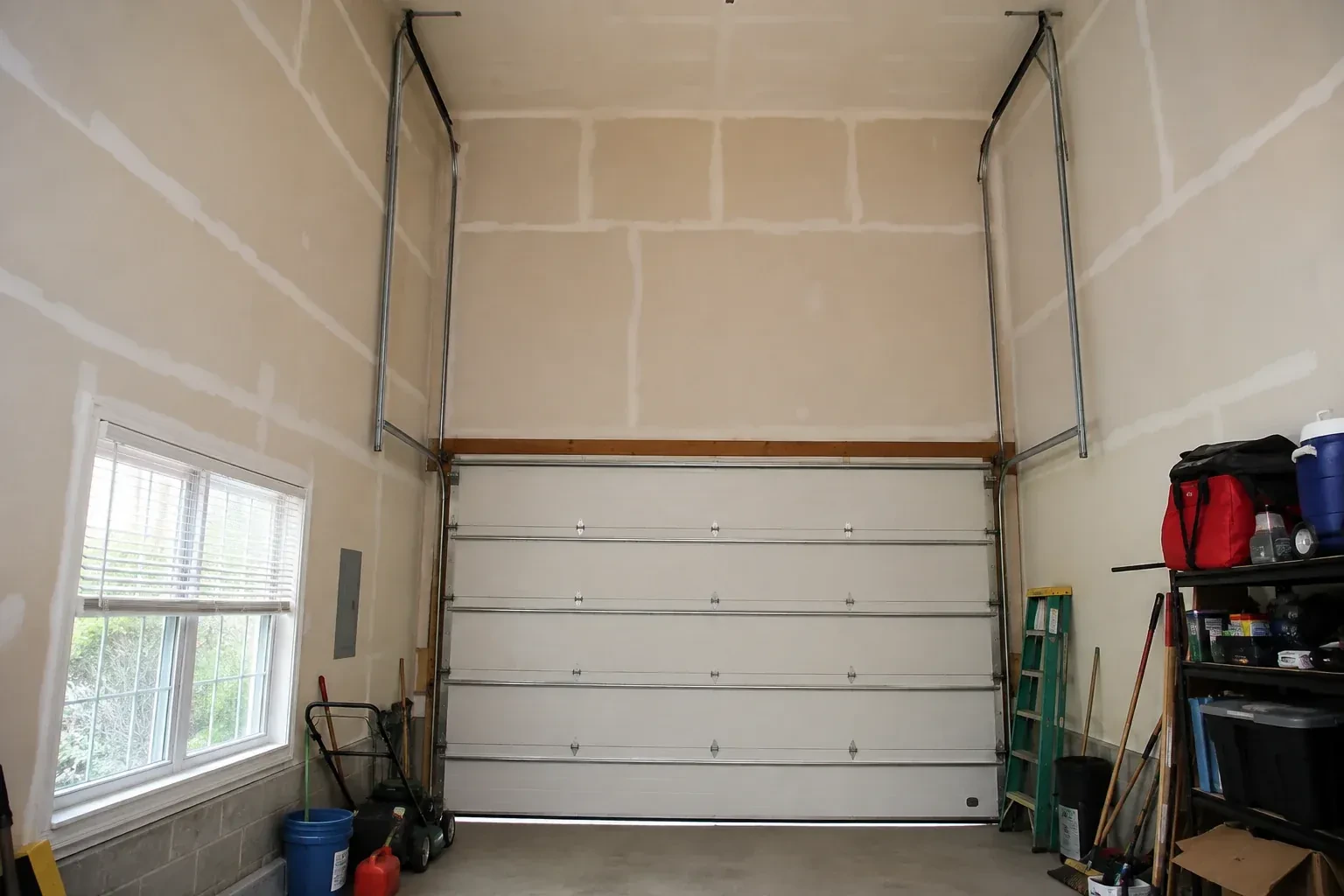
WhyA wide garage opening collects a substantial wind load because pressure acts across the full door area.
An entrance. Not an afterthought.
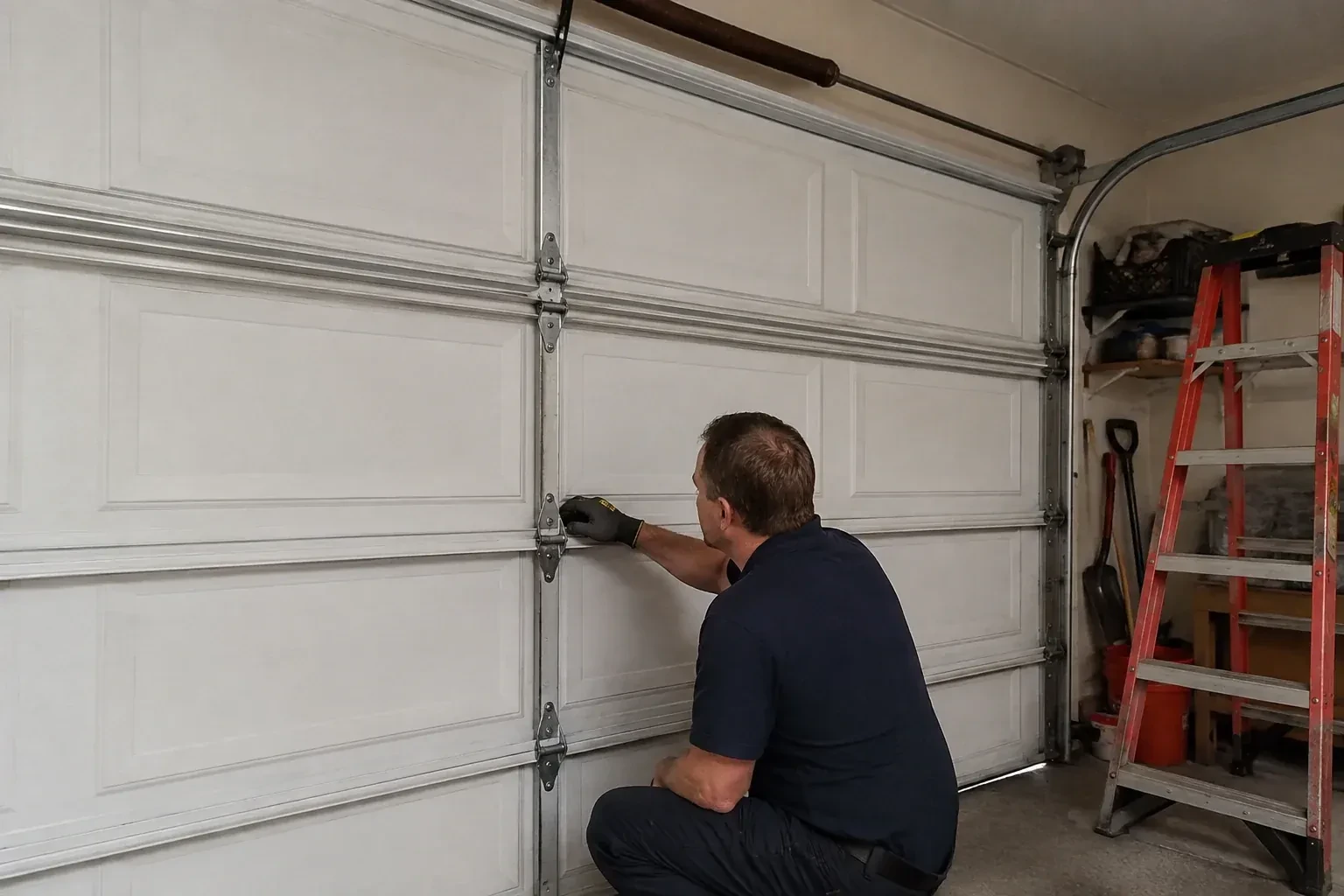
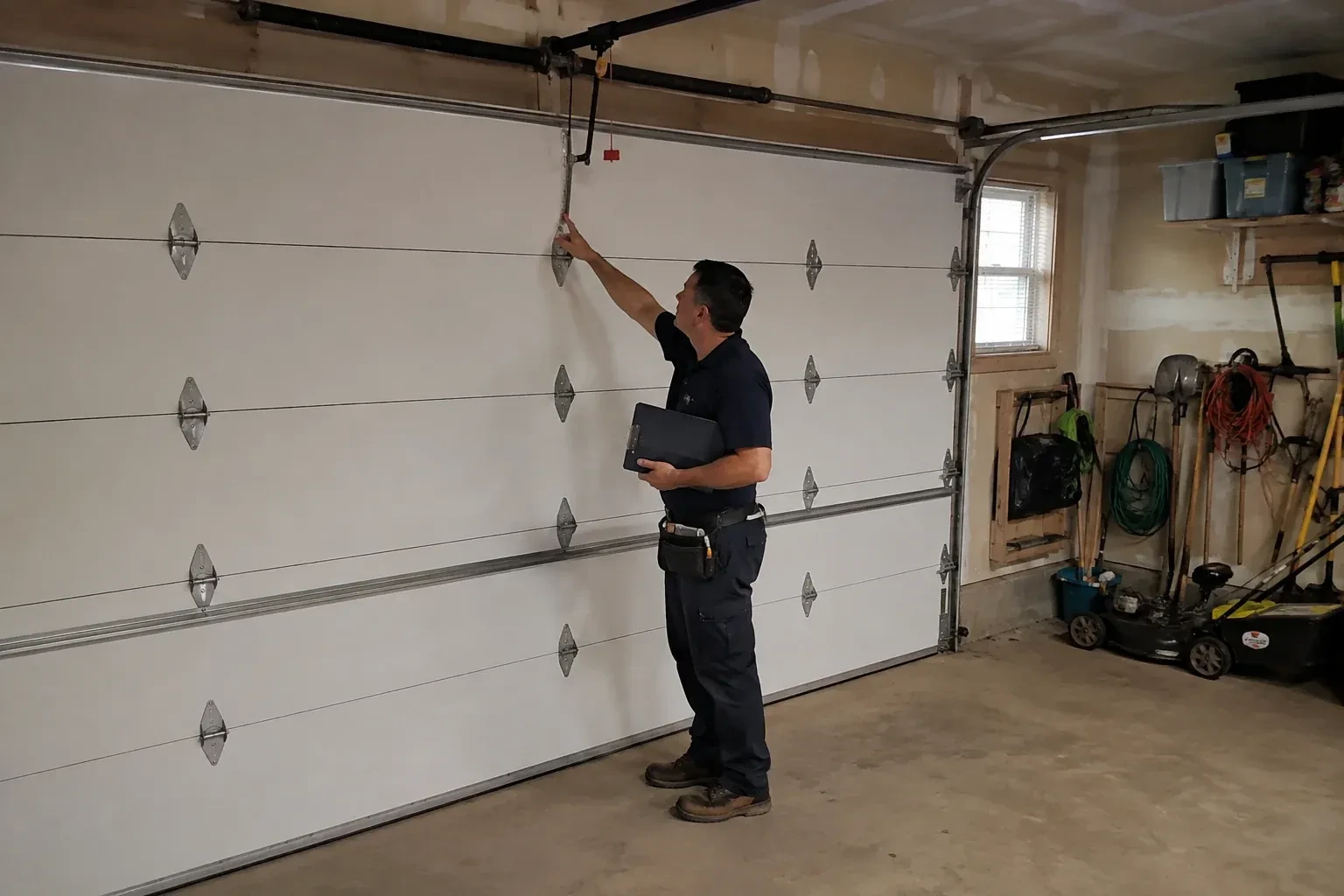
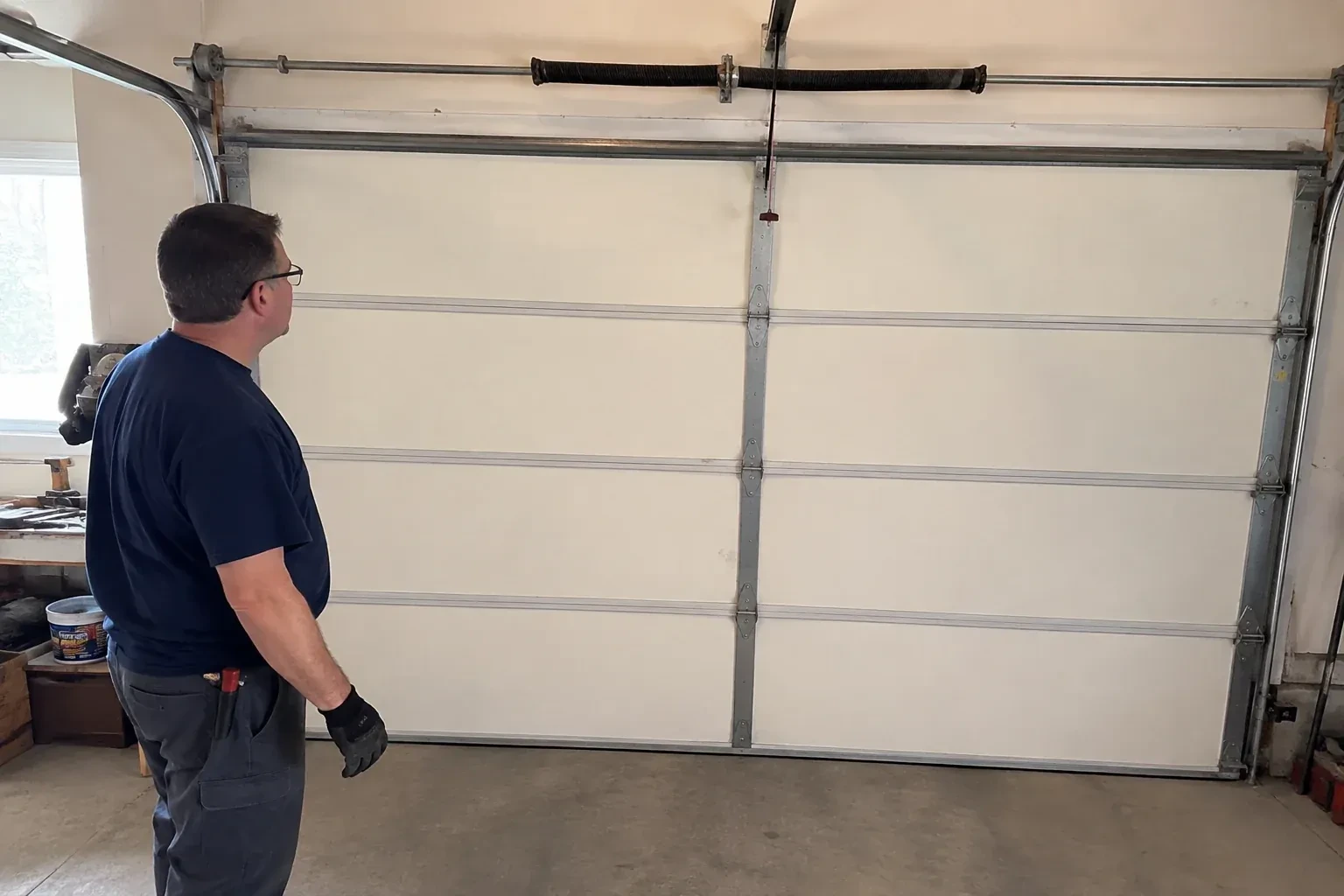
1/10Garage Door Safety Inspection
You moved in three months ago. The door works, but nobody can say how old the springs are, when anyone last looked at it, or whether the little sensors by the floor have ever been tested.
After a spring rain there is a puddle inside the door that reaches the tires. The driveway slopes toward the garage, the slab has a low corner, and the flattened old seal is not making up the difference.
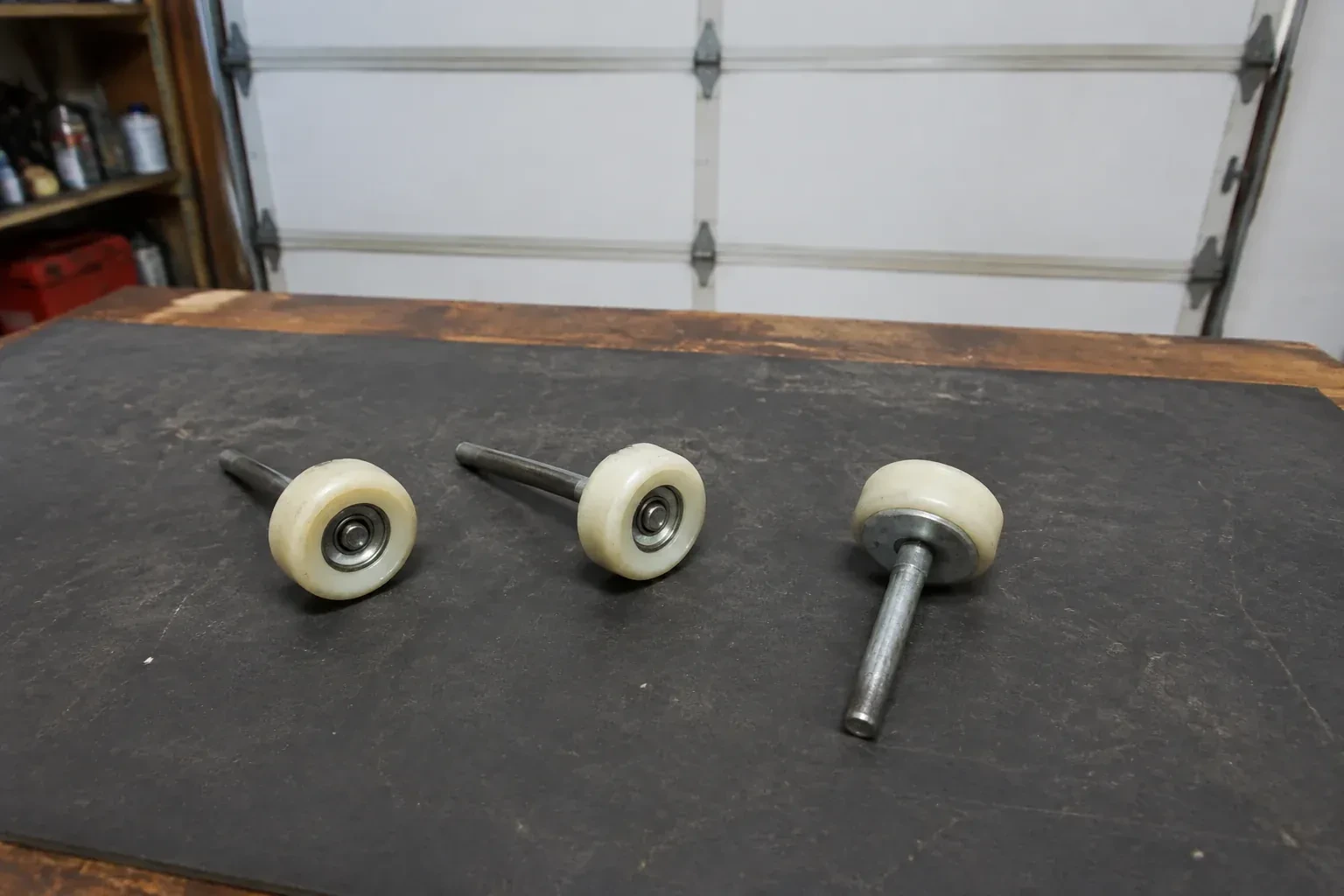
A roller near the top corner is riding on the lip of the track rather than inside it, and the section above leans back a little more each week. The door still moves, but it looks one bump away from coming out altogether.
Every time the door goes up there is a sharp pop from the same spot, about a metre off the floor, and the whole door gives a little shudder. Come back down and it happens again at exactly the same place.
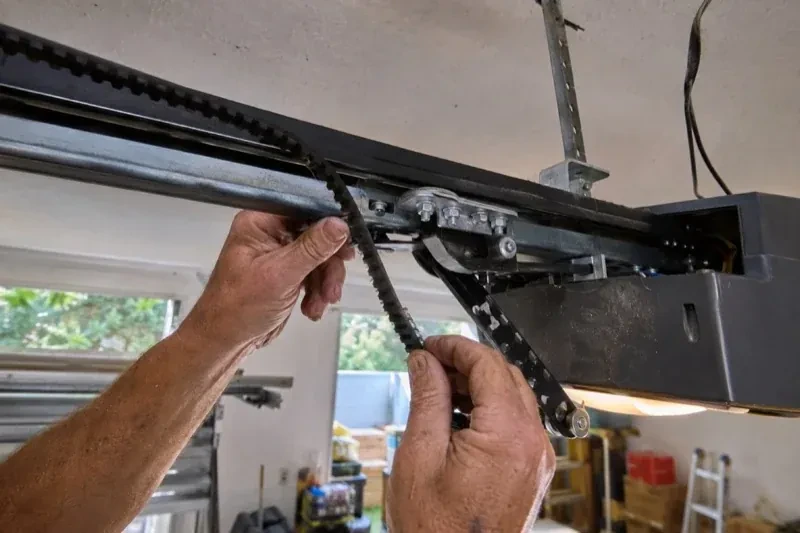
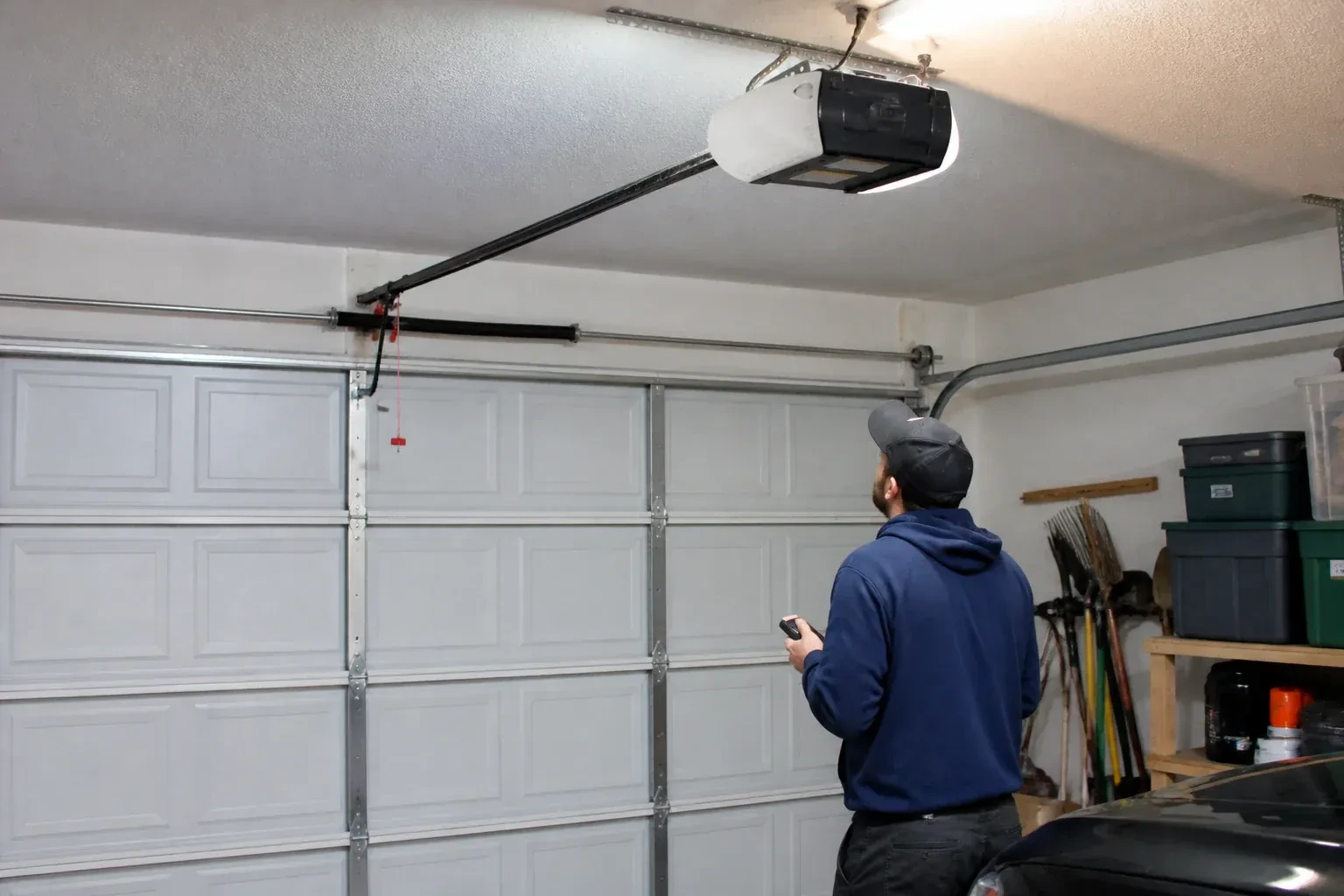
The door used to glide up with a soft hum. Now there is a sharp clack every second or so, and if you stand underneath you can see the belt sagging below the rail and slapping it on the way up.
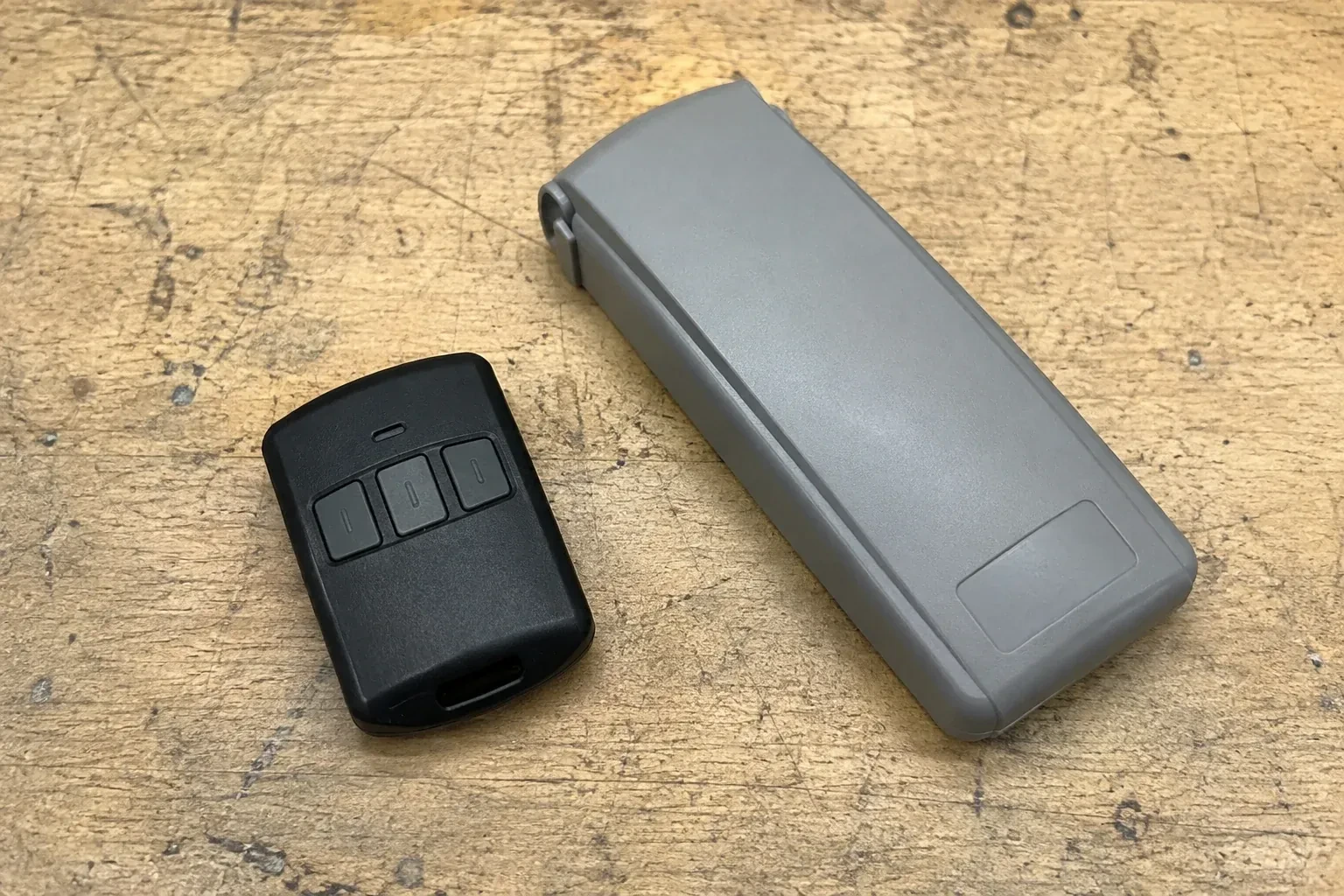
Someone in the family tried to add a remote, held the button on the ceiling unit a little too long, and now every remote in the house is dead at once. The wall control still moves the door. The remotes act as if they were never programmed.
The house came with a controller already screwed to the garage ceiling and a sensor on the door, but the app insists the device belongs to another account. The seller has moved provinces, the emails go unanswered, and every evening the door still reports to a stranger's phone.
It is the coldest morning of the year. A week of slush and road salt has crusted over the outside release lock, the key will not seat, and the opener inside is silent after the overnight outage. The car sits behind a door that will not move.
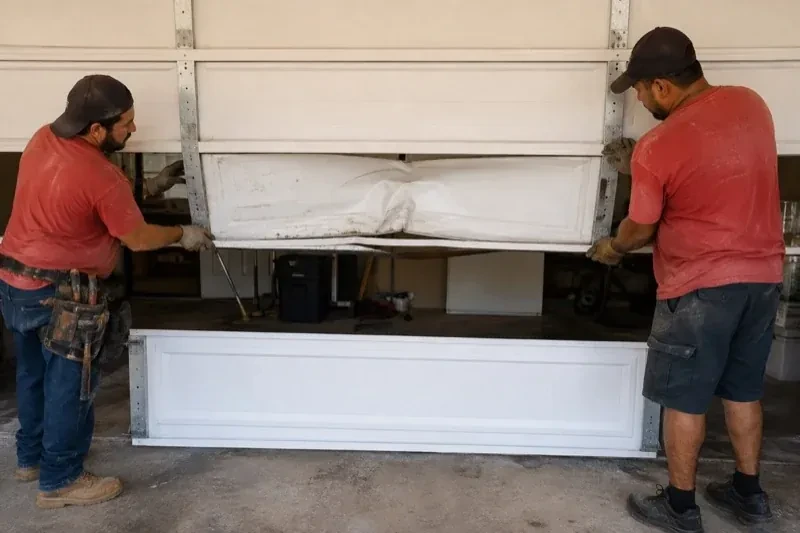
Several sections are rusting along their lower edges, and one has begun to bow. The door still travels, but its tired panels, widening gaps and uneven finish now make the whole entrance look overdue for renewal.
A recent wind event left one section slightly creased, a strut twisted, and several track fasteners loose. The door still moves, although the changed shape suggests that a complete system assessment is appropriate before regular use resumes.
What exactly gets looked at during the inspection?
The whole system, not just the opener. Sections, hinges, rollers, tracks and their fasteners; springs, cables, drums and bottom brackets; the bottom seal and perimeter weatherstrip; the opener head, rail, arm and mounting; the photo eyes, contact reversal, wall control, remotes, keypad and manual release; and the warning labels. Each is examined, and the door is tested both by hand and under power.
How can I tell that the bottom seal needs replacing?
Close the door, turn off the lights and look along the floor from inside. Daylight showing, a strip that feels hard or cracks when pressed, a bulb that has flattened and stays flat, an end hanging out of its channel, chew marks or missing pieces are all signs. So are leaves, snow or a puddle inside the door after weather. Any one of these means the seal has stopped doing its job.
What lubricant is right for a garage door?
A lubricant made for garage doors, applied lightly to hinge knuckles, roller stems and the springs, following the door maker's own recommendation, since the right product and whether bearings are included varies by manufacturer. General-purpose penetrating oils are thin and wash away, and heavy grease attracts grit. Nothing goes on the track raceway or on a nylon or plastic wheel. The opener's chain or screw rail may take a lithium grease according to its manual, and the manual for your door names what its maker prefers.
The screws spin in their holes. Can the hinge still be fitted securely?
Yes. A stripped hole is common on older steel doors and on wood doors where the timber has softened. The technician either shifts the hinge to fresh metal within the stile, uses a larger self-drilling screw that cuts new threads, or drills through and fits a bolt with a nut and washer or a backer plate on the inside. Any of these gives the new hinge a firmer anchor than the original screws had.
How long does a belt-drive repair take?
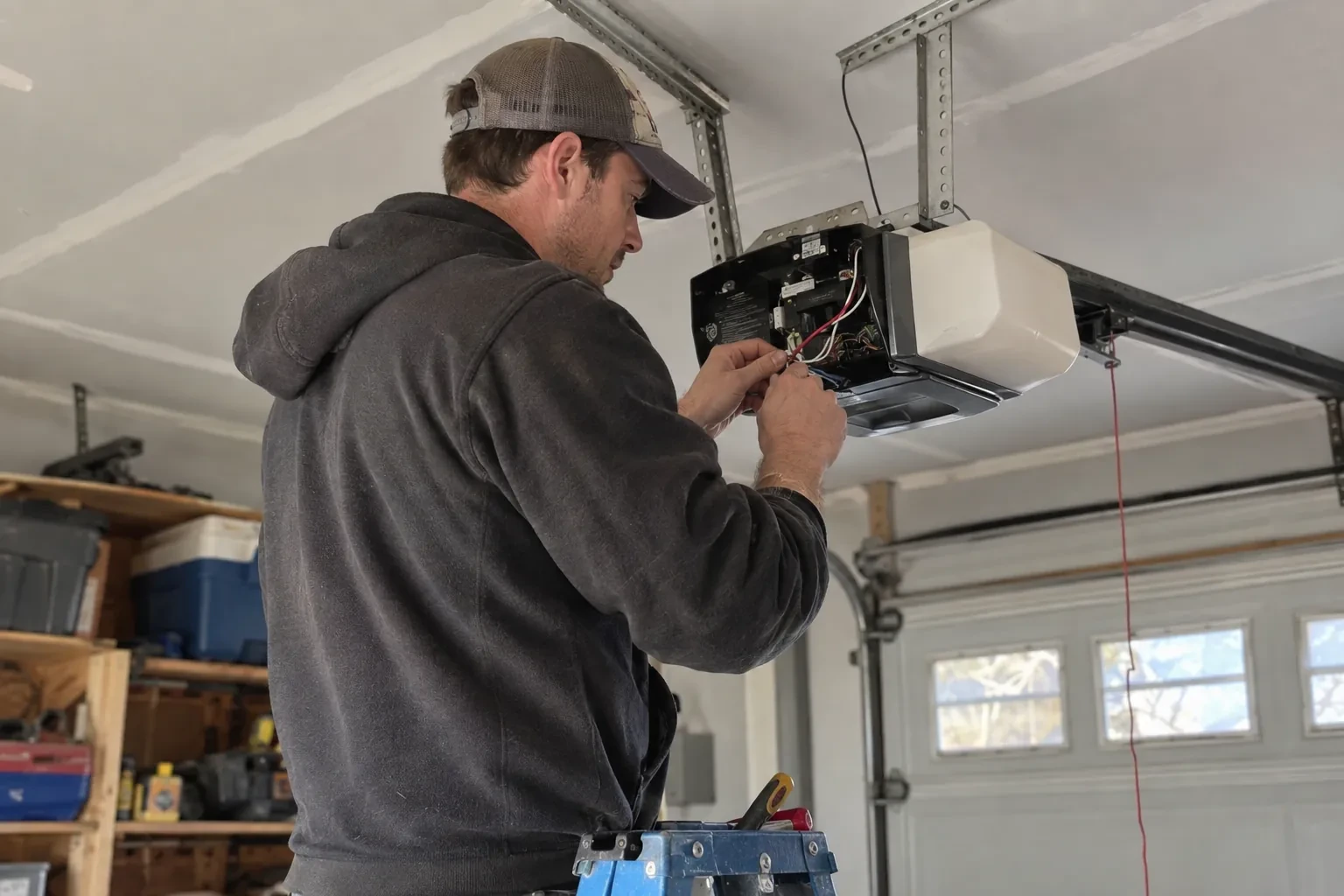
A tension adjustment with the safety tests is a short visit. Replacing the belt, trolley or idler pulley, then phasing the motor, relearning limits and running the reversal tests, is usually an hour or two. A gear-and-sprocket kit at the motor head takes longer because the head unit is opened. If the balance test turns up spring work, that is agreed as a separate job with its own time.
My older car's button will not learn my new opener. Why?
Some in-car systems from earlier model years cannot hear the newest opener radios directly. The usual answer is a small compatibility bridge module that pairs with the opener and relays the car's signal, or a handheld remote clipped to the visor. The technician identifies the car's system and the opener's generation and chooses whichever gives a reliable result.
How long does the setup take?
A built-in radio that only needs pairing and an account is the shorter visit. A retrofit hub with wiring, a sensor and network work takes longer, and adding an access point for a detached garage or correcting photo eyes first adds to it. The testing at the end, every control plus the safety tests, is never rushed. You are told where things stand once the compatibility check is done.
The outside release lock froze. How do I stop that happening again?
Salt spray and meltwater get into the keyway during a thaw and freeze overnight, the same way they do in a house lock. Keep the cylinder face clear of slush, give it a puff of dry lock lubricant before the cold sets in, and carry a small de-icer through the winter. A weather cap over the cylinder helps on a door that faces the road. The technician cleans and treats the cylinder as part of any outside release repair.
Which insulation details should I compare?
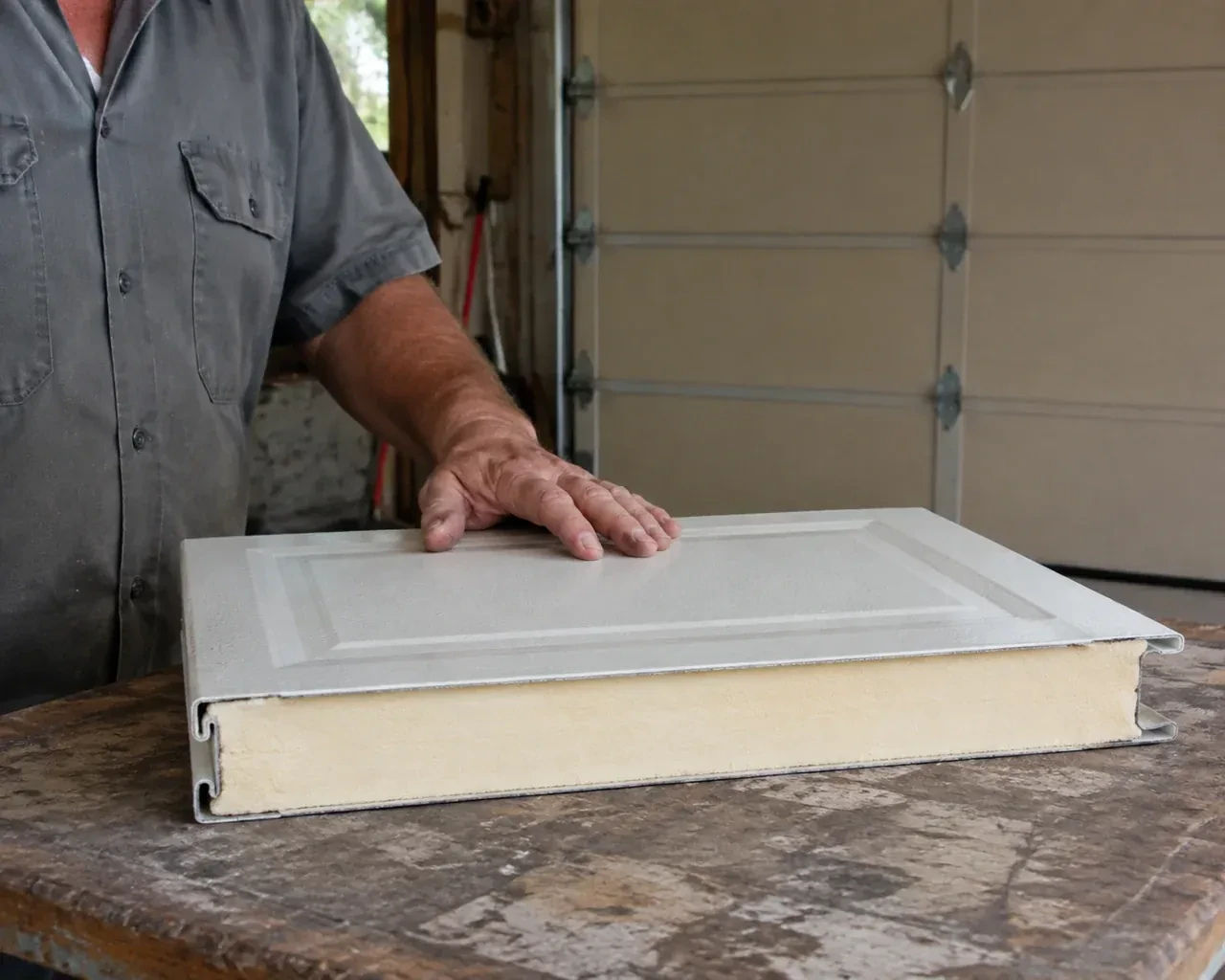
Look beyond a single thermal number. Compare section construction, insulation type and thickness, seals between panels, glazing and the perimeter weather seals included in the proposal. How often the door opens and how well it fits the floor also influence comfort. Product literature provides the appropriate performance information for the exact model.
Will a reinforced door be heavier than my old one?
It may be. Added struts, different section construction, glazing, and heavier hardware can change the total door weight. The counterbalance springs are selected for the finished assembly, and the opener is checked for compatibility and correct attachment. With proper balance, the door should still move in a controlled way by hand and under power.
Request a visit
We are careful about what we recommend in Blandford-Blenheim. If a tune-up will do, that is what we suggest. If a spring is the problem, we replace the spring and check its partner. If the door is beyond repair, we say so plainly. Every recommendation is one you can watch us justify at the door.