Openers · Wilmot
Chain-Drive Opener Repair
Halfway up, the door lurches.
In plain words
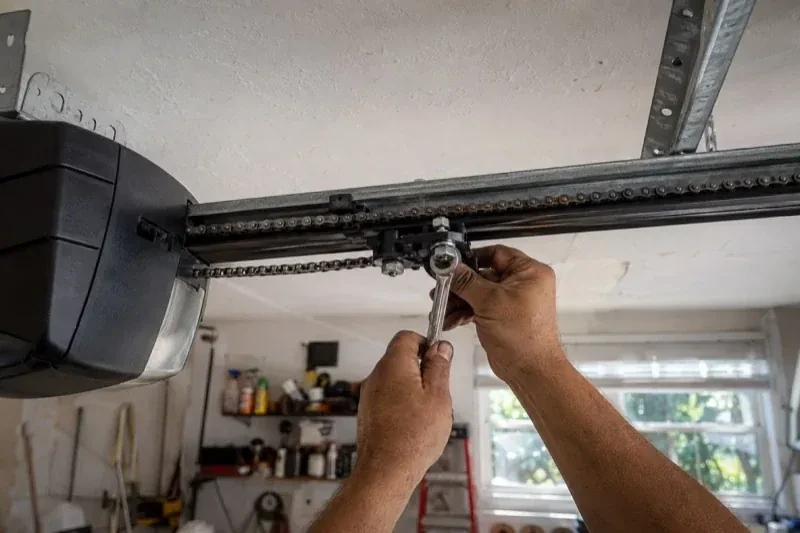
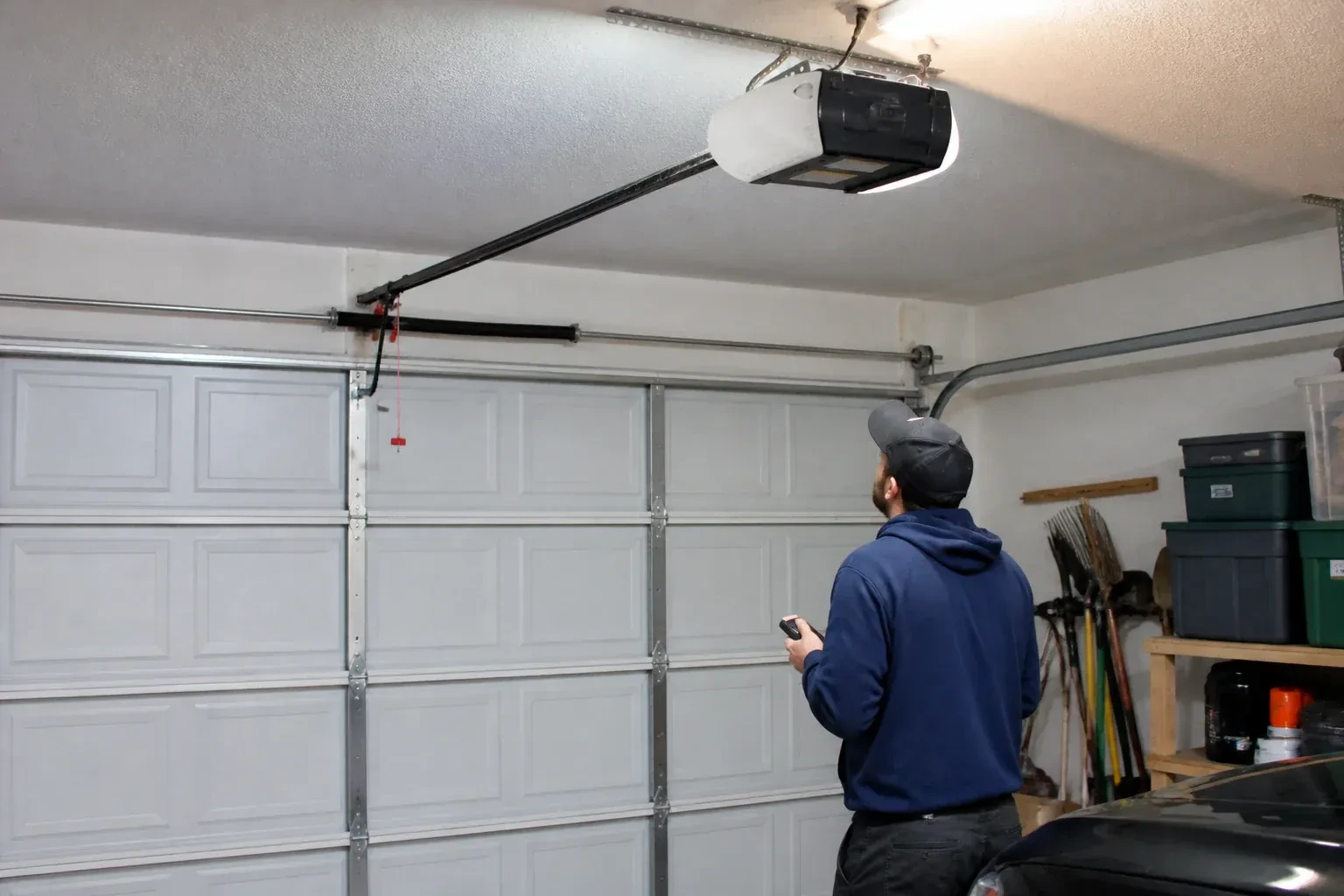
A chain drive is never silent, but it should be steady. New rattles, clanks and grinding each point somewhere specific. A chain slapping the rail is loose tension. A rhythmic clack at one spot is a worn or hooked sprocket tooth, or a stiff link passing over it. Grinding from the head is gear trouble. A rail that shakes has loose hangers or a header bracket working out of the wood. The technician runs the door by hand first to separate door noise from drive noise, then works through the drive from sprocket to trolley, tightening, tensioning or replacing what the sound identified.
How the visit goesThe motor runs, you can hear it working, but the door never moves. When you look up, the sprocket on top of the head is barely turning, and there is a little drift of pale plastic dust on the cover.
Chain-Drive Opener Repair
How the visit goes
Trolley, release lever and the stop bolt
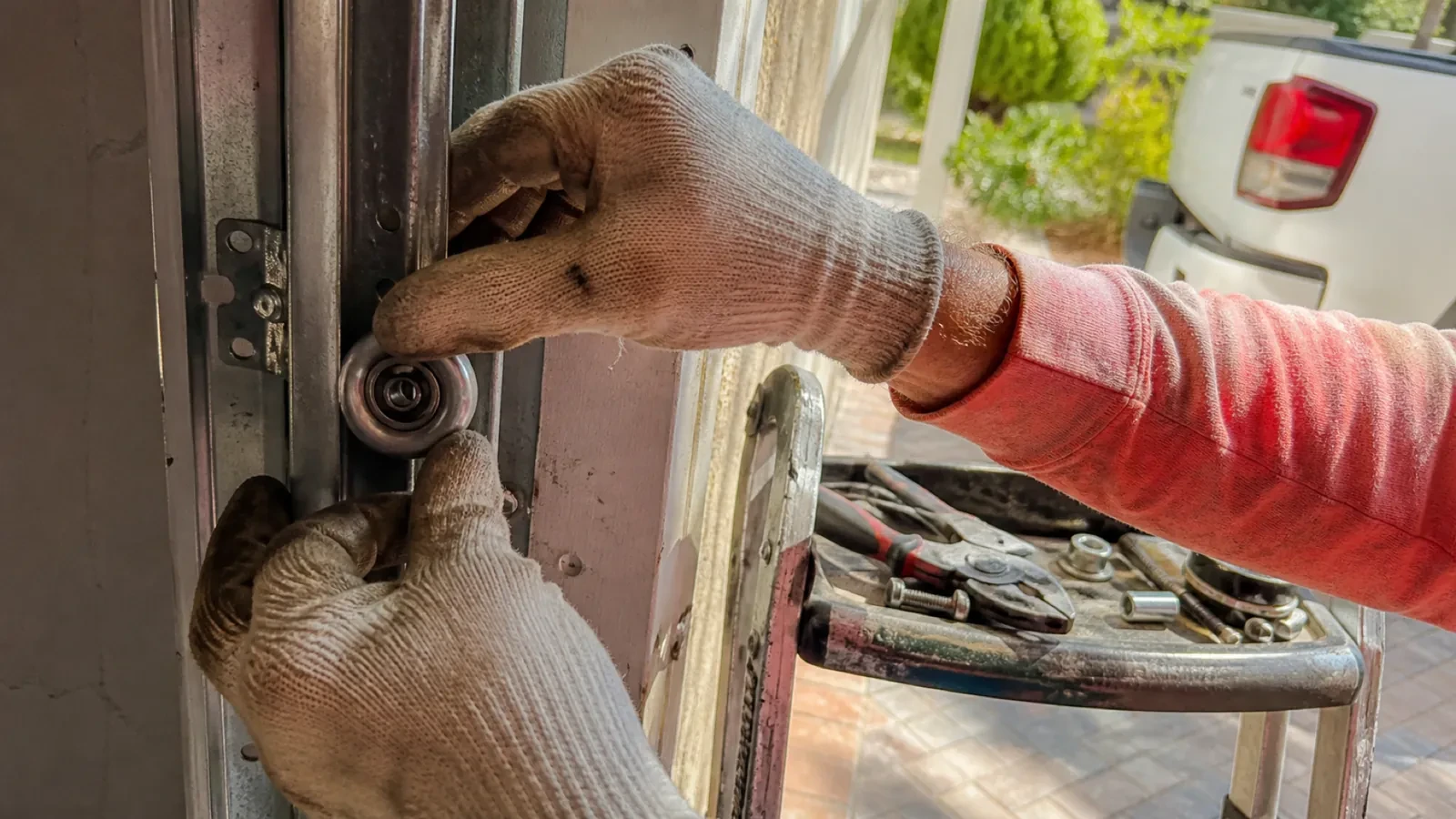
The trolley is looked at in two ways: where it sits and how it is wearing. With the door closed, the trolley should rest near the door end of the rail without touching the stop tab; with the door open, short of the stop bolt near the head. A trolley jammed against either stop explains a humming motor. The release lever is checked for a bent arm or a worn latch that lets the trolley slide past the door arm without picking it up. The technician also confirms the trolley and the motor agree about the door's position, since a chain that was run off the sprocket puts them out of phase and no amount of limit adjustment corrects that.
Fitting a new chain
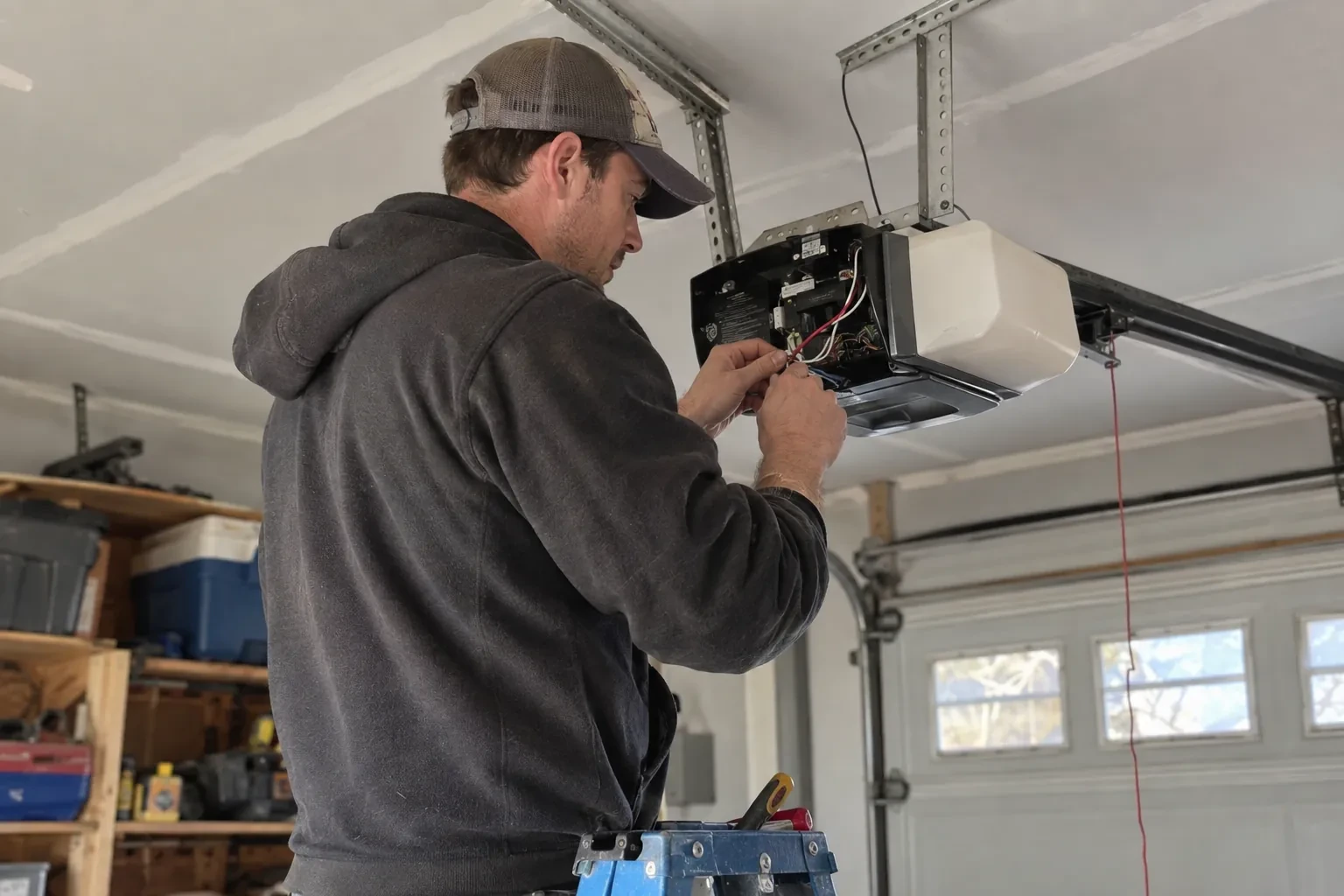
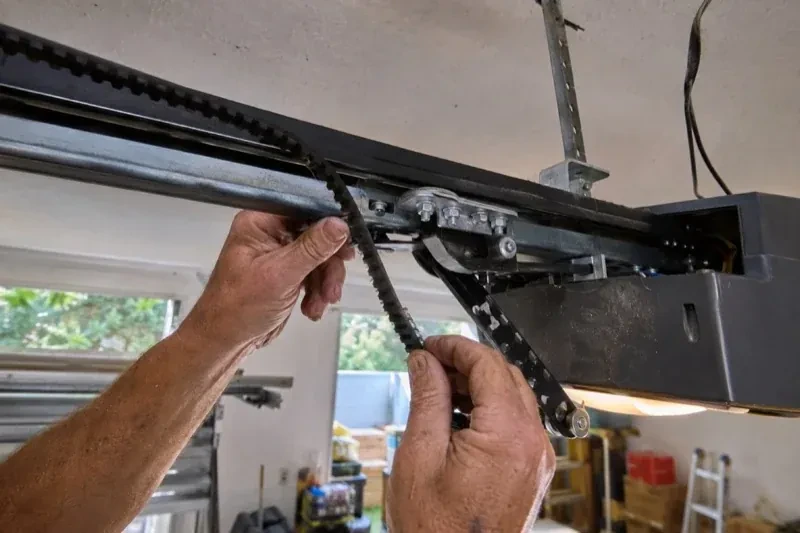
A stretched or rust-bound chain is replaced as a unit. The technician disconnects the door, slackens the tensioner and opens the master link, then draws the old chain off the sprocket, through the trolley and around the idler at the door end. The new chain, sized to the rail length, is threaded the same way, joined at the master link with the clip facing away from the direction of travel, and settled onto the sprocket teeth by hand. Any cable section on a combined chain-and-cable drive is checked for fraying and renewed if needed. The chain is then tensioned to the rail's specification and the trolley run by hand along its full length.
Grease where it belongs, and nowhere else
The rail was cleaned and given a thin coat of white lithium grease where the trolley runs, on the schedule that opener's own manual calls for, often every two or three years, with the old grease wiped away first. The gears inside the head were packed with the same grease and need nothing between services. The chain itself is treated only as the maker's manual directs, often not at all, since heavy oil collects grit and drips on the car. Rollers, hinges and bearings on the door take a garage door lubricant once a year. The tracks the rollers run in take none, and penetrating sprays stay away from the whole system because they strip grease from gears.
Chain-Drive Opener Repair
In the van
Rail hangers and header bracket
Trolley release lever
Inner and outer trolley
Motor start capacitor
RPM sensor
Chain-Drive Opener Repair
What affects the quote
When the visit happens
An evening, weekend or holiday call costs the same amount as one on a weekday for a chain-drive repair. The exact figure is confirmed once the technician has looked at the chain, the rail and the gear kit in person.
Age of the operator and parts supply
Parts for recent heads are on the van; parts for a unit several decades old may need ordering, and where a maker no longer supplies them the conversation turns to what can be done instead.
The gear kit for your model
Drive gear, worm gear and sprocket shaft assemblies are made to fit a particular head, and the kit for an older or less common unit is a different item from the one for a current model.
What to have ready
- With the red cord pulled, does the door lift by hand and stay about a metre up?
- Is the noise a rattle along the rail, a clack at one spot, or a grinding from the head?
- Does the door stop short, reverse at the floor, or open only partway?
Chain-Drive Opener Repair: questions
QuestionsWhy is there white or grey dust on top of my opener?
Those are shavings from the plastic drive gear inside the head. The gear meshes with a steel worm on the motor shaft, and when it wears the teeth flake off and collect under the cover. Once you see shavings the gear is close to stripping, after which the motor runs and the door stays still. Replacing the gear and sprocket assembly before that happens turns a stranded morning into a planned repair.
My opener is decades old. Can the chain drive still be repaired?
Often, yes. Gear kits, sprockets, chains and trolleys are still made for many older heads, and tension, phase and limits can be set on almost any unit. The limit is parts: some makers no longer support units made before the mid-1990s, and those also lack the photo-eye protection expected today. The technician checks parts availability for your model and lays out repair beside renewal so you can decide with the facts.
Will the safety reversal be tested as part of the repair?
Always, and after every adjustment, because changing tension, limits or force changes how the operator senses an obstruction. The door is closed onto a 38 mm block on the floor and must return to open on contact, then closed again while the low sensor beam is interrupted and must reverse the same way. If either test fails the settings are revisited until both pass, and you are shown the tests so you can repeat them monthly.
Related services
- Belt-Drive Opener RepairIt is minus twenty in the detached garage and the door climbs in jerks, the belt stiff as a board.
- Garage Door Opener ReplacementThe bedroom above the garage shakes every morning at six when the chain drive fires up.
- Photo-Eye Sensor Alignment or ReplacementSince shelving went up along the garage wall, the door will not close and both sensor lights are dead.