Openers · Wilmot
Belt-Drive Opener Repair
It is minus twenty in the detached garage and the door climbs in jerks, the belt stiff as a board.
In plain words
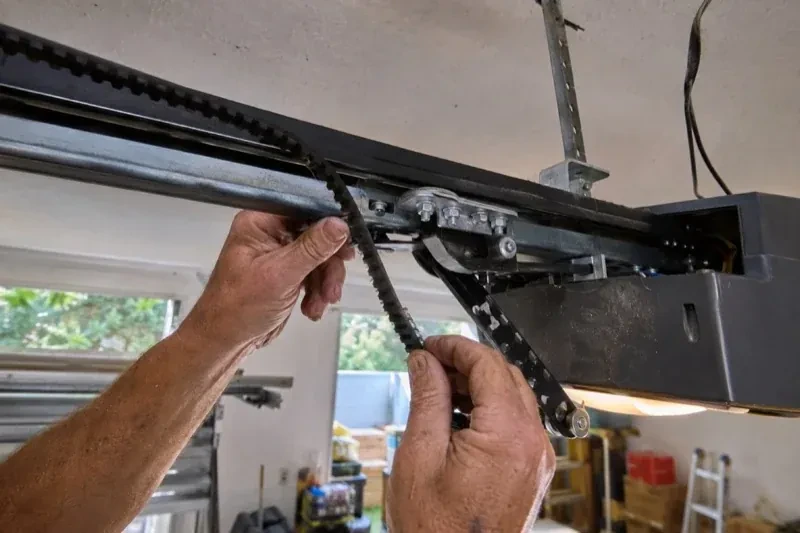
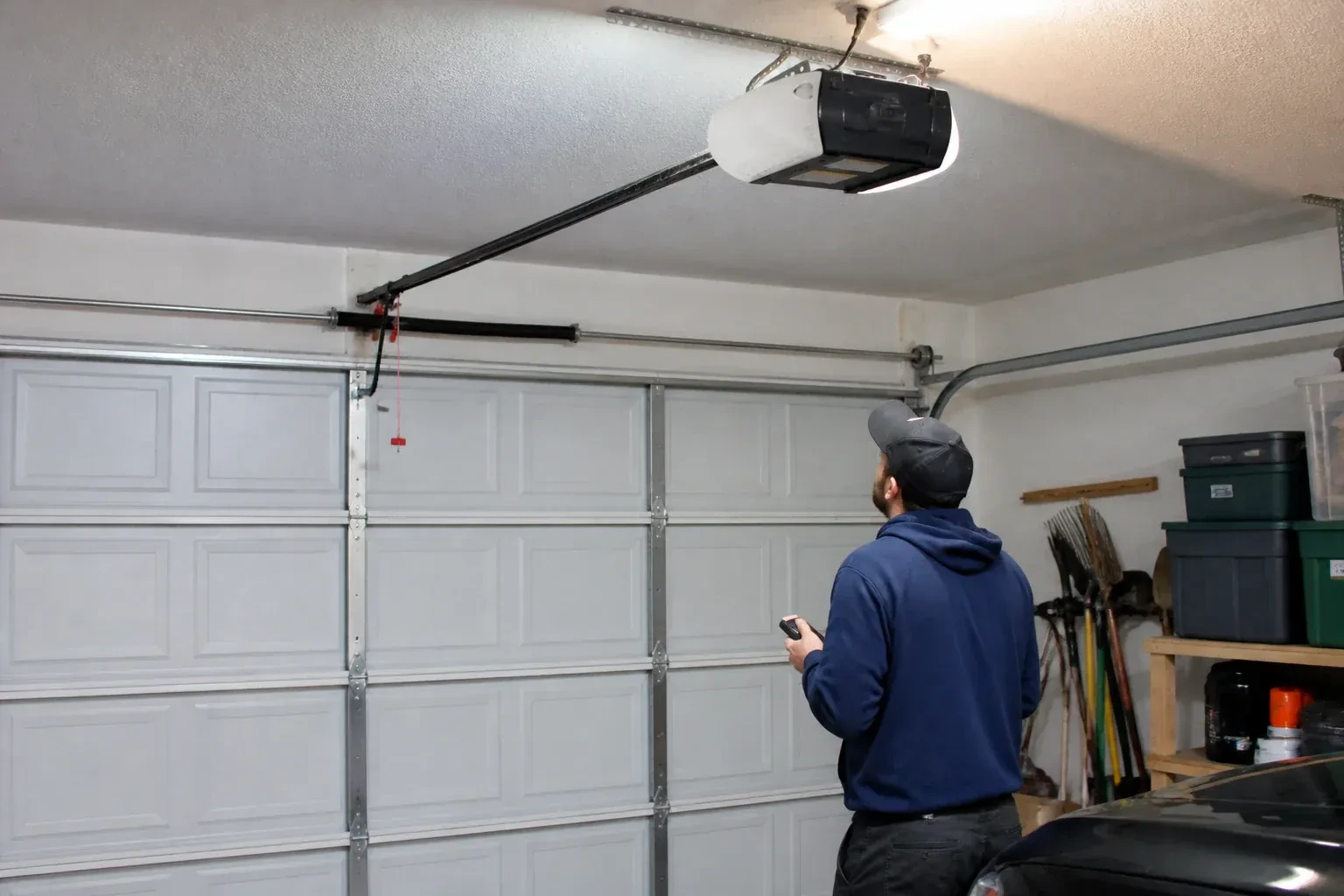
A stalled belt drive is often a trolley problem, not a belt problem. The trolley rides the rail in two halves: an outer part linked to the door arm and an inner part gripped by the belt. Pulling the red cord parts them so the door can be lifted by hand; running the operator, or a second pull, locks them again. When the release lever sticks, the housing cracks or the halves refuse to re-engage, the motor moves the belt and nothing else. Repair means freeing or replacing the trolley, checking the belt for damage from the drag, and confirming the inner half is in step with the motor.
How the visit goesThere is a new squeal from the front of the rail, up near the header, on every cycle. The belt has started tracking to one side and its edge is fuzzy where it has been rubbing.
Belt-Drive Opener Repair
How the visit goes
The trolley and its release
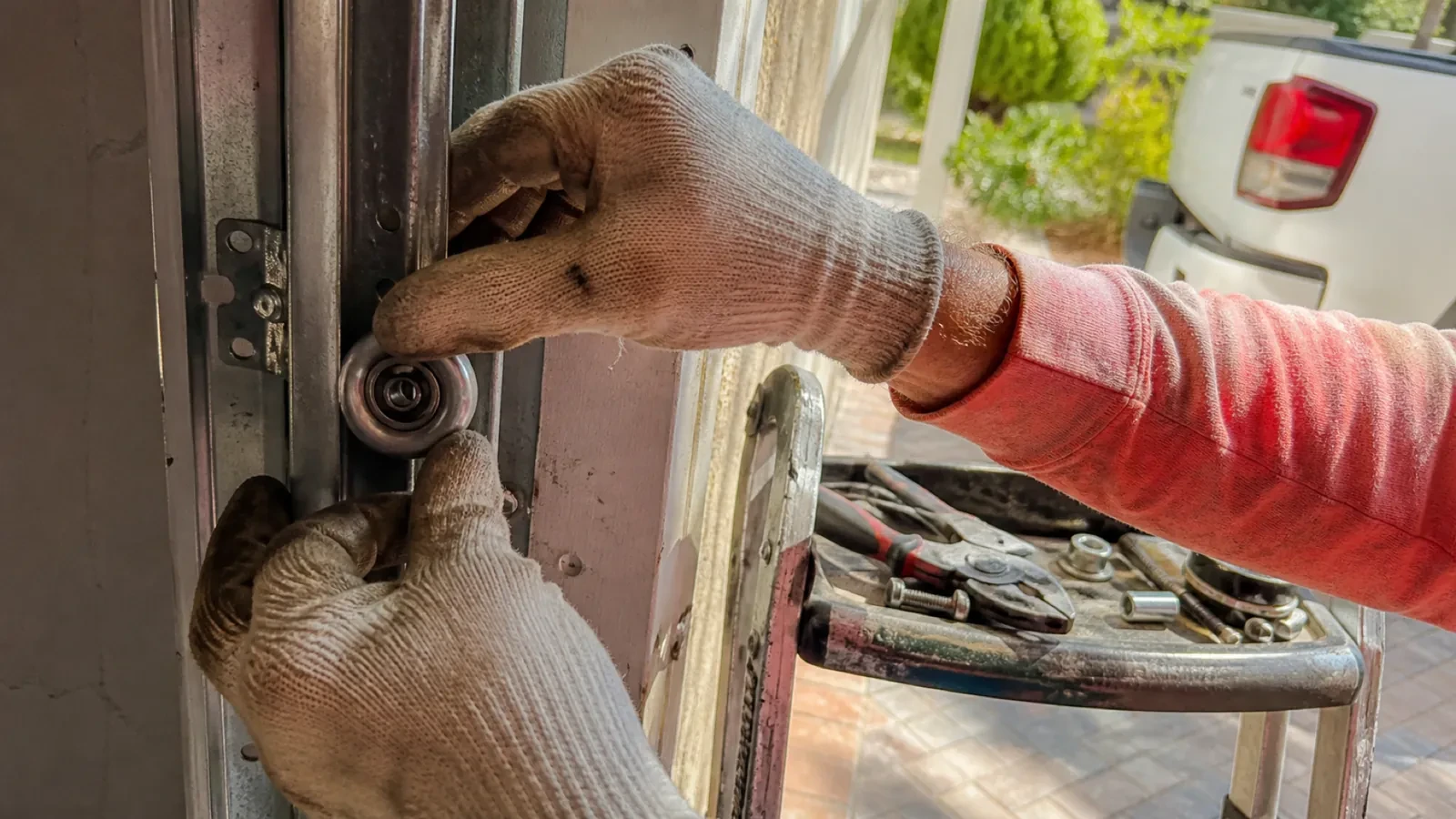
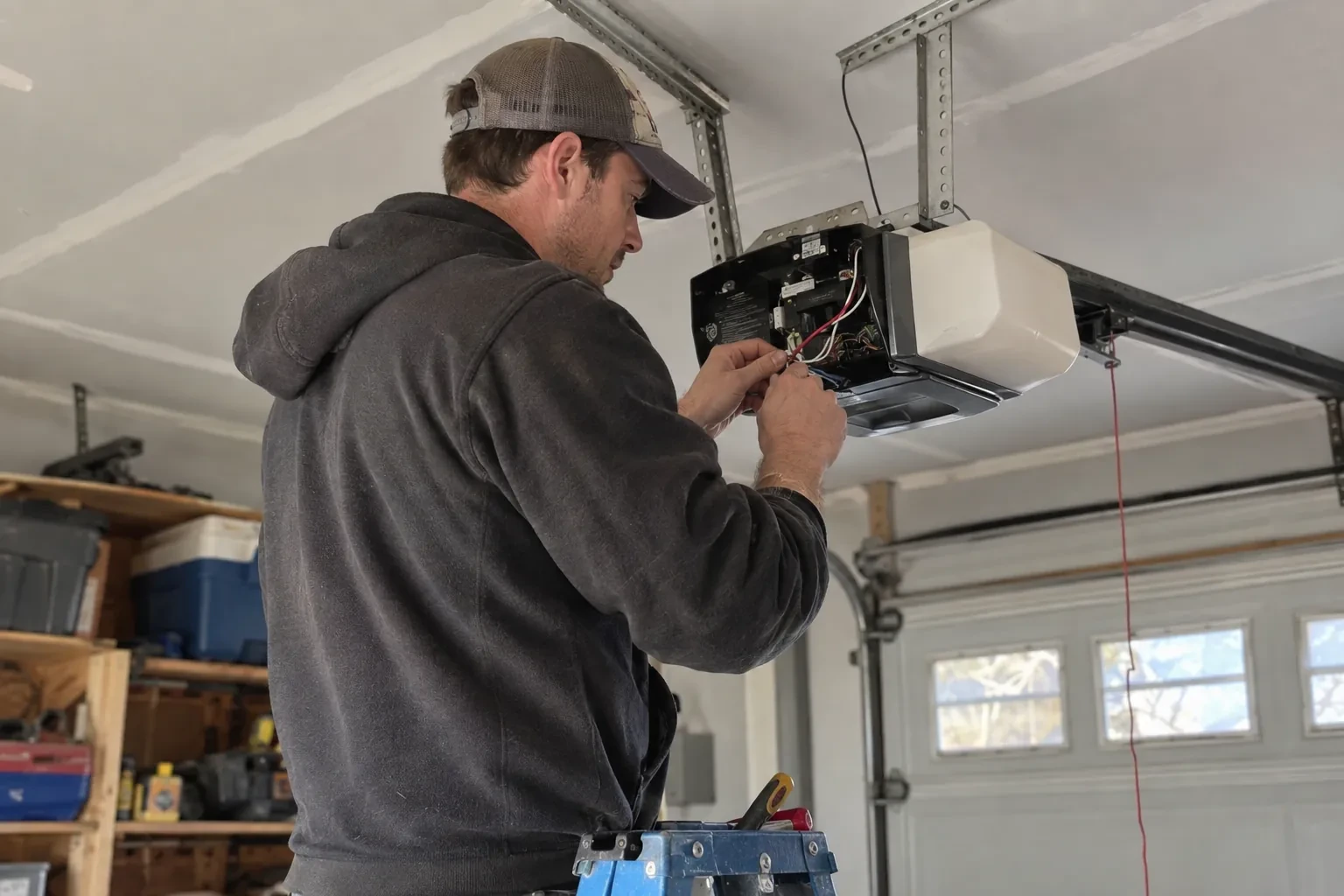
The trolley turns the belt's pull into movement of the door and takes every start and stop. The technician checks its two halves: the inner half the belt is fixed to, and the outer half the door arm hangs from. The release lever should part them cleanly when the cord is pulled and lock them together again when the operator runs or the cord is pulled a second time. Cracks in the housing, a lever gummed with old grease, play on the rail, or a trolley sitting hard against a stop bolt are all noted. Whether trolley and motor are in step is checked too, since a belt that has been off the sprocket often leaves them disagreeing.
Re-tensioning a belt that has stretched
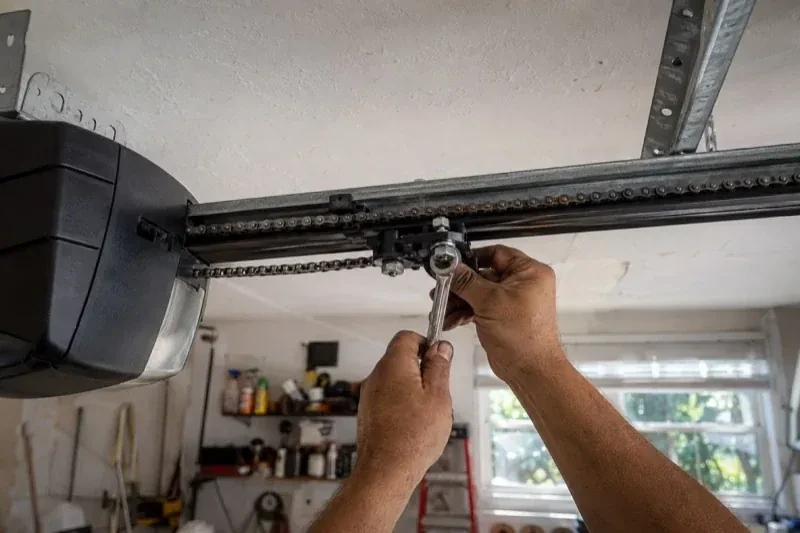
With the operator unplugged and the trolley released from the door, the technician turns the square nut on the inner trolley a little at a time, drawing the belt up until the tension spring reaches the length the maker specifies. Each turn lifts the belt slightly. They press the belt at mid-span to feel for the small give that means it is neither slack nor strained, then reconnect the trolley and run the door by motor, listening at the sprocket for the rattle that says the belt is still loose or has gone too tight. A belt that will not reach its spring length with the adjuster at its limit has stretched too far and is replaced instead.
The two tests you do each month
The repair ends with the reversal tests run in front of you, and they are yours to repeat monthly. With the door fully open, lay a scrap of 2x4 flat on the floor where the door meets it, press the wall control and watch: the door should touch the wood and climb back to the top. Then, with the door closing, pass a broom handle through the beam near the floor; it should reverse the same way. Both take under a minute. If either test ever fails, stop using the operator, work the door by the red cord, and have a trained technician check it; the fault can be the settings, the sensors, the wiring or the opener itself.
Belt-Drive Opener Repair
In the van
Light grease for the drive gear
Photo-eye sensor pair
Drive gear and sprocket kit
Door arm and clevis pins
Rail hanger straps and fasteners
Belt-Drive Opener Repair
What affects the quote
How far the technician drives
A garage on the edge of town and one down a long rural road take different time to reach, and that trip is a line of the quote.
Age and model of the operator
Parts for a current model are on the van. An older or less common operator may need a belt or trolley ordered to fit, which changes timing and sometimes the part.
A second operator on the same property
Where a double garage has two belt drives, or a workshop has its own, both can be looked at in one trip, and the quote shows the two repairs on a single visit.
What to have ready
- Are there plastic shavings or grease on top of the motor housing?
- Is there a new noise, and where along the rail does it come from?
- Has anyone tightened or adjusted the belt recently?
Belt-Drive Opener Repair: questions
QuestionsWhat information helps when I book a belt-drive repair?
The make and model printed on the motor head, roughly how old the operator is, what the belt is doing and what it sounds like, when it started, whether the red cord has been pulled and whether anyone has adjusted anything. A photograph along the rail showing the belt, and one of the label, settle most questions before the visit.
How long does a belt-drive repair take?
A tension adjustment with the safety tests is a short visit. Replacing the belt, trolley or idler pulley, then phasing the motor, relearning limits and running the reversal tests, is usually an hour or two. A gear-and-sprocket kit at the motor head takes longer because the head unit is opened. If the balance test turns up spring work, that is agreed as a separate job with its own time.
Why is the door tested by hand before the belt is touched?
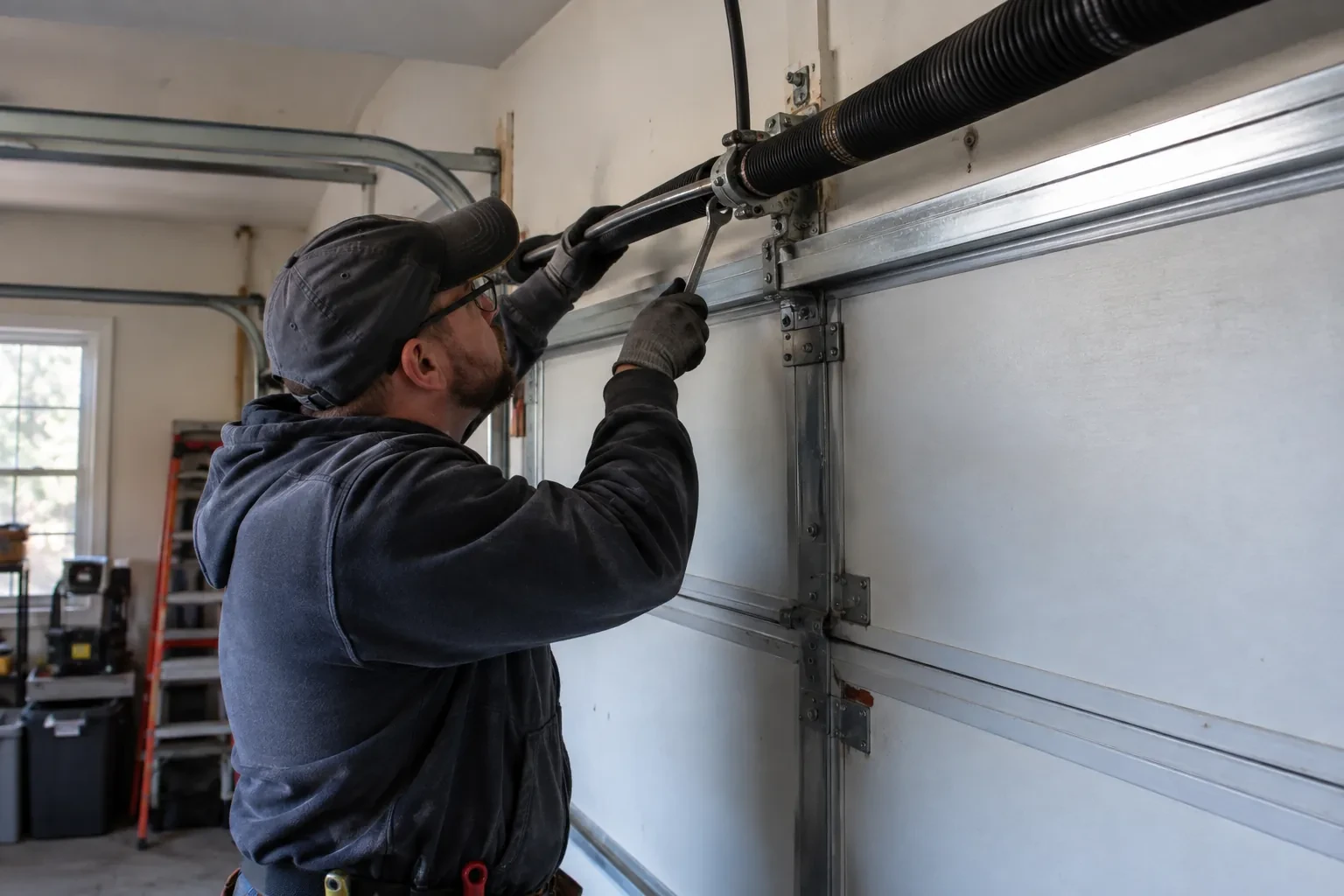
Because the belt guides the door; the springs carry it. A door that lifts with moderate effort and stays put a metre off the floor is balanced, and a belt on that door lasts. A door that drops or drifts is loading the belt, trolley and sprocket far beyond their design, so a new belt would wear the same way. Spring work comes first in that case.
Related services
- Chain-Drive Opener RepairHalfway up, the door lurches.
- Garage Door Opener ReplacementThe bedroom above the garage shakes every morning at six when the chain drive fires up.
- Photo-Eye Sensor Alignment or ReplacementSince shelving went up along the garage wall, the door will not close and both sensor lights are dead.