Garage Doors
How doors work
For property managers and homeowners alike, these notes cover the practical side of door ownership: inspection intervals, what to log, how to brief a technician and how to compare options.
Frequently asked questions
Is the inspection a repair visit?
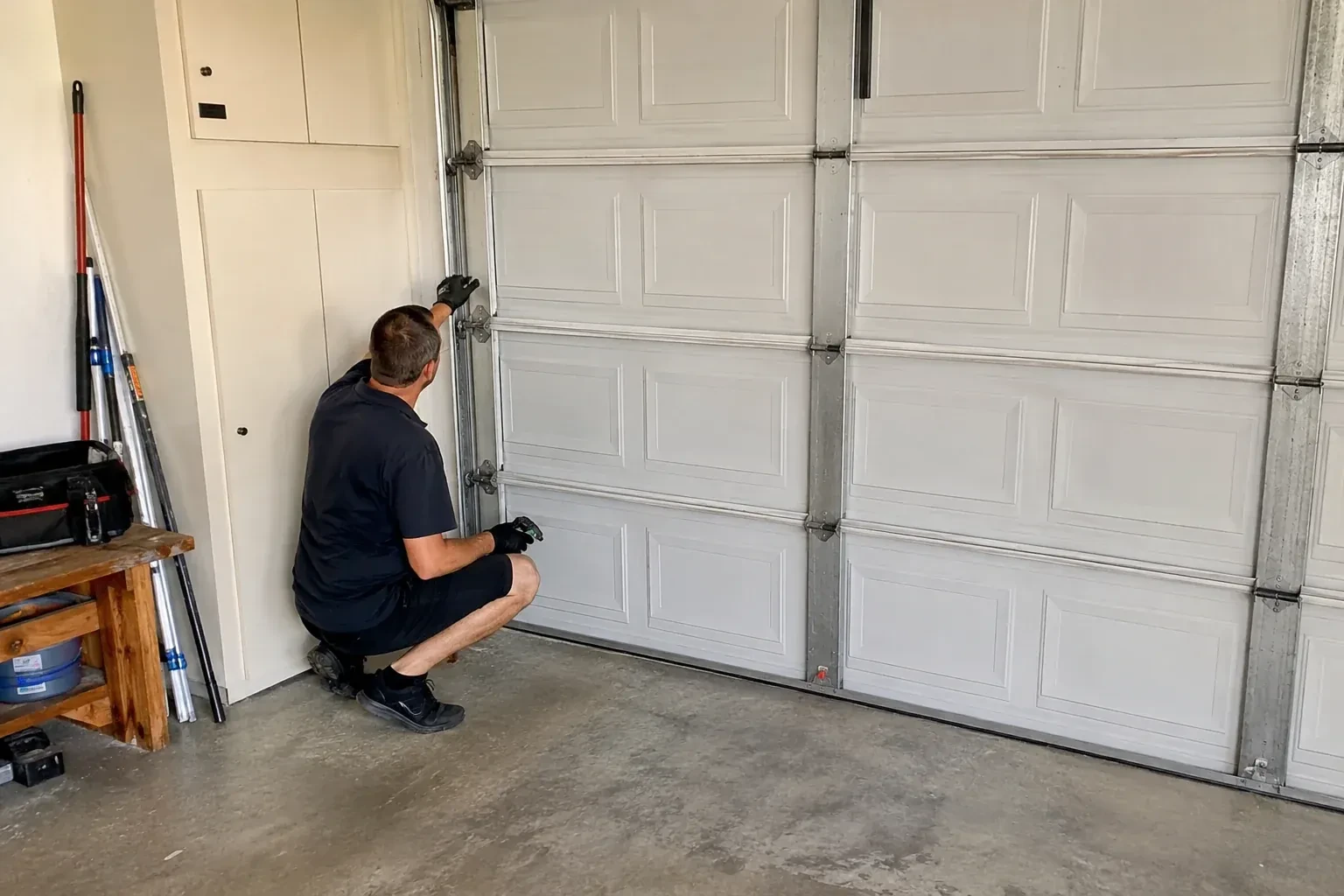
It is a look and a record first. Small maintenance items such as lubrication, cleaning and aligning the photo eyes and tightening fasteners can be done on the spot if you wish. Anything involving spring tension, cables, drums, worn rollers or damaged sections is written up with a clear explanation and quoted as its own job, so you decide with the full picture in front of you.
My door has a lock bar. Should it be used with an opener?
Not while the opener is connected. If the slide lock is engaged and someone presses the remote, the opener pulls against a locked door and can bend the top section or strip its gear. On a door driven by an opener the lock is usually disabled or removed during a tune-up, and the opener's own hold on the door provides the security. If you want a manual lock for holidays, the technician can show you how to use it safely with the opener unplugged.
How is a reset different from a track repair?
In a reset the rail is sound and the work is putting rollers, cables and sections back where that rail expects them, with minor alignment corrections. In a track repair the rail itself is the problem and must be straightened, re-hung or partly replaced first. One visit can include both, and the technician tells you which you need after looking at the door rather than guessing from the description.
Can I keep using the door while I wait for the section?
If the damage is cosmetic and the hinges, rollers and cables are sound, the door can usually stay in service. If a section is folded, a hinge has pulled out or a cable has slackened, the technician braces the door, disconnects the opener and asks you to leave it closed, because the opener pulling on a weakened section can turn a repairable door into a larger job. You will be told clearly which applies.
Can the seal be replaced in the middle of winter?
Yes, and winter is when most people notice they need one. Vinyl is stiffer in the cold, so the technician keeps the new roll warm until it is fed and takes a little longer working it across the channels. A seal frozen to the floor is freed by hand first. The door is then closed onto the new strip and the opener reset exactly as in summer, and the garage is sealed for the rest of the season.
Why is there daylight on one side but not the other?
It can be either. Worn rollers, a track bracket that has shifted or a top section that bows can move the door face toward one jamb and away from the other, and a seal that is damaged, shrunk, the wrong size or set slightly off the door face shows the same way. The technician checks both the door's alignment and the seal itself, corrects what is out of true, then fits the new seal to a door that closes evenly.
What is an automatic garage door lock, and does it replace the manual one?
It is a motorised deadbolt, offered as an accessory by some opener makers, that slides a bar into the track each time the door closes and withdraws it before the door opens, all controlled by the opener. It gives the physical security of a manual lock without the need to remember it. It can sit alongside a manual lock kept for outages, or take its place entirely.
I lubricated everything and the grinding came back. Why?
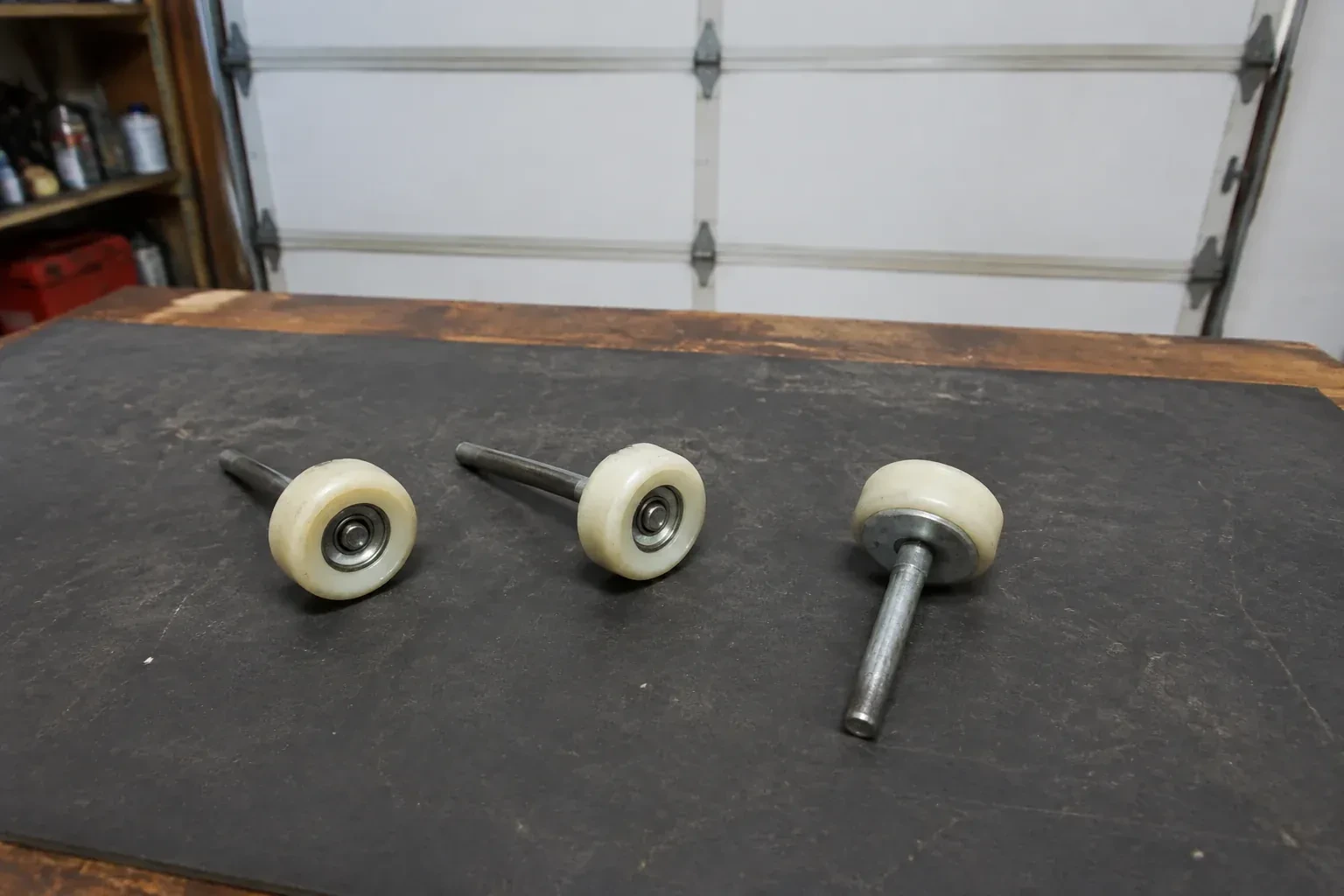
Lubricant restores bearings and hinges that are still sound; it has nothing to offer a wheel worn oval, a nylon tire that has cracked, or bearings whose balls have pitted their race. When a spray settles the noise for a day or two and it returns, the wear is in the roller itself and replacement is the answer. Spray on the track or a plastic wheel can make matters worse by collecting grit, so the technician cleans that off as part of the job.
Why do the lowest hinges rust before the others?
They live where the water is. Slush and road salt drip off the car onto the bottom two joints and pool along the floor, and the salt attacks the zinc coating where the hinge leaf meets the pin and around the screw heads. Higher hinges stay dry and often look new when the low ones are brown. Wiping the low hardware after a thaw and a light silicone film in autumn slow it down.
Can a low-headroom or high-lift layout be fitted to my existing door?
Often, yes, and it is a track job with a spring job attached. Low-headroom dual track lets a door open under a low ceiling or a beam, while high-lift track carries the door further up the wall to clear a car lift or storage. Each changes the horizontal run, the curve, the top fixtures and usually the cable drums and spring turns. The technician measures headroom, sideroom and backroom first and confirms the door suits the change.
How long do lift cables usually last?
Cables tend to live about as long as the springs they work with, often ten years or more on a door used a few times a day, and less on a door that sees heavy use or a wet, salty floor every winter. Rather than a calendar, watch the condition: fraying, rust near the loop or a slack side are the signs the set is due.
If only one spring broke, should both be replaced?
On a two-spring door both springs have completed the same number of cycles, so the intact one is usually close to the end of its life as well. Replacing the pair gives the door two matched springs sharing the load evenly and a fresh cycle count on both sides. The technician looks at the remaining spring's condition and the door's configuration, then explains the reasoning so you can choose the scope with a clear picture.
What happens during the visit?
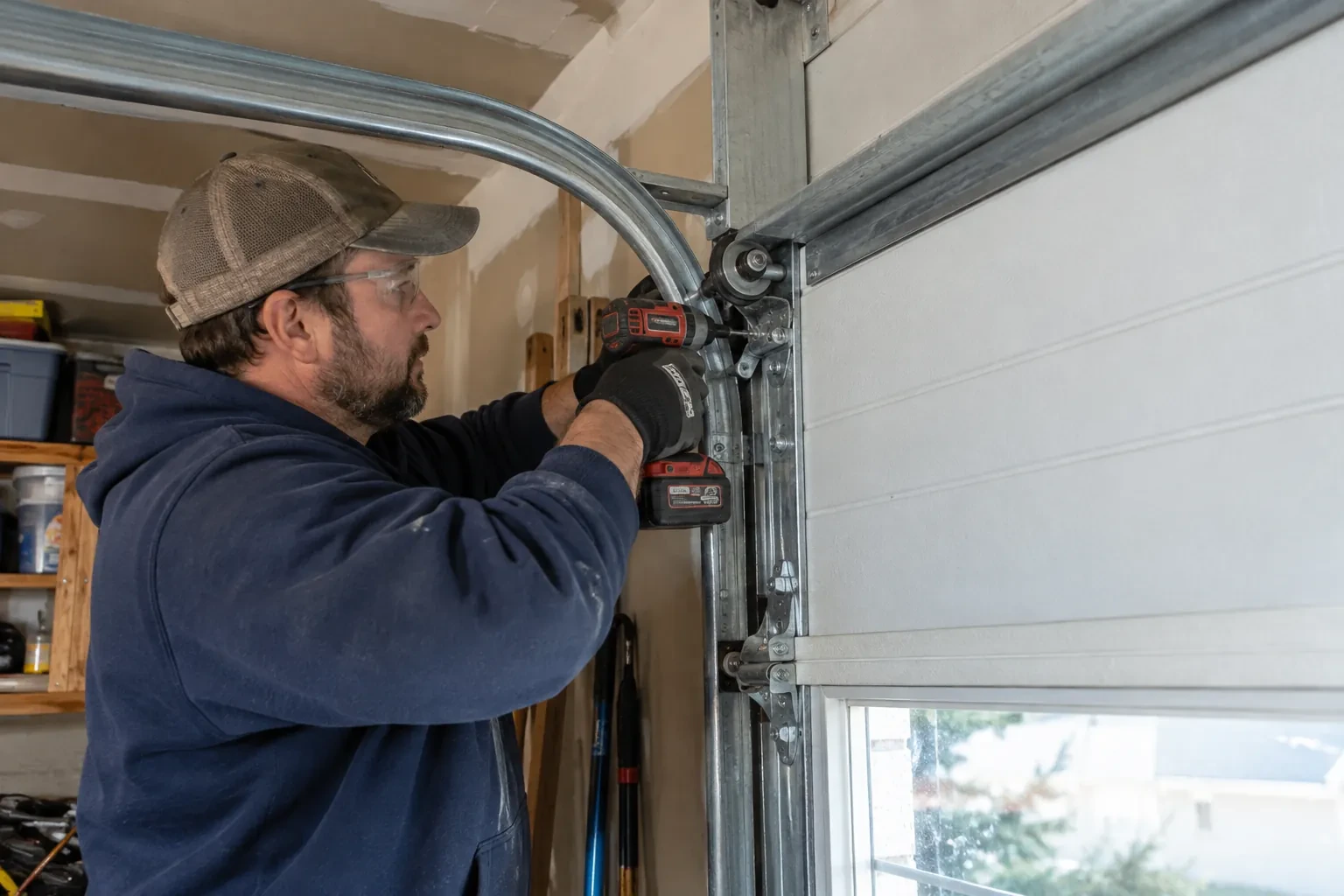
The technician releases the opener, opens the door fully and clamps it so the springs go slack, then inspects springs, pulleys, cables, hangers and containment cables and weighs the door. The old springs come off, a matched pair goes on with containment cables through them, the lift cables are routed over the pulleys and the two sides are set to matching hook positions. The door is balanced by hand, the opener reconnected and its reversing tested with you watching.
I am getting a new opener. Should the door be balanced first?
Yes, and installers will usually insist on it. A new opener is set up against the door it meets on the day, so its travel and force settings are only right if the door is already balanced. Fitting a new motor to a heavy door shortens the motor's life and puts the safety reversal out of range. Balancing first means the new opener starts life doing the light work it was designed for.
Can the force just be turned up so the door closes in winter?
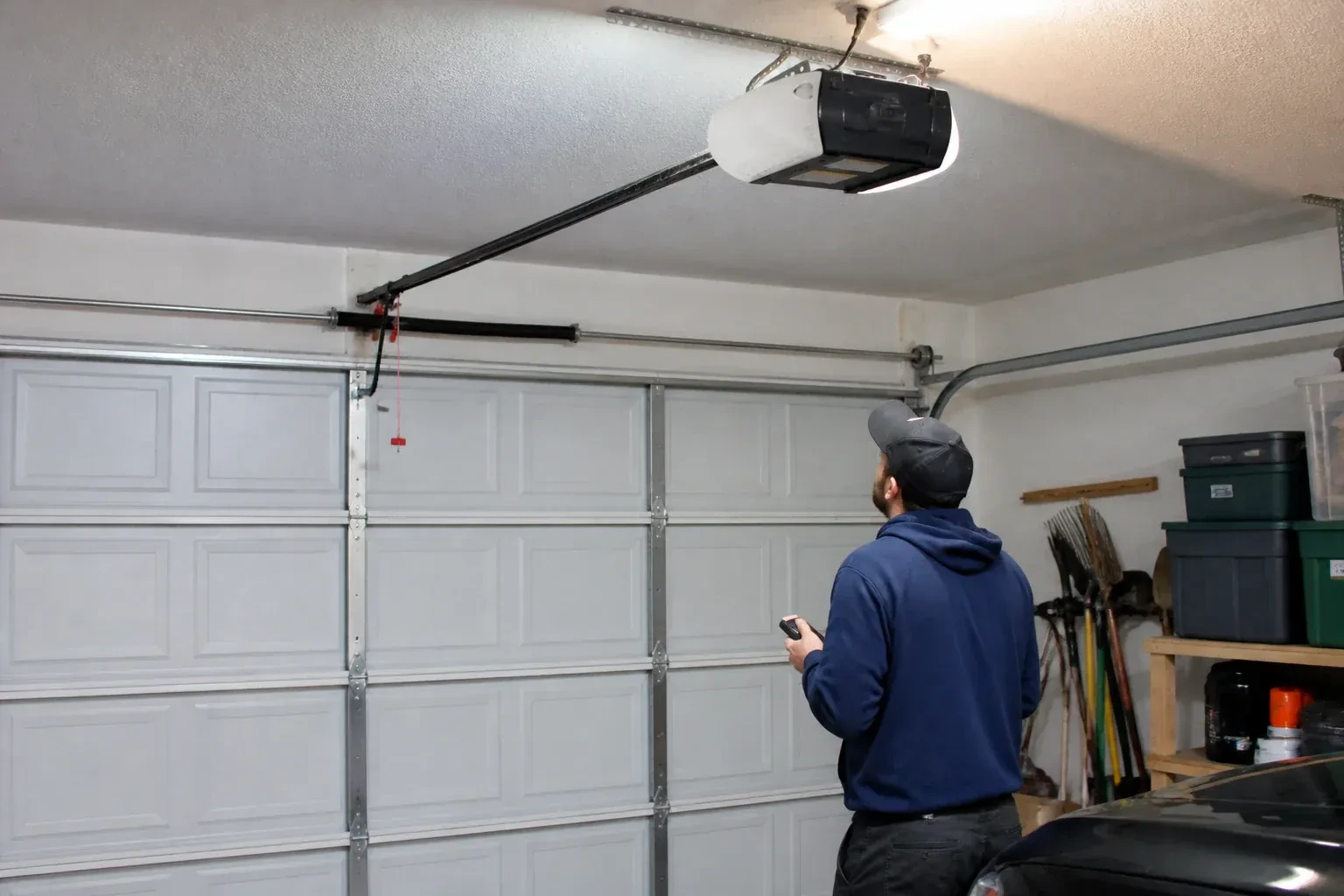
Raising force is not the fix; it only hides one. The force setting is the opener's sense of touch, and turning it up so a door pushes through a frozen seal or stiff rollers also means it pushes harder against anything else in its path. The right approach is to free the seal, lubricate the moving parts for cold weather, confirm the balance, and then set force as low as reliably works, proving it with the 2x4 test.
Why is there white or grey dust on top of my opener?
Those are shavings from the plastic drive gear inside the head. The gear meshes with a steel worm on the motor shaft, and when it wears the teeth flake off and collect under the cover. Once you see shavings the gear is close to stripping, after which the motor runs and the door stays still. Replacing the gear and sprocket assembly before that happens turns a stranded morning into a planned repair.
What information helps when I book a belt-drive repair?
The make and model printed on the motor head, roughly how old the operator is, what the belt is doing and what it sounds like, when it started, whether the red cord has been pulled and whether anyone has adjusted anything. A photograph along the rail showing the belt, and one of the label, settle most questions before the visit.
Is battery backup worth having?
For many households it is the feature they value most, especially where ice storms and winter outages are part of life. A backup battery inside or beside the head unit runs the door for a number of cycles when the power is off, so you can get the car out or put it away without heaving the door up by hand in the dark. The head unit chirps or lights an indicator when the battery needs renewing, which is every few years.
How should I clean the lenses?
Gently, with a soft dry or lightly damp cloth, the way you would clean eyeglasses. Never scrape a lens or use a solvent, since a scratched or clouded lens scatters the beam. Wipe both sensors, then check that the receiving light comes on steadily. If a lens frosts on cold mornings, give it a few minutes to clear or dry it with a cloth. A quarterly wipe keeps dust, cobwebs and salt film from building up.
How many remotes can one opener store?
It depends on the unit. Older head units and add-on receivers hold a handful of devices, often fewer than ten, while newer openers store dozens of remotes, keypad codes and vehicle buttons. When a memory is full, the oldest entry may be overwritten or the new device refused. Taking stock of which controls are still in use, and clearing the ones that are not, keeps space for the devices that matter.
What batteries does the sensor take, and how long do they last in a cold garage?
Most sensors take a coin cell or a pair of small cylindrical cells, specified by the maker. In a heated garage a battery commonly lasts a year or two; in an unheated one, expect less, and choose a lithium cell over alkaline because it holds its voltage in the cold. The app warns you as the battery runs down, and replacing it takes a moment and a fresh cell.
How high should the release handle hang?
No more than about 1.8 metres above the floor, so an adult standing on the slab can reach it, and high enough to clear the roof of the car parked beneath it. It should also be plainly visible and red. If a new door or a rail change left the cord short, or a previous owner tied it up around the rail, the technician cuts a fresh rope to the right length and moves any obstruction out of the way.
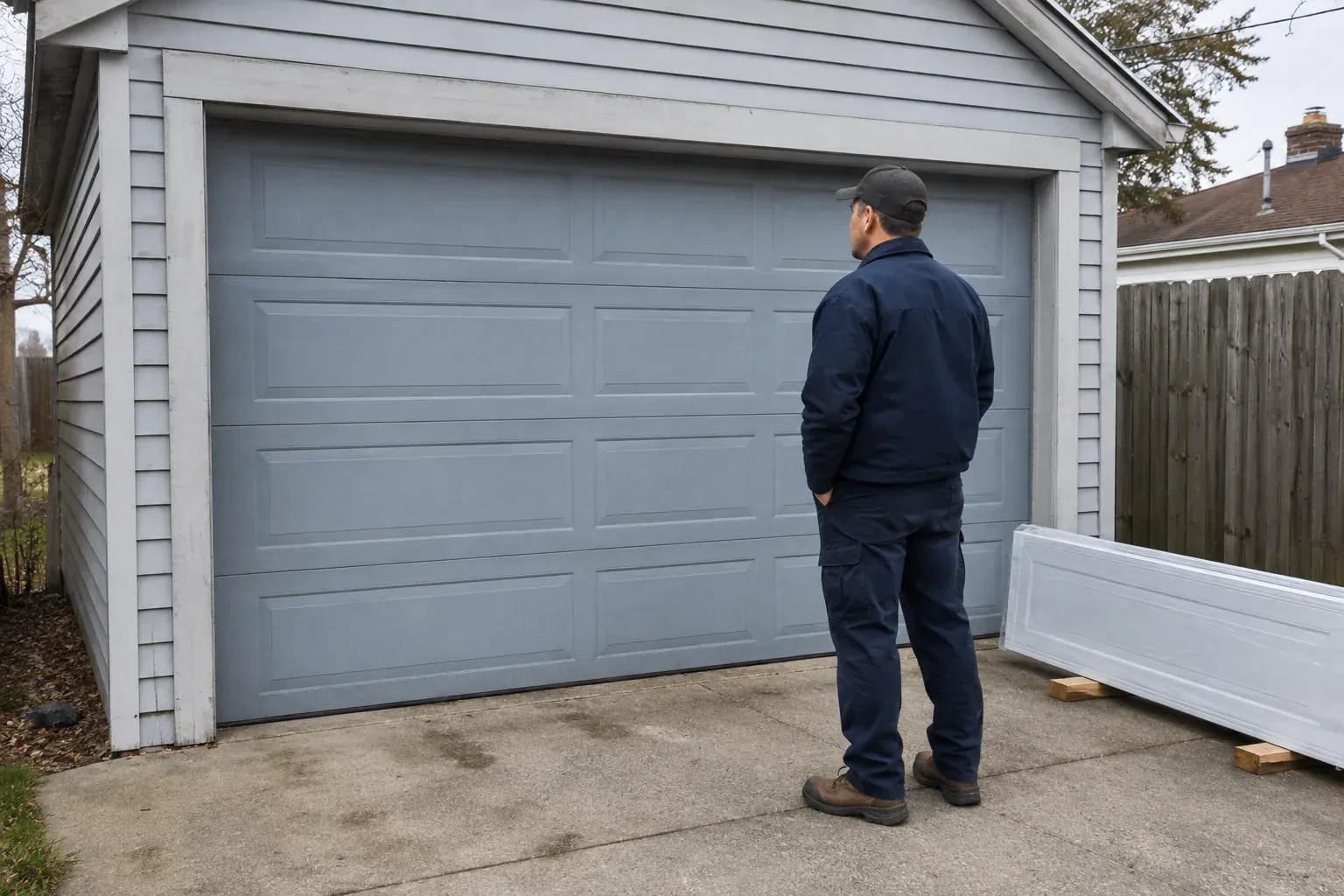
What panel materials are commonly available?
Sectional doors are commonly made with steel, aluminum, wood or composite construction, with model-specific finishes and insulation options. Each differs in weight, maintenance needs and appearance. The useful comparison considers exposure, desired style, garage use and available product data, then carries the chosen weight into the spring and hardware selection.
What safety checks are done after installation?
The installer first checks manual balance, cable tracking, roller travel, track supports, fasteners and the fully open and closed positions. If an operator is connected, complete powered cycles follow. Photo-eye response, contact reversal according to the operator instructions, wall controls and emergency release are demonstrated. The customer also receives guidance on safe gripping points and keeping clear of section joints.
What happens to the old garage door?
The operator is disconnected, spring energy is released with controlled tools, and sections are removed in sequence. Tracks, cables, drums, springs, and brackets follow once their loads are managed. Disposal or recycling is handled according to the agreed scope. Clearing the old assembly also exposes jamb areas that deserve a final condition check before new anchors are placed.
How are two side-by-side doors made to look consistent?
The layout uses shared reference lines for window height, panel divisions, handles, strap accents and exterior trim. Each opening is still measured separately because floors and jambs can differ. Samples and elevation drawings help resolve whether both doors use identical patterns or coordinated versions scaled to their widths. Installation then checks closed position and seal contact independently while preserving the planned visual alignment.
Can the panel layout mix clear and opaque sections?
Many door families allow a planned mix of compatible glass, polymer or solid panels. That can screen storage and work areas at eye level while bringing more daylight through upper rows. The layout is confirmed through the product options for the ordered size and construction, since panel weight, insulation and available finishes must remain compatible across the complete door.
Who handles permits or inspections for the garage door work?
Responsibility depends on the project, municipality and the wider building scope, so it should be named in the construction documents or proposal. The builder can confirm what approvals cover the opening, framing, electrical work and installed door. The door installer supplies relevant product and installation information for their scope. Keeping these roles explicit prevents an inspection assigned to one party from being assumed by another.
What can staff prepare before the repair visit?
Clear vehicles, pallets and stored materials from both sides of the opening and arrange another traffic route. Have the door number, model information, control location and service record available if possible. Note where in the cycle the symptom occurs and whether there was an impact or recent change. Access to the electrical isolation point may also be needed.
How are salt and winter moisture handled?
The lower guides, sill, fasteners, bottom seal and sensor faces are checked for ice, grit and corrosion. Buildup is cleared with methods suited to the material, drainage issues are noted and damaged sealing parts can be renewed within scope. The door is tested after cleaning because cold-weather resistance can exist alongside an alignment or balance problem.
Can a high-lift conversion create room for a vehicle lift?
That is a common reason to consider one. The assessment uses the lift's raised height, the vehicle profile and working clearance to define the needed zone. The proposed door path is then measured against that zone, including the lowest section in the open position. Final feasibility depends on available wall height, ceiling conditions, structure and equipment placement.