Repairs · Blandford-Blenheim
Garage Door Safety Inspection in Blandford-Blenheim
During the power outage you pulled the red cord and tried to lift the door by hand.
In plain words
For a home you have just bought, or one you are about to sell, the inspection gives the door a starting point. The report records the door and opener models, the spring type, the condition of every wearing part and the results of the balance and safety tests, all against a date. Anything that needs attention is listed with a suggested order. From then on you have something to compare against: a noise that appears next year means something changed since the record, not a mystery, and a buyer or an insurer asking about the door gets a factual answer instead of a shrug.
How the visit goesYou moved in three months ago. The door works, but nobody can say how old the springs are, when anyone last looked at it, or whether the little sensors by the floor have ever been tested.
Garage Door Safety Inspection
How the visit goes
Putting a name to the door and the opener
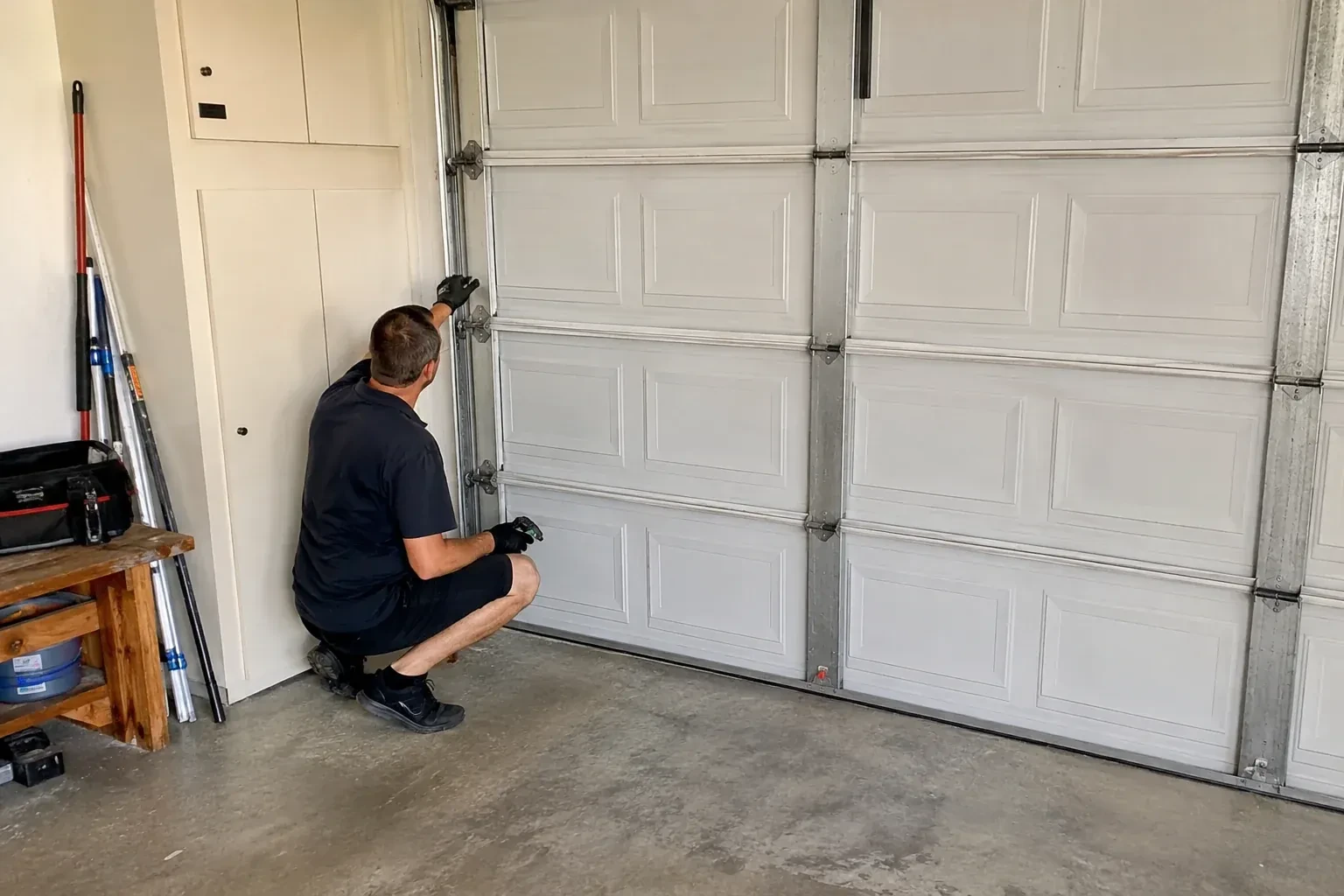
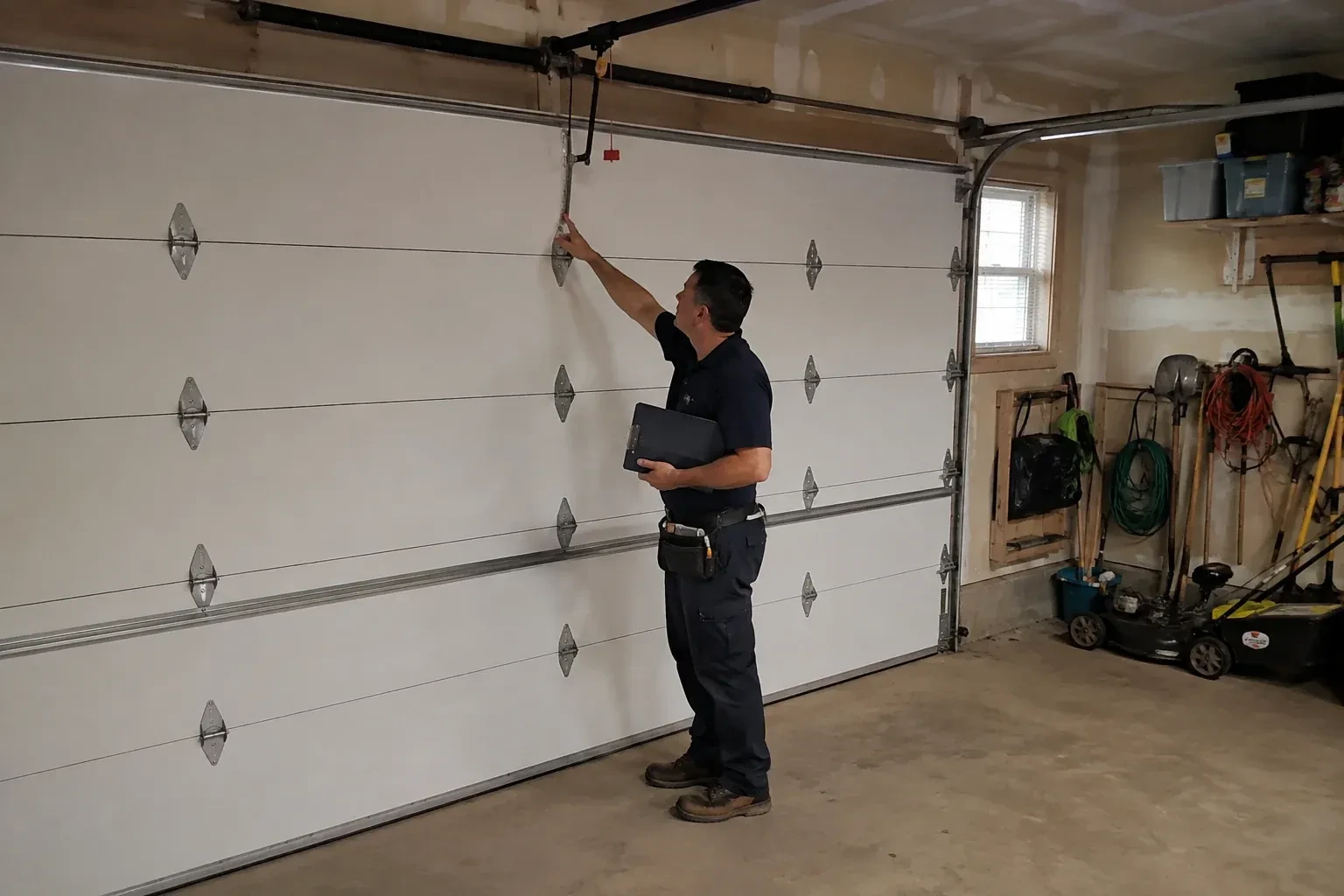
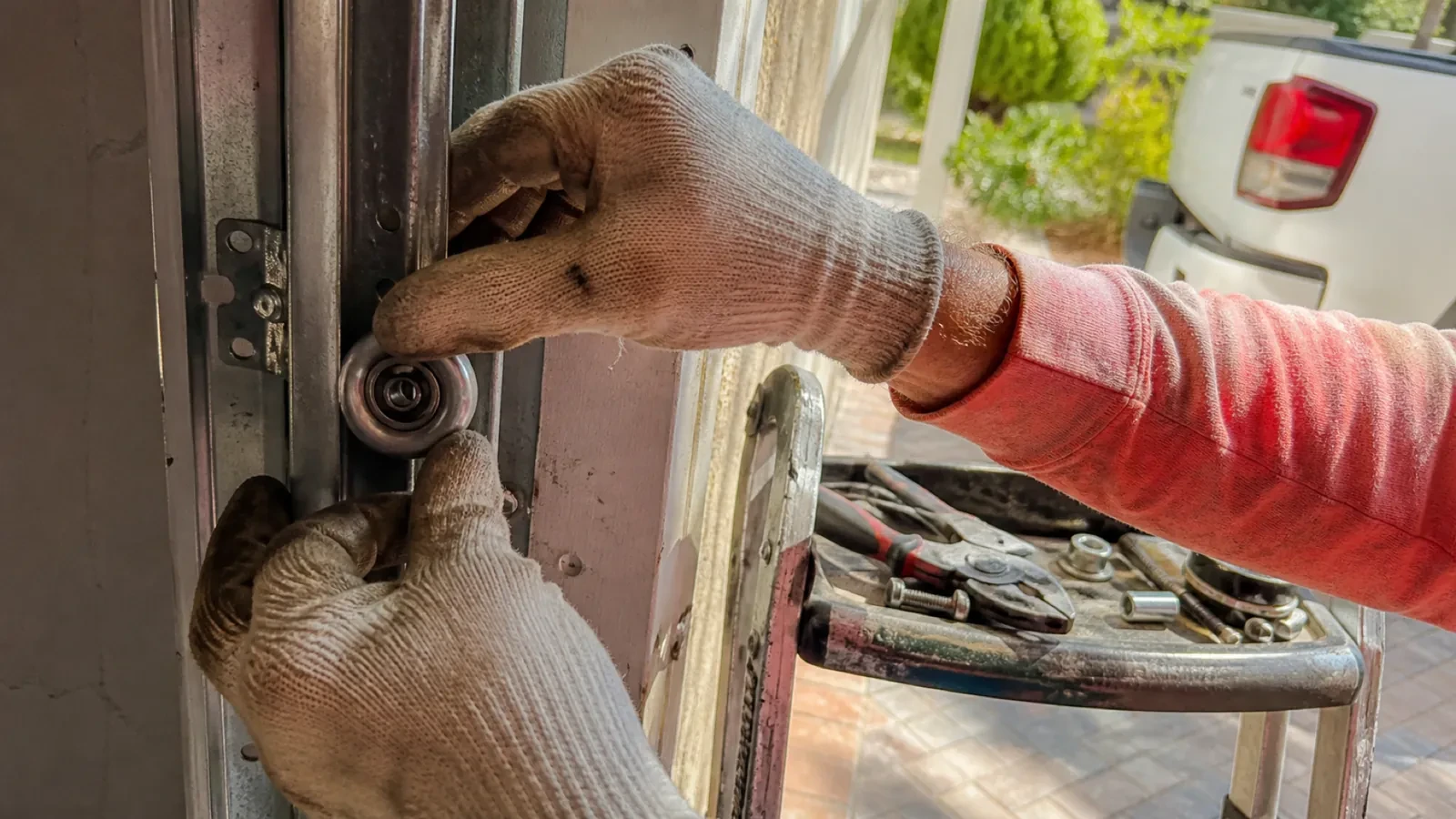
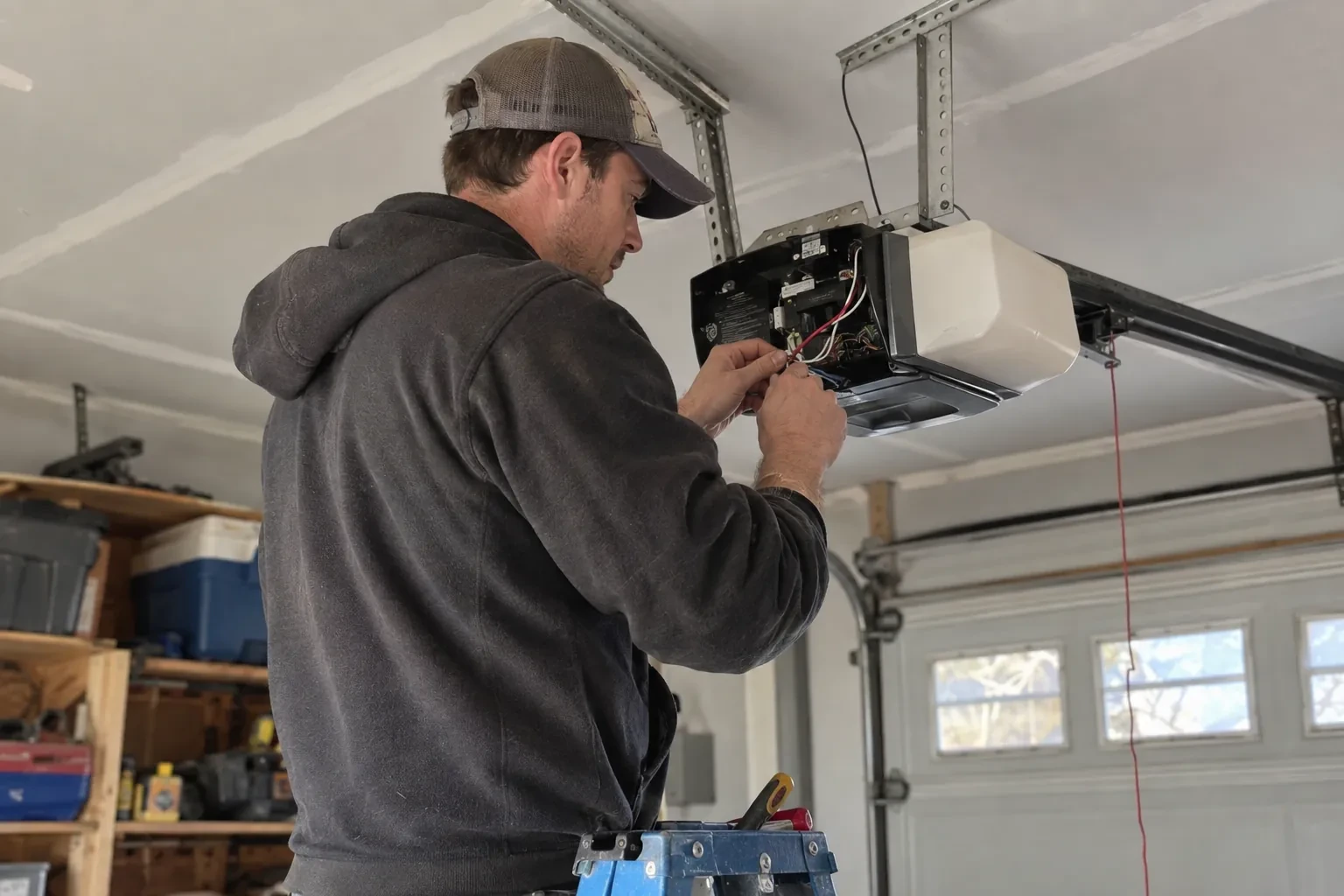
The first thing the technician does is read labels. The door's model tag is usually on the inside of an end stile or the bottom section, and the opener's is on the motor head; between them they tell the technician the door's weight class, the lift hardware it was built with and the exact test procedure the opener maker publishes. That matters because reversal settings, photo-eye mounting heights and force limits differ between models and generations. Writing the model numbers down at the start also means the report is tied to a specific door, so the next person to look at it, years from now, starts from the same page.
Checking the photo eyes
The photo eyes are the pair of small sensors low on each track that watch the opening with an invisible beam. The technician confirms they are mounted at the height the opener maker specifies, aligned so the indicator lights hold steady, clean of grime and frost, and wired securely. Then, with the door closing, the beam is broken with an object; the door should reverse before it reaches anything. A sensor that has been knocked out of line, wired loosely or blinded by low sun explains a great many doors that refuse to close on some afternoons, and the fix is often alignment and a wipe of the lens, done on the spot.
Keeping the opening clear and the controls sensible
A few placement decisions carry on after the visit. Bins, bikes and the snow shovel live away from the opening so the door never comes down on them and the cables never go slack. The wall control stays mounted high enough that a small child cannot reach it and where whoever presses it can see the door. Remotes are kept out of toys and glove compartments that children play in. If the household includes anyone unsteady on their feet, the manual release handle is confirmed to be reachable without a stepladder. None of this is hardware; it is simply the layout that lets the safety devices do their job.
Garage Door Safety Inspection
In the van
Inspection checklist and report form
Remote and keypad batteries
Work light and inspection mirror
Spring and cable gauges
Camera for findings
Garage Door Safety Inspection
What affects the quote
A retest after repairs
When the report lists repairs, a short return visit to rerun the balance, reversal and photo-eye tests once the work is done is quoted as its own item.
High-lift, oversized or custom doors
Doors taller or wider than a standard residential opening, or with high-lift tracks and drums, have more to measure and take longer to observe through a cycle.
Opener type and age
A current opener with photo eyes, a keypad and several remotes has more devices to test than an older unit with contact reversal alone, and the test procedures differ by model.
What to have ready
- When was the door last serviced, and do you have the paperwork?
- What prompted the call, and when did you first notice it?
- Is there a spring on a shaft above the opening, or springs stretched along the tracks?
Garage Door Safety Inspection: questions
QuestionsIs the inspection a repair visit?
It is a look and a record first. Small maintenance items such as lubrication, cleaning and aligning the photo eyes and tightening fasteners can be done on the spot if you wish. Anything involving spring tension, cables, drums, worn rollers or damaged sections is written up with a clear explanation and quoted as its own job, so you decide with the full picture in front of you.
What exactly gets looked at during the inspection?
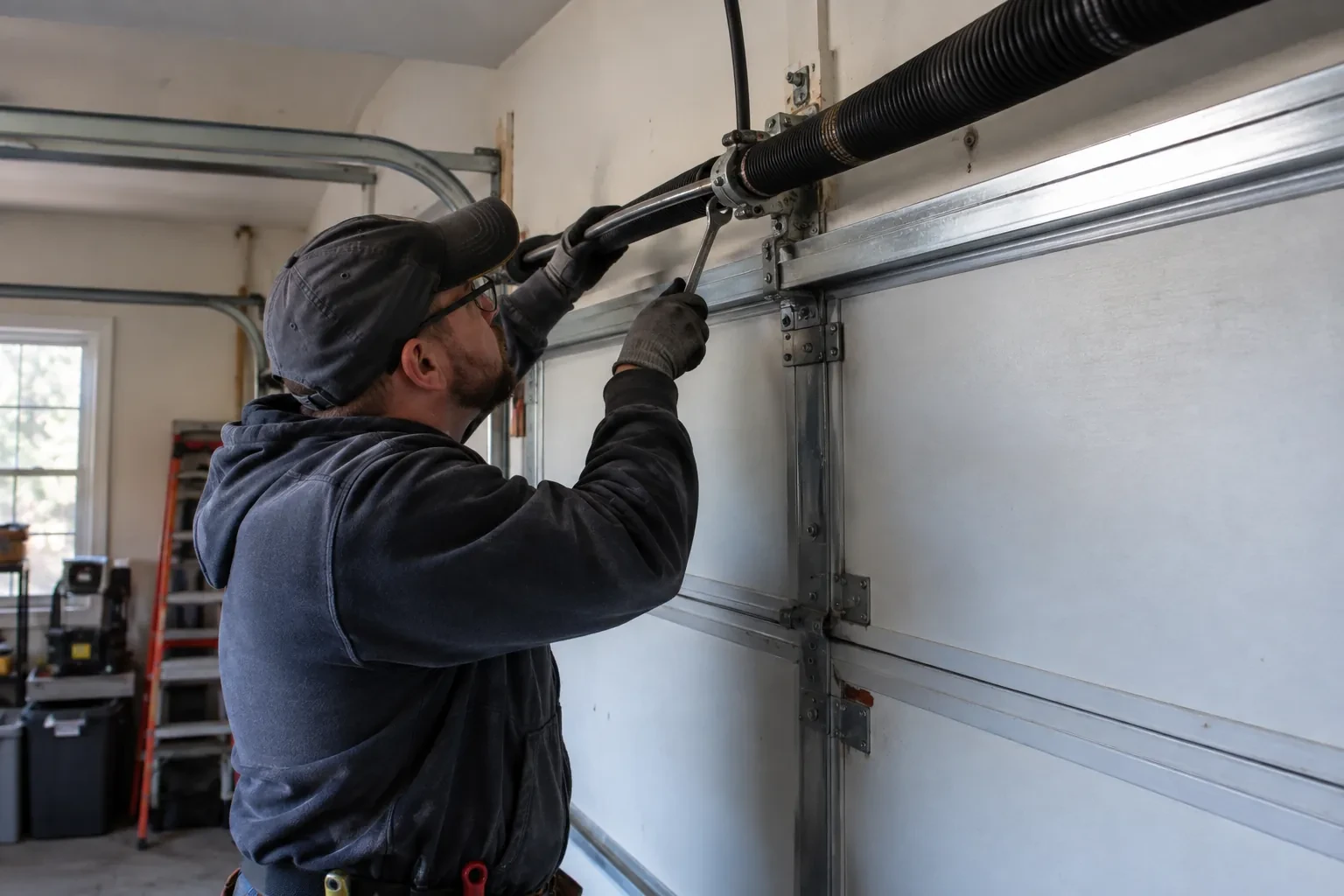
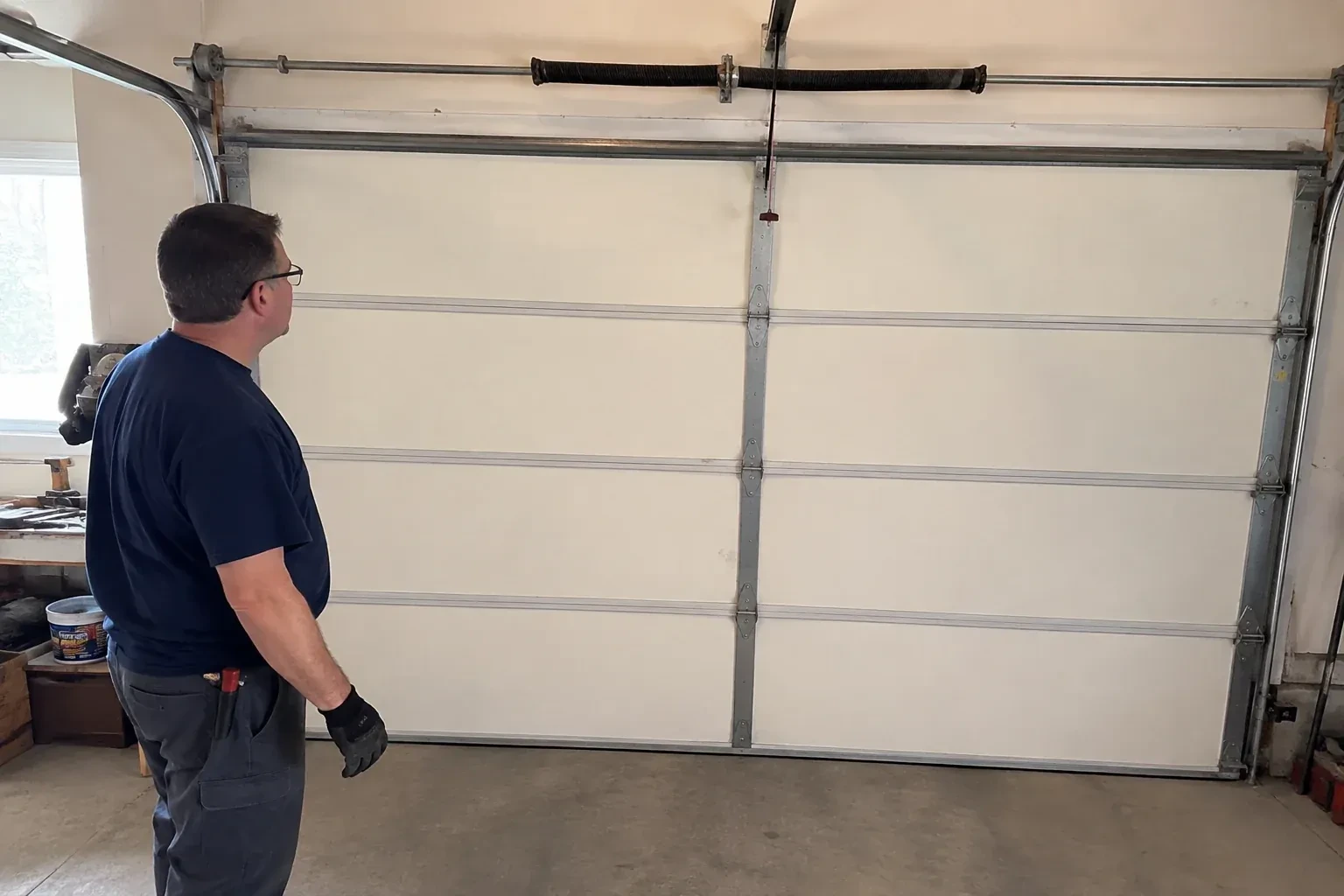
The whole system, not just the opener. Sections, hinges, rollers, tracks and their fasteners; springs, cables, drums and bottom brackets; the bottom seal and perimeter weatherstrip; the opener head, rail, arm and mounting; the photo eyes, contact reversal, wall control, remotes, keypad and manual release; and the warning labels. Each is examined, and the door is tested both by hand and under power.
Will you tell me if the door should not be used?
Yes, plainly and at the door. A slack or frayed cable, a gap in a spring coil, a door hanging crooked, a bracket pulling out of the framing or an opener that fails the reversal test are the kinds of findings that put an item in the stop-use group. When that happens you see the reason yourself, the door is left resting in a safe spot with the opener unhooked, and the fix is written up and quoted so it can be booked.
Related services
- Off-Track Garage Door ResetThe door came down fine but with a scraping noise, and now the vertical track on one side is bowed away from the wall.
- Garage Door Panel ReplacementYou misjudged the last metre of the driveway and felt the bumper meet the door.
- Garage Door Bottom Seal ReplacementThe strip under the door has gone as hard as a hose left out for ten summers.