Openers · Blandford-Blenheim
Emergency Release Repair in Blandford-Blenheim
Since the new door went in, the red handle has hung just below the ceiling, a stepladder's height above anyone in the household.
In plain words
The visit runs in a fixed order. On the phone you describe what the release did, where the door was, and what kind of opener hangs from the ceiling. On site the door is closed or safely supported before anything else. The release assembly is inspected from handle to trolley, the door is disconnected and lifted by hand to check its balance, and the failed part is replaced with one that fits the model. The handle is set to the right height, the trolley is reconnected with the door closed, and the opener runs full cycles and both reversal tests. It ends with a demonstration on your own door.
How the visit goesIt is the coldest morning of the year. A week of slush and road salt has crusted over the outside release lock, the key will not seat, and the opener inside is silent after the overnight outage. The car sits behind a door that will not move.
Emergency Release Repair
How the visit goes
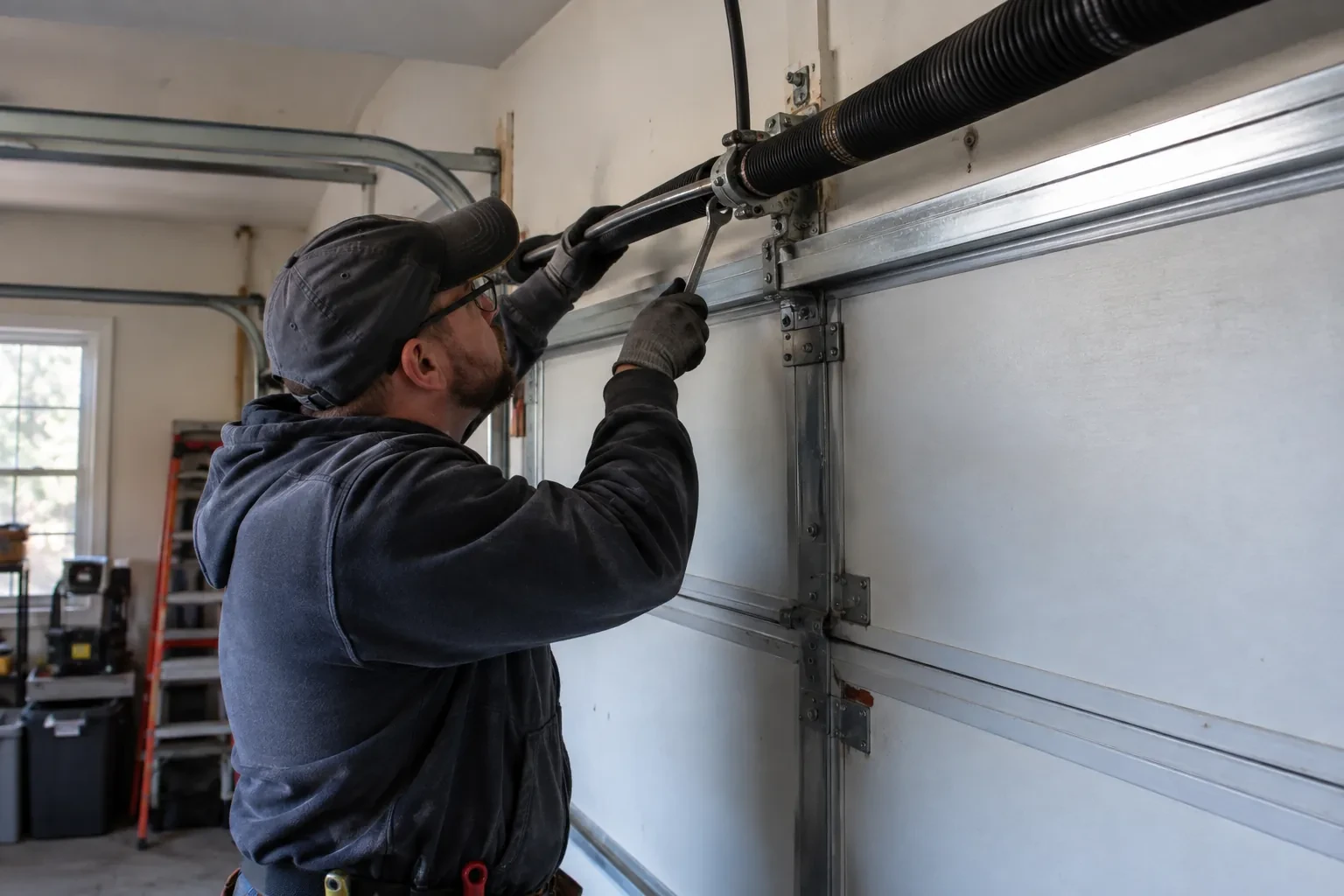
Reading the release as a chain of parts
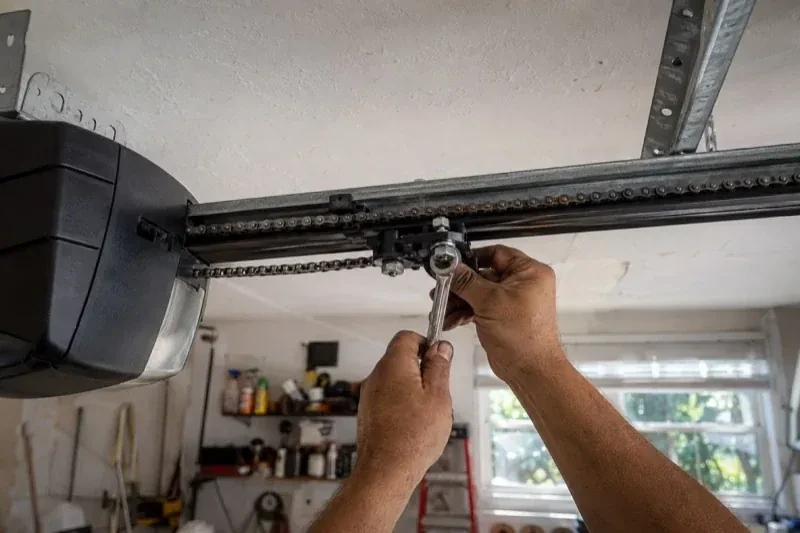
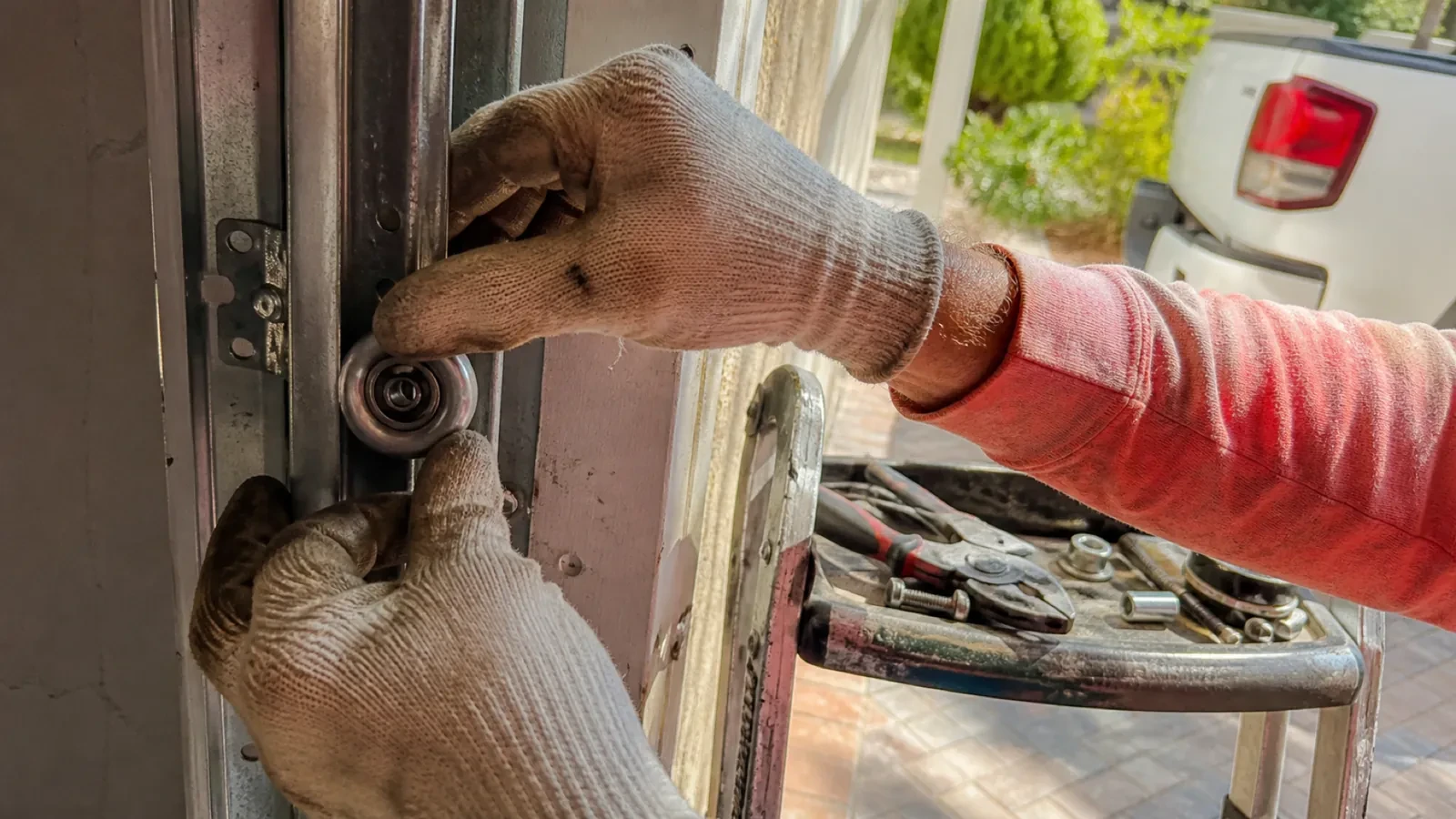
With the door settled, the release is inspected link by link rather than as a single handle. The cord: frayed, knotted, sun-rotted or cut short. The handle: present, red, and the right shape to grip. The lever on the trolley: does it swing fully to the release position and snap back, or is it bent, sticky or missing its spring. The trolley and carriage: are the latch surfaces worn, is the body cracked, is the arm to the door straight. The stops at either end of the rail: has the trolley been driven into one. Each link is checked so the repair replaces what failed rather than the part nearest to hand.
A new cord and handle at the right height
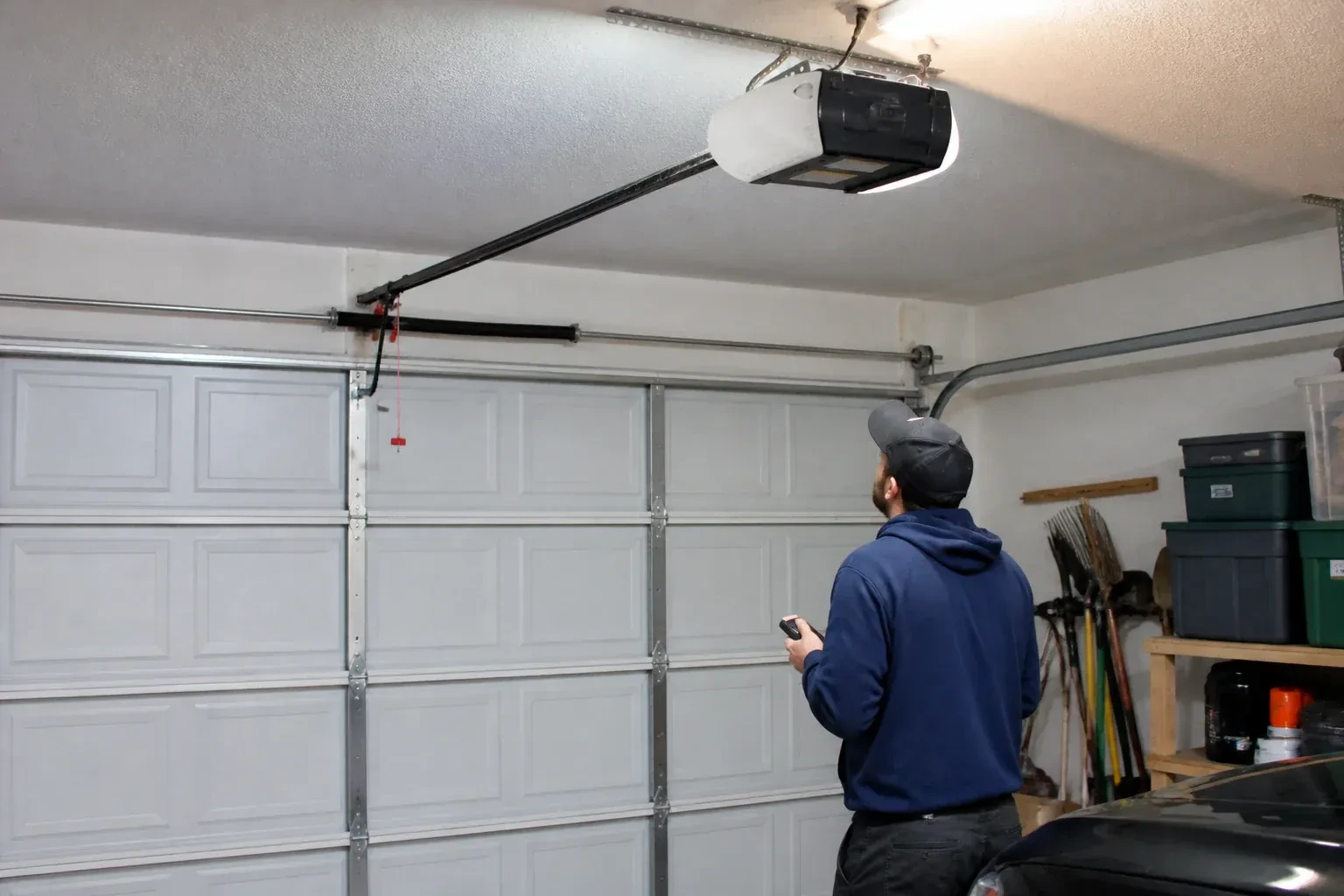
A cord that has frayed, rotted in the sun or snapped is replaced with a rope and red handle kit made for openers. The rope is tied to the release lever with a knot that will not slip under a hard pull, then cut so the handle hangs no higher than about 1.8 metres above the floor and clears the vehicle roof. The handle sits where it can be seen from the door into the house, and any storage that crowded it is pointed out to you. A red handle that is easy to tell apart from everything else on the ceiling is what the standard asks for, and it is what the technician leaves behind.
Through the winter
A release serviced in autumn is set up for the season the household is most likely to need it. The cord is rope that stays supple in the cold, the outside cylinder has been cleaned and lubricated, and the door has been proven to lift by hand with the bottom seal freed rather than frozen. Keep snow and ice cleared from the threshold so a manual lift is not working against a seal stuck to the slab, and keep the slide bolt or manual lock handy for nights when the door is in manual mode. A door that moves by hand is a door that gets you out.
Emergency Release Repair
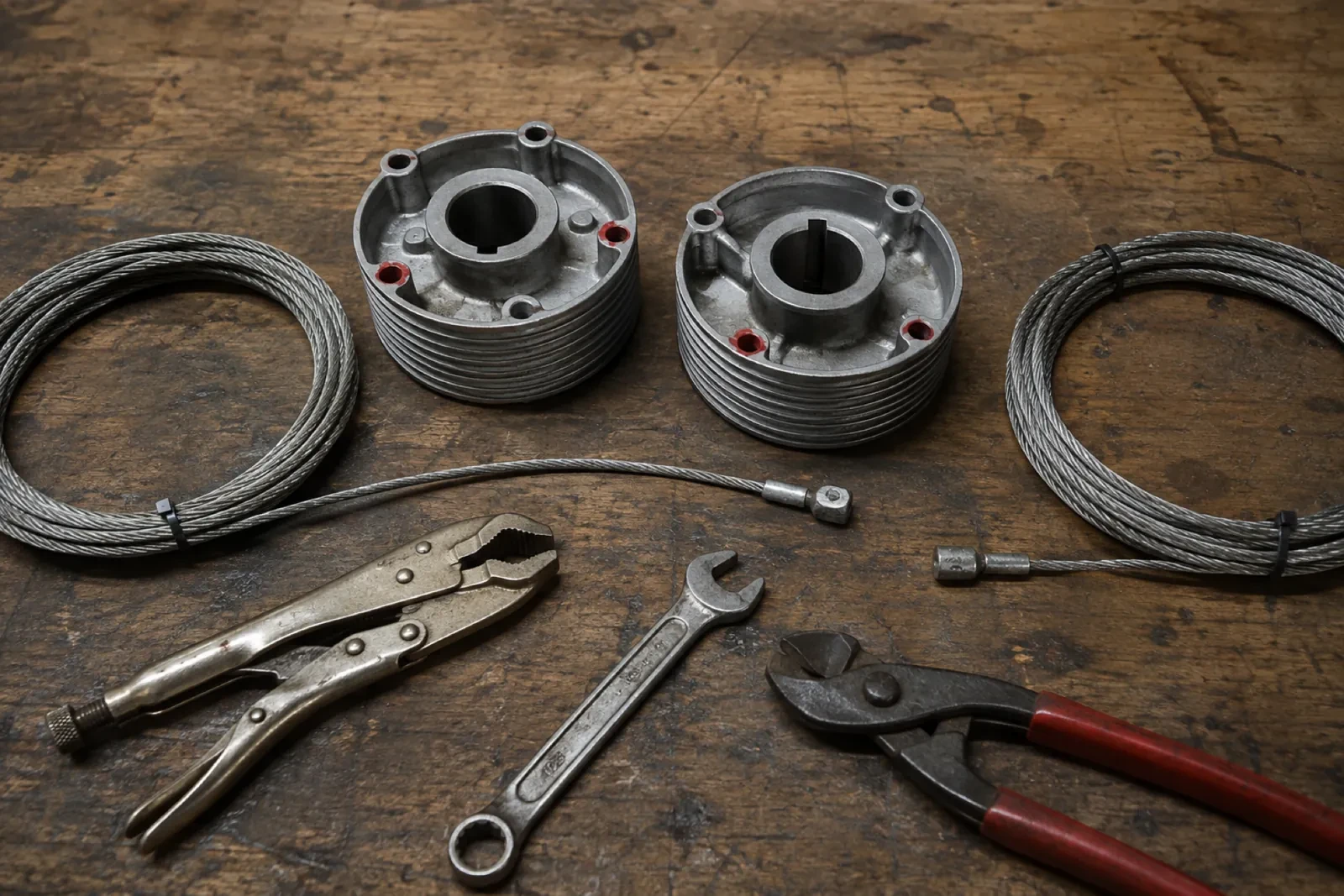
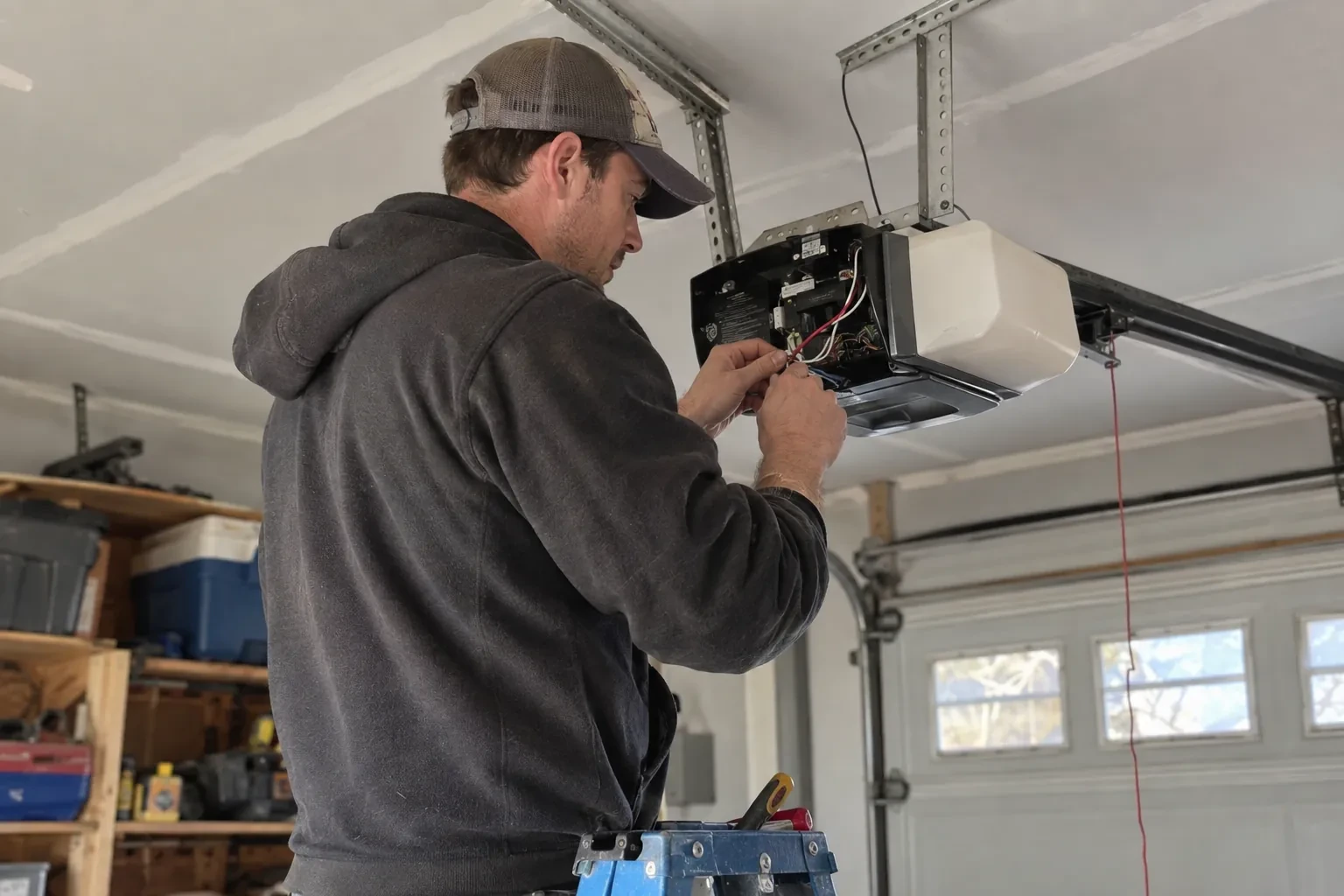
In the van
Rope and red handle kit
Outside key release kit (lock, cable, keys)
Trolley and carriage assembly
Track clamps to hold the door
Release lever and spring
Emergency Release Repair
What affects the quote
Cord, lever or trolley
A rope and handle is the smallest item; a lever and spring sits in the middle; a complete trolley or carriage assembly is the larger part, and the diagnosis says which one you need.
Door material for the outside release
Cutting a cylinder hole through a thin steel section is routine; an insulated door, a wood door or a glass-panel top section takes more care and sometimes a reinforcing plate.
Damage from a door that dropped
A release pulled on an unbalanced open door can bend the arm, the carriage, a bracket or a panel. Anything that took the impact is listed on its own once it has been seen.
What to have ready
- Has the door or the opener been replaced since the release was last used?
- Is anything stored under the rail or tied around the cord?
- Roughly how old is the opener, and can you read the model label?
Emergency Release Repair: questions
QuestionsHow high should the release handle hang?
No more than about 1.8 metres above the floor, so an adult standing on the slab can reach it, and high enough to clear the roof of the car parked beneath it. It should also be plainly visible and red. If a new door or a rail change left the cord short, or a previous owner tied it up around the rail, the technician cuts a fresh rope to the right length and moves any obstruction out of the way.
The outside release lock froze. How do I stop that happening again?
Salt spray and meltwater get into the keyway during a thaw and freeze overnight, the same way they do in a house lock. Keep the cylinder face clear of slush, give it a puff of dry lock lubricant before the cold sets in, and carry a small de-icer through the winter. A weather cap over the cylinder helps on a door that faces the road. The technician cleans and treats the cylinder as part of any outside release repair.
How do I keep the door in manual mode during a long outage?
On many rails, pull the cord straight down and then back toward the opener; the lever stays in the released position until you return it, so the trolley will not catch the door on its own. On others the trolley simply stays free until the opener is run. Lift and lower the door by its handle and use the slide bolt or manual lock to hold it shut. When power returns, reconnect first, then use the wall control.