Openers · Waldau
Emergency Release Repair in Waldau
Since the new door went in, the red handle has hung just below the ceiling, a stepladder's height above anyone in the household.
In plain words
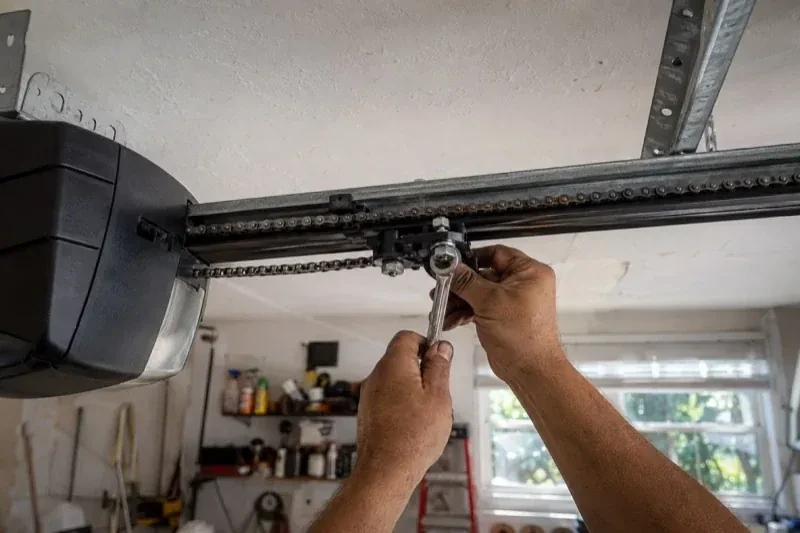
Emergency release repair puts the manual disconnect on an opener into working order. That disconnect is the red handle on a cord below the rail, the spring-loaded lever it pulls, and the trolley that lets go of the door when the lever is thrown and grips it again when the two are brought back together. When any of those parts is missing, bent, worn or set at the wrong height, moving the door by hand in an outage becomes a struggle and reconnecting it afterwards a puzzle. The technician fits parts made for that opener, sets the handle where it belongs, and proves the sequence from disconnect to reconnect.
How the visit goesIt is the coldest morning of the year. A week of slush and road salt has crusted over the outside release lock, the key will not seat, and the opener inside is silent after the overnight outage. The car sits behind a door that will not move.
Emergency Release Repair
How the visit goes
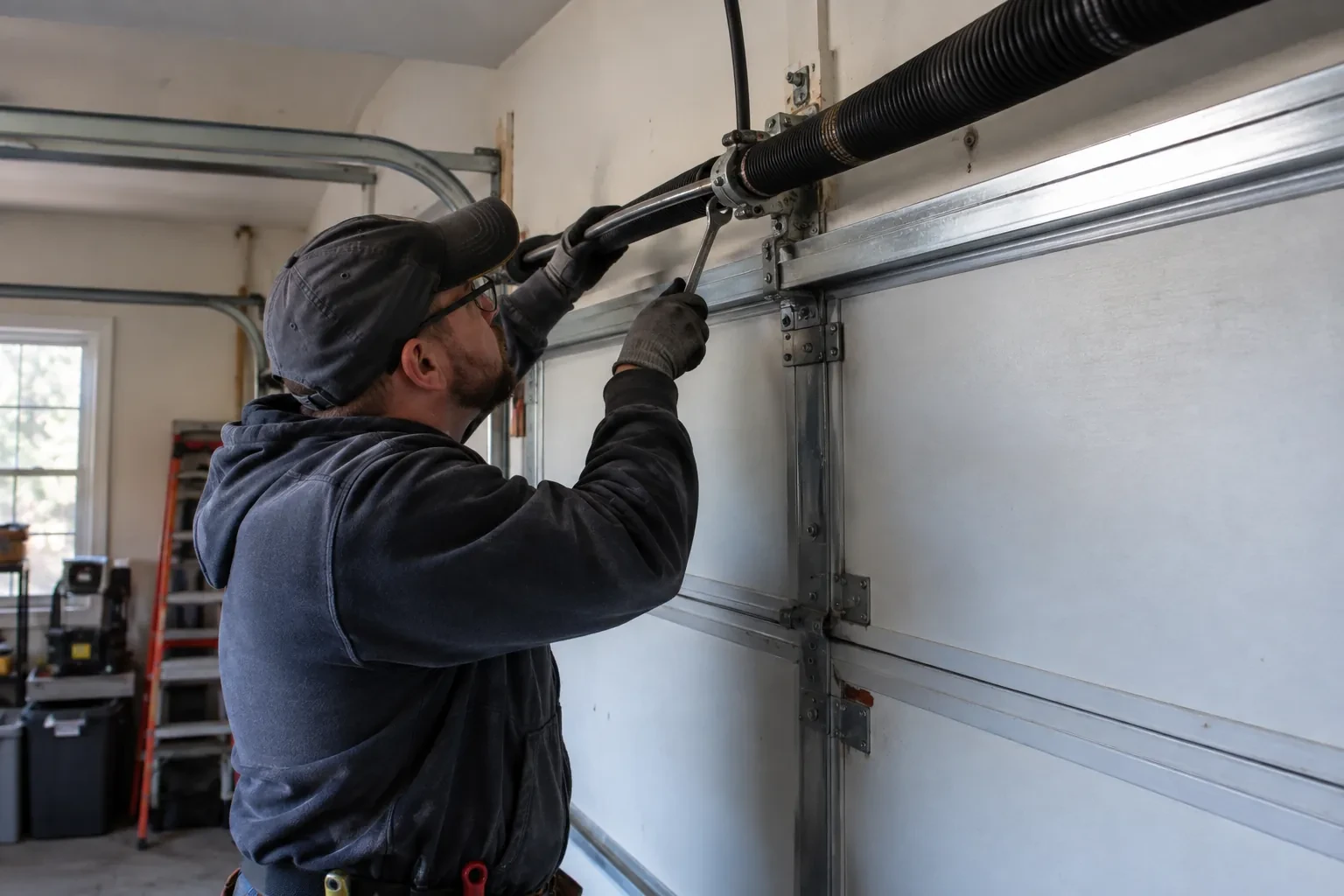
Who needs to use it, and how they get in
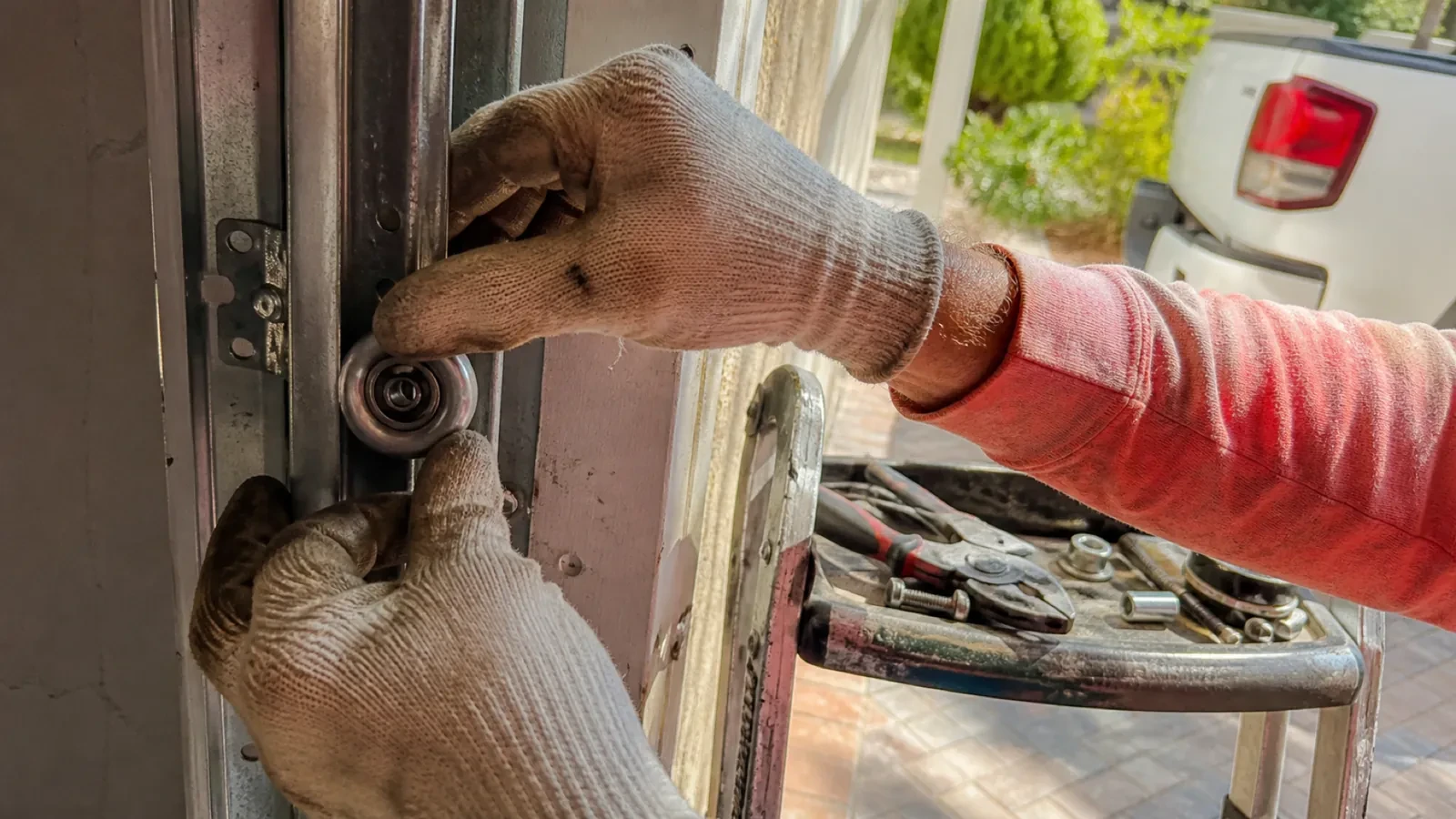
Finally the technician asks about the household and the building. Is there a side door or a door into the house, or is the overhead door the only way in? Who is likely to be pulling the handle in an outage: a tall adult, a teenager, an older relative? Does the family use the release often, or has it never been touched? Has a car roof been catching the cord? These answers shape the cord length, whether an outside key release is worth fitting, and how much of the visit goes to demonstration. The point is a release that works for the people who actually live there.
Freeing a trolley from the stop bolt
A trolley jammed against the stop at the end of the rail is freed rather than forced. The release is pulled so the door is out of the picture, the chain or belt tension nut is backed off a few turns to give the trolley room, and the motor is run so the trolley walks away from the stop. The travel limit that let it run too far is then adjusted, the chain or belt is re-tensioned to the sag the maker specifies for that rail, and the trolley is reconnected. Because the limits were touched, the door is cycled and the reversal tests are repeated before the job is called done.
A monthly minute of checking
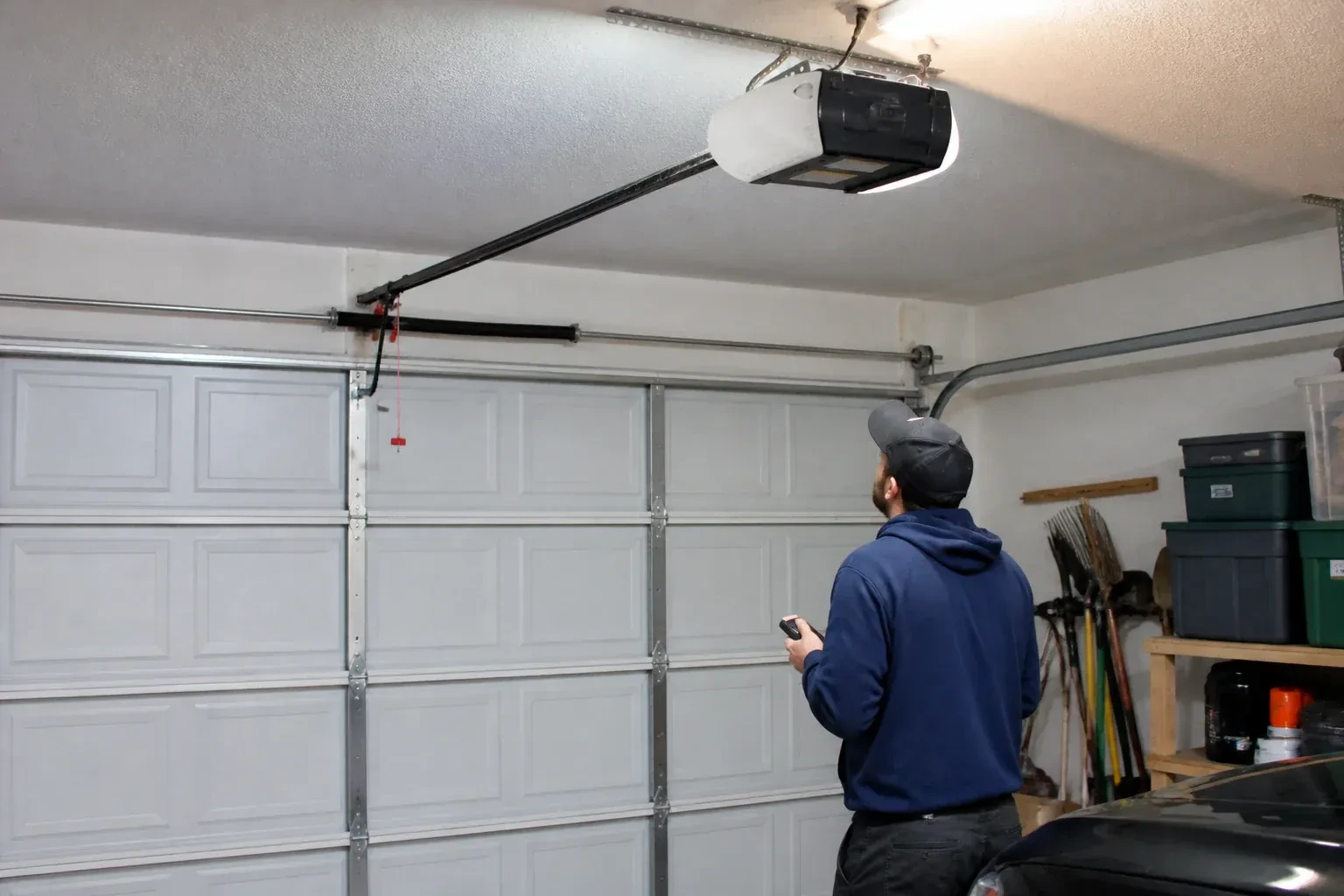
The industry advice is to look over the door and opener about once a month, and the release fits into that habit. With the door closed, pull the handle and raise the door by hand to about halfway to feel that it moves freely and holds where you leave it; then lower it and reconnect. Follow with the reversal checks: the door should back off a length of 2x4 laid flat on the floor and reverse when something passes through the sensor beam. If the door ever feels heavier than it did today, or the trolley stops clicking home, that is the moment to call rather than to keep using it.
Emergency Release Repair
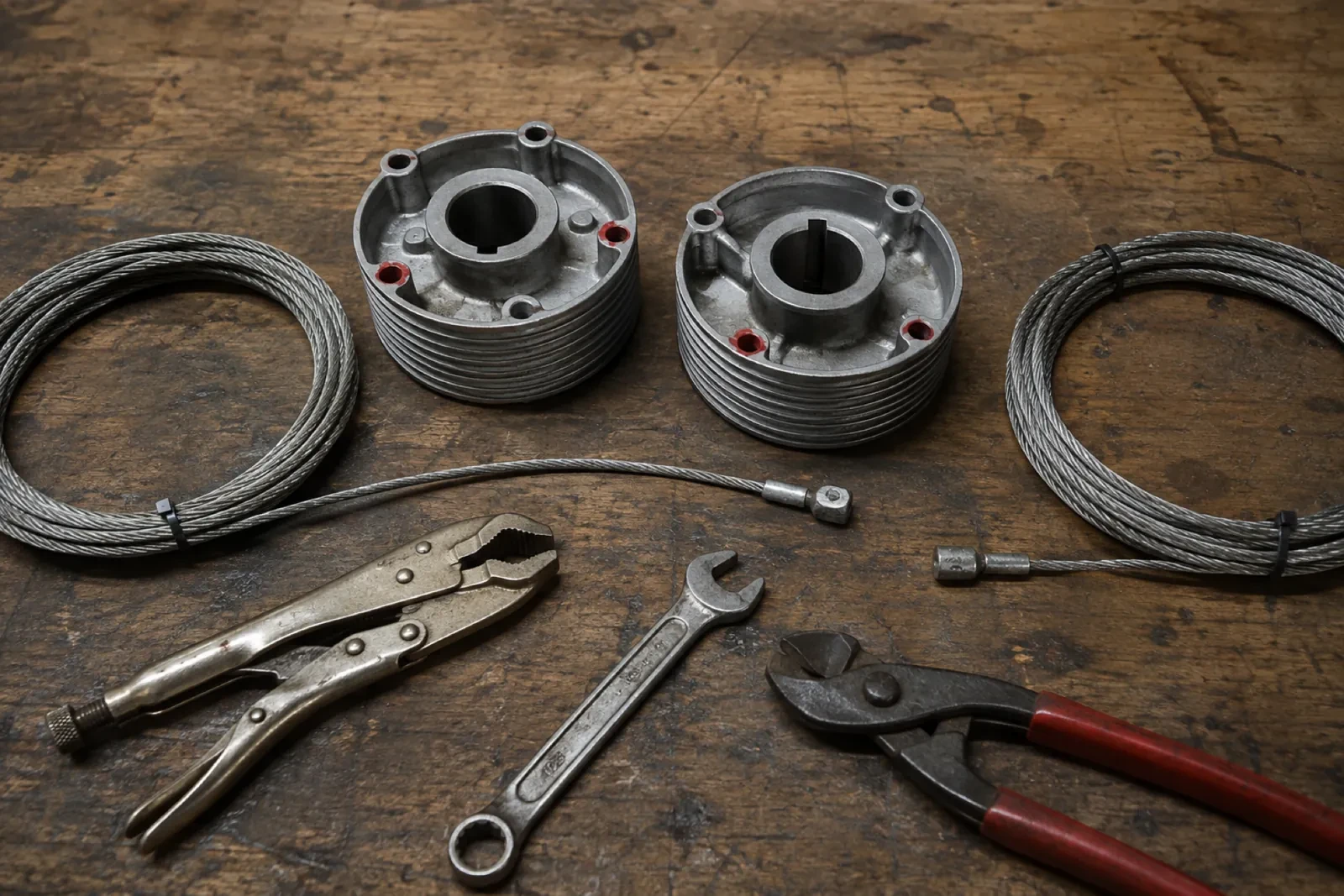
In the van
Rope and red handle kit
Outside key release kit (lock, cable, keys)
Trolley and carriage assembly
Track clamps to hold the door
Release lever and spring
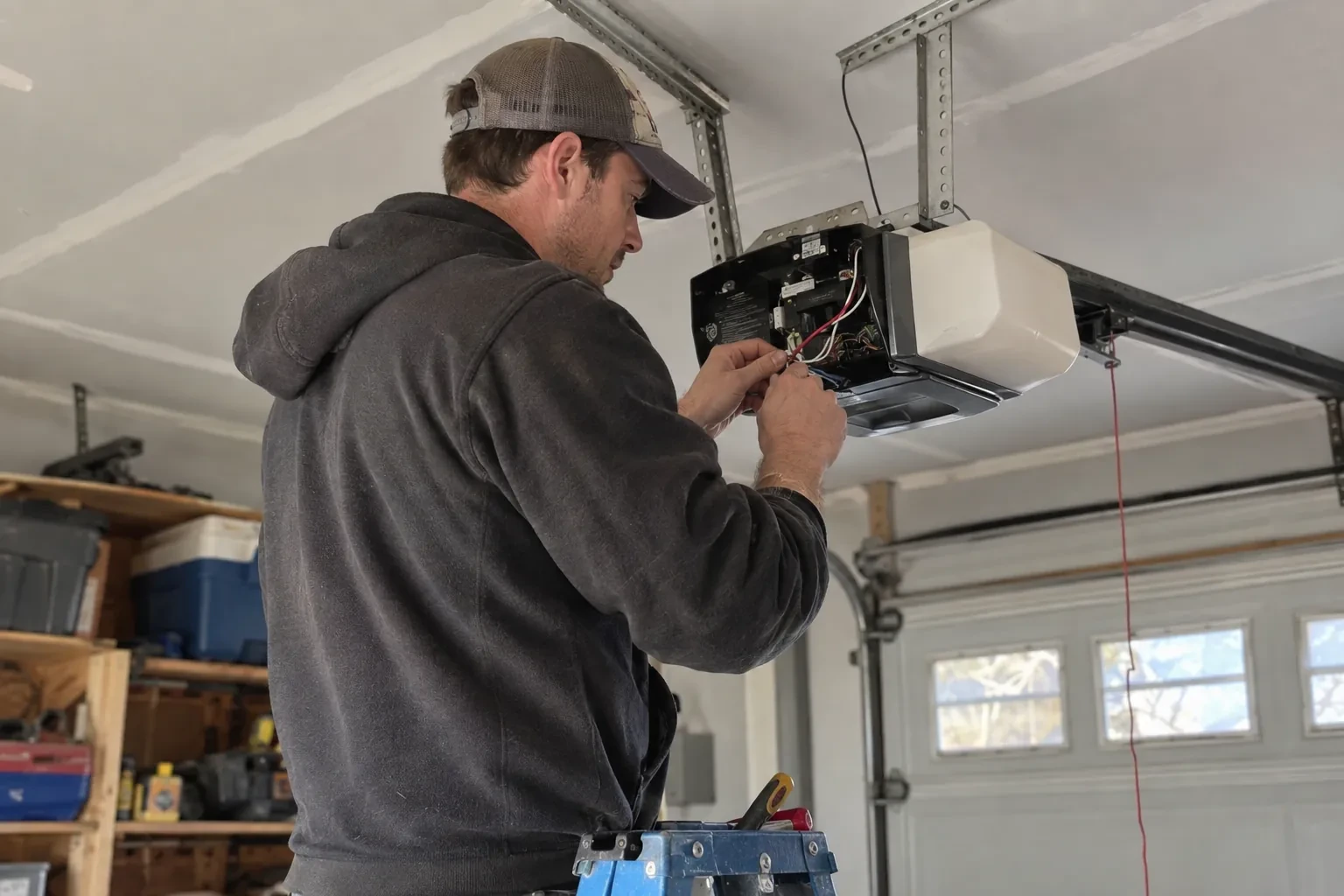
Emergency Release Repair
What affects the quote
Ceiling height and access
A standard garage puts the trolley in easy reach from a step ladder. High ceilings, a storage loft, a high-lift track or a car that cannot be moved add setup time.
Travel and tension reset
Where the trolley was freed or swapped, the chain or belt is re-tensioned and the travel limits are reset, then the reversal tests repeated. That setup time is part of the job and shown as such.
Distance to your door
Every visit includes the drive. A property on the edge of the service area or down a long rural road takes more of the technician's day than one a few streets away, and the quote allows for it.
What to have ready
- Where was the door when the release was pulled, and where is it now?
- Is anything stored under the rail or tied around the cord?
- How does the door feel when you lift it by hand: light, heavy, or does it drift?
Emergency Release Repair: questions
QuestionsHow high should the release handle hang?
No more than about 1.8 metres above the floor, so an adult standing on the slab can reach it, and high enough to clear the roof of the car parked beneath it. It should also be plainly visible and red. If a new door or a rail change left the cord short, or a previous owner tied it up around the rail, the technician cuts a fresh rope to the right length and moves any obstruction out of the way.
The outside release lock froze. How do I stop that happening again?
Salt spray and meltwater get into the keyway during a thaw and freeze overnight, the same way they do in a house lock. Keep the cylinder face clear of slush, give it a puff of dry lock lubricant before the cold sets in, and carry a small de-icer through the winter. A weather cap over the cylinder helps on a door that faces the road. The technician cleans and treats the cylinder as part of any outside release repair.
How do I keep the door in manual mode during a long outage?
On many rails, pull the cord straight down and then back toward the opener; the lever stays in the released position until you return it, so the trolley will not catch the door on its own. On others the trolley simply stays free until the opener is run. Lift and lower the door by its handle and use the slide bolt or manual lock to hold it shut. When power returns, reconnect first, then use the wall control.