Springs · Waldau
Garage Door Track Repair or Replacement in Waldau
Halfway up, the door lurches and one roller rides onto the lip of the channel.
In plain words
What you get back is a door that runs its full height without a catch, hesitation or bang, with every roller seated in its channel and both sides rising together. The track sits plumb and firm on the jambs, the horizontal runs hold level from solid hangers, and the door seals along the stop when closed. Because the track was set to the door and the springs re-tensioned to it, the door balances by hand and the opener works lightly. You also leave with a note of the track profile, radius and lift type, which makes any later part a simple match.
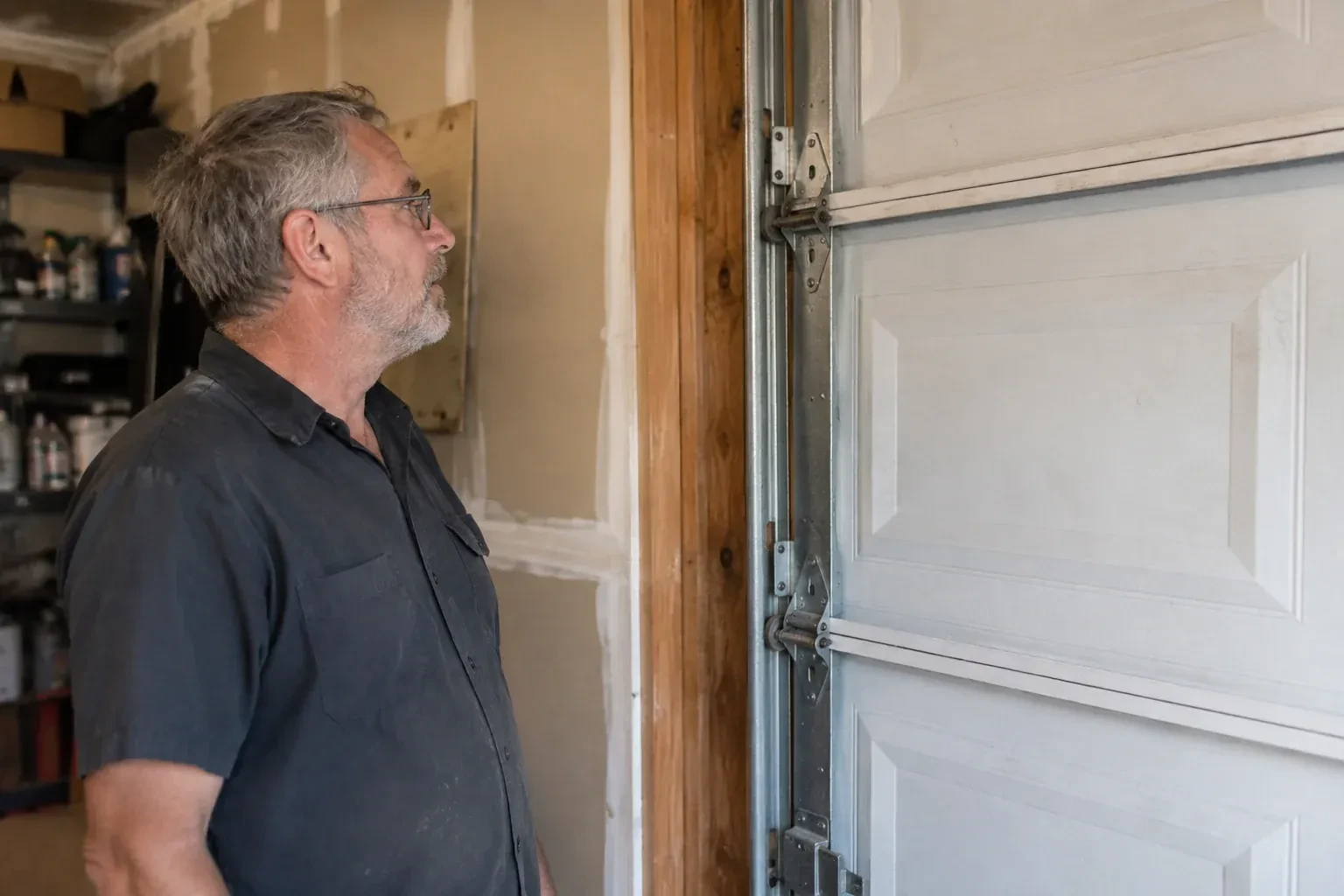
How the visit goesYou bought the house with a door that sticks near the top of its travel. The vertical track was screwed tight against the jamb, so the door drags along its stop moulding on every trip instead of swinging clear.
Garage Door Track Repair or Replacement
How the visit goes
The horizontal run and its hangers
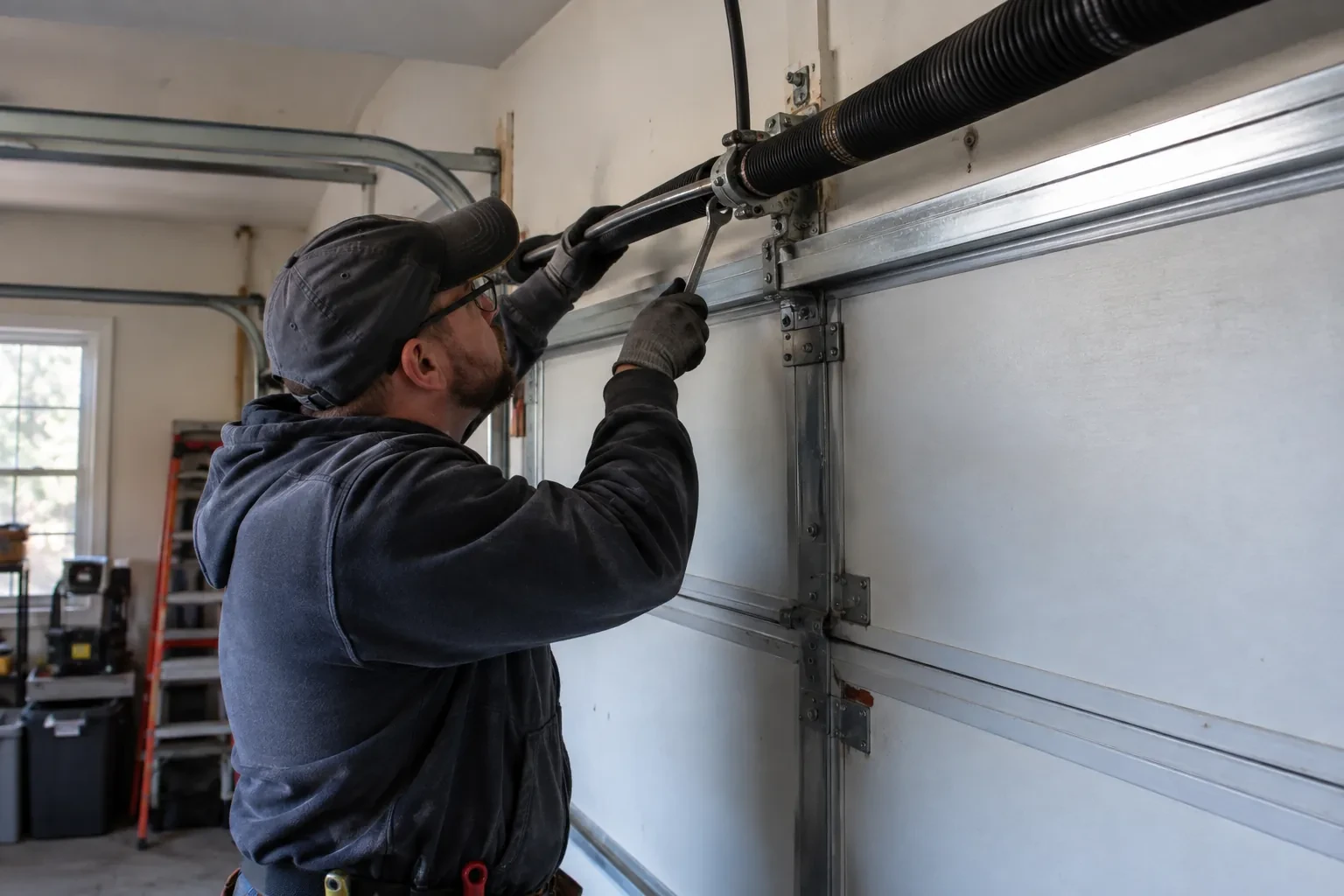
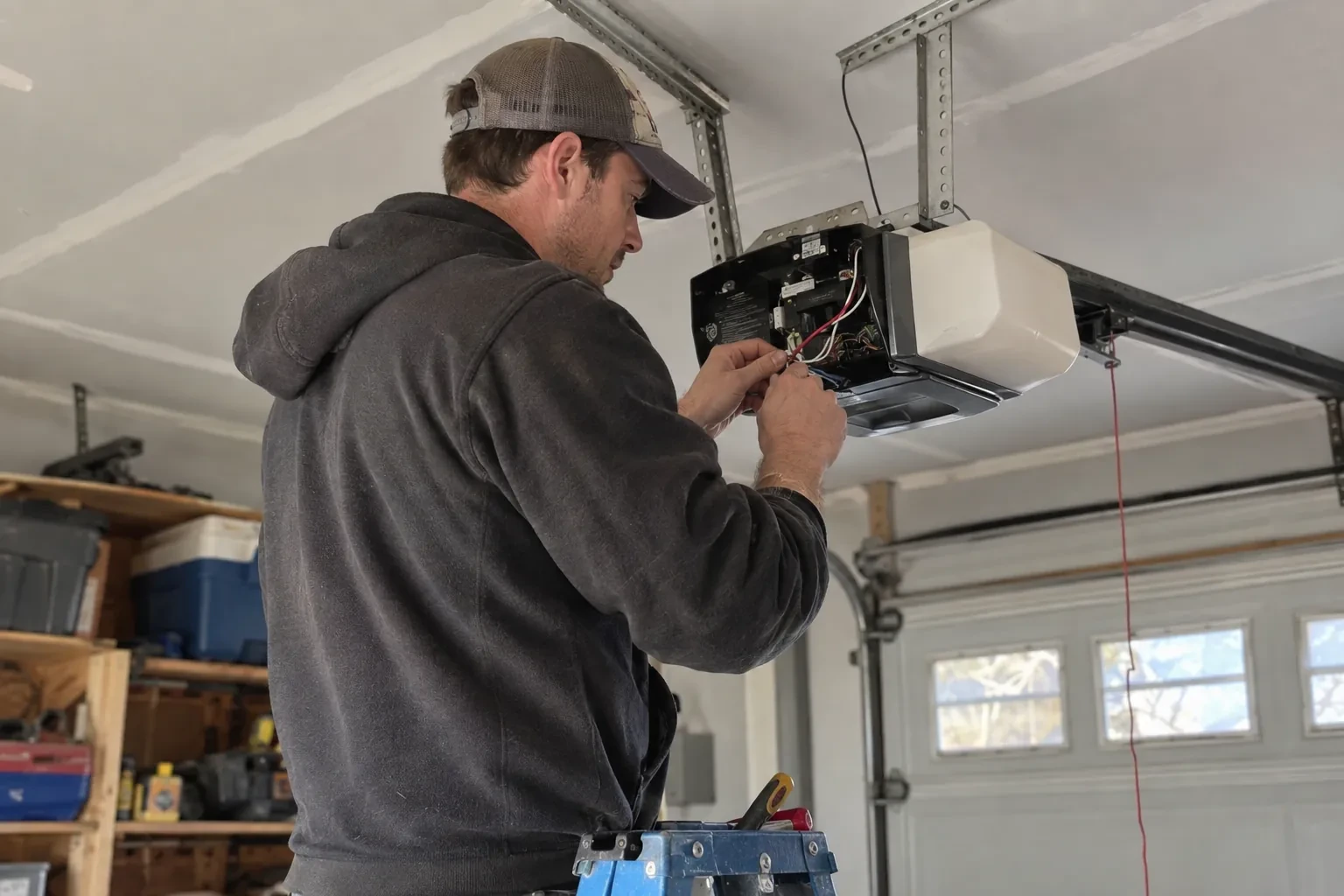
Overhead, the horizontal tracks should be level with each other, or set to the same pitch, held from the ceiling by back hangs of perforated angle screwed into joists. The technician sights along each run for sag, twist or a spread channel, checks the stiffening angle riveted to the track is intact, and puts weight on each hanger to check for flex. A run that droops at the rear slopes the wrong way rather than level or its intended pitch; one knocked sideways by a ladder or stored goods twists the top section as it travels. A door drifting back toward the opening once raised points to balance instead. Any hanger anchored into drywall alone is flagged for a joist.
Fixing into sound framing
Track is only as steady as the wood it is screwed to. Where the bottom of a jamb has gone soft, the technician cuts back to solid timber and sisters a new piece alongside or replaces the lower length, fastening it through to the framing behind. Enlarged or stripped screw holes higher up are plugged and re-drilled, or the bracket is moved to fresh wood. Lag screws of the right length and diameter are driven into the jamb, and any hanger anchored into ceiling finish alone is moved to a joist or given a length of angle to reach one. This is unglamorous work, and it is the reason the alignment lasts.
The record of the track profile and layout
Before leaving, the technician tells you what the door runs on: two-inch or three-inch track, the radius of the curve, whether the layout is standard, low-headroom or high lift, and which pieces were straightened or replaced. Write it inside the cover of the door manual or on a card by the opener. Any future part, a roller, a hinge, a section of track, is then ordered to match rather than measured from scratch, and a technician years from now can read at a glance how the door was set up. If the jamb was repaired or a hanger moved to a joist, that goes on the same note.
Garage Door Track Repair or Replacement
In the van
Jamb lumber and construction screws
Flag brackets
Lag screws and track bolts
Jamb brackets or continuous angle
Perforated angle back hangs
Garage Door Track Repair or Replacement
What affects the quote
Door size and weight
A tall or double door has longer runs of track and heavier loads on the brackets, and a heavy insulated or wood door may call for heavier-gauge track and more substantial hangers.
Ceiling hangers and what they are fixed to
A hanger that has bent or pulled from a joist is replaced, and a run that was only fixed into drywall gets angle reaching to solid framing. Each hanger corrected is named in the quote.
Track profile and radius
Two-inch track in a 12-inch or 15-inch radius is stock for most residential doors; three-inch track, unusual radii and high-lift pieces are ordered to the door and priced as such.
What to have ready
- Where is the damage: near the floor, at the curve, or on the overhead run?
- Can you see a bracket standing away from the wood or screws backing out?
- Is the wood beside the door soft, split or discoloured at the floor?
Garage Door Track Repair or Replacement: questions
QuestionsCan a low-headroom or high-lift layout be fitted to my existing door?
Often, yes, and it is a track job with a spring job attached. Low-headroom dual track lets a door open under a low ceiling or a beam, while high-lift track carries the door further up the wall to clear a car lift or storage. Each changes the horizontal run, the curve, the top fixtures and usually the cable drums and spring turns. The technician measures headroom, sideroom and backroom first and confirms the door suits the change.
Will track work involve the springs?
Sometimes. The flag bracket at the top of the vertical track usually carries the bearing for the torsion shaft, so if that bracket or the curve has to move, the springs are unloaded first with winding bars and rewound afterwards to the same turns. Simple work on the vertical run below the curve, or on the horizontal hangers, can often be done with the springs left alone. Either way the door is balance-tested at the end.
Why is there a gap between the track and the edge of the door?
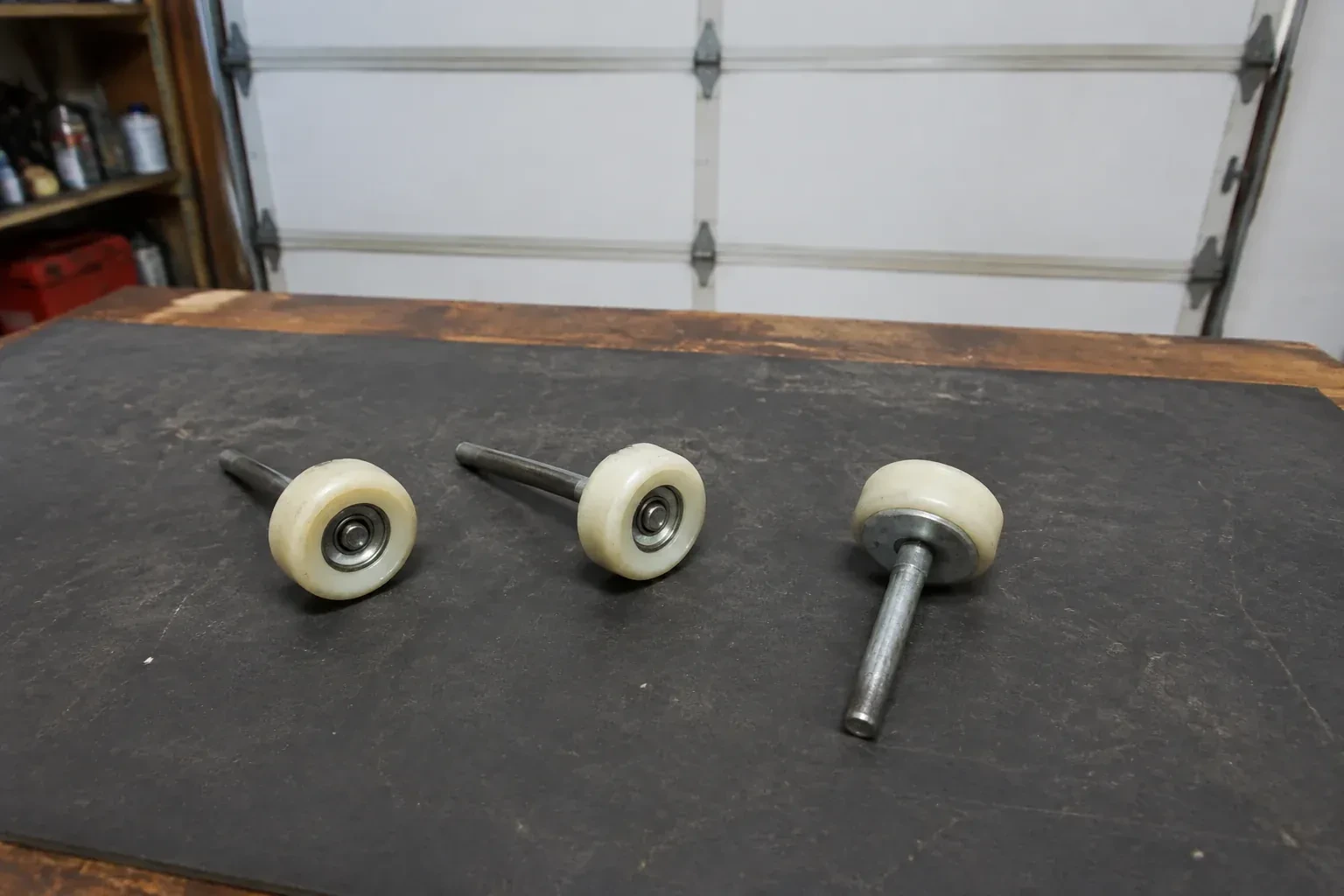
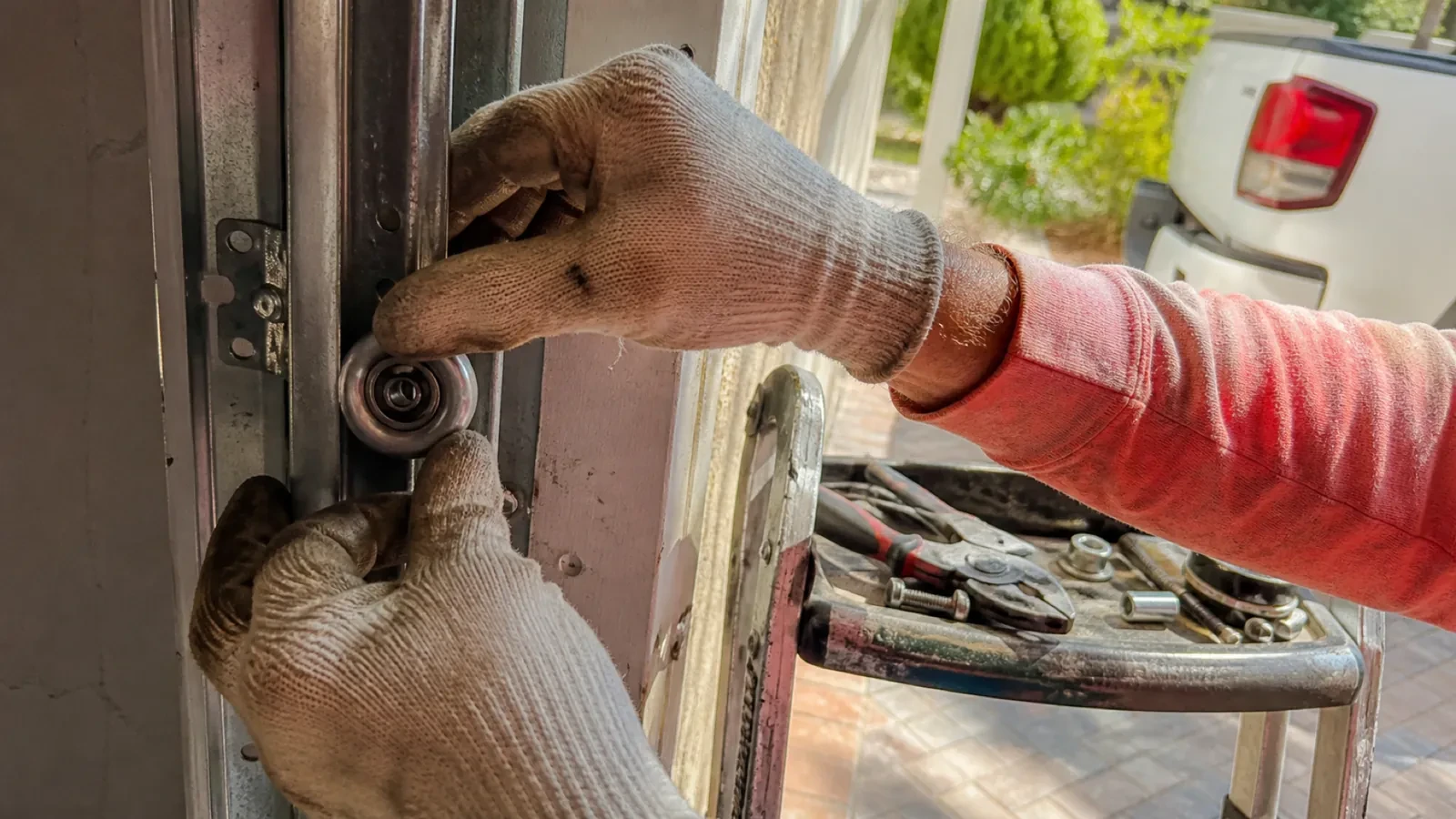
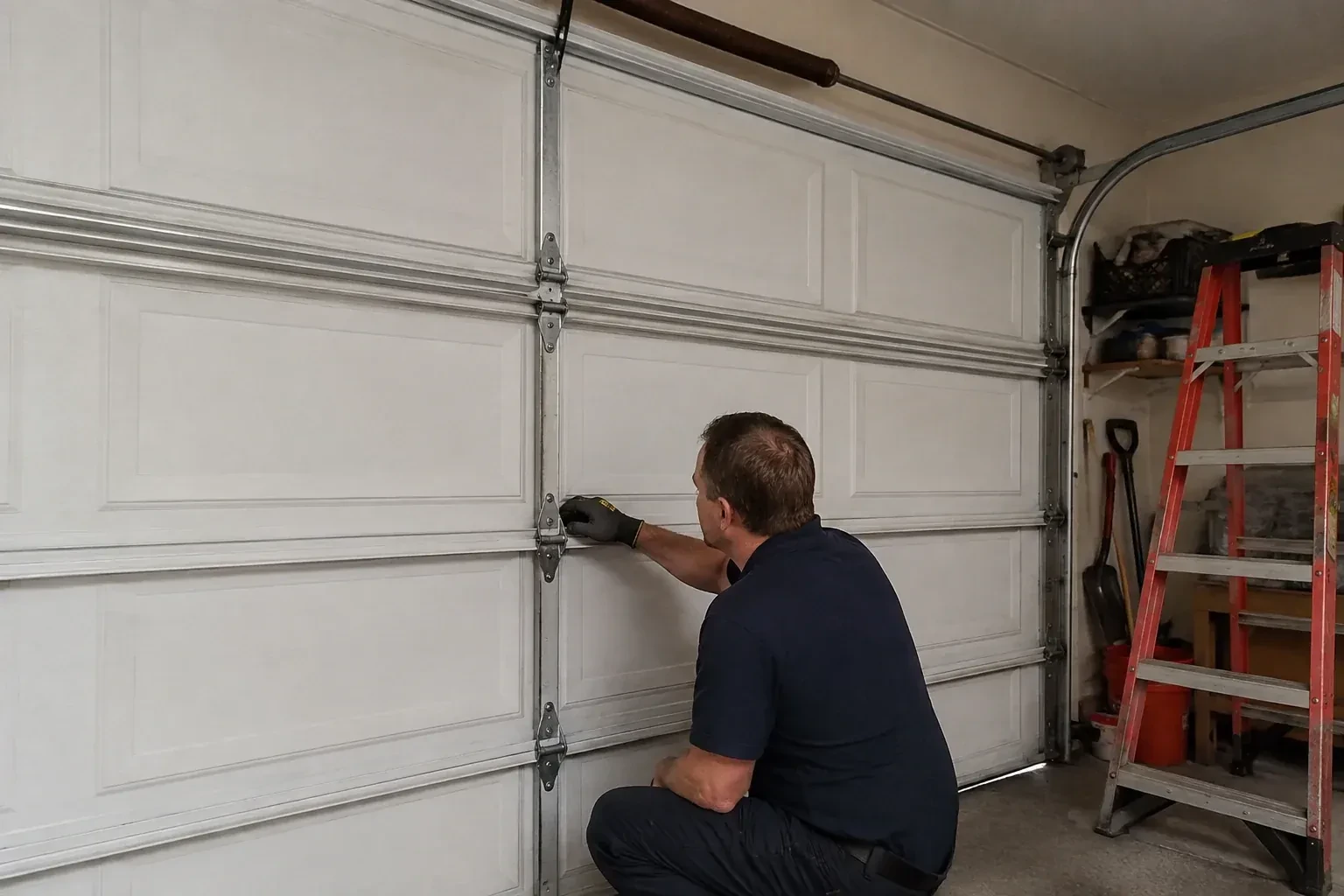
That gap is intentional. The rollers sit on stems that reach out from the hinges, and the track stands a set distance from the door so the wheels ride in the channel without the door's edge touching the track. The gap should be equal on both sides and slightly larger at the top of the vertical run, which is the taper that lets the door seal at the stop and release on opening. Unequal gaps are a sign the track has moved.
Related services
- Garage Door Hinge ReplacementThe roller at the top of the second panel is leaning outward and only half of the wheel is still in the track.
- Garage Door Cable ReplacementThe cable has wrapped itself around the shaft above the door instead of sitting on its drum.
- Torsion Spring ReplacementYou heard a sharp bang from the garage, and now the opener hums for a second and gives up.