Openers · Haysville
Emergency Release Repair in Haysville
Since the new door went in, the red handle has hung just below the ceiling, a stepladder's height above anyone in the household.
In plain words
The operator standard for residential openers in this country asks for a manual release that is coloured red, easy to tell apart from the rest of the mechanism, and reachable from the floor, with the handle no more than about 1.8 metres up. The reason is plain: in an outage or emergency, someone who has never touched the opener must be able to find and use it. Emergency release repair brings an opener back to that standard when the handle has gone missing, been tied out of reach, or was left too high after a door change, and leaves the household knowing what the red handle is for.
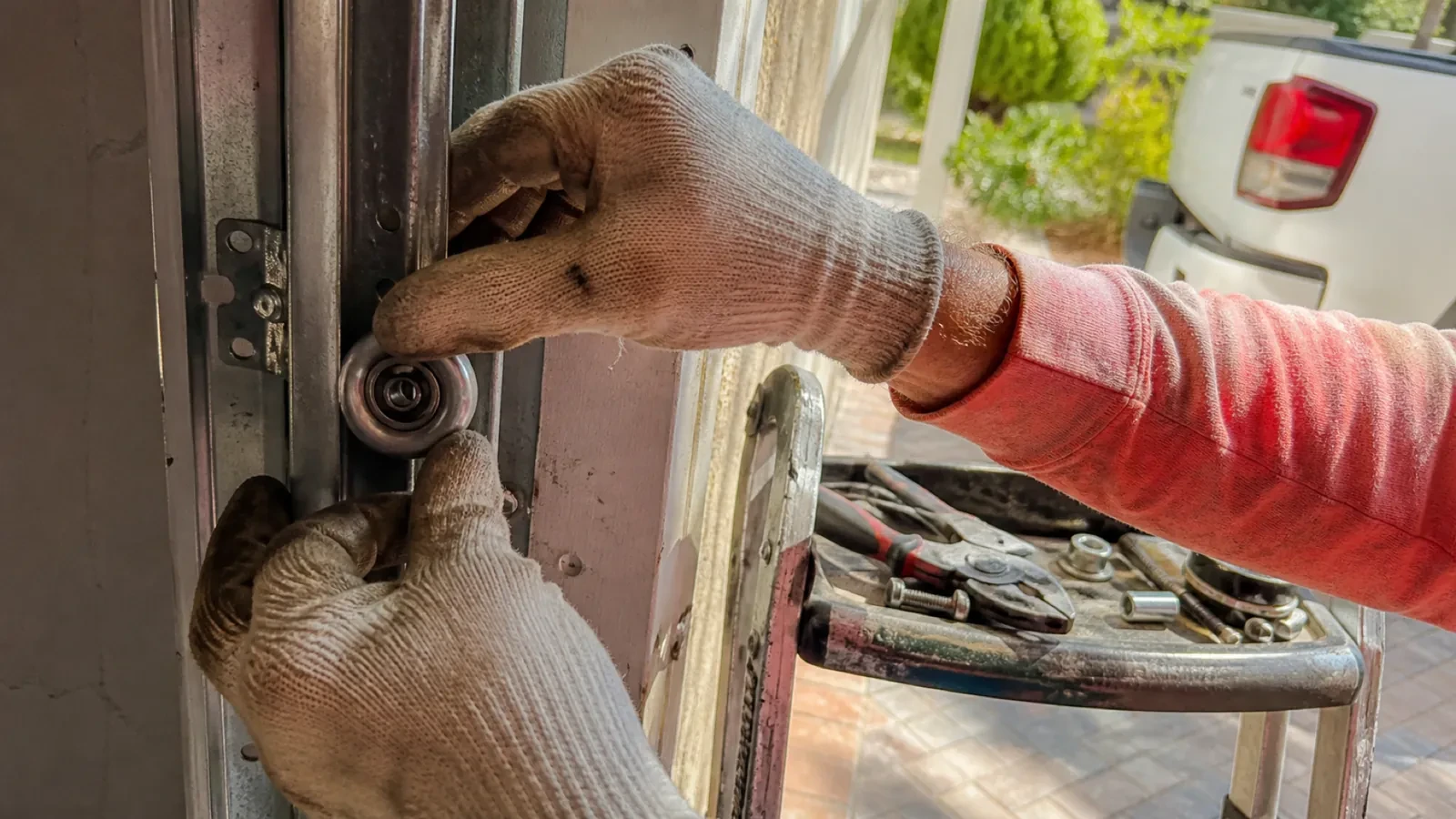
How the visit goesIt is the coldest morning of the year. A week of slush and road salt has crusted over the outside release lock, the key will not seat, and the opener inside is silent after the overnight outage. The car sits behind a door that will not move.
Emergency Release Repair
How the visit goes
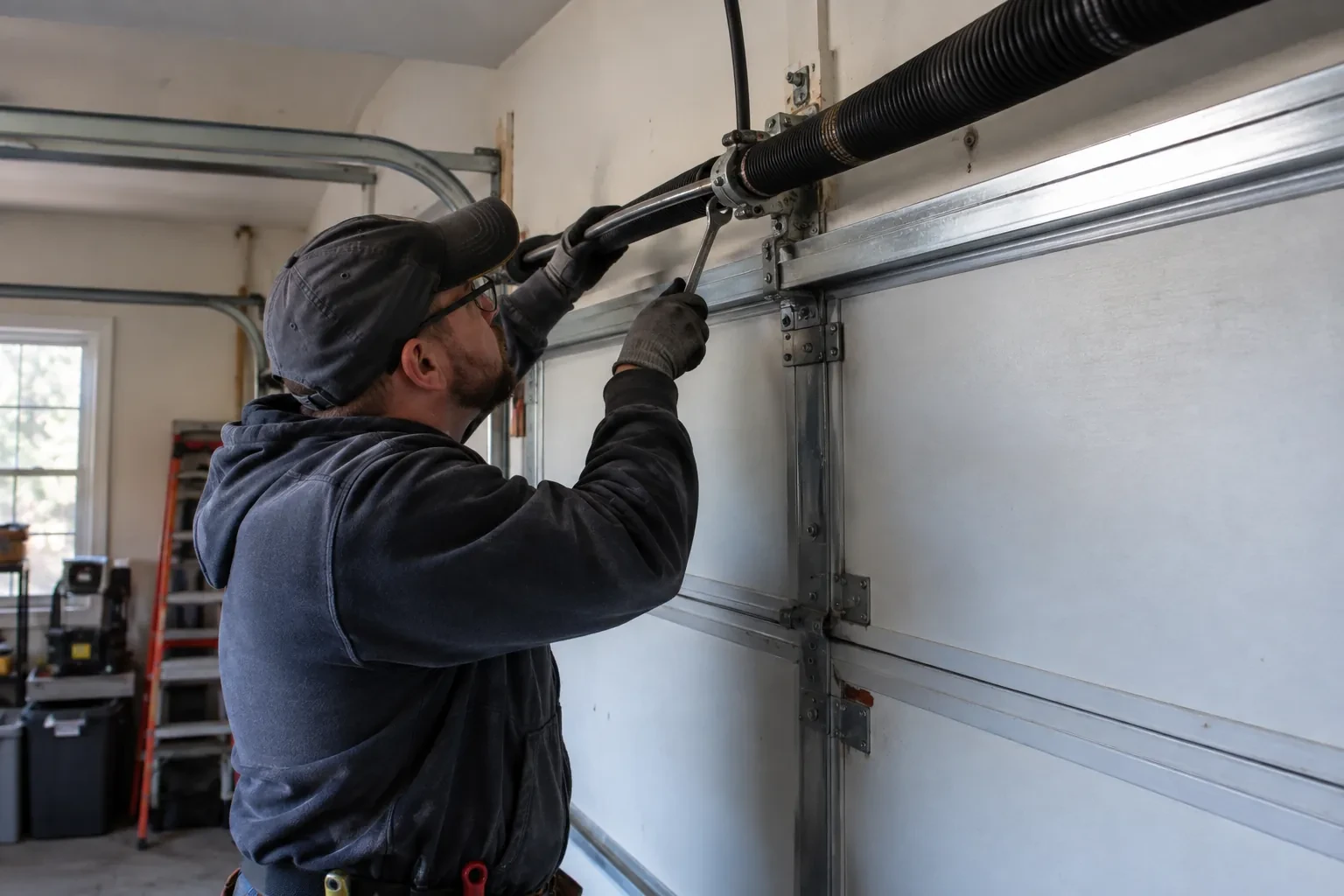
What kind of opener and rail
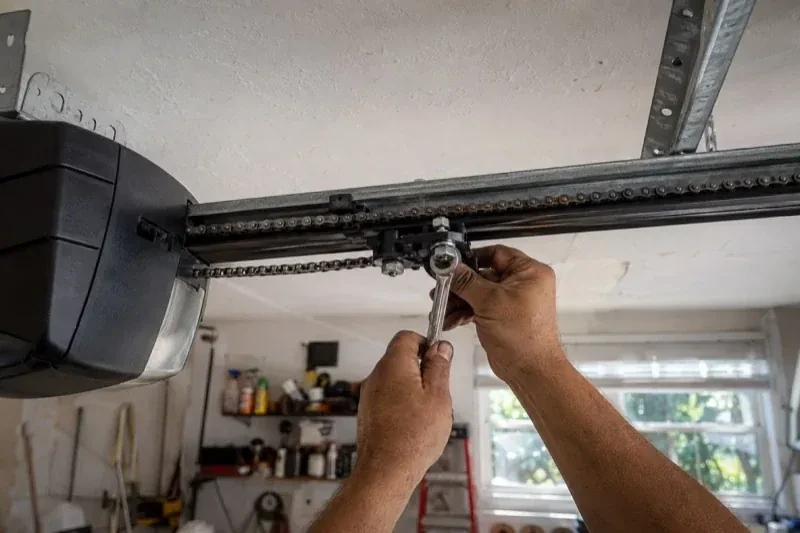
Release designs differ by opener, so the model is identified from its label before parts are chosen. A chain or belt unit on a one-piece rail pulls straight down; on a sectional square rail the cord is pulled down and then back to hold the lever; a screw-drive carriage has its own release; a wall-mounted unit beside the door uses a handle on a cable that clicks rather than a trolley on a rail. Age matters too: an older chain-drive head may take a different trolley from the current one. Knowing the exact unit means the replacement cord, lever, trolley or outside release cable is the one the maker specifies.
Setup and safety tests after the work
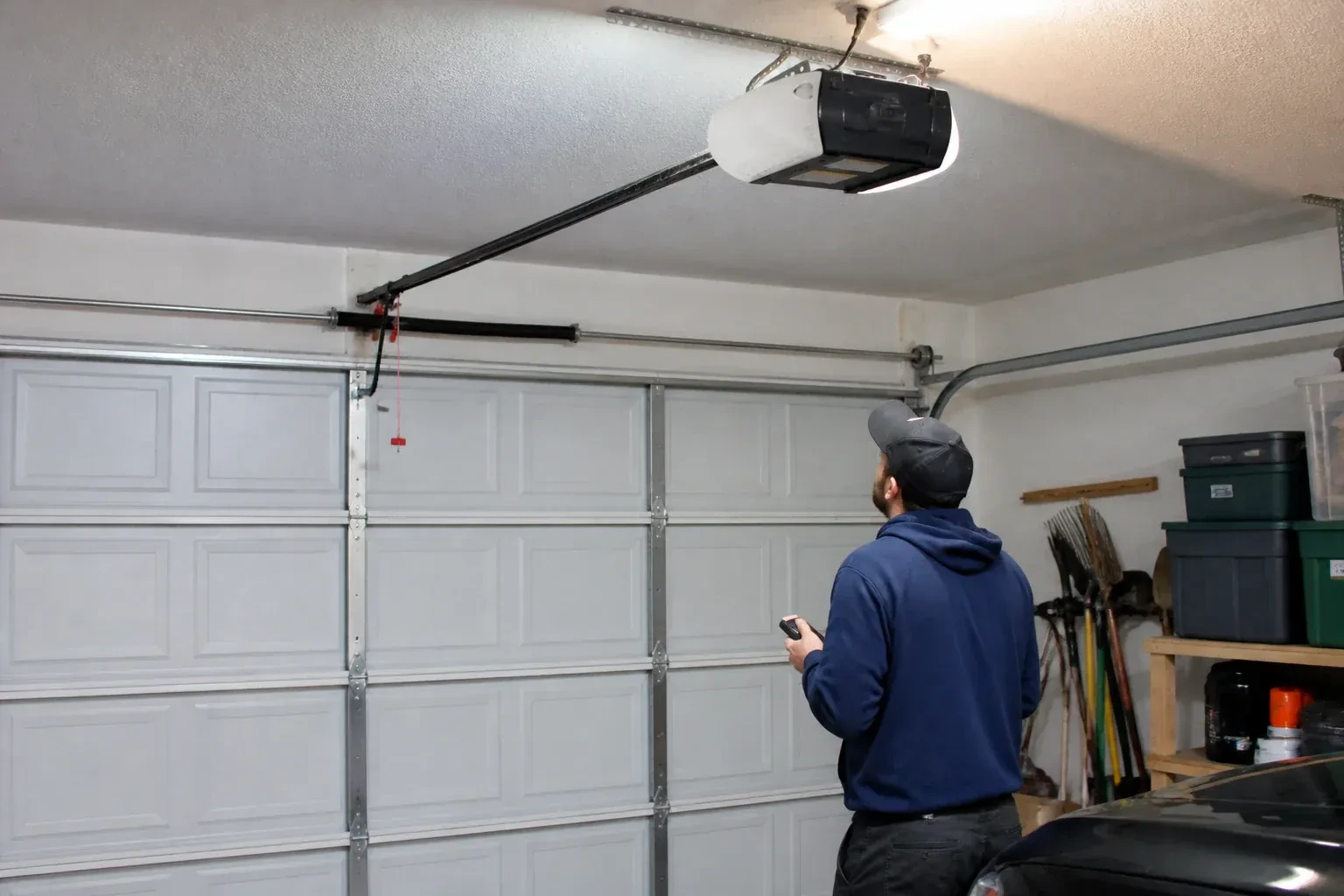
Because the drive tension, travel limits or trolley were disturbed, the opener is set up again before the visit ends. Travel is adjusted so the door seals on the floor without hammering and stops clear of the header; force is left as low as reliably moves the door. Then the two reversal tests: a 2x4 laid flat under the centre of the door must send it back up on contact, and an object passed through the photo-eye beam while closing must do the same. The release cord is checked one last time for height and clearance, and the door is run from each control you own.
Battery backup and outage-prone streets
If your street loses power a few times each winter, the technician may raise battery backup. Modern openers can carry a battery that opens and closes the door on stored power, which spares you the release altogether in most outages. The battery is a wearing part, generally replaced every few years, and the head unit signals when it is tired. The release remains the fallback when the battery is flat or the opener itself has failed, which is why both are kept in working order. You leave knowing which of the two your household relies on and how each one is checked.
Emergency Release Repair
In the van
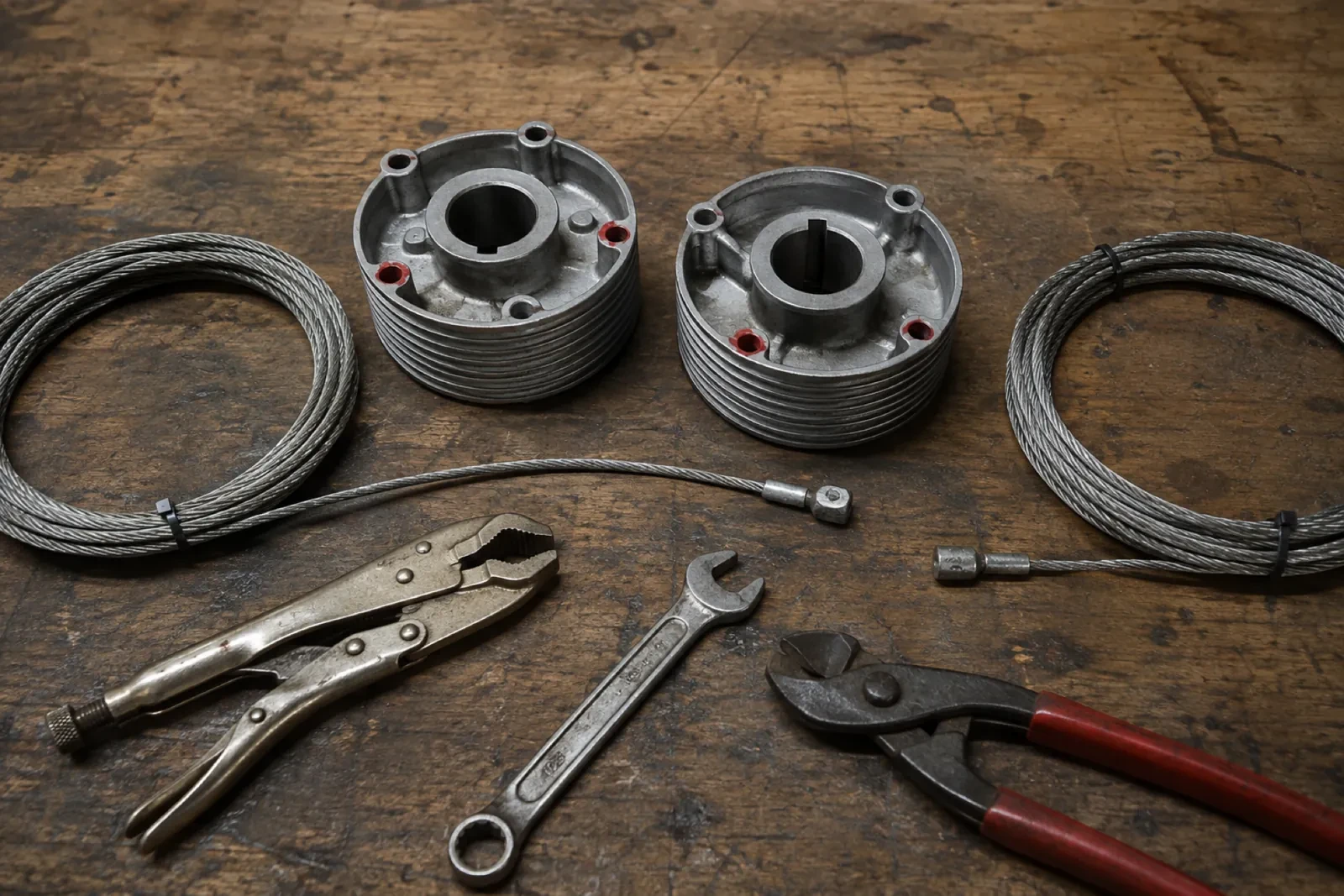
Rope and red handle kit
Outside key release kit (lock, cable, keys)
Trolley and carriage assembly
Track clamps to hold the door
Release lever and spring
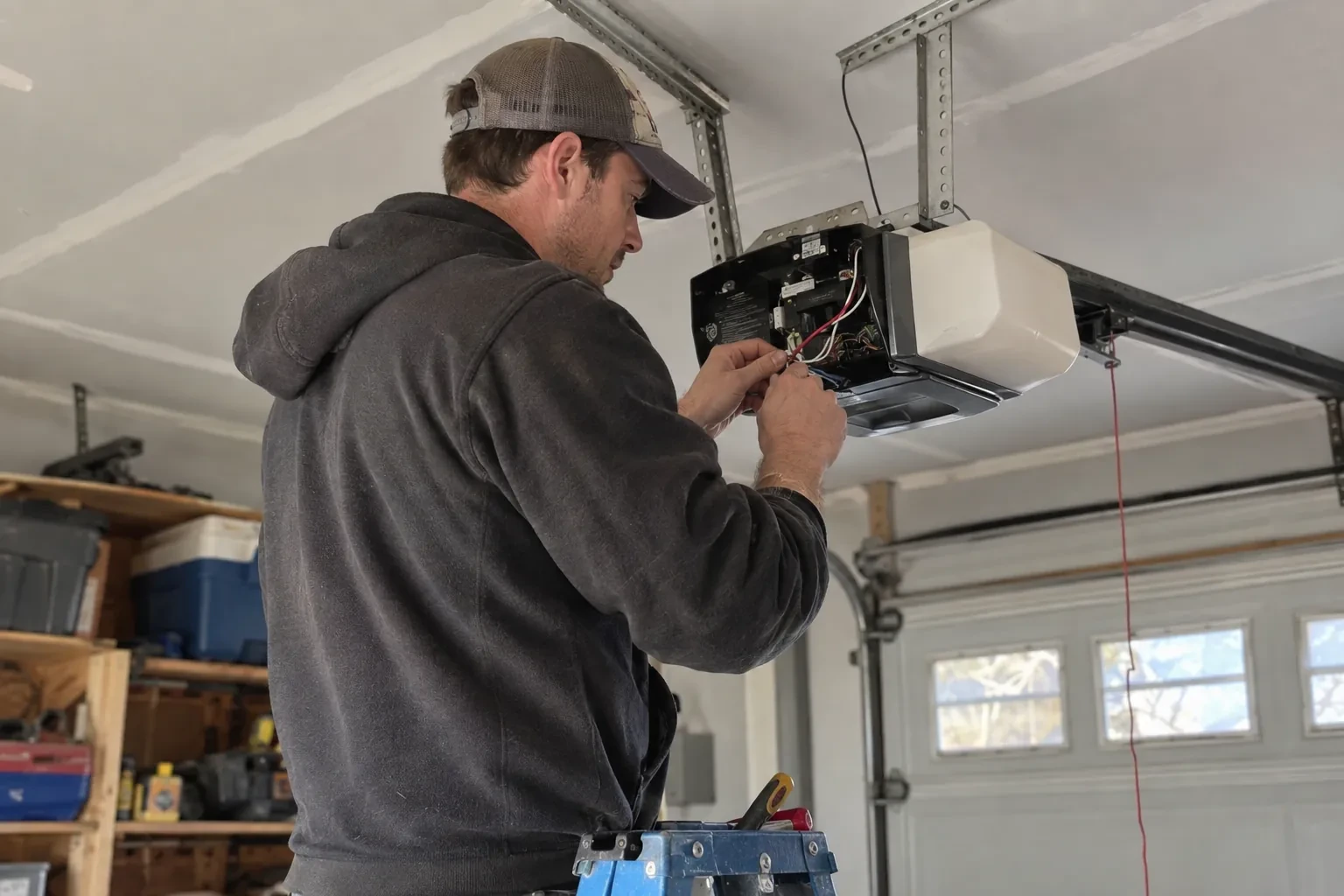
Emergency Release Repair
What affects the quote
Travel and tension reset
Where the trolley was freed or swapped, the chain or belt is re-tensioned and the travel limits are reset, then the reversal tests repeated. That setup time is part of the job and shown as such.
Extra keys and a lockbox
Two keys come with an outside release. Additional keys cut for family members, or a small lockbox for the spare, are small add-ons listed as separate lines.
Time of the call
A weekday daytime visit and an evening, weekend or holiday one cost the same amount for freeing or repairing an emergency release. The exact figure is confirmed once the technician has seen the trolley, the cord or lever, and how the door was left.
What to have ready
- Has the door or the opener been replaced since the release was last used?
- How does the door feel when you lift it by hand: light, heavy, or does it drift?
- Is anything stored under the rail or tied around the cord?
Emergency Release Repair: questions
QuestionsHow high should the release handle hang?
No more than about 1.8 metres above the floor, so an adult standing on the slab can reach it, and high enough to clear the roof of the car parked beneath it. It should also be plainly visible and red. If a new door or a rail change left the cord short, or a previous owner tied it up around the rail, the technician cuts a fresh rope to the right length and moves any obstruction out of the way.
The outside release lock froze. How do I stop that happening again?
Salt spray and meltwater get into the keyway during a thaw and freeze overnight, the same way they do in a house lock. Keep the cylinder face clear of slush, give it a puff of dry lock lubricant before the cold sets in, and carry a small de-icer through the winter. A weather cap over the cylinder helps on a door that faces the road. The technician cleans and treats the cylinder as part of any outside release repair.
How do I keep the door in manual mode during a long outage?
On many rails, pull the cord straight down and then back toward the opener; the lever stays in the released position until you return it, so the trolley will not catch the door on its own. On others the trolley simply stays free until the opener is run. Lift and lower the door by its handle and use the slide bolt or manual lock to hold it shut. When power returns, reconnect first, then use the wall control.