New Doors · Wilmot
Commercial Rolling Door Repair
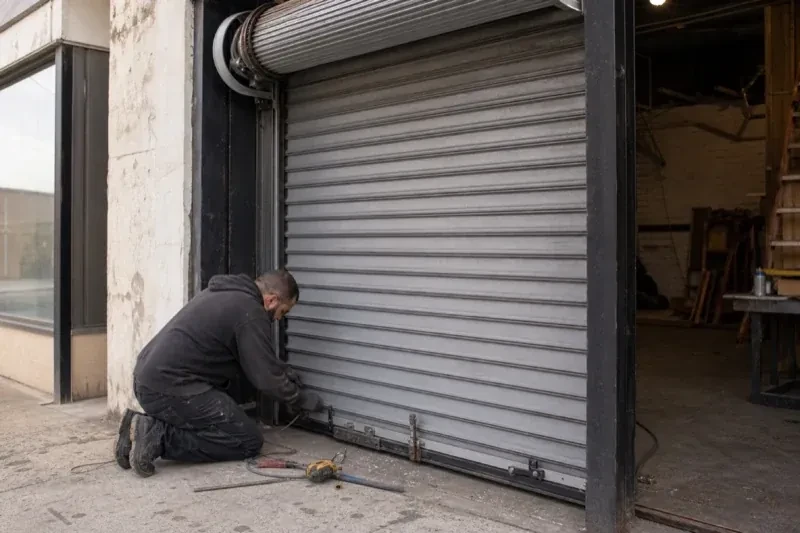
A lift truck clipped the lower curtain during unloading.
In plain words
Exterior rolling doors work at the boundary between indoor operations and winter weather. Hardened bottom seals leave daylight, ice holds the bar to the sill, and salt-laden grit can collect where the curtain enters its guides. Service separates weather effects from alignment or balance faults, cleans the travel path and renews damaged sealing parts where included. The curtain is then checked for even contact at the floor and smooth entry into the coil. Care guidance focuses on keeping drains, guides, sensor faces and the threshold clear while using only the lubricant named for the door.
How the visit goesThe hand chain takes far more effort than it did last month. The curtain feels heavy from the first pull, pauses around mid-travel, and settles downward instead of holding a steady position.
Commercial Rolling Door Repair
How the visit goes
Read the curtain from bottom to coil
The curtain reveals how the door has been travelling. The bottom bar is checked for level, twist, impact marks and even contact with the sill. Moving upward, the inspection follows interlocking slats or sheet material, endlocks and windlocks for dents, separation, missing fasteners, polished rub marks or sideways shift. At the hood, the technician observes how the material enters the coil and whether it stacks evenly on the barrel. These clues show whether a damaged section can be renewed locally or whether distortion has spread far enough to affect guides, brackets and counterbalance.
Secure the curtain and stored energy
Repair starts by establishing a stable mechanical state. Power is isolated under the site's procedure, the operating controls are kept from use, and the work zone remains controlled. Depending on position and construction, the curtain is lowered, clamped, blocked or supported with suitable lifting equipment before a guide, bracket or drive part is loosened. Manual chains are secured and counterbalance components are treated as energised. This setup gives the technician control over weight and movement, allowing later adjustments to be deliberate. It also protects nearby stock and equipment while the opening is temporarily out of normal service.
Documentation for a labelled fire door
When the assembly carries a fire-protection label, the customer receives a record that keeps ordinary operation and fire-door responsibilities connected but distinct. It identifies relevant labels, compatible repaired parts, closing-path observations and the inspection or test activity included in the authorised scope. Any release-system, alarm-interface or building-fire-plan item assigned elsewhere is named clearly. The facility can retain this with its fire-safety records and continue the inspection schedule required for closures in fire separations. Guides and the doorway remain free of storage so the door can follow its intended closing path.
Commercial Rolling Door Repair
In the van
Operator brake and limits
Roller chain and sprockets
Counterbalance spring assembly
Windlocks and curtain fasteners
Barrel and headplate brackets
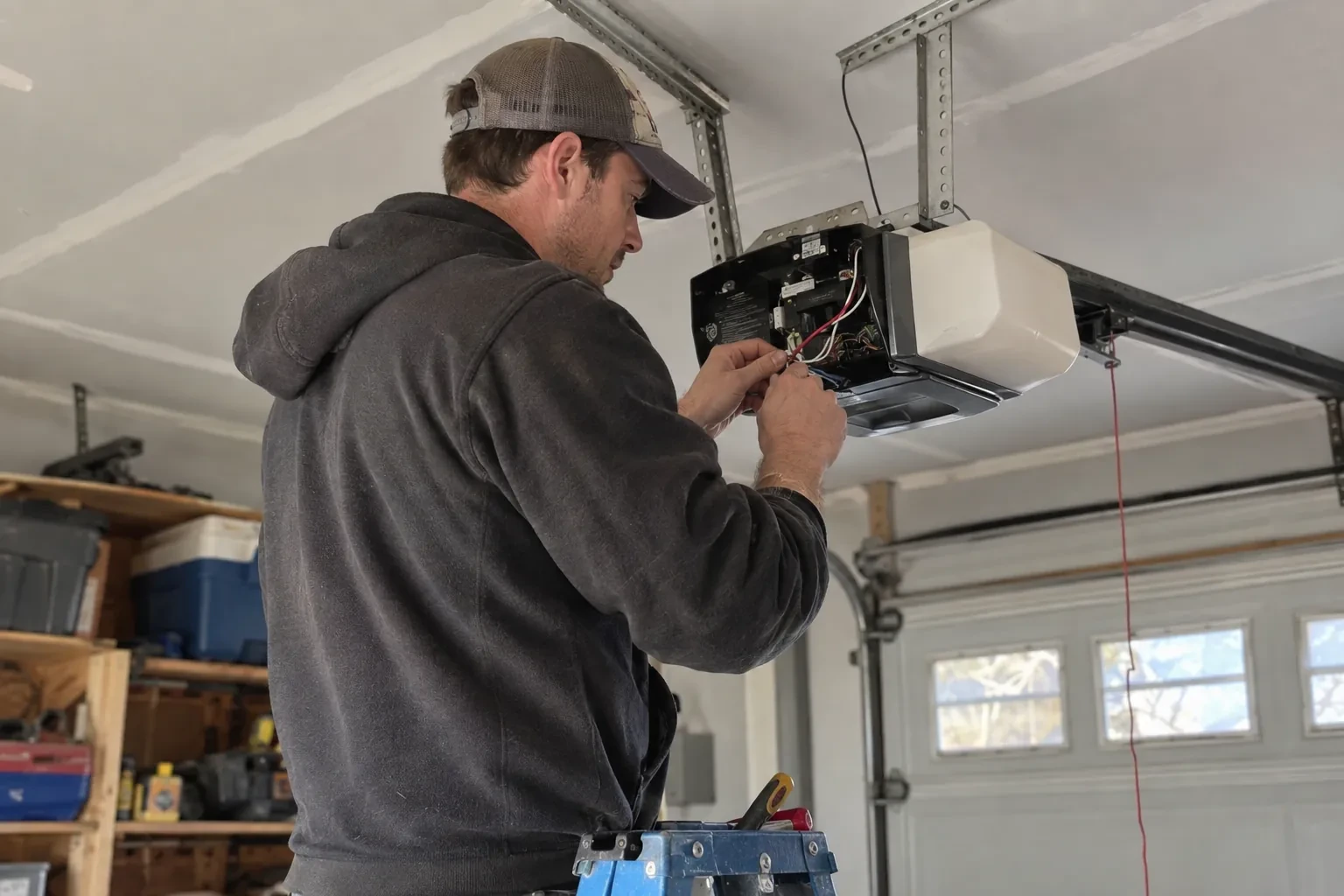
Commercial Rolling Door Repair
What affects the quote
Traffic-control requirements
Loading schedules, pedestrian routes, lift-truck lanes and access to both faces determine how the work zone is maintained. Facility support and alternate routing form part of the service plan.
Testing and documentation
Normal cycles, manual operation, protective responses, fire-door procedures and facility records vary by assembly. The proposal can name the demonstrations, measurements and written results included at handover.
Door construction and size
A coiling slat curtain, rolling sheet door, insulated assembly or labelled fire door uses different components and procedures. Opening width and height also shape curtain weight, access and handling equipment.
What to have ready
- What happens when staff use the normal control?
- Is the curtain fully open, closed or stopped between limits?
- Are door, operator or previous service records available?
Commercial Rolling Door Repair: questions
QuestionsHow are salt and winter moisture handled?
The lower guides, sill, fasteners, bottom seal and sensor faces are checked for ice, grit and corrosion. Buildup is cleared with methods suited to the material, drainage issues are noted and damaged sealing parts can be renewed within scope. The door is tested after cleaning because cold-weather resistance can exist alongside an alignment or balance problem.
Why is there a grinding or clattering sound near the hood?
Noise at the head can come from worn barrel bearings, loose brackets, misaligned drive chain or sprockets, shifting slats, an uneven coil or hardware contacting the hood. The pattern matters: once per revolution suggests something different from continuous guide scrape. Controlled observation locates the source before a specific part is selected.
How is a rolling fire door repair different?
A labelled fire door is a closure in a fire separation, so labels, listed construction, compatible components, release hardware, clear closing path and required records shape the work. Routine operating repair and specialised fire-door inspection or release testing are defined explicitly. Substitutions are based on assembly information rather than appearance or approximate fit.
Related services
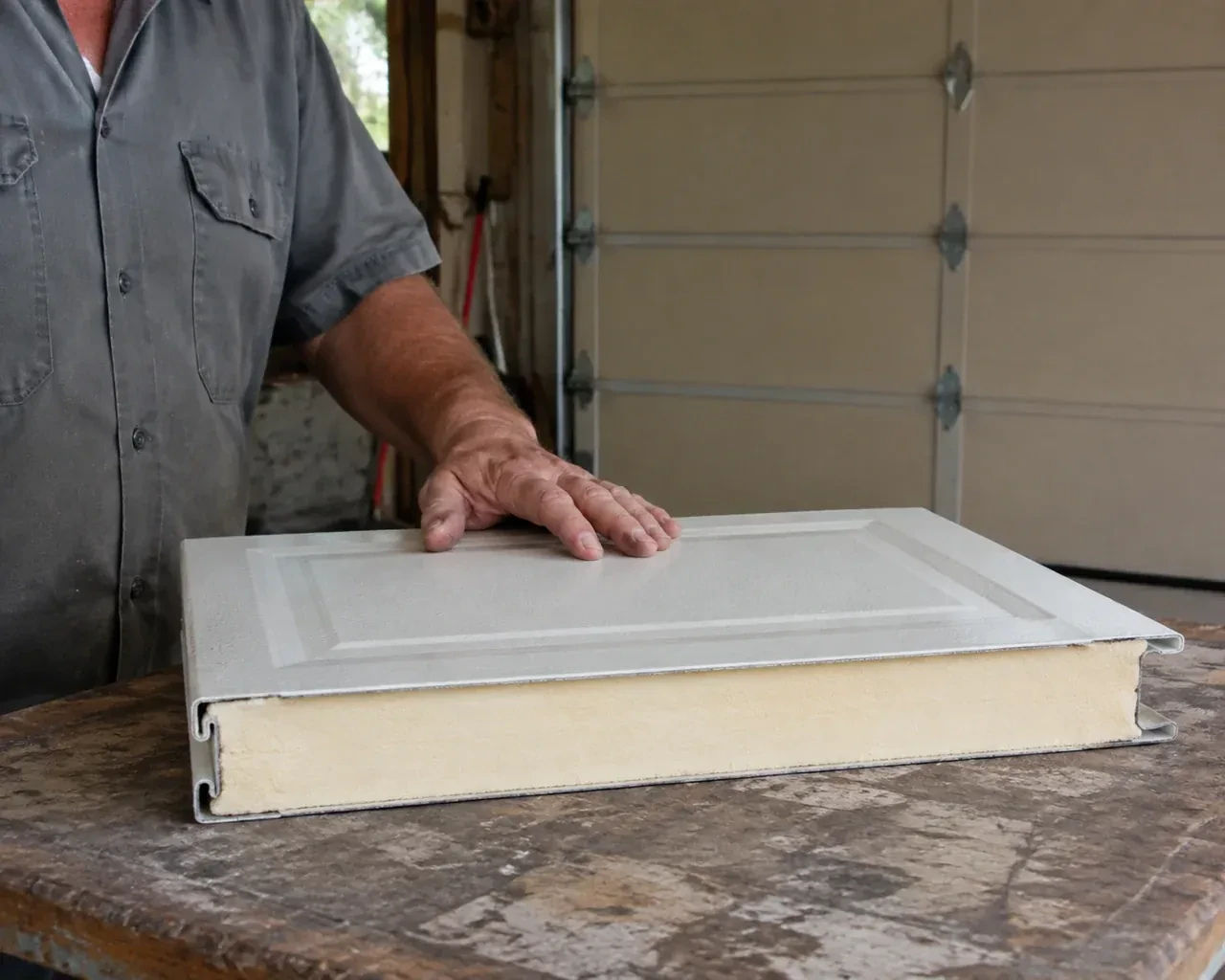
- Insulated Steel Garage Door InstallationDaylight appears beside the closed door and powdery snow collects just inside after windy weather.
- Wind-Rated Garage Door ReplacementA recent wind event left one section slightly creased, a strut twisted, and several track fasteners loose.
- Carriage-House Garage Door InstallationThe existing door has reached the point where panels, rollers and finish all look tired.