Repairs · Wilmot
Garage Door Panel Replacement
You misjudged the last metre of the driveway and felt the bumper meet the door.
In plain words
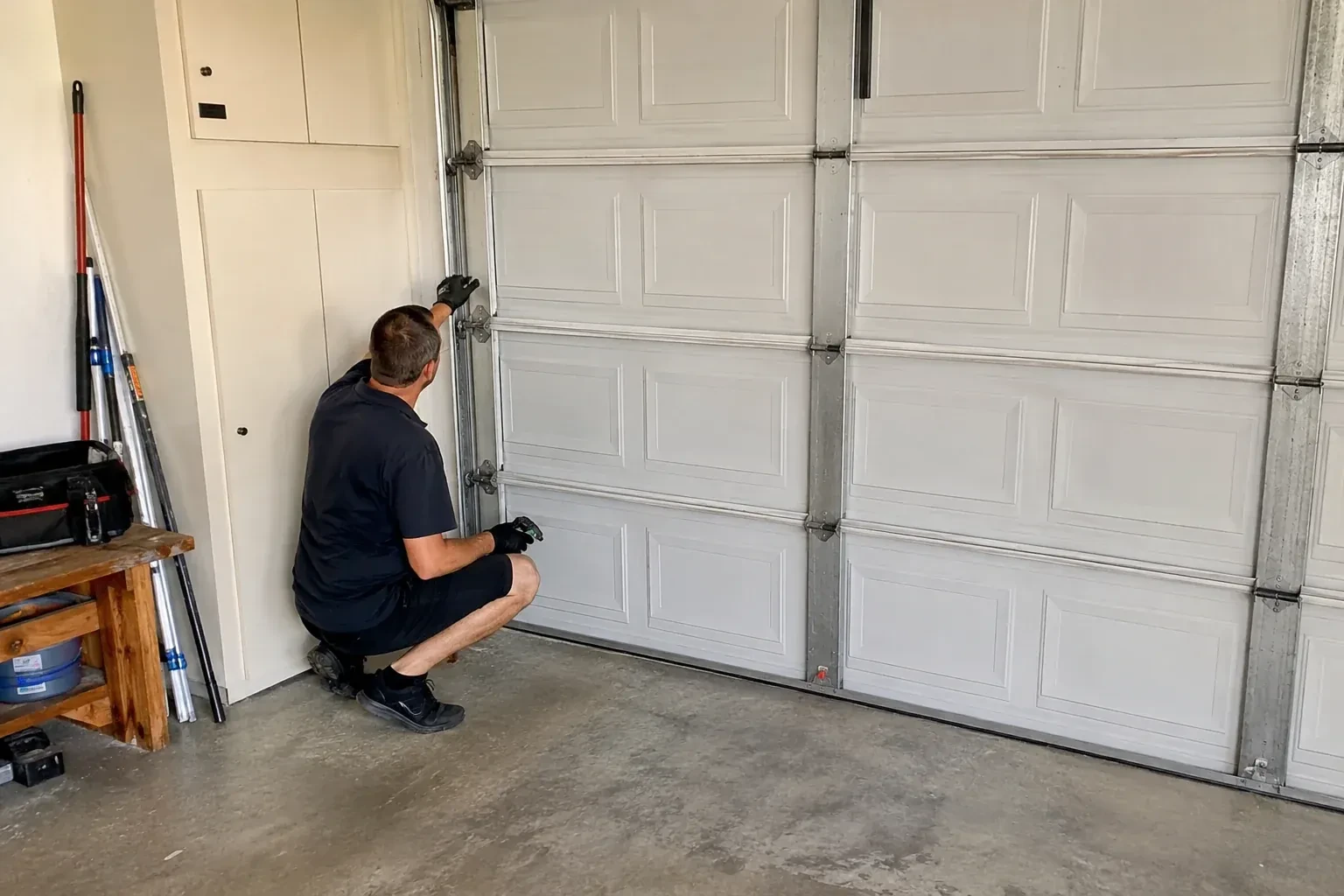
Not all sections are equal. The bottom section carries the brackets that anchor the lift cables, the seal that meets the floor, and most of the abuse from ice, salt and bumpers. The top section takes the pull of the opener arm and often carries a strut. The intermediate sections mostly carry hinges and rollers. Which position is damaged shapes the whole job: a bottom section means releasing spring tension before the brackets come off, a top section means dealing with the opener bracket and top fixtures, and a middle section is the most straightforward exchange. The technician plans the visit around that position.
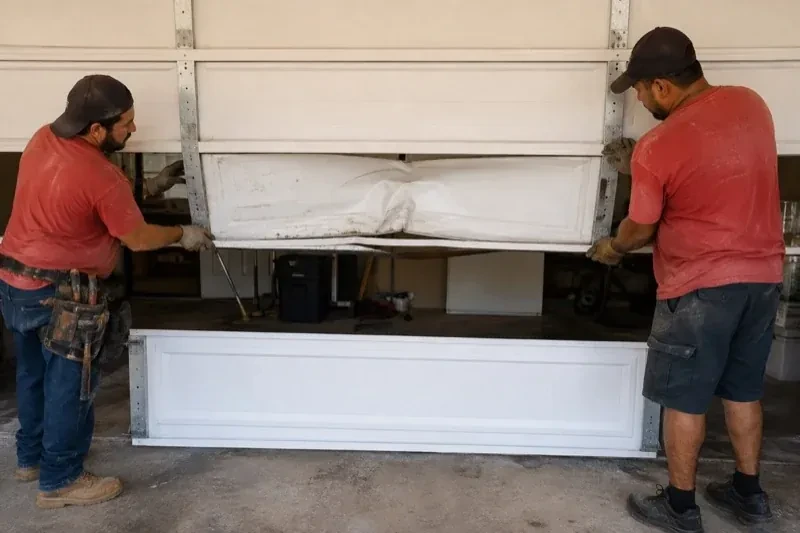
How the visit goesThe inside face of one section has started to bow outward and the outer skin has a soft, wavy look. Tap it and it sounds hollow in places. The door is insulated, and the foam core seems to have parted from the steel.
Garage Door Panel Replacement
How the visit goes
Mapping the damage on the section
Where a dent sits matters as much as its size. A shallow dish in the middle of the skin is one thing; a crease that runs to the joint, a fold at an end stile, or a bend through a hinge point is another, because those areas carry the door's load as it moves. The technician records the depth of the damage, whether the inner skin or backer is affected, whether a strut has kinked and whether the section still lies flat when the door is closed. That map decides between working the dent out, replacing the single section, or looking harder at the rest of the door.
Bottom section: brackets, seal and cables
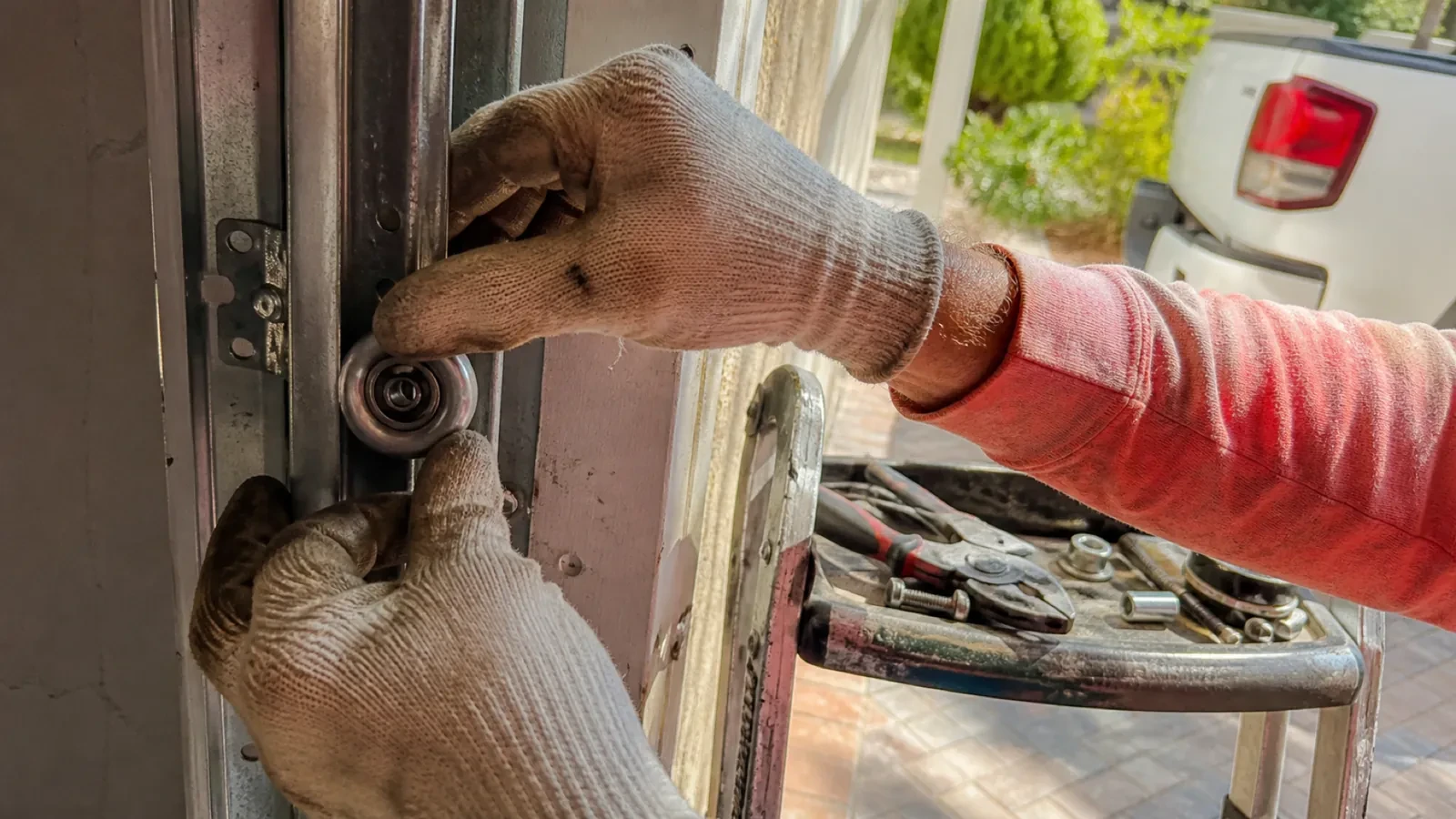
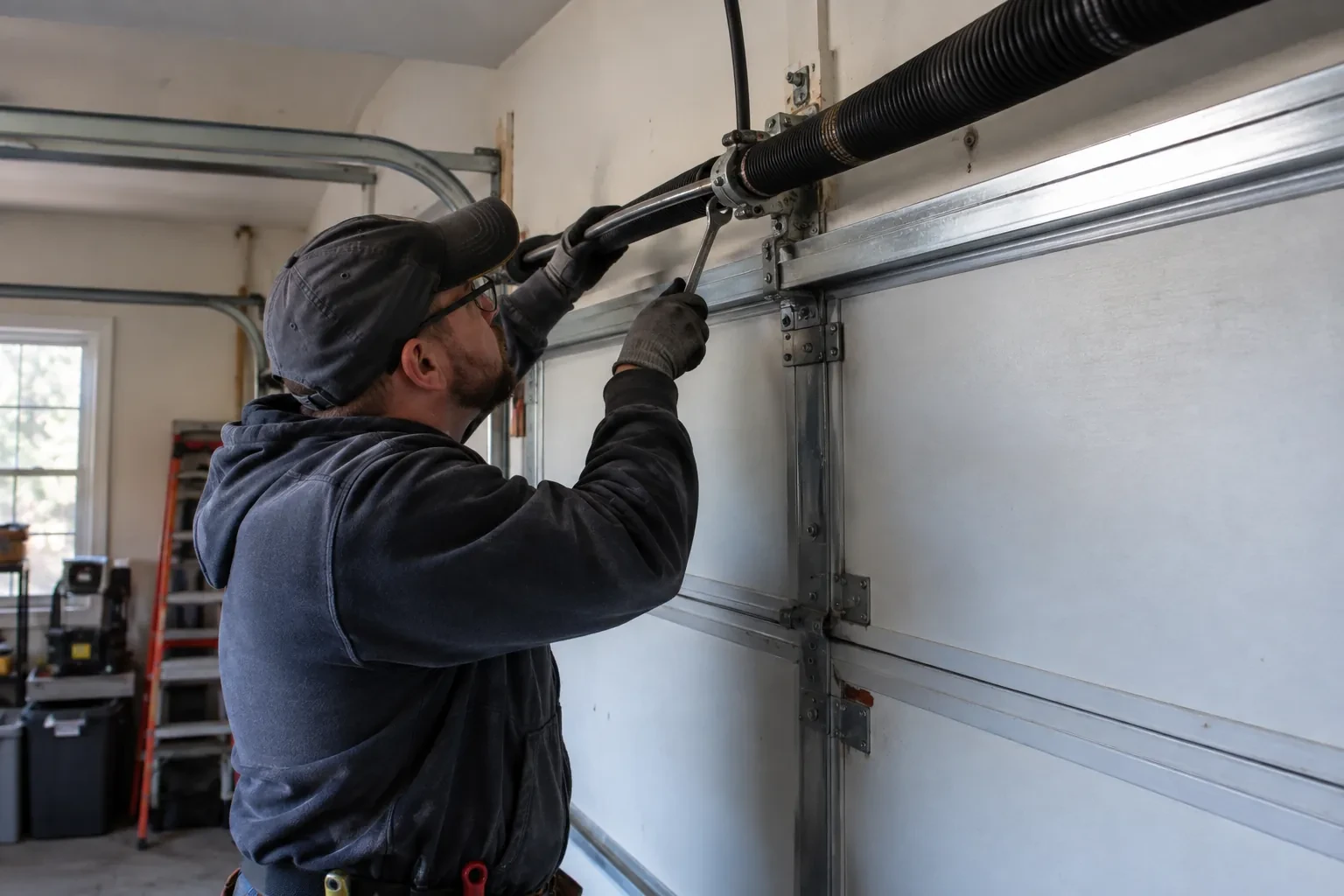
A new bottom section arrives bare, so its working parts are fitted on site. Bottom brackets are bolted to each end, with the cable attached and the safety tab in place, and a roller set in each bracket. The seal retainer is fixed along the bottom edge and a new astragal is slid into it so the door meets the floor evenly. The lift cables are laid over the drums, the springs are wound back to the correct number of turns for the door's height, and the set screws are tightened. The door is then eased off the floor by hand to confirm the cables are seated and even on both sides.
Habits that keep sections out of harm's way
Most section damage comes from a handful of everyday moments, and small changes head them off. Wait until the door is fully open before pulling in or out; the sensor and lights on many openers make that easy to judge. Give the door a metre of clearance when parking a trailer or leaning bikes. If the driveway is the rink, a practice net or a sheet of plywood on the inside face of the lower sections takes the pucks instead of the steel. And if the door is ever struck, stop using it and have it looked at, because the visible dent is not always the whole story.
Garage Door Panel Replacement
In the van
Nylon or steel rollers
Self-tapping stile screws
Winding bars and track clamps
Horizontal reinforcement strut
Bottom brackets with cable tabs
Garage Door Panel Replacement
What affects the quote
Whether the exact section is still made
A current model is a straightforward order. A discontinued design may mean a section from a related series, a custom-made section, or a discussion about the whole door, each of which lands differently on the quote.
Hinges, rollers and brackets
Hardware bent or worn by the damage is replaced along with the section. The quote lists hinges by joint position, rollers by type, and any bottom or top brackets, so you can see what accompanies the section itself.
Condition of tracks and cables
An impact often nudges a track bracket or nicks a cable where it wraps the drum. Straightening or resetting track and replacing a cable are itemised so the section quote stays clear.
What to have ready
- Roughly how old is the door, and has any section been replaced before?
- What caused the damage, and when did it happen?
- Roughly how wide and how tall is the door?
Garage Door Panel Replacement: questions
QuestionsCan I keep using the door while I wait for the section?
If the damage is cosmetic and the hinges, rollers and cables are sound, the door can usually stay in service. If a section is folded, a hinge has pulled out or a cable has slackened, the technician braces the door, disconnects the opener and asks you to leave it closed, because the opener pulling on a weakened section can turn a repairable door into a larger job. You will be told clearly which applies.
Can a dent be repaired instead of replacing the section?
Sometimes. A shallow dent in the middle of a steel skin, away from joints and hinge points, can often be eased out or filled, sanded and painted. Damage that creases the metal, reaches a joint or an end stile, bends a hinge point, or kinks a strut affects how the section carries load as the door moves, and a new section is the sound repair there. The technician tells you which category your dent falls into.
What is a strut, and does a new section need one?
A strut is a horizontal steel stiffener fastened across the inside of a section to keep it from bowing. Wide doors, top sections where the opener arm pulls, and bottom sections that take knocks are the usual places for them. If your damaged section had a strut, the new one gets a straight strut refitted or replaced. If a top section bowed because it never had one, adding a strut is part of putting it right.
Related services
- Garage Door Tune-UpEvery morning the door announces itself to the whole street: a long metallic squeal as it climbs, a rattle at the top, and a groan on the way back down.
- Off-Track Garage Door ResetThe door came down fine but with a scraping noise, and now the vertical track on one side is bowed away from the wall.
- Garage Door Bottom Seal ReplacementThe strip under the door has gone as hard as a hose left out for ten summers.