Repairs · Wilmot
Garage Door Perimeter Weatherstrip
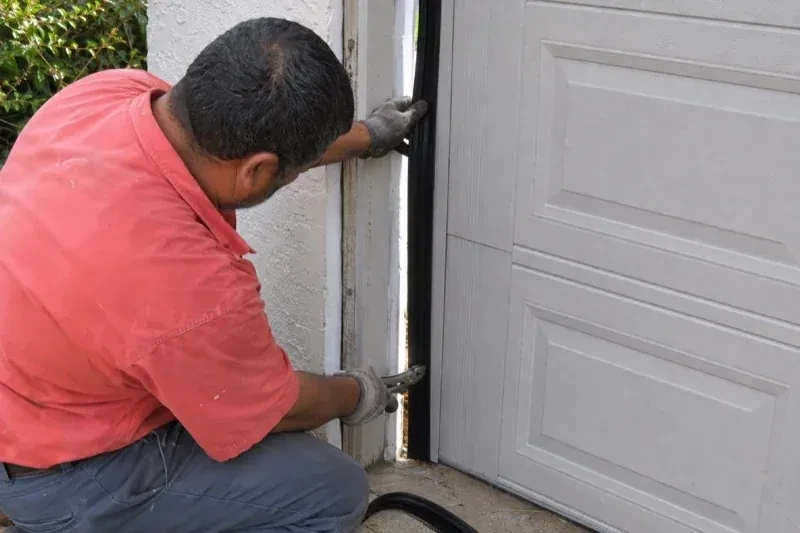
The new door went in last year and looks perfect, but the old wooden stop and its tired seal were left in place.
In plain words
For an attached garage the perimeter seal does more than keep leaves out. The garage is a buffer between the weather and the house, and drafts around the door cool the wall it shares with the kitchen and the floor of the room above it. Snow blown in melts and refreezes on the slab, and mice follow the warm air in at open corners. A well-fitted side and header seal closes those paths and eases the job of the weatherstripped door between garage and house, though the garage's warmth also depends on the door's own seal, the ceiling and the heating. It is a worthwhile comfort improvement for the house.
How the visit goesAfter a windy night there is a fine ridge of snow on the garage floor along one side of the door, and another across the top step. The door was shut the whole time; the snow came in around it.
Garage Door Perimeter Weatherstrip
How the visit goes
Probing the jambs and header
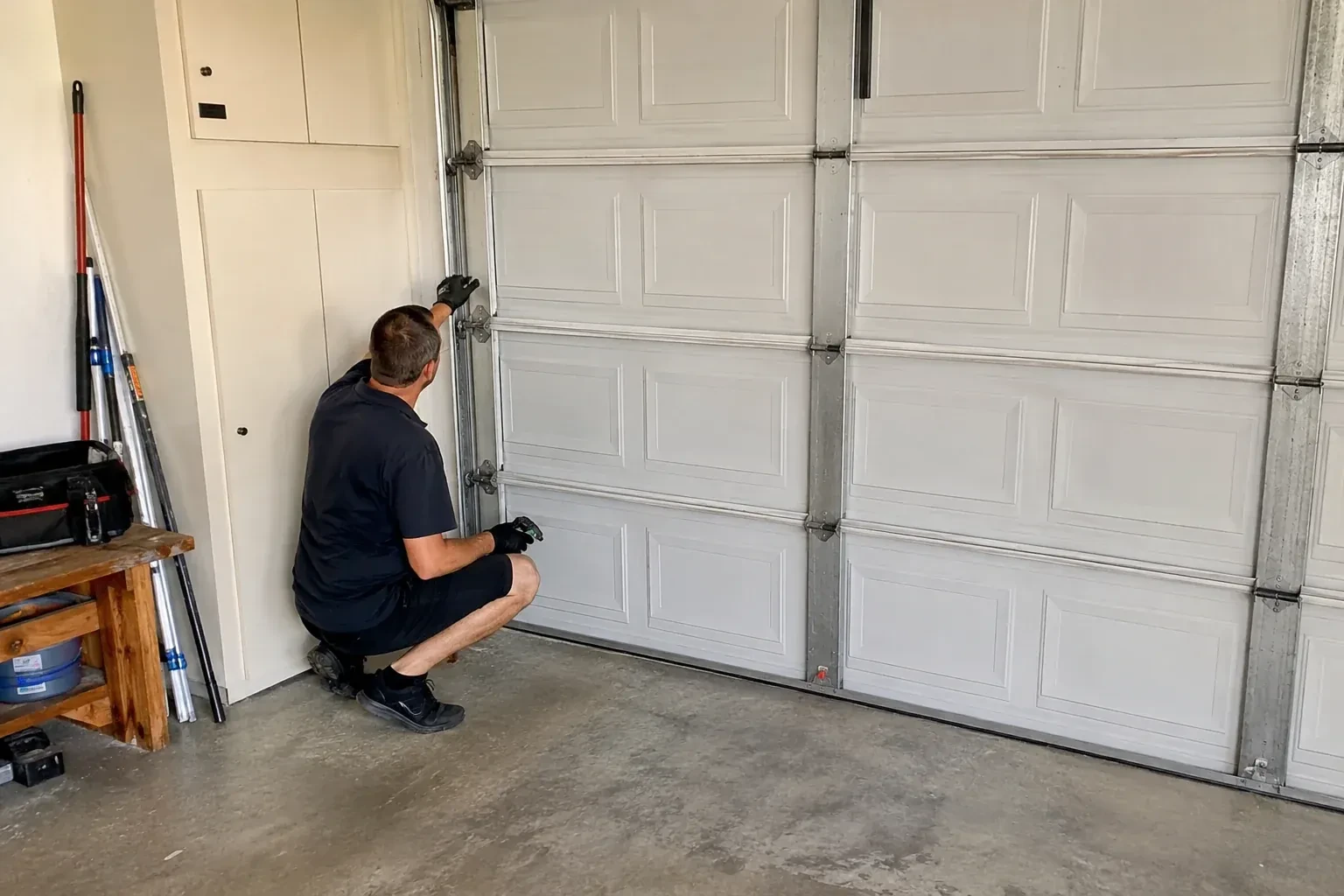
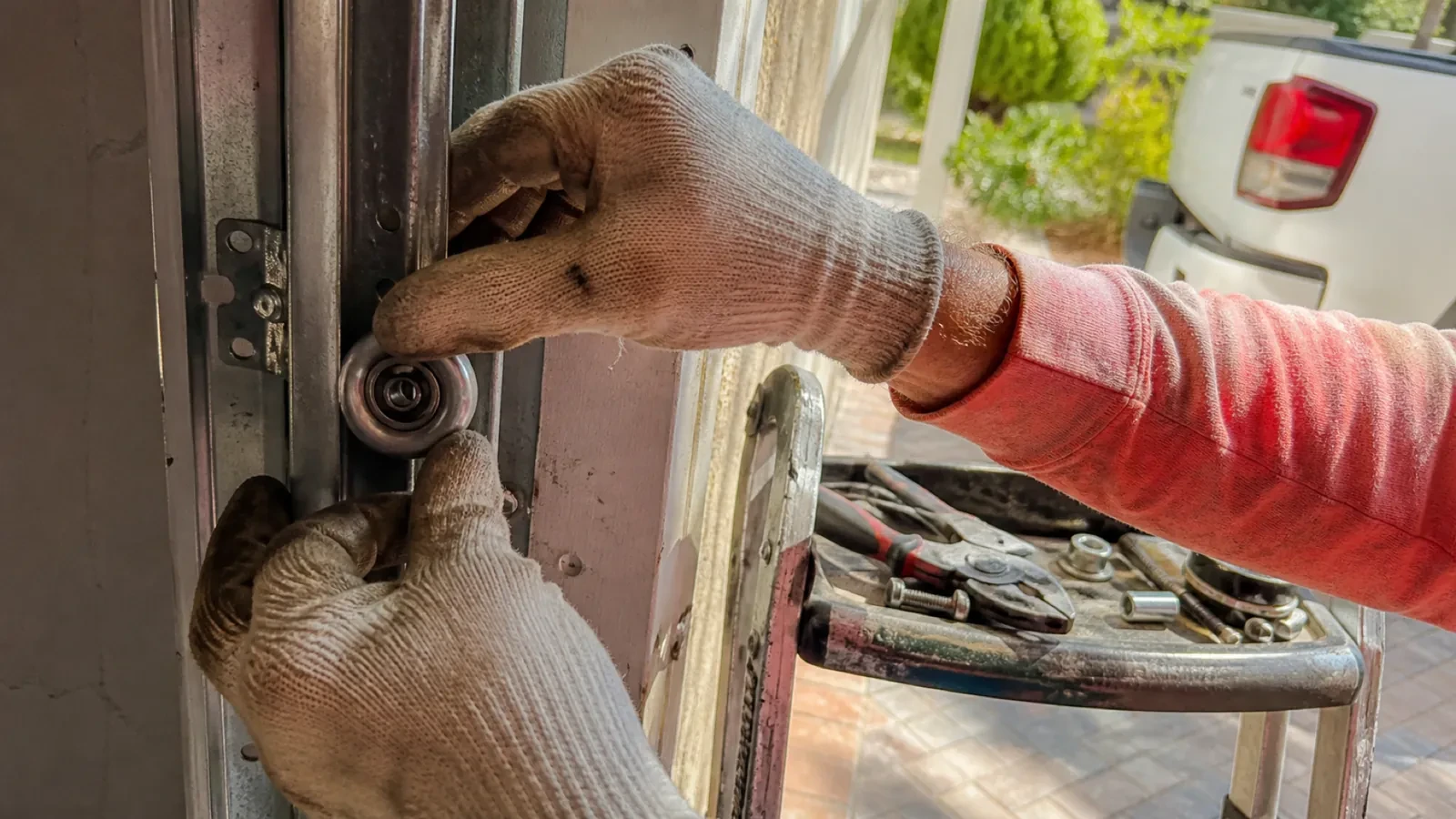
The strip is only as secure as the wood behind it, so the jambs are probed with an awl along their length and especially the lowest part, where slush and salt sit all winter. Soft, dark or crumbling wood is marked for repair. The header is checked for sag and for gaps opening between it and the top section. Where the jambs are clad in aluminum or vinyl, the technician looks for what the cladding hides and for where the seal can be fastened through to solid material. This step often adds a splice of new lumber or PVC trim to the job, and it is what makes the new seal stay put.
Making the jamb sound
Where probing found soft wood, it is dealt with before the seal. Rot at the base of the jamb is cut back to solid material and a matching piece of lumber or PVC trim is spliced in, fixed and primed. Minor soft spots are hardened with an epoxy consolidant and filled. Fasteners that will hold the new stop are then going into wood that grips them, which is what keeps the strip tight through years of the door pressing on it. Where the jamb is clad, the technician finds the solid framing behind the cladding and fastens through to it rather than into the thin skin.
A note of what was fitted
Before leaving, the technician tells you what went on: the seal type, the profile and fin width, the colour, and the lengths of the header and sides. It is worth writing this on a card near the opener or in the door's paperwork. If one length is ever damaged, by a ladder or a car mirror, the same profile can be matched and a single piece replaced rather than the whole set. If a jamb was repaired, the note records where and with what, so anyone painting or working on the frame later knows what is behind the finish.
Garage Door Perimeter Weatherstrip
In the van
Epoxy consolidant and exterior primer
Flexible vinyl fin seal
Exterior screws and weatherproof staples
Silicone spray lubricant
Aluminum retainer and rubber insert
Garage Door Perimeter Weatherstrip
What affects the quote
Colour and profile
Standard colours and fin widths are carried on the truck. A less common colour, an extra-wide fin or a commercial retainer with insert may be a special order, with the difference noted.
Jamb material
Wood jambs take nails; steel or aluminum-clad jambs need screws and sometimes a backing piece, and masonry openings need a different fixing altogether, each with its own time and hardware.
Partial replacement
Replacing one damaged length rather than all three is a smaller job, provided the remaining pieces are still soft and the profile can be matched.
What to have ready
- Is the seal cracked, torn, loose, or missing in places?
- Is anything stored against the jambs, or a car parked close to the opening?
- What colour is the trim around the door?
Garage Door Perimeter Weatherstrip: questions
QuestionsWhy is there daylight on one side but not the other?
It can be either. Worn rollers, a track bracket that has shifted or a top section that bows can move the door face toward one jamb and away from the other, and a seal that is damaged, shrunk, the wrong size or set slightly off the door face shows the same way. The technician checks both the door's alignment and the seal itself, corrects what is out of true, then fits the new seal to a door that closes evenly.
Will a new seal make the room above my garage warmer?
It can help. Drafts around the garage door cool the garage, and the garage cools the floor above it and the wall it shares with the house. Closing the perimeter cuts those drafts, though how much warmer the garage runs depends on the door's own seal, the ceiling insulation and how the space is heated, not the perimeter alone. A technician can talk through those as separate steps if the room stays cold.
The wood around my door is rotten near the floor. Can the seal still go on?
Yes, and the rot is handled first. The soft wood at the base of the jamb is cut back to sound material and a new piece of lumber or PVC trim is spliced in, fixed and primed, so the fasteners for the new stop bite into something solid. This is one of the most common additions to a perimeter seal job here, because slush and salt sit against the jamb base all winter.
Related services
- Garage Door Tune-UpEvery morning the door announces itself to the whole street: a long metallic squeal as it climbs, a rattle at the top, and a groan on the way back down.
- Off-Track Garage Door ResetThe door came down fine but with a scraping noise, and now the vertical track on one side is bowed away from the wall.
- Garage Door Panel ReplacementYou misjudged the last metre of the driveway and felt the bumper meet the door.