Springs · St. Agatha
Torsion Spring Replacement in St. Agatha
You heard a sharp bang from the garage, and now the opener hums for a second and gives up.
In plain words
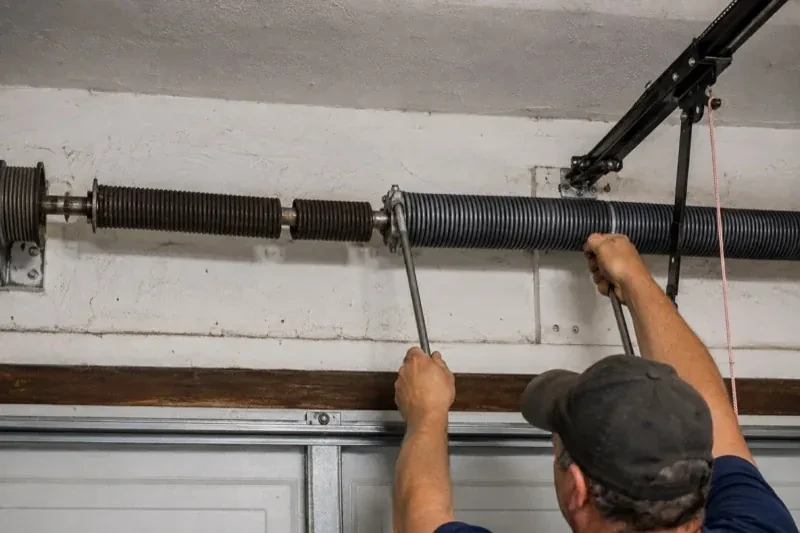
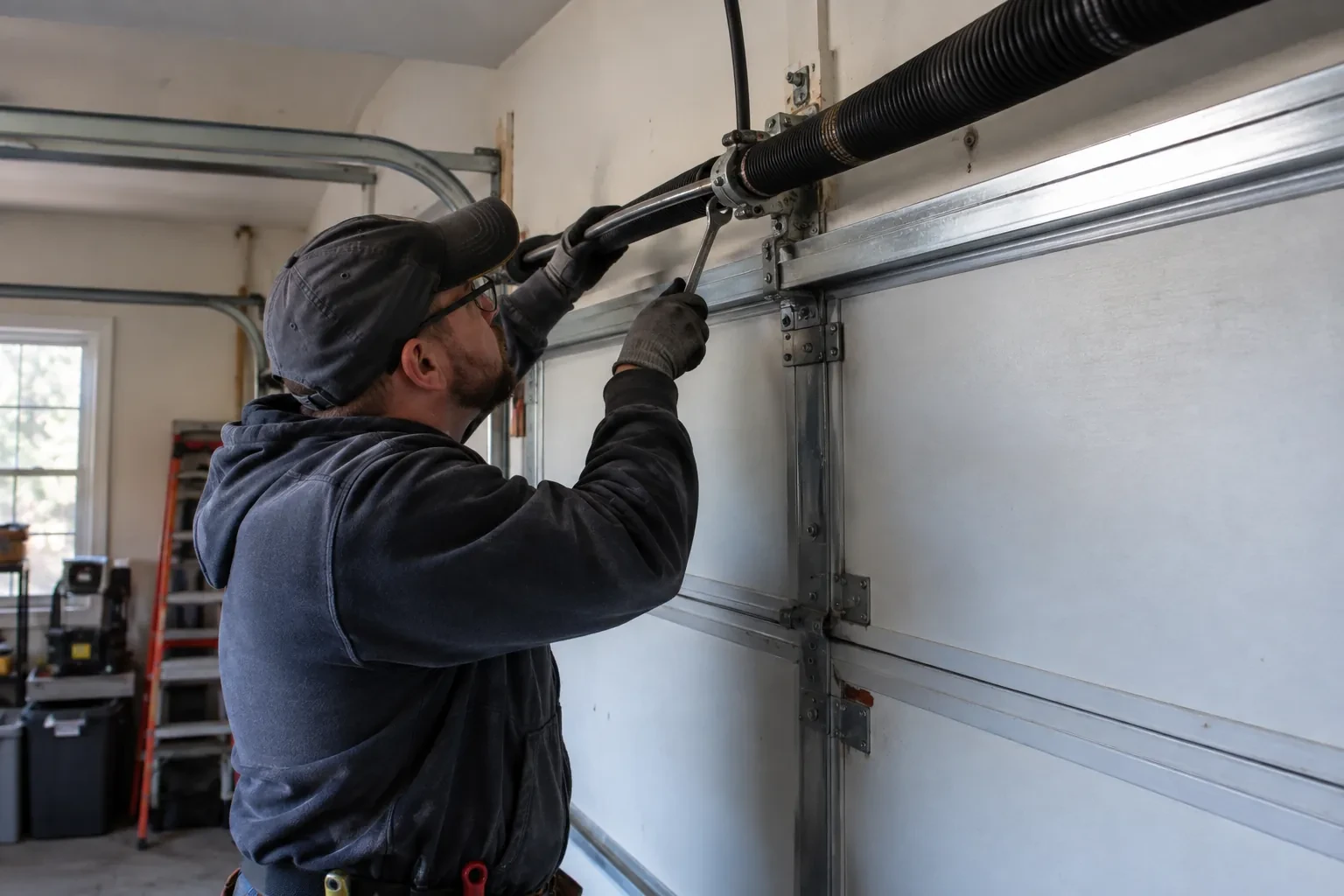
The heart of this service is matching, not just swapping. Two springs can look identical and behave very differently, because the force a torsion spring produces depends on its wire thickness, inside diameter, length and wind direction, and the right combination depends on the door's weight, height, drum type and track lift. The technician measures all of those before choosing a spring, then confirms the choice the only way that counts: lifting the finished door by hand and feeling it stay put at waist height. A properly matched spring lasts longer and keeps the opener working easily.
How the visit goesAfter pulling the red release cord, you tried lifting the door yourself and it would barely leave the floor. A door that used to glide up with one hand now takes real effort, which points to the counterbalance rather than the opener.
Torsion Spring Replacement
How the visit goes
Looking for damage the break left behind
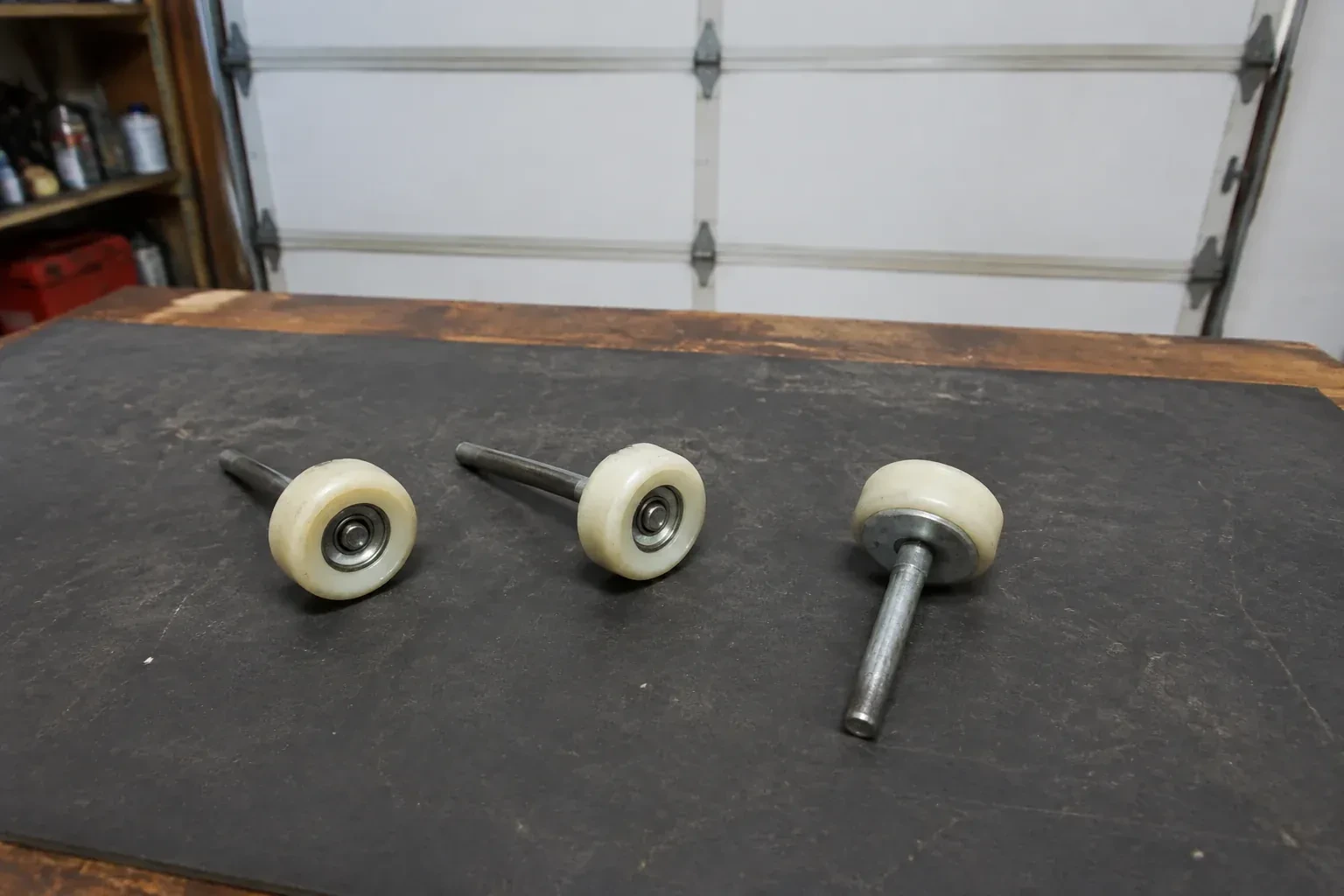
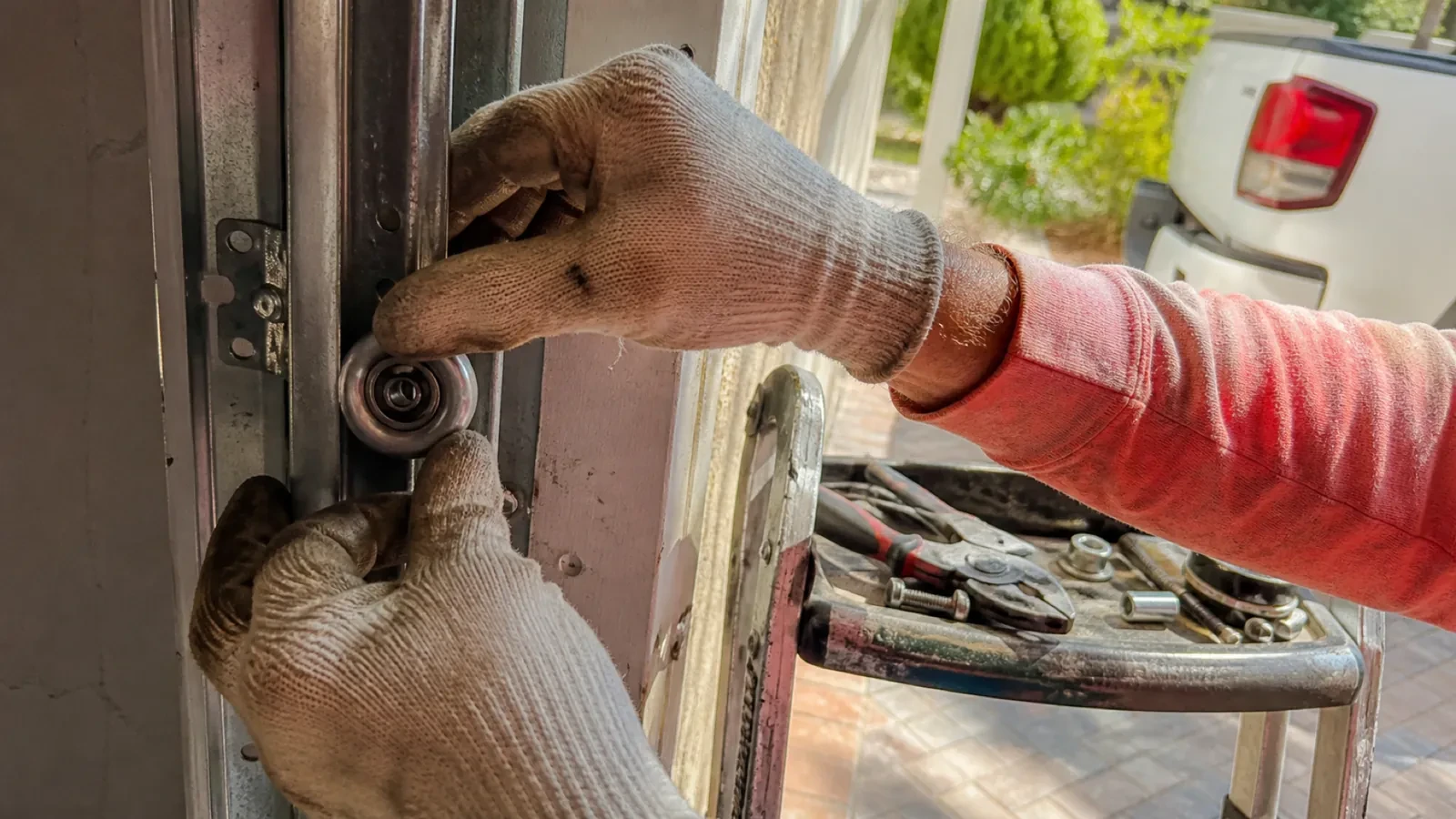
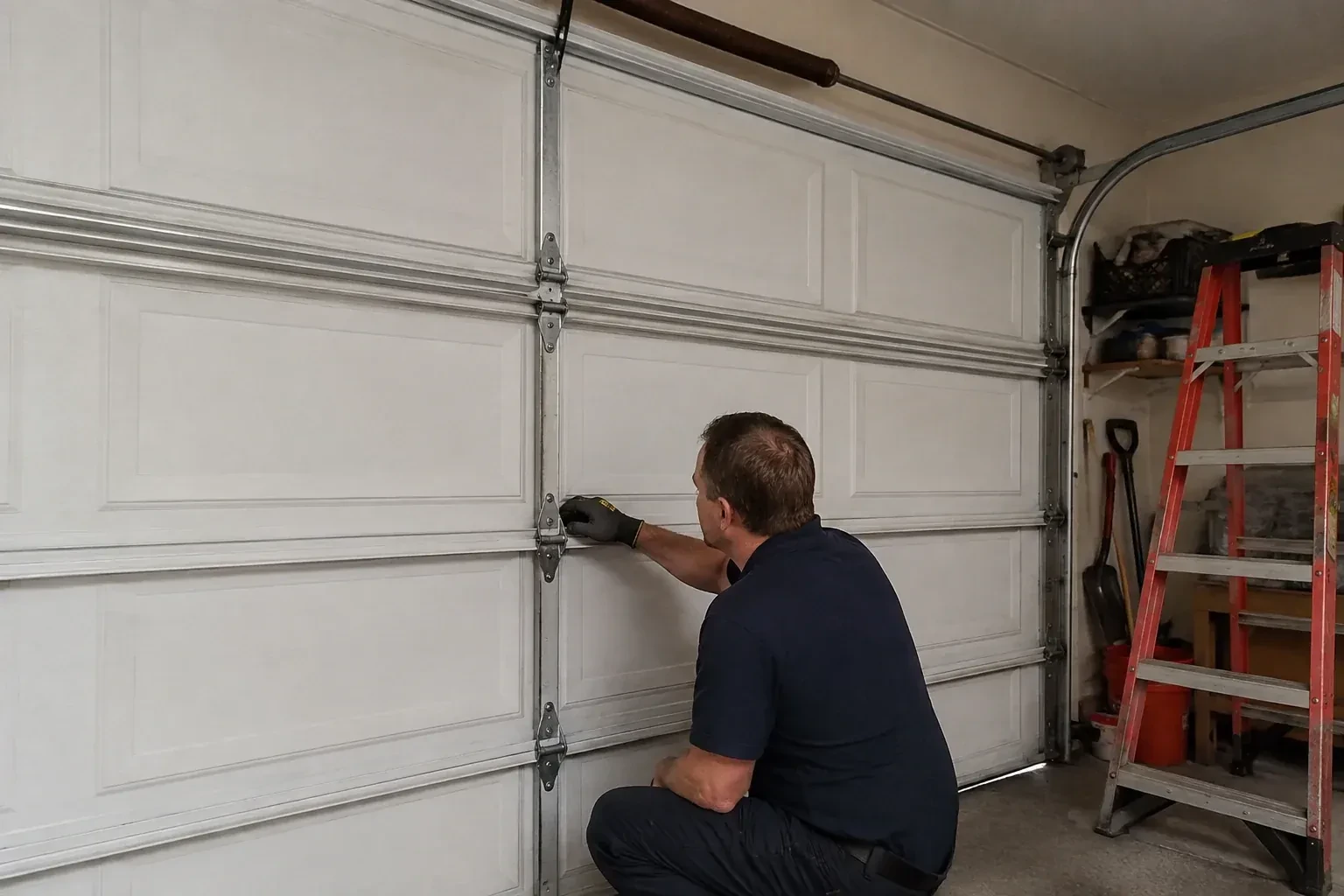
When a spring snaps, the door's full weight suddenly lands on parts that were never meant to carry it. The technician checks the top section for a bow or crease where the opener trolley pulled, looks at the trolley and rail for bending, and inspects hinges and roller stems along the top panel. If the door came down crooked, the rollers and track are examined for a jump or a dent. Catching these effects before the new spring goes in means the balanced door runs on straight hardware rather than dragging a distorted section through the tracks.
Renewing the bearings while the shaft is out
Removing a spring frees the shaft, which is the moment to deal with bearings. The centre bearing, which sits in the bracket between the springs and carries the shaft under constant load, is pressed out and replaced if it grinds or has play. End bearings in the plates at each side are checked the same way. New bearings are seated square, and the shaft is slid back through them and turned by hand to confirm smooth rotation before any spring is wound. Smooth bearings reduce the effort the spring and opener have to overcome, which extends the life of both.
Relief for the opener
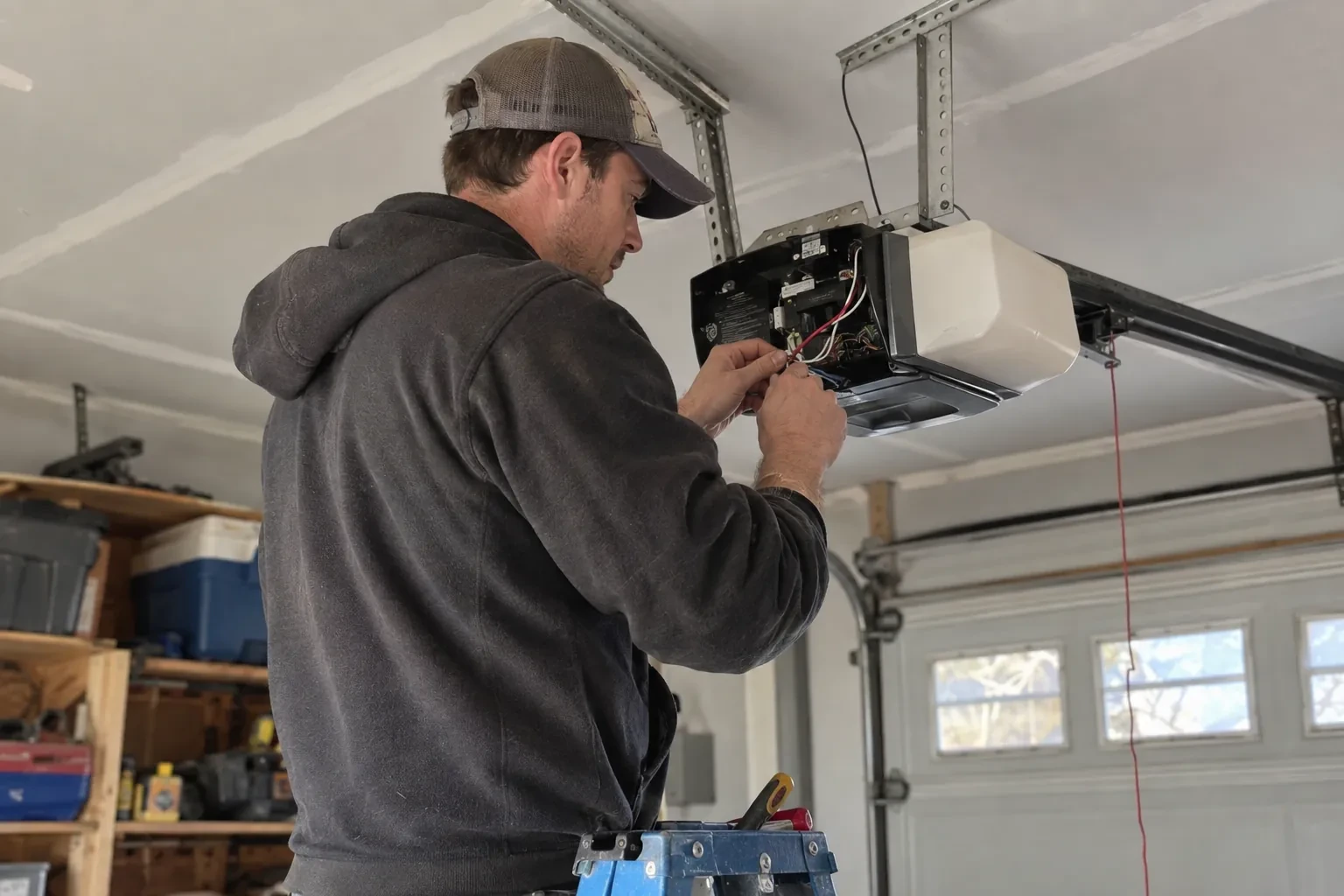
Your opener benefits as much as the door. With the spring carrying the weight again, the motor, gear drive, trolley and rail return to the light duty they were designed for, which tends to mean a longer working life and less noise. Force settings have been reset to suit a balanced door, so the safety reversal reacts to a genuine obstruction rather than to a heavy door. Once a year, repeat the simple reversal test by placing a length of wood flat on the floor in the door's path and confirming the door reverses on contact. The opener's photo-eye sensors deserve a wipe at the same time.
Torsion Spring Replacement
In the van
Winding bars
Cable drums
Torsion springs, oil-tempered or galvanized
Stationary cone bolts and nuts
Locking pliers for the track
Torsion Spring Replacement
What affects the quote
Opener reconnection and testing
Resetting force and travel limits and running the reversal and photo-eye tests are part of the visit. An opener with worn gears or a slipping trolley uncovered during testing becomes a separate item.
Cycle rating chosen
A standard-cycle spring and a high-cycle spring balance the door the same way but differ in wire and length. Choosing a longer-life spring is an option the household can weigh against how often the door is used.
Drum type and lift configuration
Standard-lift drums are the common case. High-lift, vertical-lift or low-headroom arrangements use different drums, cable lengths and turn counts, which changes the parts and the time involved.
What to have ready
- About how many times a day does the door open and close?
- Can you see a gap in the spring above the door?
- Is the door currently closed, open, or stuck partway?
Torsion Spring Replacement: questions
QuestionsIf only one spring broke, should both be replaced?
On a two-spring door both springs have completed the same number of cycles, so the intact one is usually close to the end of its life as well. Replacing the pair gives the door two matched springs sharing the load evenly and a fresh cycle count on both sides. The technician looks at the remaining spring's condition and the door's configuration, then explains the reasoning so you can choose the scope with a clear picture.
Can a spring be adjusted rather than replaced?
A spring that is intact but has relaxed slightly can be given a little more tension, within limits, to restore balance; this is a normal adjustment on a door that has settled. A spring with a broken coil is replaced as a unit, since the wire has reached the end of its life. The technician checks the condition of the steel and recommends whichever restores a balanced, safe door.
Why is my door sitting crooked since the spring broke?
On a two-spring door, one intact spring keeps pulling on its side while the broken side goes slack, so the door lifts unevenly and a cable can jump its drum. The technician levels the door, reseats the cables in their drum grooves and evens the tension after the new spring is fitted. Rollers and track are checked for damage from the crooked travel so the door runs square again.
Related services
- Garage Door Hinge ReplacementThe roller at the top of the second panel is leaning outward and only half of the wheel is still in the track.
- Garage Door Track Repair or ReplacementHalfway up, the door lurches and one roller rides onto the lip of the channel.
- Garage Door Cable ReplacementThe cable has wrapped itself around the shaft above the door instead of sitting on its drum.