New Doors · New Dundee
Insulated Steel Garage Door Installation in New Dundee
Daylight appears beside the closed door and powdery snow collects just inside after windy weather.
In plain words
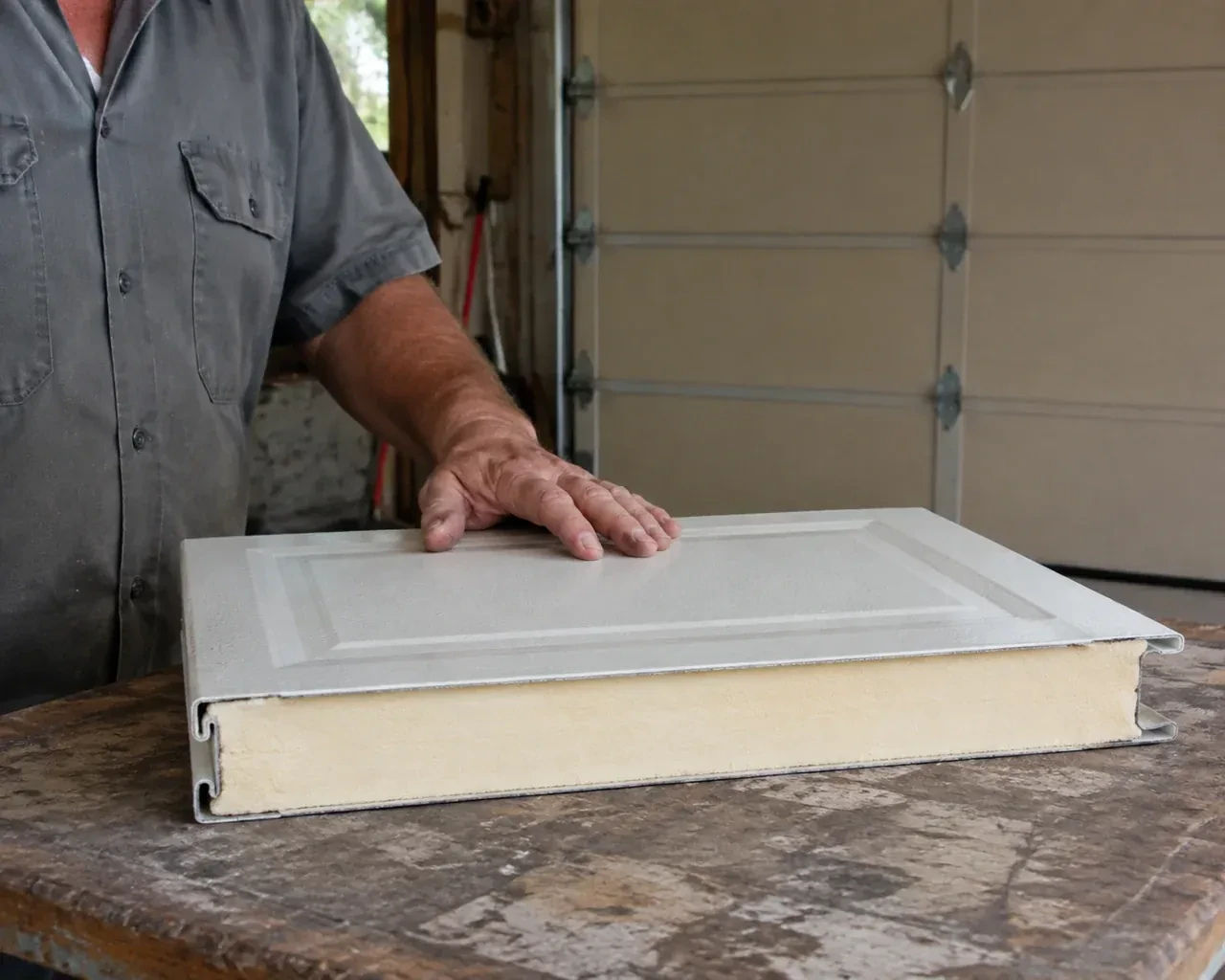
An insulated steel garage door is a sectional assembly with steel faces and insulating material inside the sections. Installation begins with the finished opening, because width, height, floor level, side clearance and ceiling obstructions decide which track and hardware arrangement fits. The selected sections, tracks, rollers, hinges, springs, cables and weather seals are supplied as a coordinated system. After assembly, the installer balances the door by hand, checks its full path, connects a compatible opener where required and confirms the safety functions before demonstrating normal use.
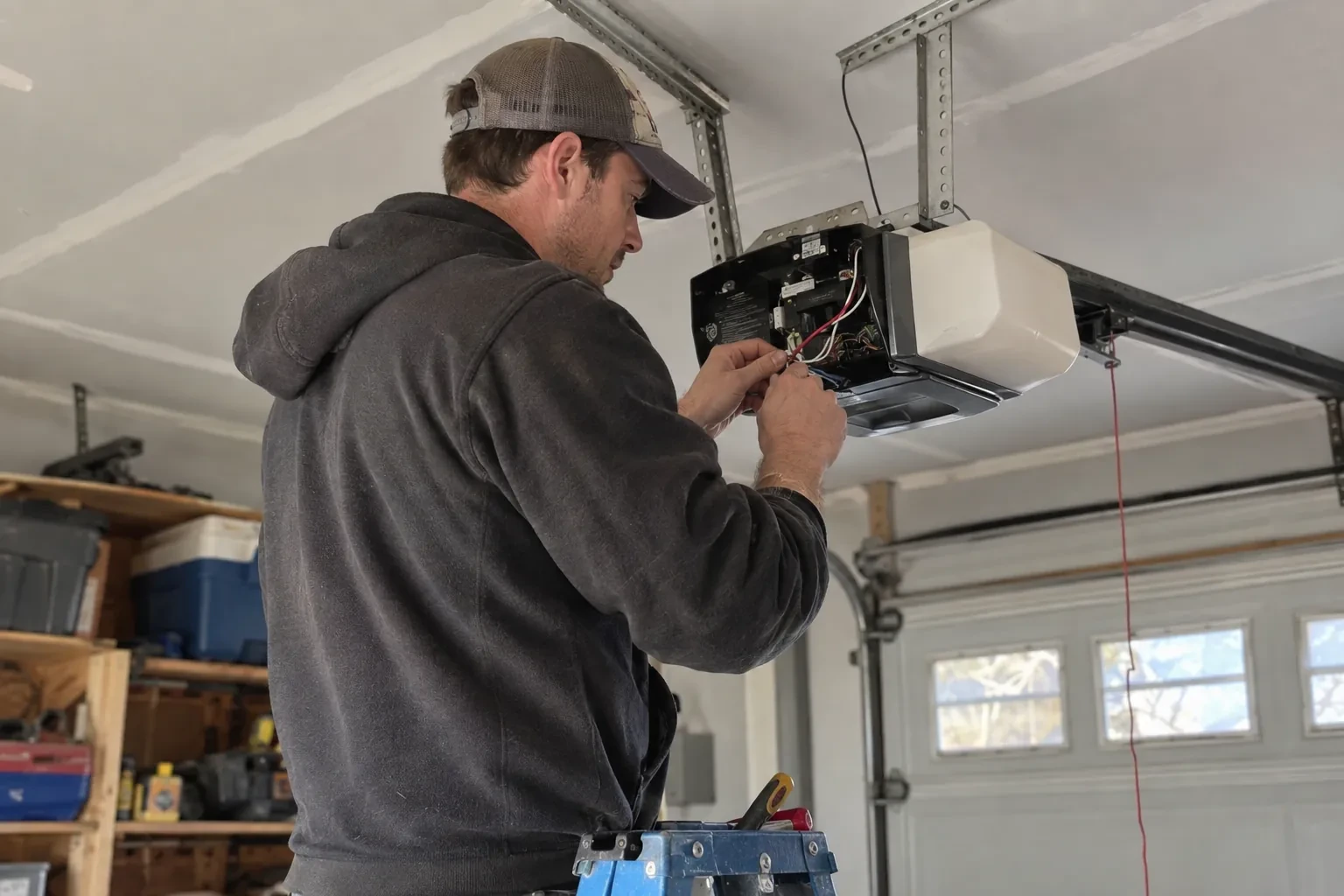
How the visit goesThe opener strains as the heavy older door starts upward, and manual movement feels uneven. A new insulated assembly calls for counterbalance hardware matched to its actual weight and a compatibility check for the operator.
Insulated Steel Garage Door Installation
How the visit goes
Reviewing the old door as a system
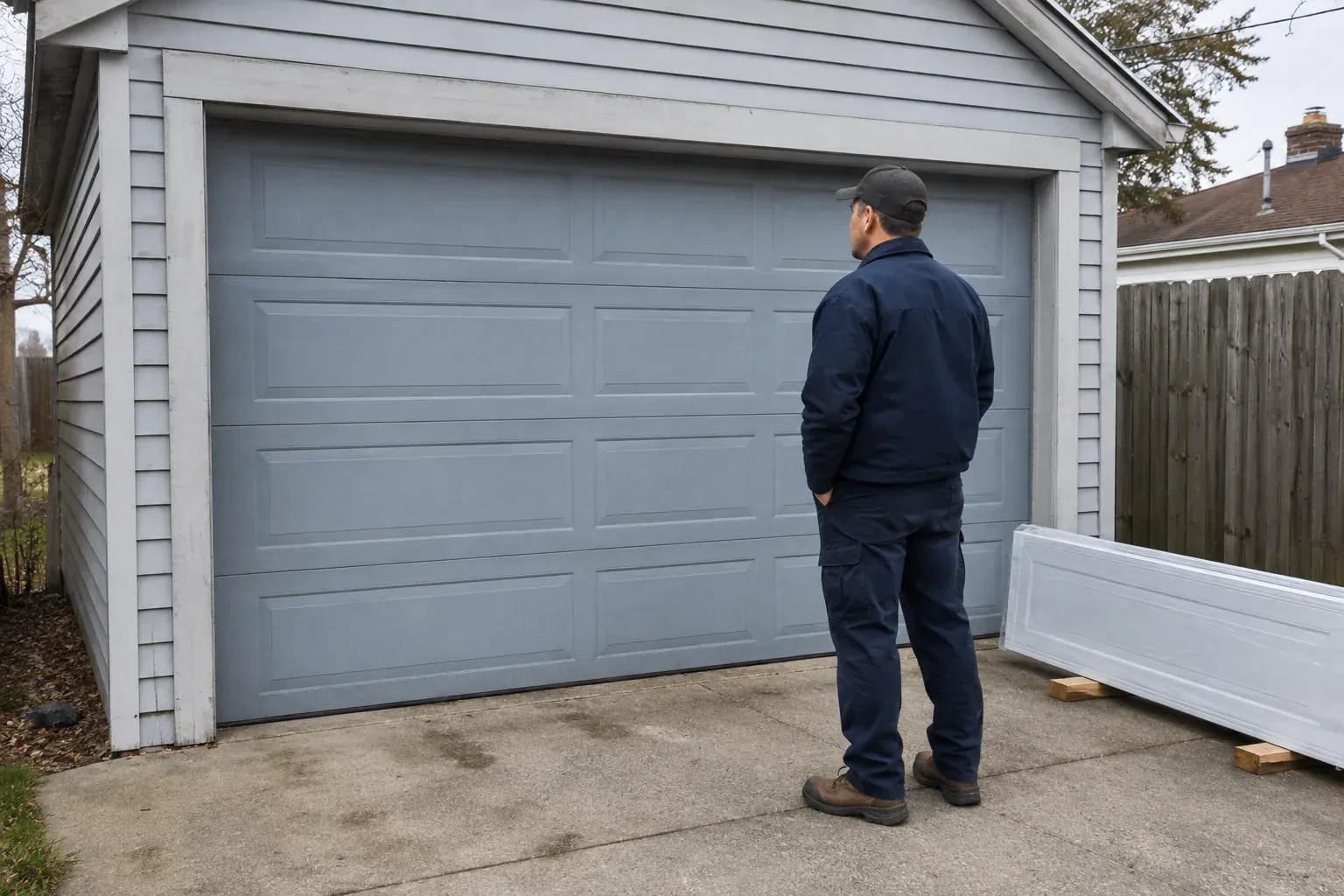
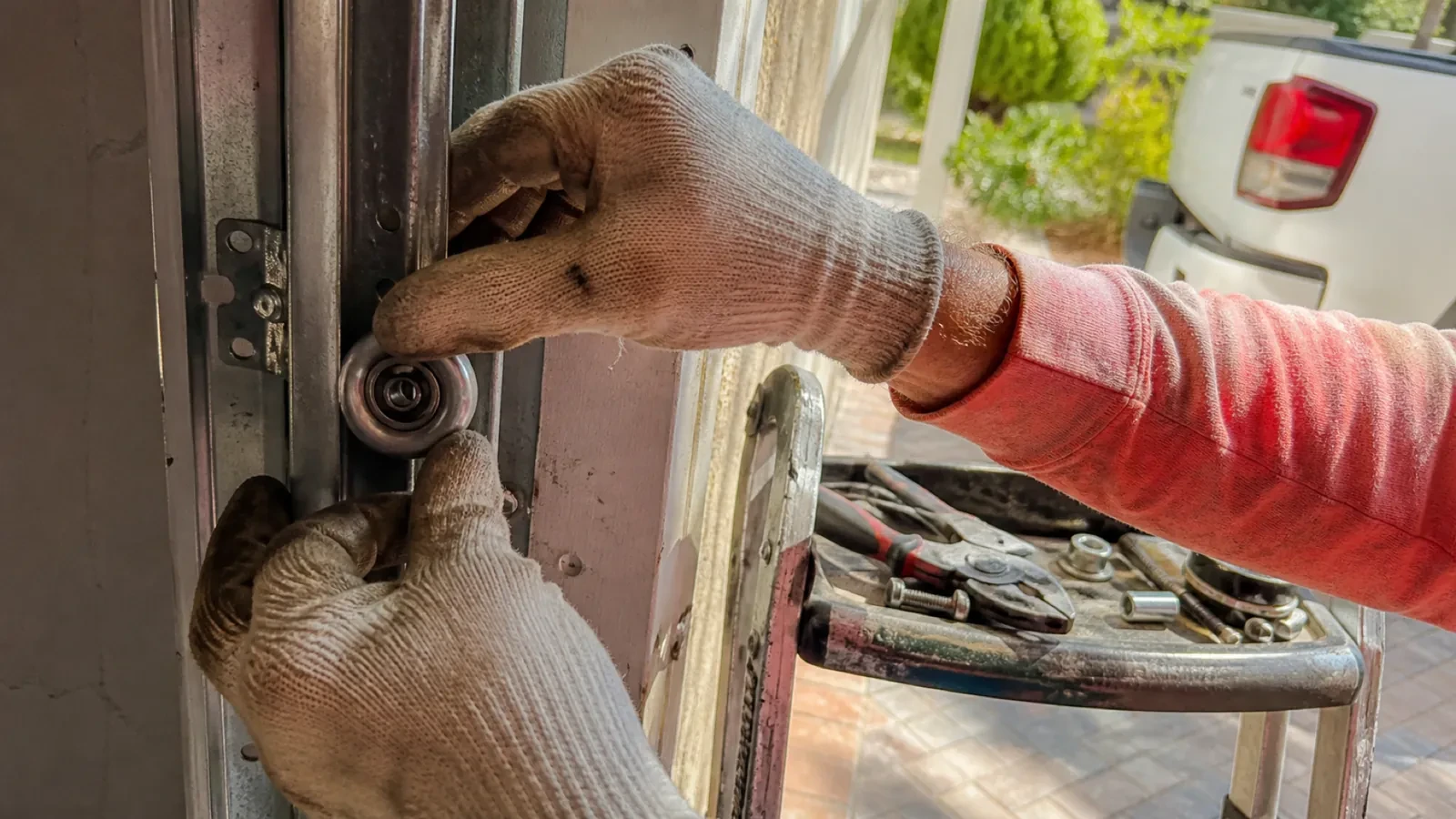
The existing assembly provides useful clues about the opening. Its track radius, spring layout, section thickness, opener attachment and wear patterns show how the space has been working. The installer looks for rubbing rollers, twisted tracks, uneven cable travel, floor gaps and repairs that changed the geometry. This inspection helps explain current problems, but the new door is still specified with its own compatible tracks and counterbalance parts. Reusing a component is considered only when its identity, condition and manufacturer guidance support that choice.
Matching counterbalance to door weight
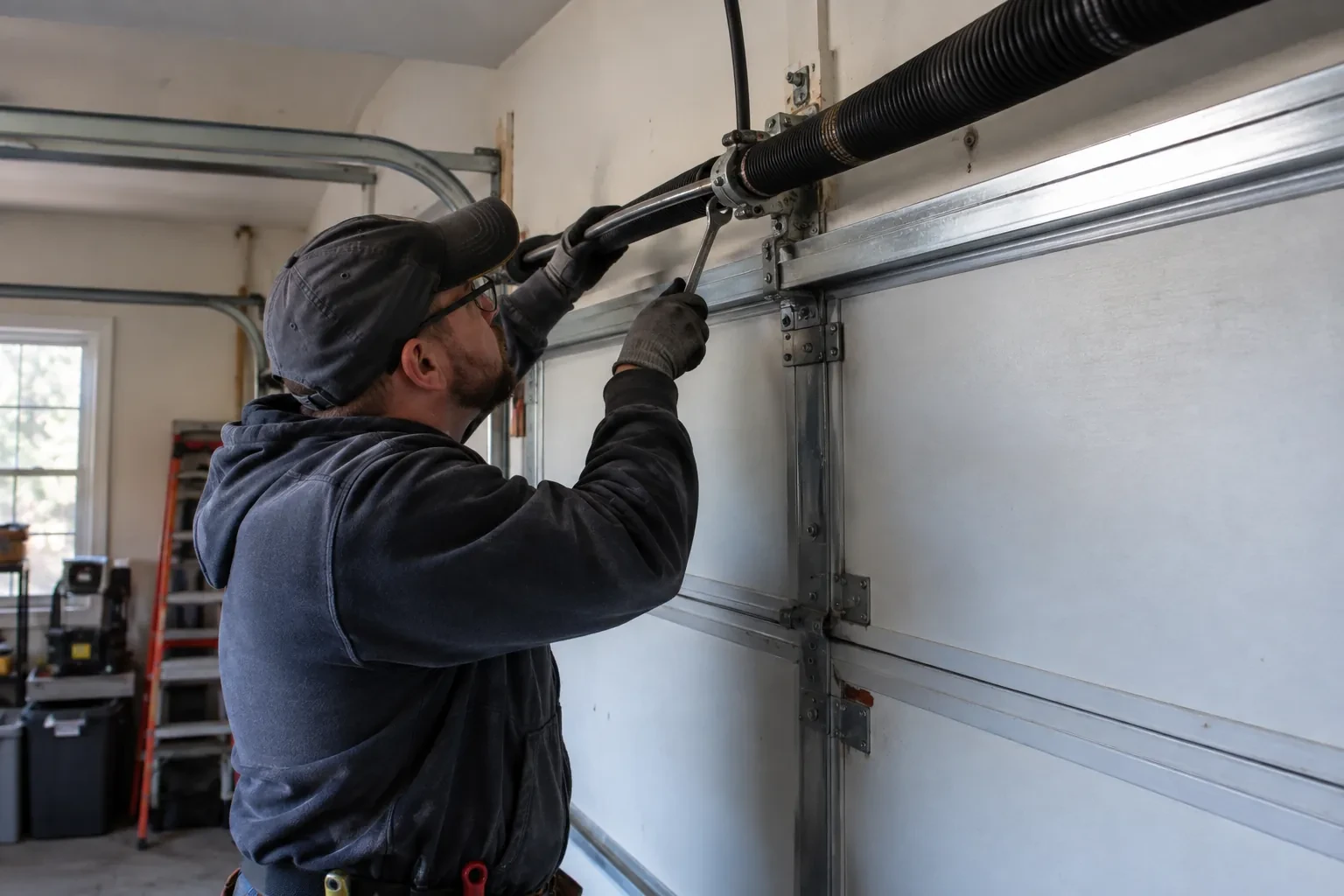
Once the sections and related hardware are in place, the counterbalance system is installed for the actual completed door. Torsion components may include a shaft, bearing plates, cable drums, lift cables and springs selected for the door's weight and travel. An extension system uses its own springs, pulleys, cables and containment provisions. The installer sets tension with purpose-made tools, keeps cables seated evenly and tests movement by hand. Adjustment continues until the door stays manageable through its travel without relying on the electric operator to carry an unbalanced load.
A more comfortable garage boundary
The finished opening has insulated steel sections joined into a complete moving assembly, with seals meeting the floor, jambs and header. That combination can moderate the surface temperature and air movement associated with a large exterior door, especially in an attached or actively used garage. Results still depend on the rest of the room, including walls, ceiling, other doors and ventilation. The customer leaves with the exact product information, so future comparisons refer to the installed construction and declared assembly values rather than a remembered marketing number.
Insulated Steel Garage Door Installation
In the van
Track rollers
Vertical tracks
Perimeter weather seals
Insulated steel sections
Cable drums
Insulated Steel Garage Door Installation
What affects the quote
Decorative hardware
Exterior handles, hinge accents and trim pieces add ordered materials and layout work. Their positions must suit the section design without interfering with movement.
Opener integration
Connecting an existing compatible operator differs from installing a new one. Reinforcement, controls, sensors, rail position, travel setup and testing define this portion.
Bottom and perimeter sealing
Seal type, retainer, jamb moulding and floor variation affect materials and fitting. An irregular slab may need a separately planned threshold or floor correction.
What to have ready
- How do you use the garage besides parking?
- Can vehicles and stored items be moved before installation?
- Are there beams, pipes or storage above the door?
Insulated Steel Garage Door Installation: questions
QuestionsWhat safety checks are done after installation?
The installer first checks manual balance, cable tracking, roller travel, track supports, fasteners and the fully open and closed positions. If an operator is connected, complete powered cycles follow. Photo-eye response, contact reversal according to the operator instructions, wall controls and emergency release are demonstrated. The customer also receives guidance on safe gripping points and keeping clear of section joints.
What information should I receive at handover?
Keep the door and opener manuals, product identification, care instructions and a description of the installed hardware. The closeout should also note manual balance, full-cycle travel and applicable safety tests. Window, finish and seal details help with future care, while model and component records make later parts selection more accurate than relying on appearance alone.
Can the new door use my old tracks?
A replacement is normally planned with track designed for its section thickness, rollers, weight and required clearances. Old track may look similar while having a different spacing, curve or support arrangement. The installer identifies every component and follows the selected door maker's compatibility information before proposing reuse. Treating panels and track as one system supports clean travel and correct perimeter positioning.
Related services
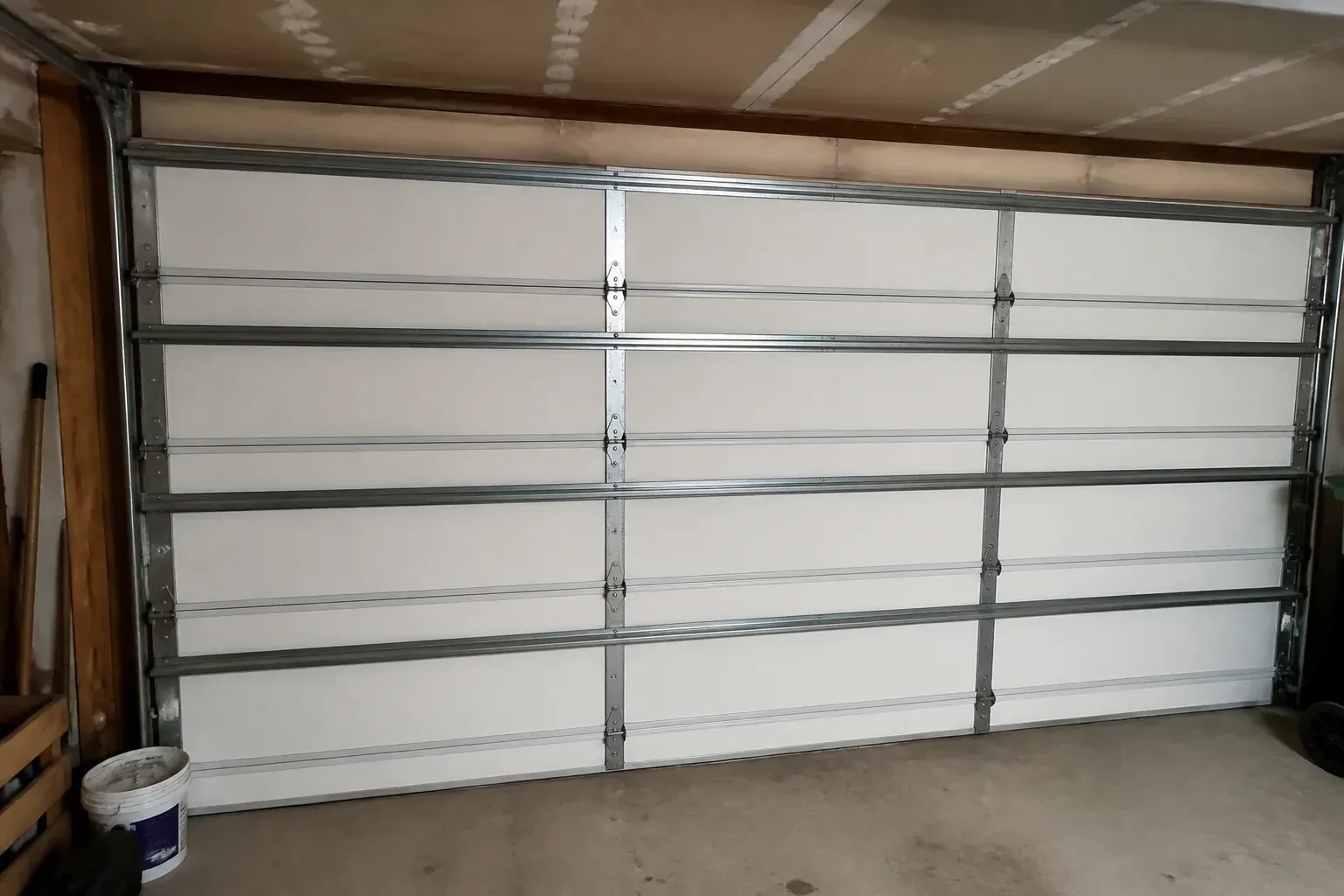
- Wind-Rated Garage Door ReplacementA recent wind event left one section slightly creased, a strut twisted, and several track fasteners loose.
- Carriage-House Garage Door InstallationThe existing door has reached the point where panels, rollers and finish all look tired.
- Full-View Glass Garage Door InstallationYour workshop faces the driveway and needs a professional, welcoming frontage without putting tools on display.