New Doors · Phillipsburg
Insulated Steel Garage Door Installation in Phillipsburg
Daylight appears beside the closed door and powdery snow collects just inside after windy weather.
In plain words
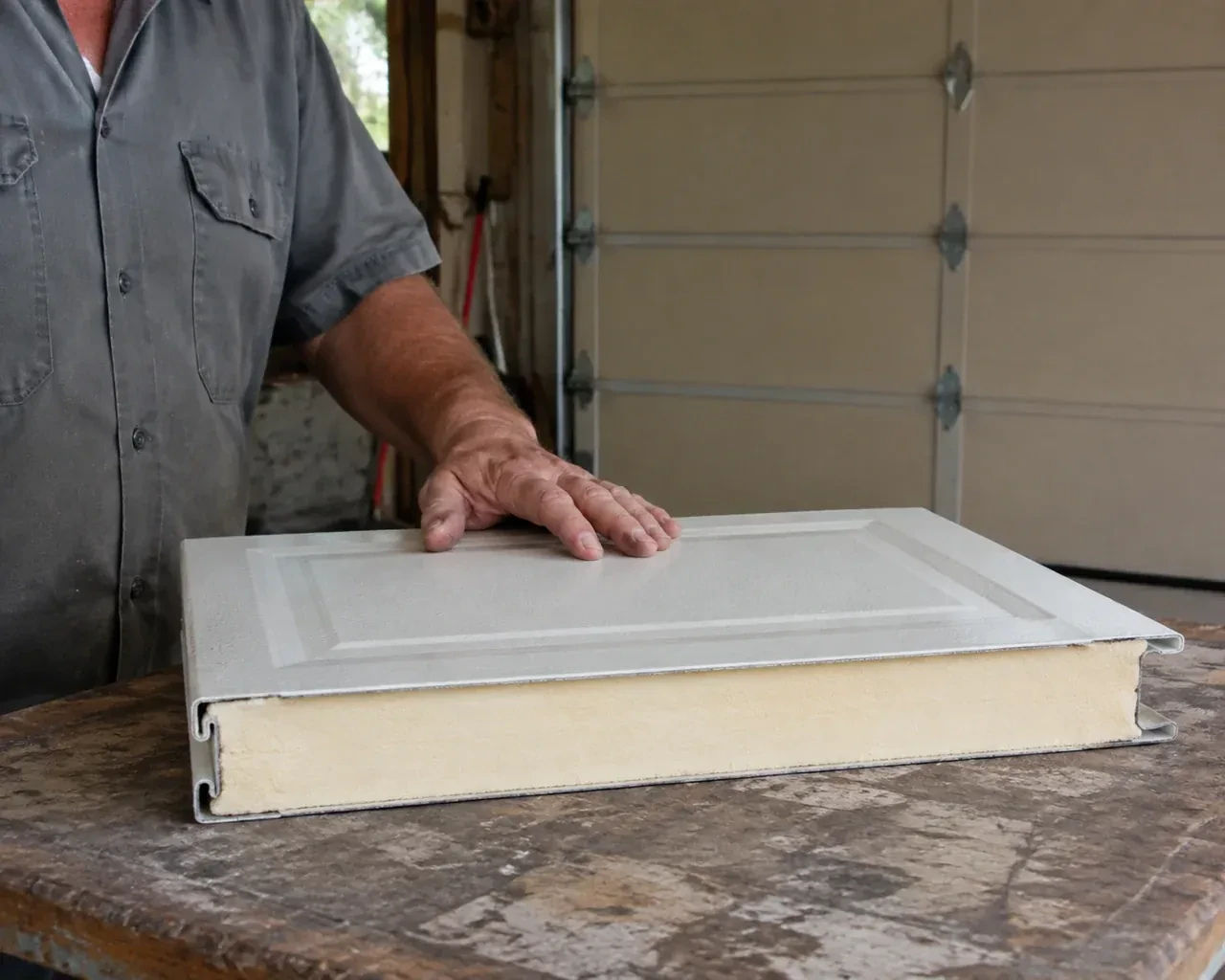
Replacing an older door is more than hanging new panels on whatever hardware is already present. Section thickness, overall weight, roller position, track curve, spring selection and opener geometry work together. The installer therefore checks the framing and clearances, removes the loaded components carefully, and fits the track supplied or specified for the new door. Each section is levelled as it goes in, the counterbalance is adjusted to support the completed weight, and weather seals are set for useful contact without dragging on the door during travel.
How the visit goesThe existing door opens on old tracks that crowd storage near the ceiling. A replacement needs careful measurements for headroom, backroom and opener clearance before the new sections can travel properly.
Insulated Steel Garage Door Installation
How the visit goes
Measuring the finished opening
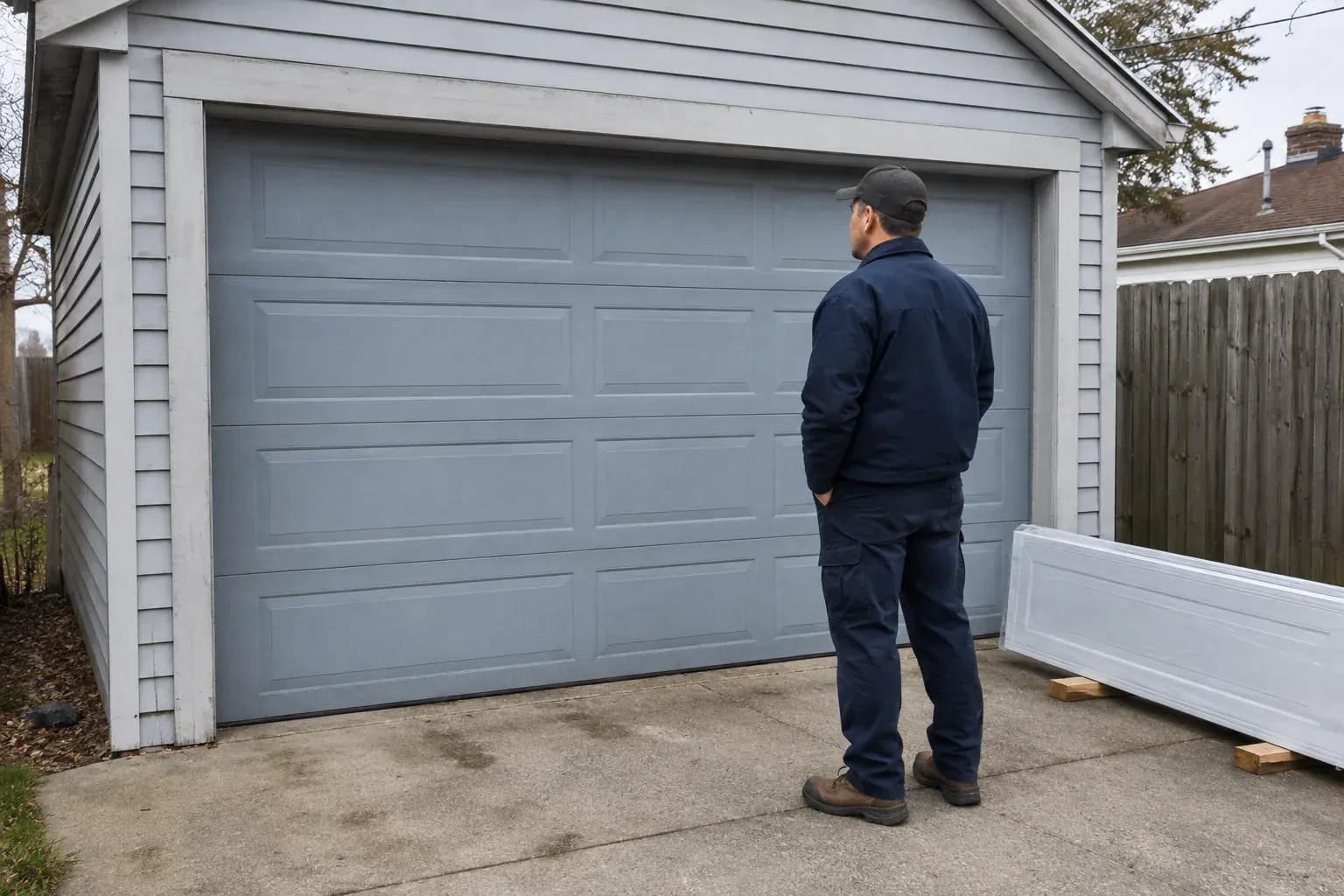
The first measurements are taken where the completed door will actually sit, not from an old label or a rough framing plan. Width and height are checked at several points, along with whether the floor is level and the jambs are plumb. The installer also records sideroom for vertical track and counterbalance hardware, headroom above the header, and backroom into the garage for horizontal tracks and an opener rail. Pipes, beams, lights, racks and attic access are marked because each can affect the available door path.
Sealing the perimeter carefully
Weather sealing is fitted after door position is established. The bottom astragal is checked against the slab across the full width, including low spots or a floor that slopes toward the driveway. Jamb and header seals are placed to make continuous, light contact with the exterior face while allowing the sections to move freely. Corners receive particular attention because small discontinuities can admit noticeable light and wind. The closed door is viewed from inside, and seal position is refined where contact is uneven without using excessive pressure to hide an opening problem.
A practical maintenance rhythm
The customer receives a manageable routine rather than a complicated service schedule. Visual checks cover cables, rollers, hinges, tracks, weather seals and unusual section movement from a safe position. The door and opener manuals set the timing for balance, reversal and photo-eye tests, lubrication points and professional inspection. Fasteners or finishes can be observed without touching loaded spring hardware. This habit preserves a useful record of how the system changes with daily cycles, humidity and winter conditions, making future service conversations more precise.
Insulated Steel Garage Door Installation
In the van
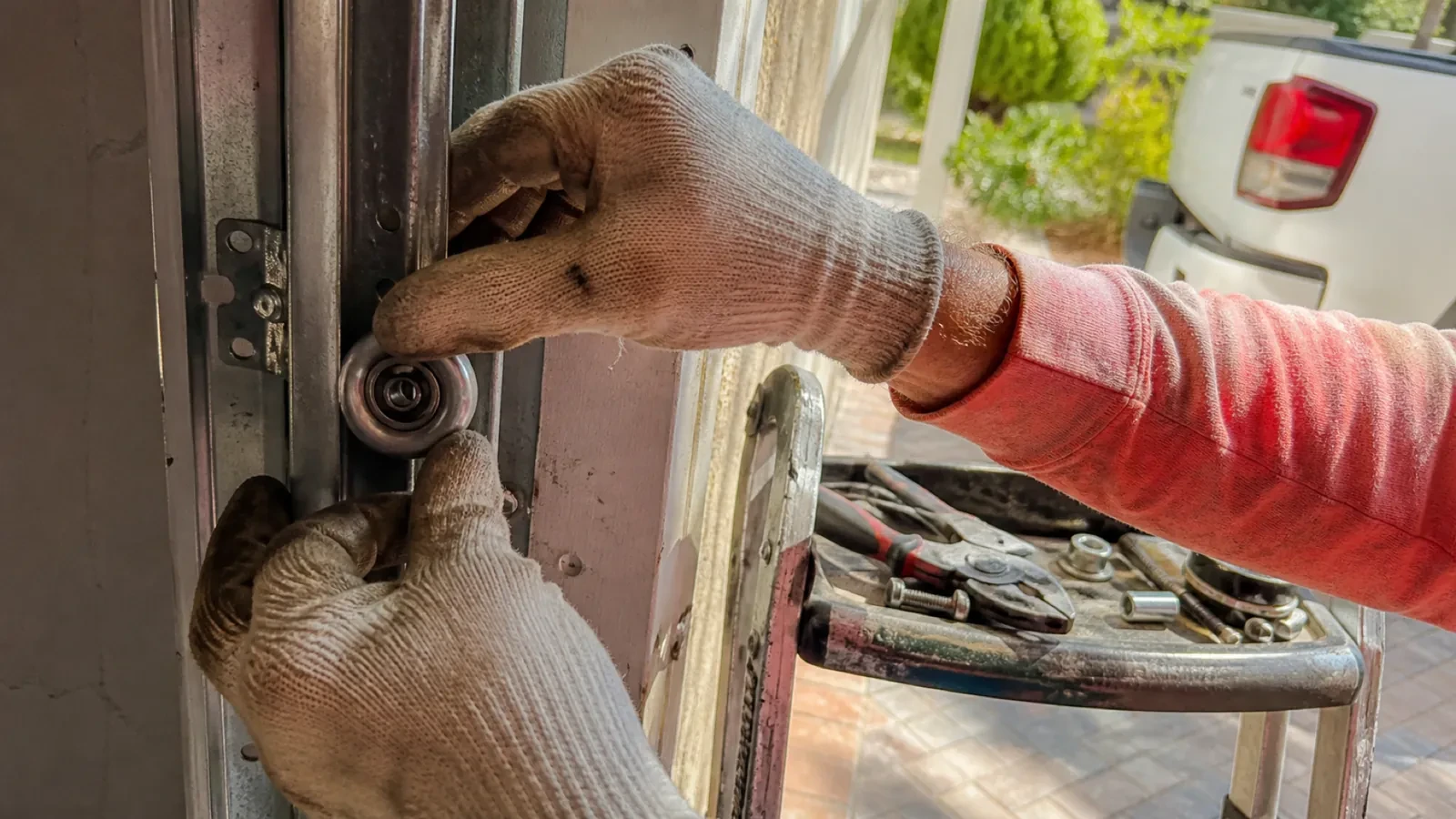
Track rollers
Vertical tracks
Perimeter weather seals
Insulated steel sections
Cable drums
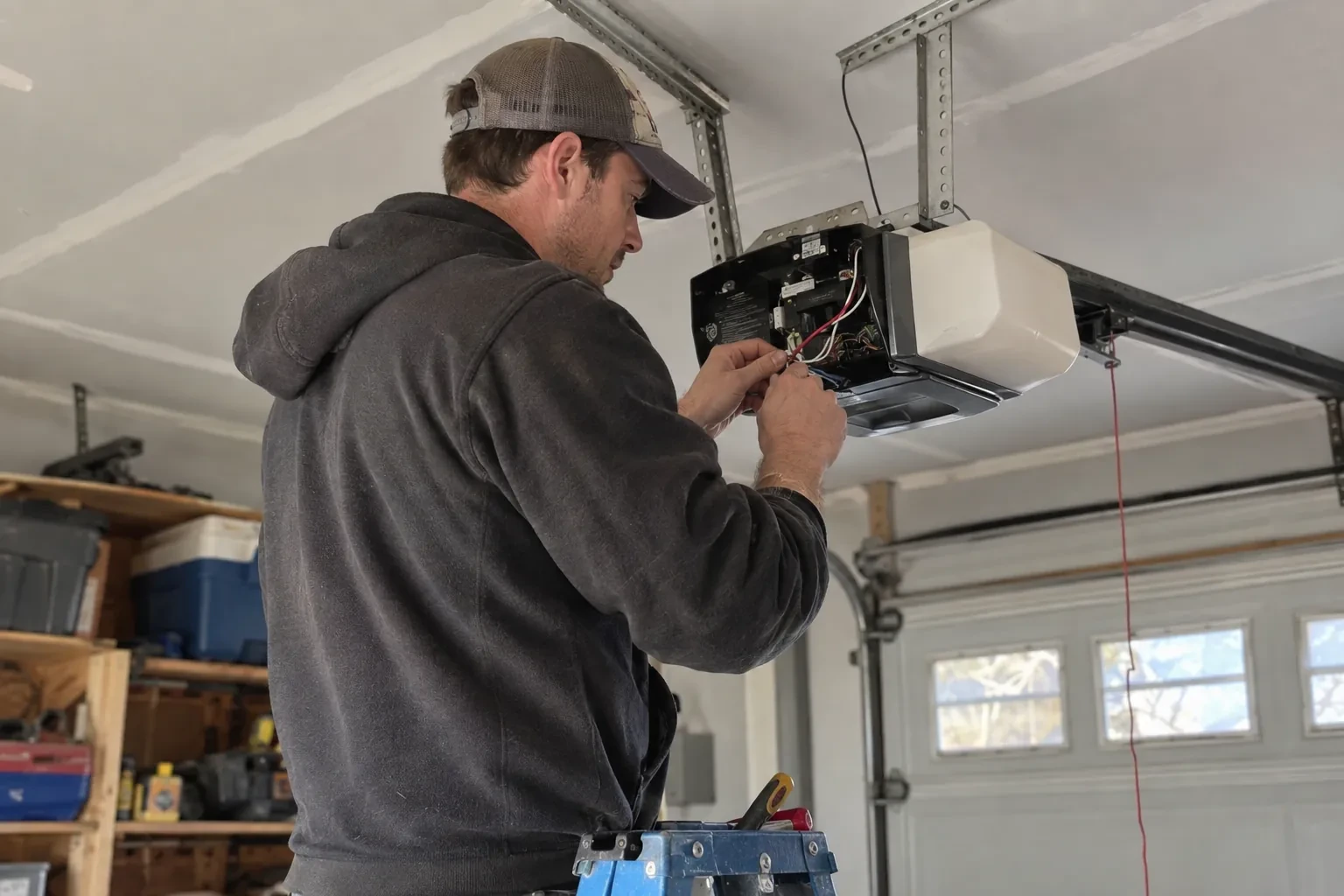
Insulated Steel Garage Door Installation
What affects the quote
Ceiling obstructions
Pipes, lights, ducts, attic hatches and storage racks can alter track supports or require coordination before fitting. Clear access reduces uncertainty in the installation plan.
Counterbalance system
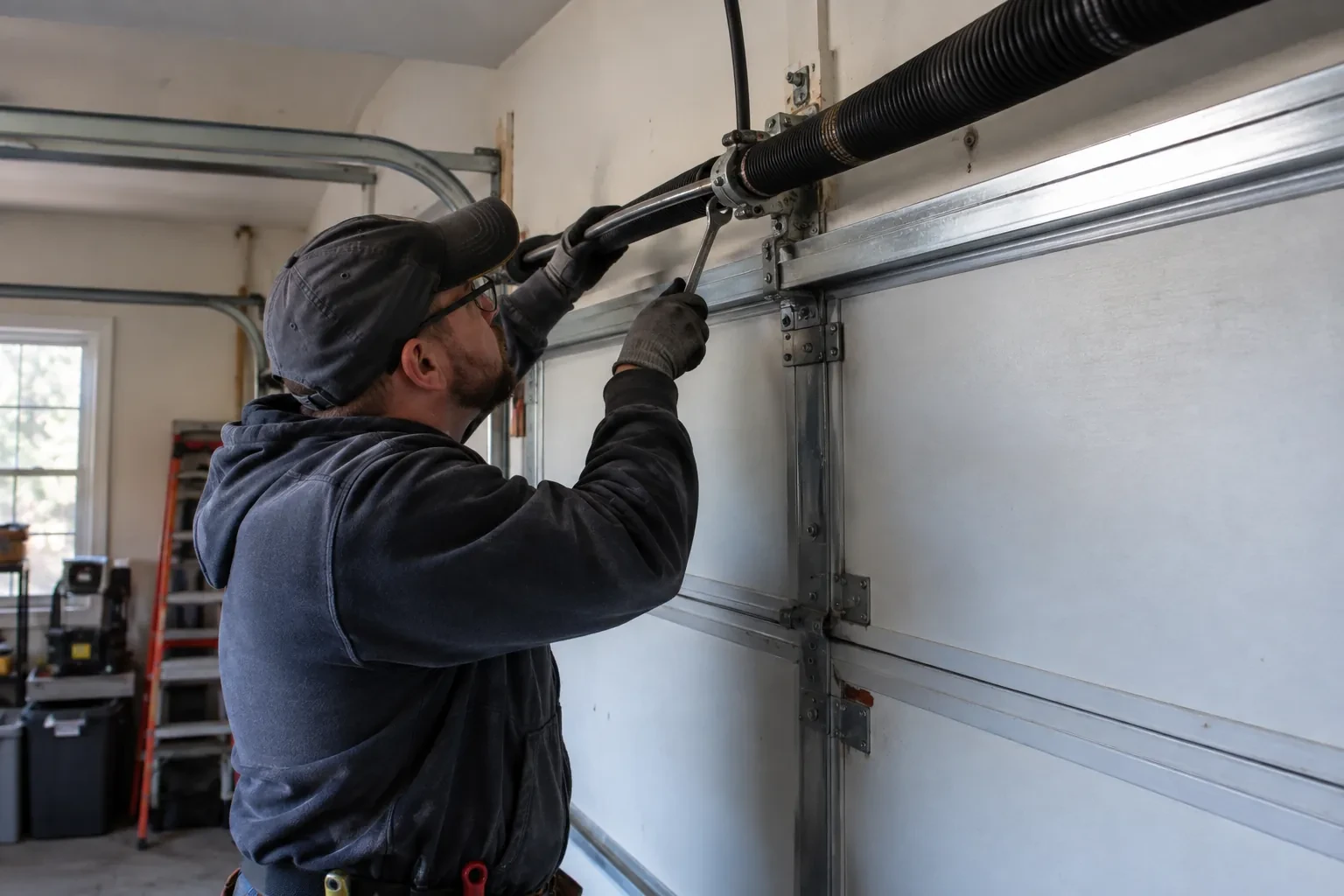
Door weight and travel determine spring, shaft, drum or extension hardware requirements. The specified counterbalance is itemized as part of the matched operating system.
Decorative hardware
Exterior handles, hinge accents and trim pieces add ordered materials and layout work. Their positions must suit the section design without interfering with movement.
What to have ready
- Will the existing opener remain or be replaced?
- Is the garage attached to living space?
- What are the finished opening width and height?
Insulated Steel Garage Door Installation: questions
QuestionsWhat safety checks are done after installation?
The installer first checks manual balance, cable tracking, roller travel, track supports, fasteners and the fully open and closed positions. If an operator is connected, complete powered cycles follow. Photo-eye response, contact reversal according to the operator instructions, wall controls and emergency release are demonstrated. The customer also receives guidance on safe gripping points and keeping clear of section joints.
What information should I receive at handover?
Keep the door and opener manuals, product identification, care instructions and a description of the installed hardware. The closeout should also note manual balance, full-cycle travel and applicable safety tests. Window, finish and seal details help with future care, while model and component records make later parts selection more accurate than relying on appearance alone.
Can the new door use my old tracks?
A replacement is normally planned with track designed for its section thickness, rollers, weight and required clearances. Old track may look similar while having a different spacing, curve or support arrangement. The installer identifies every component and follows the selected door maker's compatibility information before proposing reuse. Treating panels and track as one system supports clean travel and correct perimeter positioning.
Related services
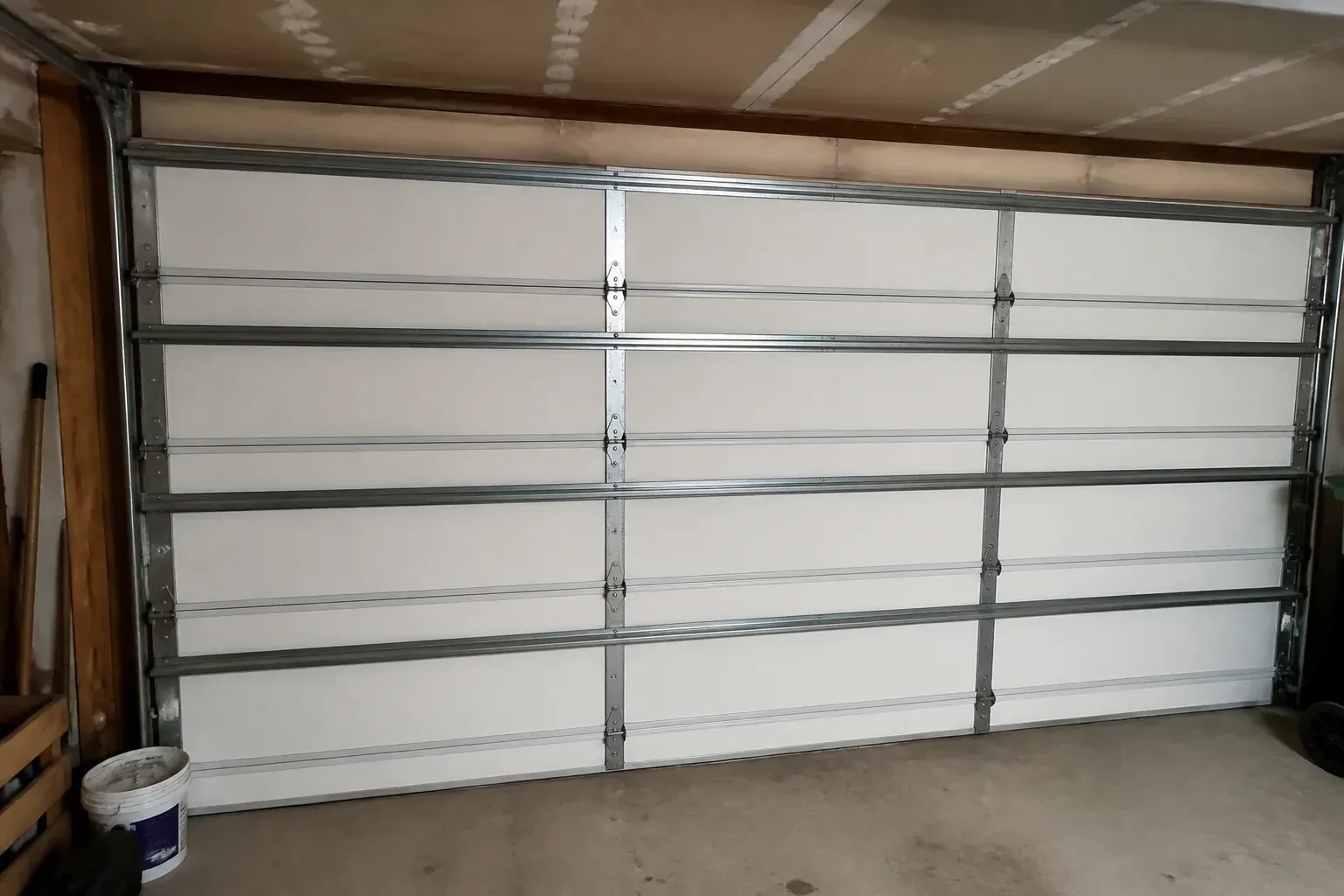
- Wind-Rated Garage Door ReplacementA recent wind event left one section slightly creased, a strut twisted, and several track fasteners loose.
- Carriage-House Garage Door InstallationThe existing door has reached the point where panels, rollers and finish all look tired.
- Full-View Glass Garage Door InstallationYour workshop faces the driveway and needs a professional, welcoming frontage without putting tools on display.