Springs · Phillipsburg
Garage Door Hinge Replacement in Phillipsburg
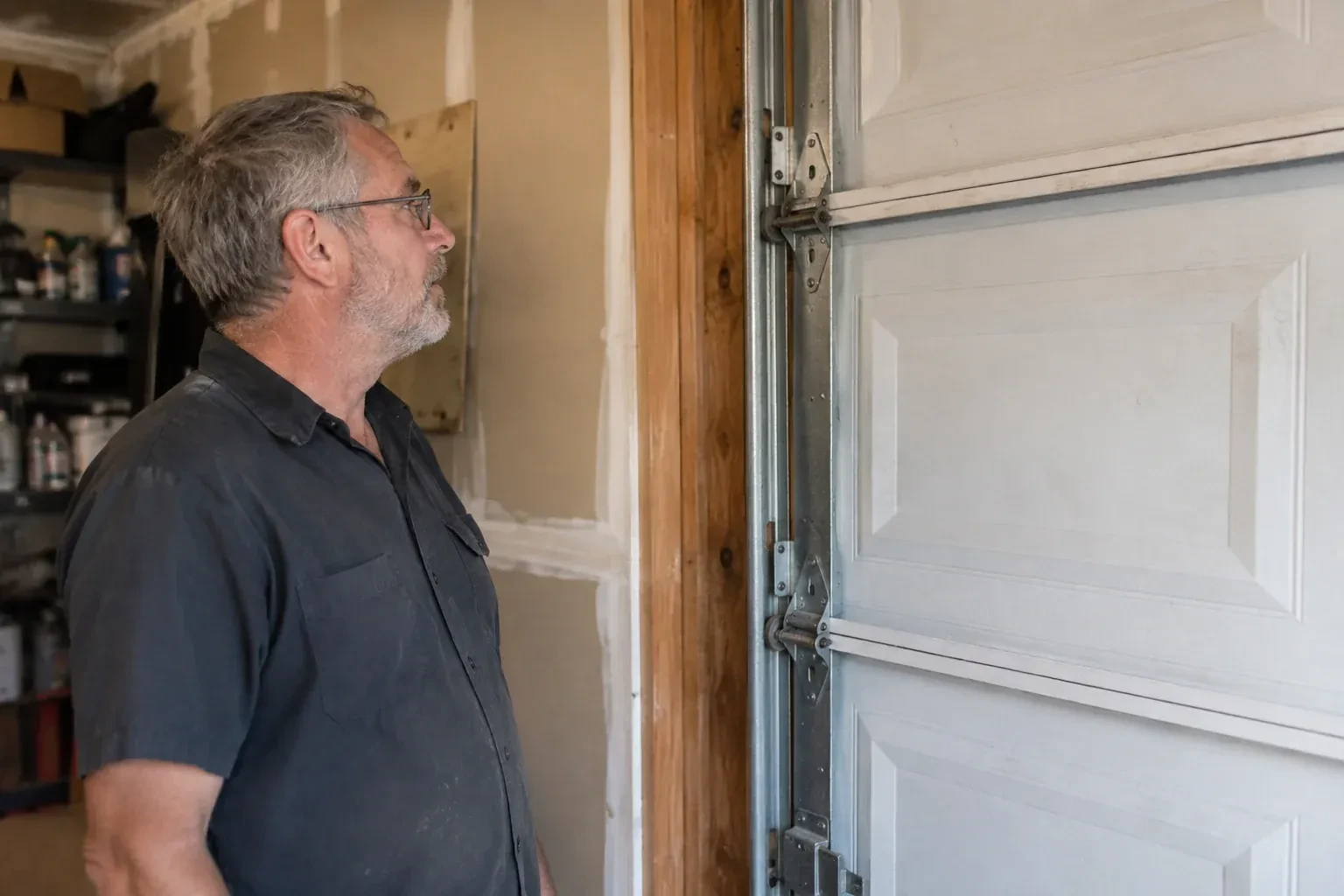
The roller at the top of the second panel is leaning outward and only half of the wheel is still in the track.
In plain words
The hinge is only as good as what it is screwed to. On a steel door the screws bite into the stile, a folded steel channel at the panel edge, sometimes with a support plate behind it; on a wood door they thread into timber. Years of vibration back screws out, and once a hole is stripped the hinge rocks and the joint loosens. Hinge replacement includes fresh fasteners, and where holes have opened up the technician shifts to sound metal, steps up to a larger self-drilling screw, or bolts through the panel with a nut and washer or a backer plate. The new hinge then stays put.
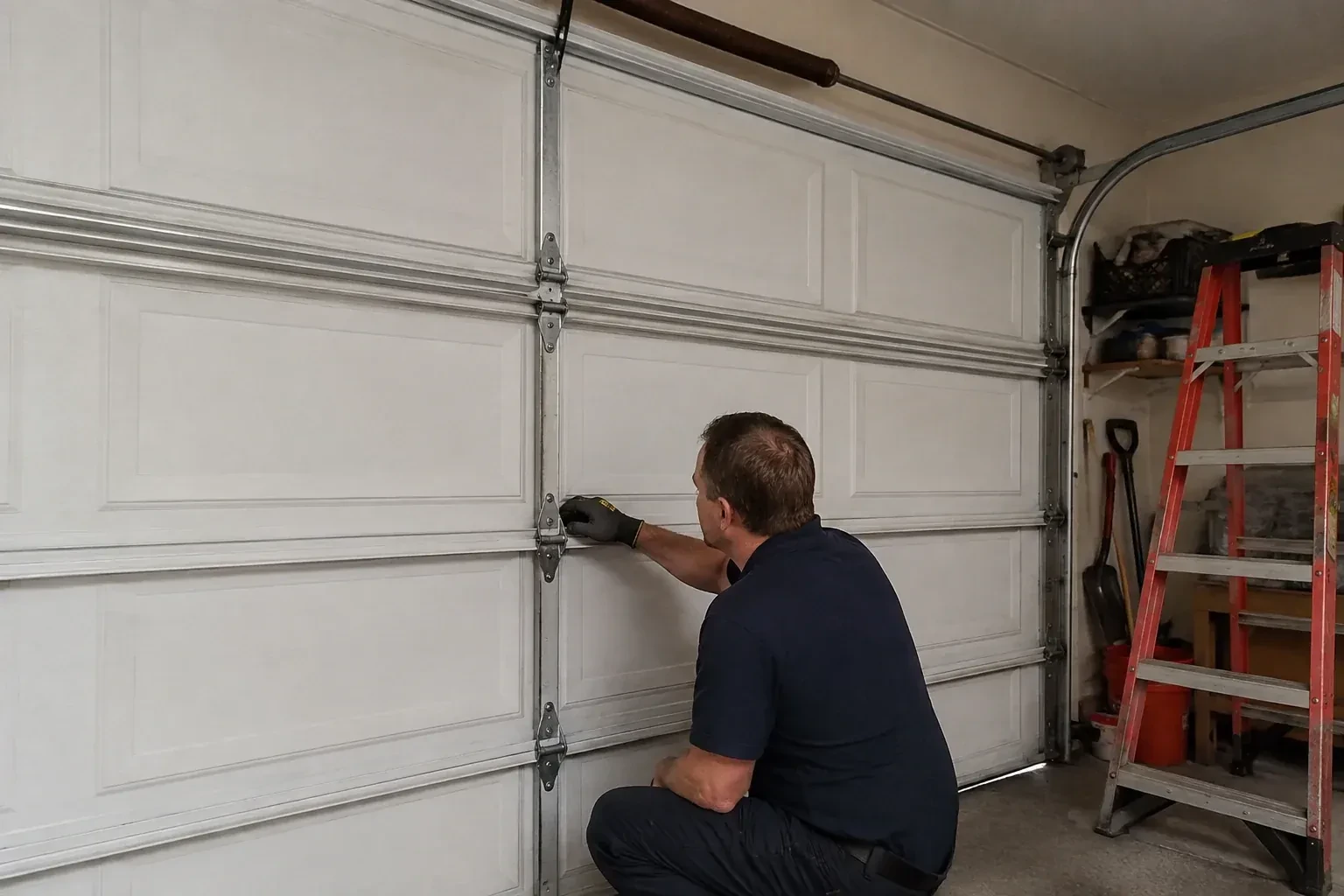
How the visit goesThe car nudged the door on the way in. There is a dent low on one end, and above it the hinge that carries the roller is bent so the panel edges rub together and squeal as the door lifts.
Garage Door Hinge Replacement
How the visit goes
The rollers the hinges carry
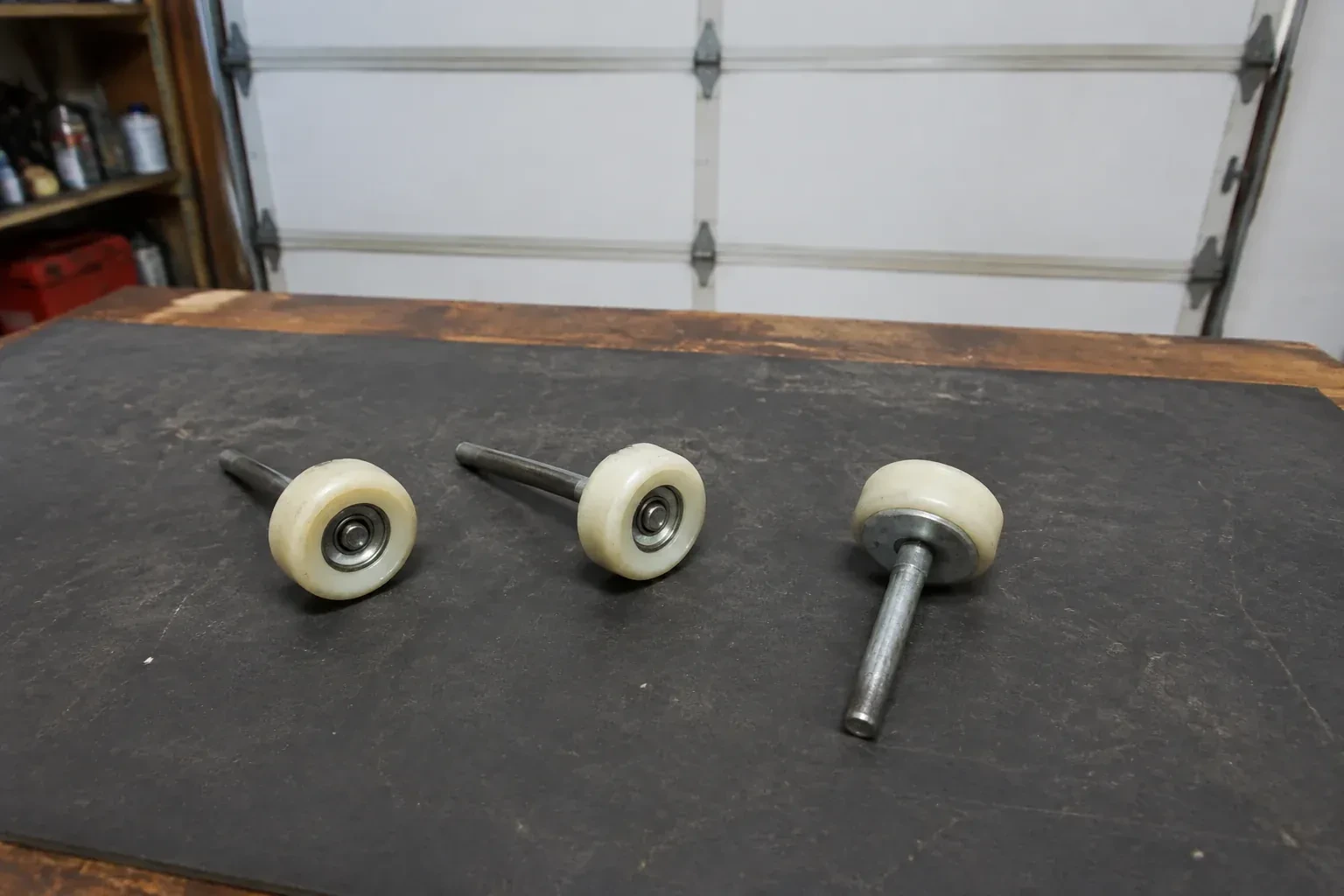
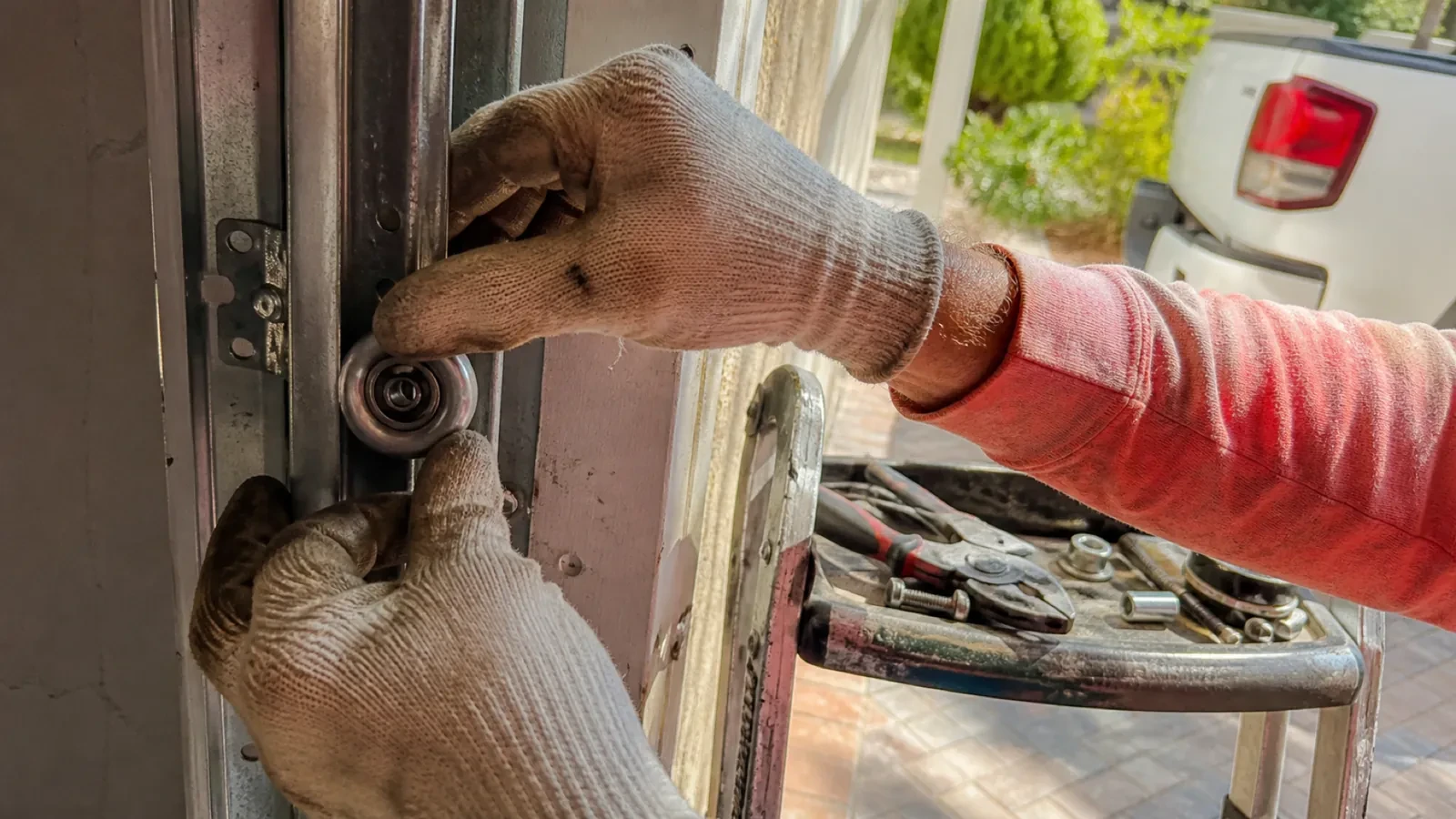
Each edge hinge cradles a roller stem, and the two wear together. The technician spins every wheel, looks for cracked or flat-spotted tires, checks that the stem has the right length for the hinge it sits in and that the bearing turns without grinding. A roller that has seized drags at the hinge on every trip, and a stem that is too short lets the wheel wander out of the track and twist the hinge. Where rollers are worn, changing them while the hinge is off costs a few minutes and stops the new hinge inheriting the strain that finished the old one.
Fresh anchoring for tired holes
Where screws spin or a hole has torn, the fix is a better anchor. The technician chooses from three approaches. First, shift the hinge slightly to sound metal within the stile, where the hole pattern allows it. Second, step up to a larger self-drilling screw that bites fresh threads in the existing hole. Third, drill through the panel and fit a bolt with a nut and washer, or a backer plate across the inside of the stile, so the load spreads across fresh material rather than a torn edge. On a wood door, a split stile is filled or reinforced before the hinge goes back on.
Screws you can tighten and hardware you leave alone
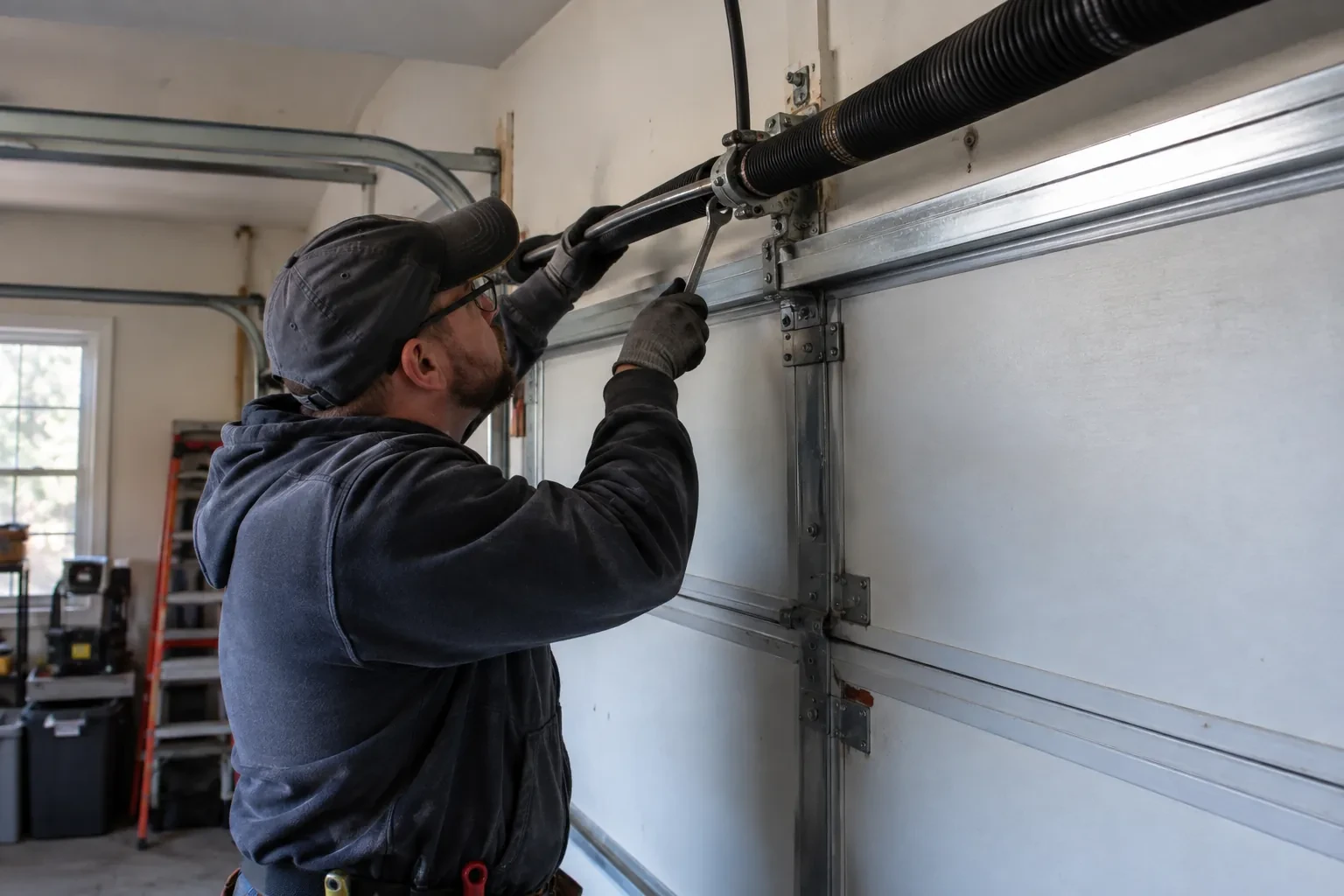
Hinge screws loosen with vibration and temperature swings, and snugging them with a socket wrench once a year is a homeowner task; do it with the door closed and the opener disconnected. The hardware to leave alone is the bottom bracket in each lower corner, which anchors the lift cable and is under spring tension whenever the springs are wound; many doors fit tamper-resistant fasteners there for that reason. The springs, cables and their brackets are the technician's job. Knowing which screws are yours and which are not is what makes the annual tighten-up both useful and uneventful.
Garage Door Hinge Replacement
In the van
Hex-head self-drilling screws
Panel strut
Carriage bolts, nuts and washers
Centre hinges
Heavy-gauge hinges for heavy doors
Garage Door Hinge Replacement
What affects the quote
Rollers renewed at the same time
Where a roller is cracked, seized or flat-spotted, replacing it while the hinge is off is efficient, and the roller set is listed as an optional item you can accept or decline.
Edge hinge or centre hinge
A centre hinge unscrews and refits in a few minutes. An edge hinge carries the roller and has to be worked out of the track, so it takes longer and is often paired with a roller.
Gauge and grade of the replacement
Standard 14-gauge hinges are priced differently from heavy 11-gauge parts, and moving a heavy insulated door up a gauge is an upgrade named as its own line in the quote.
What to have ready
- Is the door closed, open or stuck partway right now?
- Is a roller leaning or partly out of the track anywhere?
- Is the door steel, wood or insulated steel?
Garage Door Hinge Replacement: questions
QuestionsWhy do the lowest hinges rust before the others?
They live where the water is. Slush and road salt drip off the car onto the bottom two joints and pool along the floor, and the salt attacks the zinc coating where the hinge leaf meets the pin and around the screw heads. Higher hinges stay dry and often look new when the low ones are brown. Wiping the low hardware after a thaw and a light silicone film in autumn slow it down.
The screws spin in their holes. Can the hinge still be fitted securely?
Yes. A stripped hole is common on older steel doors and on wood doors where the timber has softened. The technician either shifts the hinge to fresh metal within the stile, uses a larger self-drilling screw that cuts new threads, or drills through and fits a bolt with a nut and washer or a backer plate on the inside. Any of these gives the new hinge a firmer anchor than the original screws had.
Is the bracket at the bottom corner a hinge too?
No, and it is the one piece of hardware on the door that stays untouched during hinge work. The bottom bracket in each lower corner holds the bottom roller and anchors the lift cable, so it carries spring tension whenever the springs are wound. Many manufacturers fit tamper-resistant fasteners there. Changing a bottom bracket means unloading the springs first, which is a separate job with its own method.
Related services
- Garage Door Track Repair or ReplacementHalfway up, the door lurches and one roller rides onto the lip of the channel.
- Garage Door Cable ReplacementThe cable has wrapped itself around the shaft above the door instead of sitting on its drum.
- Torsion Spring ReplacementYou heard a sharp bang from the garage, and now the opener hums for a second and gives up.