Repairs · Phillipsburg
Garage Door Tune-Up in Phillipsburg
Every morning the door announces itself to the whole street: a long metallic squeal as it climbs, a rattle at the top, and a groan on the way back down.
In plain words
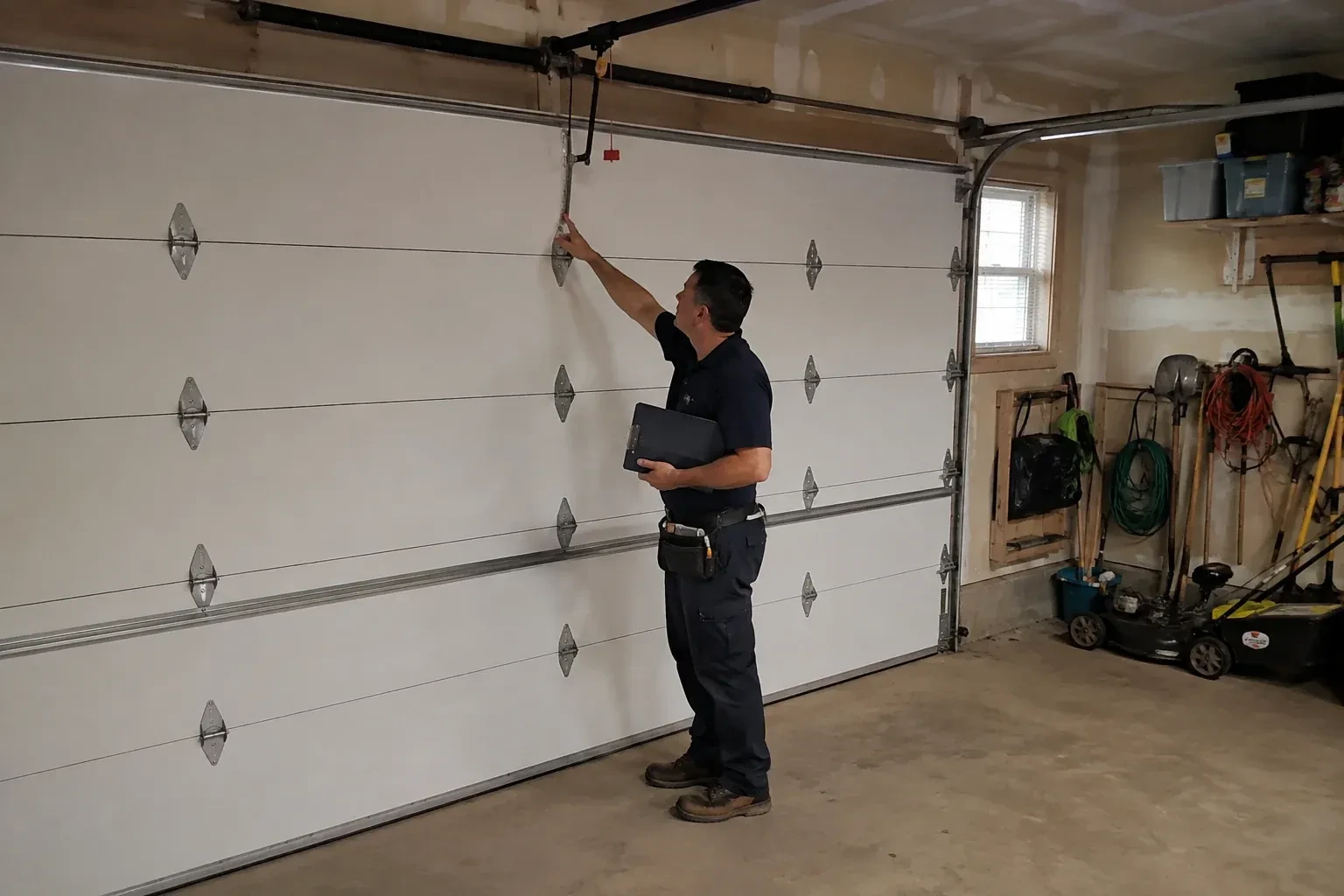
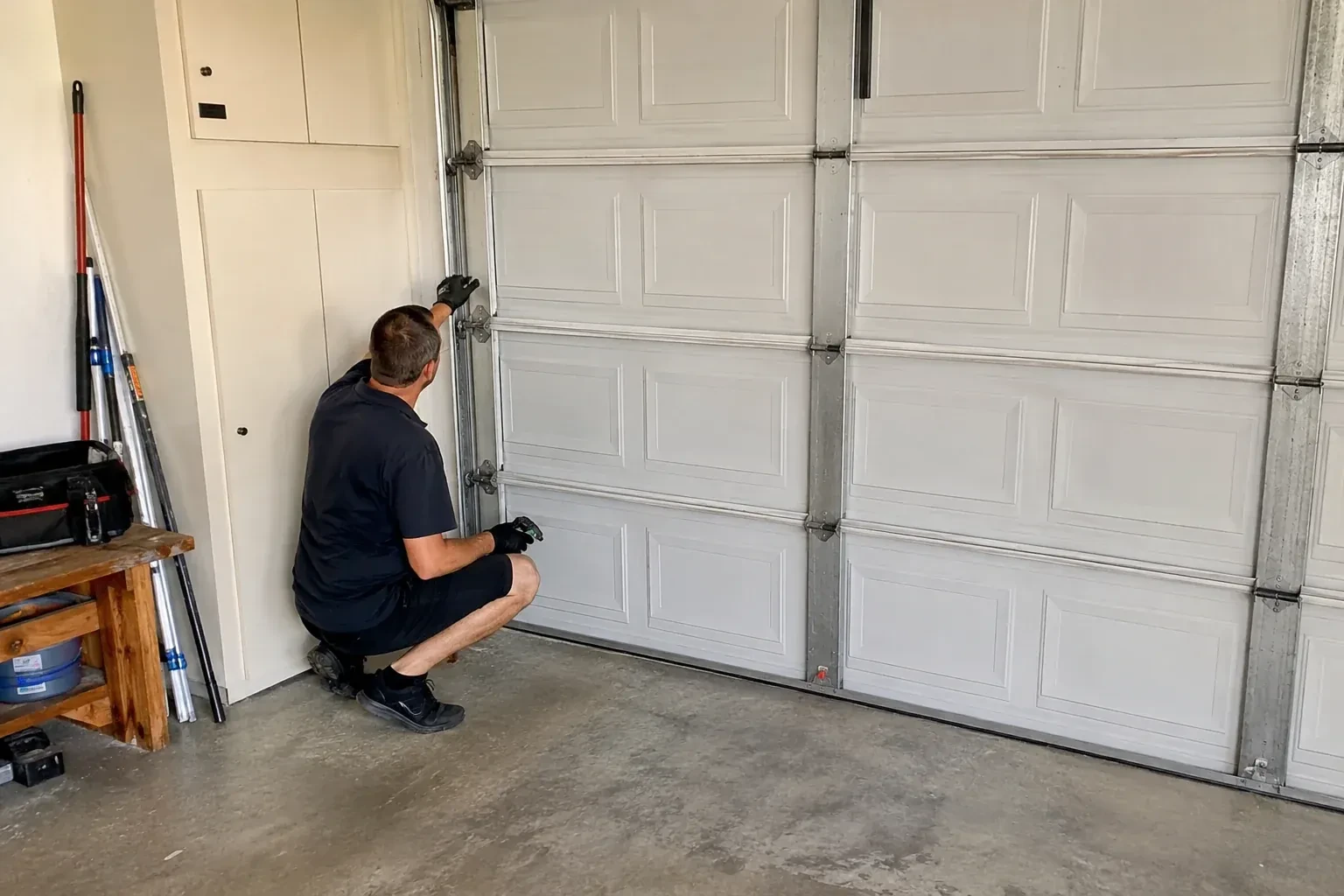
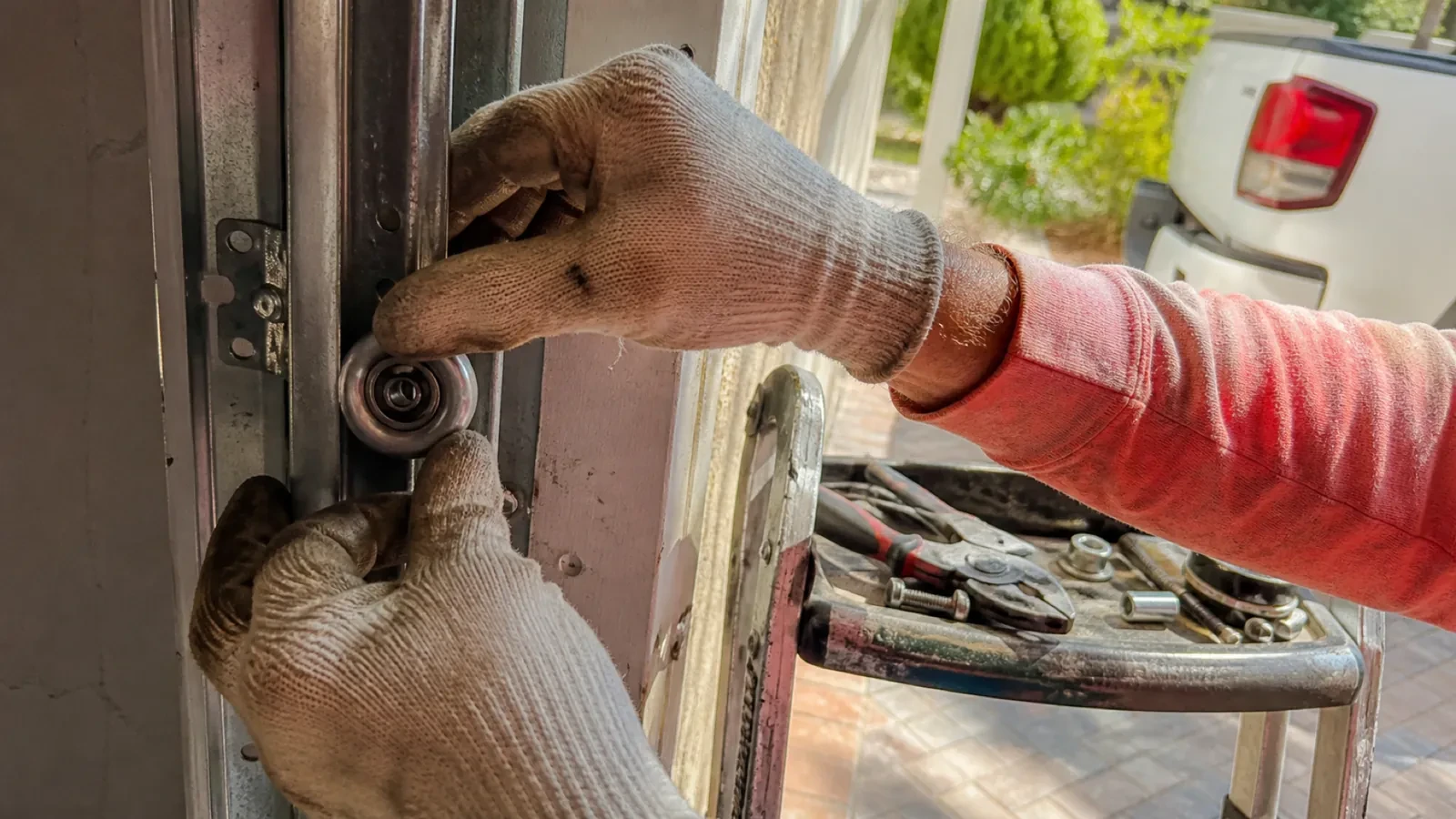
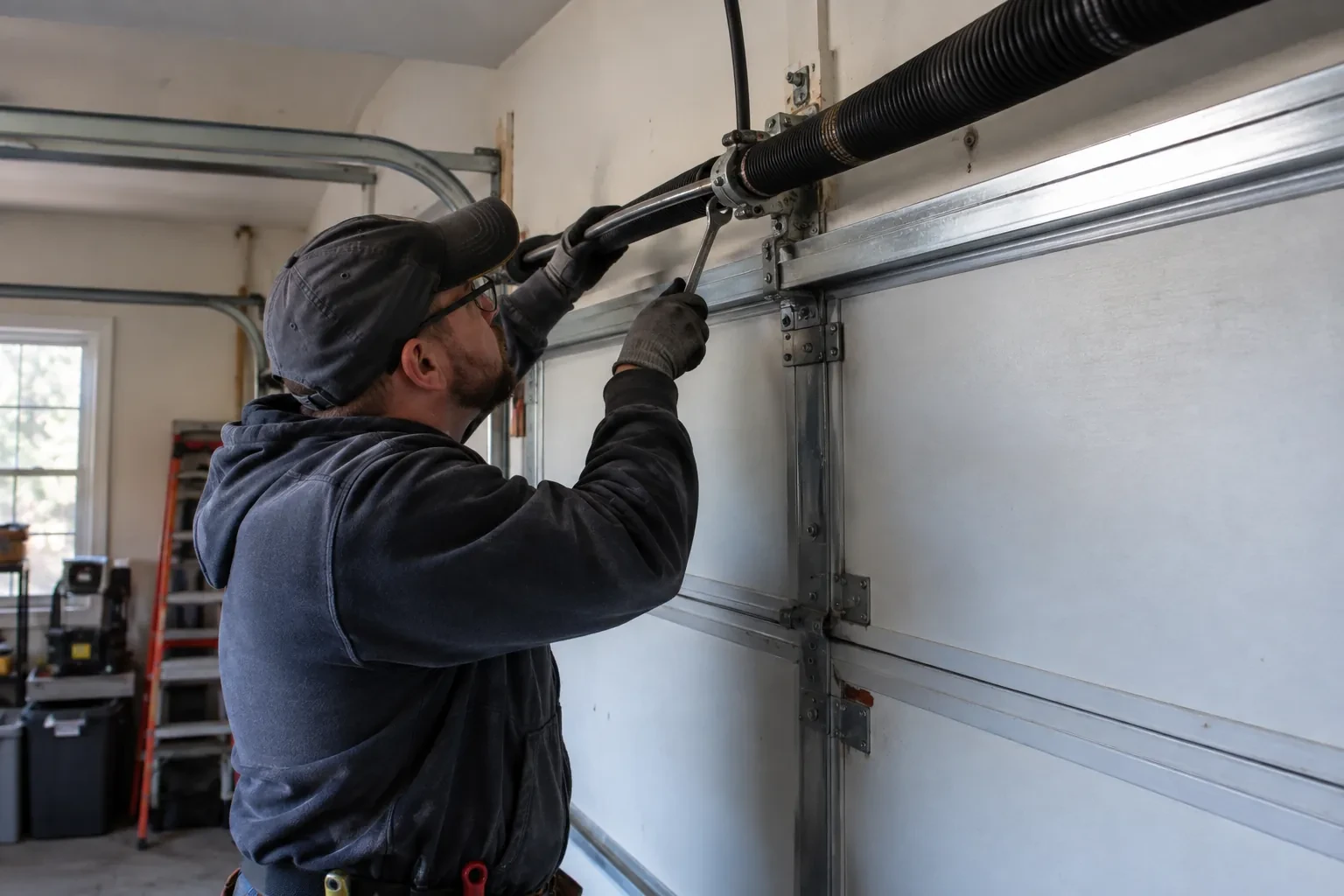
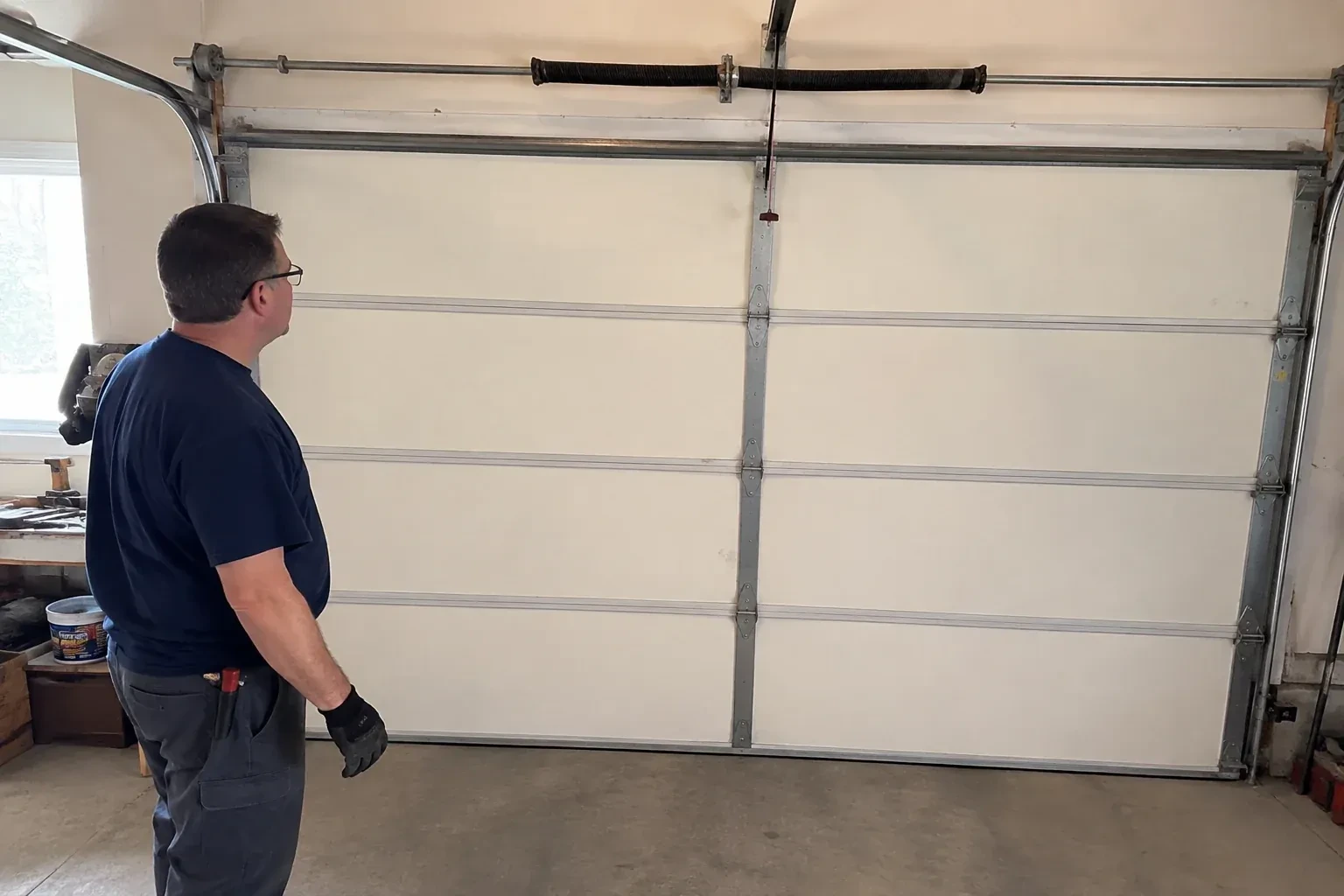
The visit follows a set order. First the technician watches a full cycle, up and down, from a safe distance, noting where the noise, shaking or hesitation lives. Then the door is closed and inspected hardware by hardware, from the bottom brackets to the torsion shaft. The manual release is pulled and the door is lifted by hand to feel the balance. Only then does the work start: fasteners, lubrication, opener adjustments and sensor alignment. A second cycle and the reversal tests close the visit, and the difference between the first run and the last is the measure of the tune-up.
How the visit goesSince the first cold snap the door has been sluggish. It climbs slowly, hesitates near the top and the opener motor sounds strained. On the coldest mornings it opens a hand's width, thinks about it, and comes back down.
Garage Door Tune-Up
How the visit goes
Feeling the balance by hand
The door is disconnected from the opener with the red release handle, and the technician lifts it by hand, gripping only the handles or a safe edge. A properly balanced door rises with modest effort, stays fully open on its own and holds still when left about a metre off the floor. A door that sinks back down, or that takes real strength to raise, has springs that have lost tension and an opener that has been carrying weight it was not designed for. This check takes a minute and decides more than any other: it tells the technician whether the tune-up can proceed as maintenance or whether spring work needs to be quoted first.
Setting travel and force on the opener
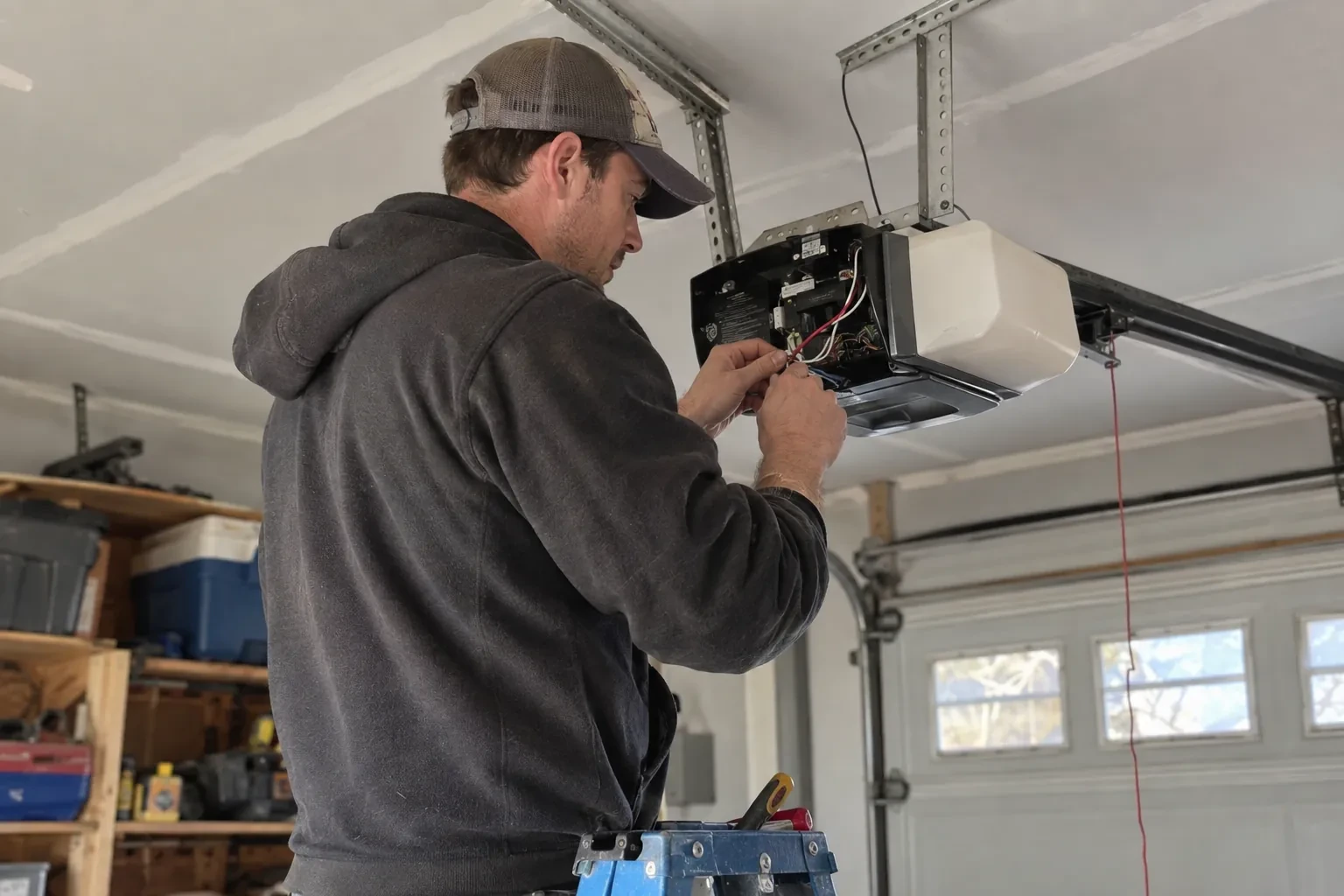
The opener has two settings that drift over time: how far the door travels, and how much force it applies before deciding something is in the way. The technician runs the door and adjusts the down travel so the door seals firmly on the floor without bowing the top section or crushing the seal, and the up travel so it stops fully open without the trolley hitting the stop. Force is set as low as will reliably close the door, because a low force setting is what lets the door reverse gently on contact. On a sectional door the arm is kept from passing straight up and down at the closed position, which protects the top section and the rail.
Balance you can feel with one hand
Before leaving, the technician shows you how to check the balance yourself: pull the red release with the door closed, lift the door by its handle, and feel it rise easily, stay open and hold still partway. Knowing what a balanced door feels like is the single most useful thing a homeowner can take from a tune-up, because a door that starts to sink or grow heavy over the coming year is telling you the springs are tiring, long before the opener fails. If the balance was found wanting on this visit, the operator is taken out of service until the spring work is done, and that finding is in your record with a separate quote.
Garage Door Tune-Up
In the van
Locking pliers or C-clamps
2x4 test block and tape measure
Silicone or lithium garage door lubricant
Hinge screws and track bolts
Bottom seal (astragal)
Garage Door Tune-Up
What affects the quote
Torsion or extension springs
Torsion springs above the header and extension springs beside the tracks are inspected differently, and extension systems have pulleys and safety cables that add items to the checklist.
Number of doors
Two or three doors on the same property are usually serviced in one visit, and the second and third door are quoted at a different rate from the first because the travel is shared.
Season and weather
A winter visit can include freeing a seal frozen to the slab and working with thickened lubricant before the tune-up proper can begin, which adds time to the visit.
What to have ready
- Where in the door's travel does the problem happen?
- What have you noticed: noise, shaking, hesitation, slamming, or reversing on its own?
- Is the door worse in cold weather or after rain?
Garage Door Tune-Up: questions
QuestionsMy door has a lock bar. Should it be used with an opener?
Not while the opener is connected. If the slide lock is engaged and someone presses the remote, the opener pulls against a locked door and can bend the top section or strip its gear. On a door driven by an opener the lock is usually disabled or removed during a tune-up, and the opener's own hold on the door provides the security. If you want a manual lock for holidays, the technician can show you how to use it safely with the opener unplugged.
Is a tune-up worthwhile on a door that seems to work fine?
Yes, because a garage door wears quietly. Hinge pins run dry long before they squeal, screws back out a turn at a time, springs lose tension by degrees and sensors drift. A yearly tune-up keeps the door in the condition its maker intended, catches a fraying cable or a cracked hinge while it is a small job, and confirms the safety reversal is doing its work. It is the same logic as an oil change on a car that is still running.
Which lubricant is right for a garage door?
A silicone-based or white lithium garage door lubricant, sold for the purpose. Penetrating oils and general sprays are thin, attract dust and are gone in weeks; heavy grease traps grit. For the rubber bottom seal and weatherstrip, use only a silicone spray, since petroleum products attack rubber and make it brittle. Nylon rollers with sealed bearings need no lubricant, while ones with an exposed bearing can need a touch where their own maker calls for it. A small amount on each point, worked in by moving the door, is enough.
Related services
- Off-Track Garage Door ResetThe door came down fine but with a scraping noise, and now the vertical track on one side is bowed away from the wall.
- Garage Door Panel ReplacementYou misjudged the last metre of the driveway and felt the bumper meet the door.
- Garage Door Bottom Seal ReplacementThe strip under the door has gone as hard as a hose left out for ten summers.