Springs · Petersburg
Garage Door Cable Replacement in Petersburg
The cable has wrapped itself around the shaft above the door instead of sitting on its drum.
In plain words
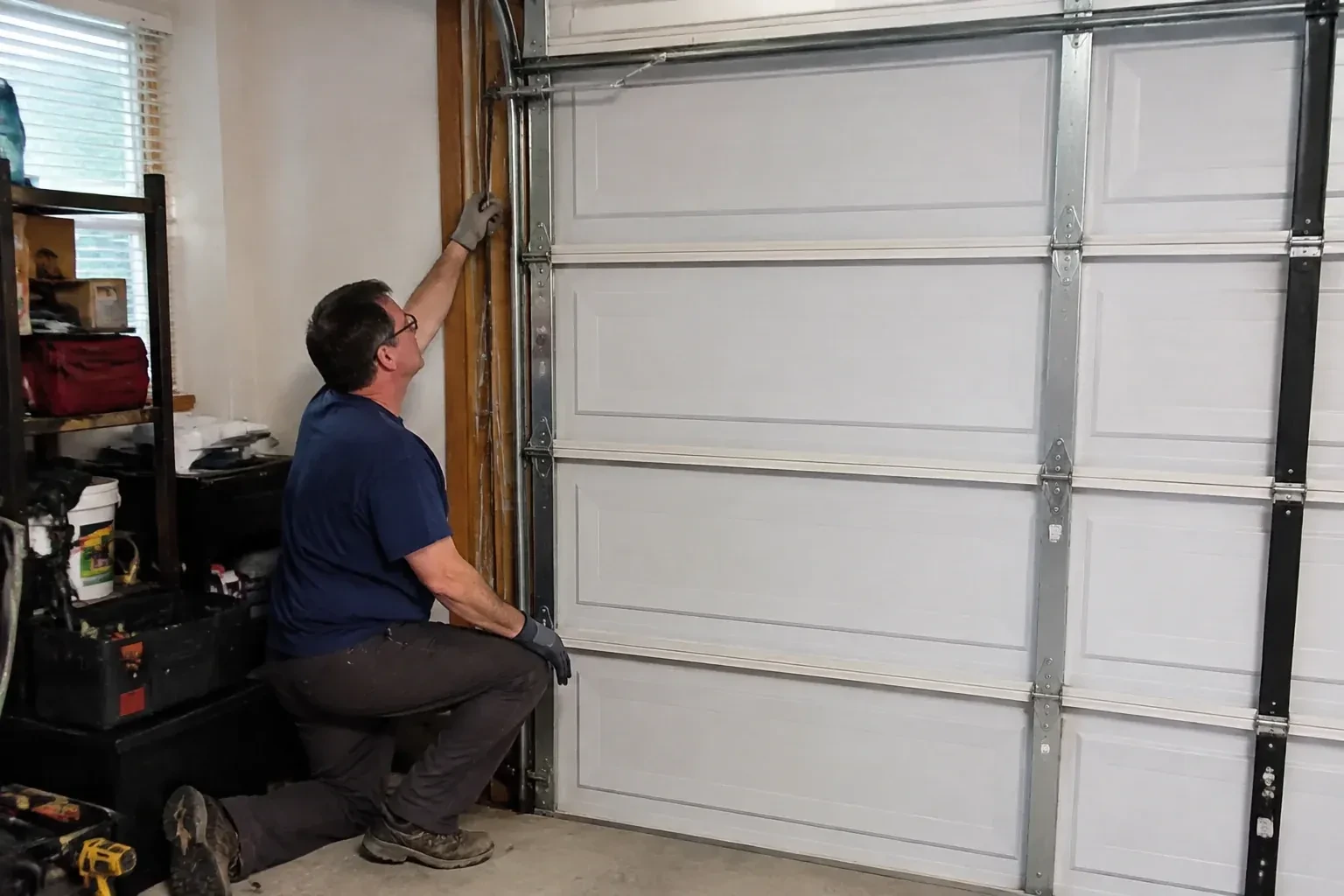
A failed cable is usually telling you something about the rest of the system. It may have frayed against a bent track, rusted at a corroded bracket, jumped its drum when the door closed on an object, or slackened because a spring is weak. Cable replacement therefore starts with the whole lifting path: both cables, both drums or pulleys, the bottom brackets, rollers, hinges, track and springs. Whatever caused the failure is put right alongside the new cables, so the fresh steel is not rubbing on the same rough edge that finished the last set. That is what turns a repair into a lasting one.
How the visit goesSomeone left the snow shovel leaning in the opening and the door came down on it. Now a loop of steel cable hangs loose beside the track and the door refuses to close the last few inches.
Garage Door Cable Replacement
How the visit goes
Bottom brackets and the pin the cable rides on
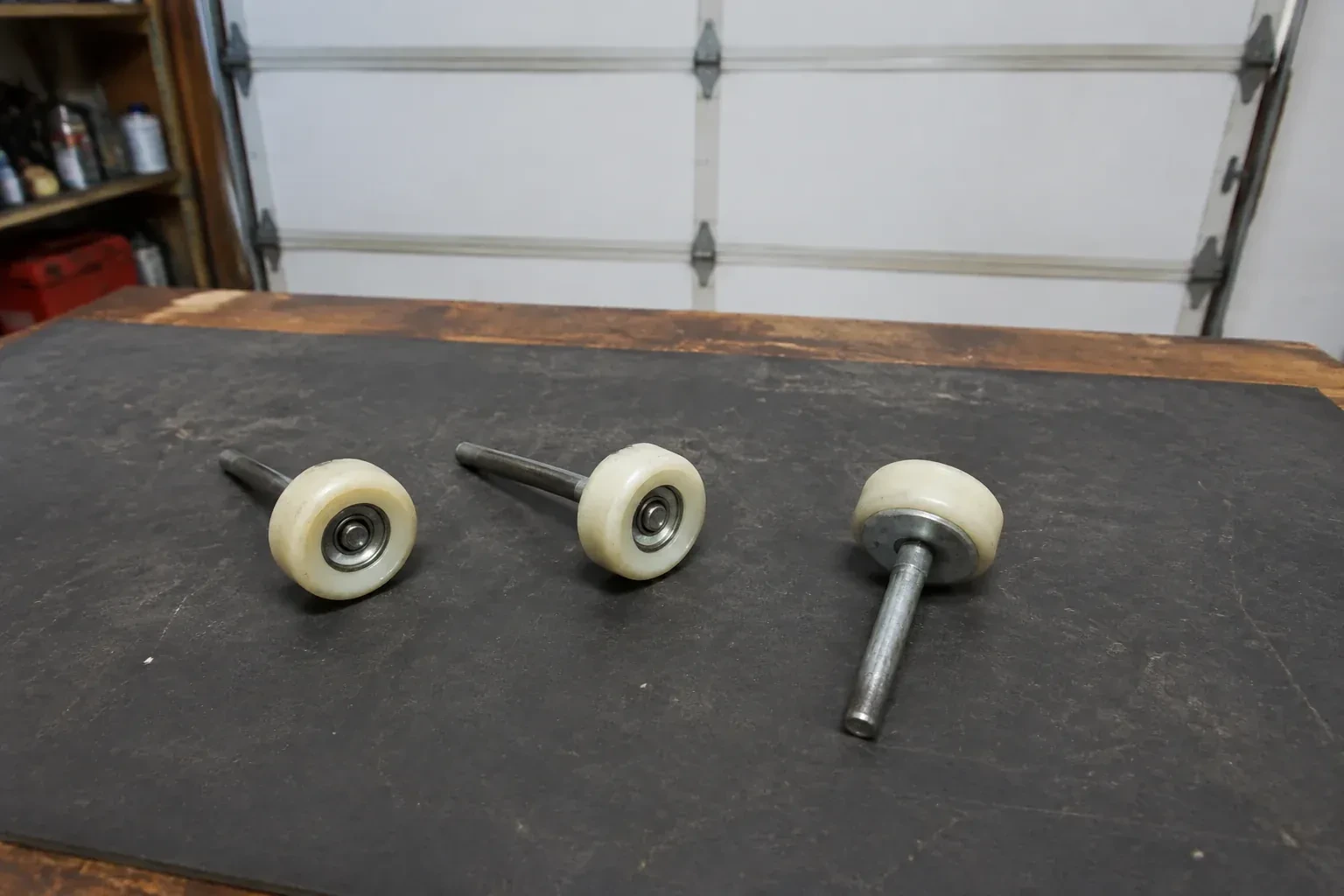
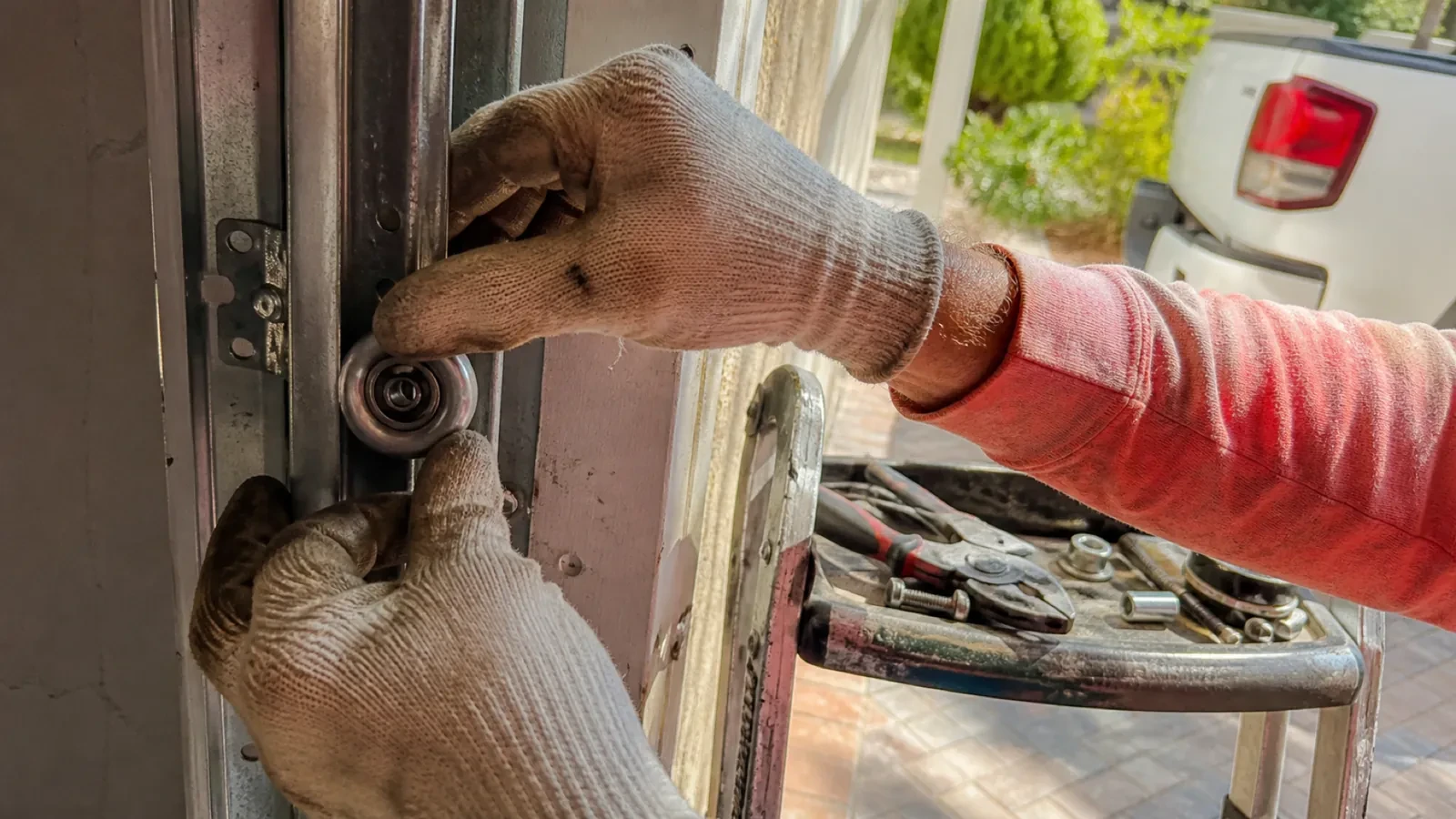
The bottom bracket in each corner anchors the cable and carries the bottom roller, and it lives in the wettest, saltiest spot on the door. The technician looks for bending from an impact, corrosion around the cable pin and the fasteners into the section, and a roller that has seized or lost its stem bearing. On many doors these brackets have tamper-resistant fasteners because they are under load whenever the springs are tensioned, so they are inspected as found and only removed once the counterbalance is unloaded. A bracket that is bent or rusted through is scheduled for replacement in the same visit so the new cable has a sound anchor.
Taking the tension off the springs
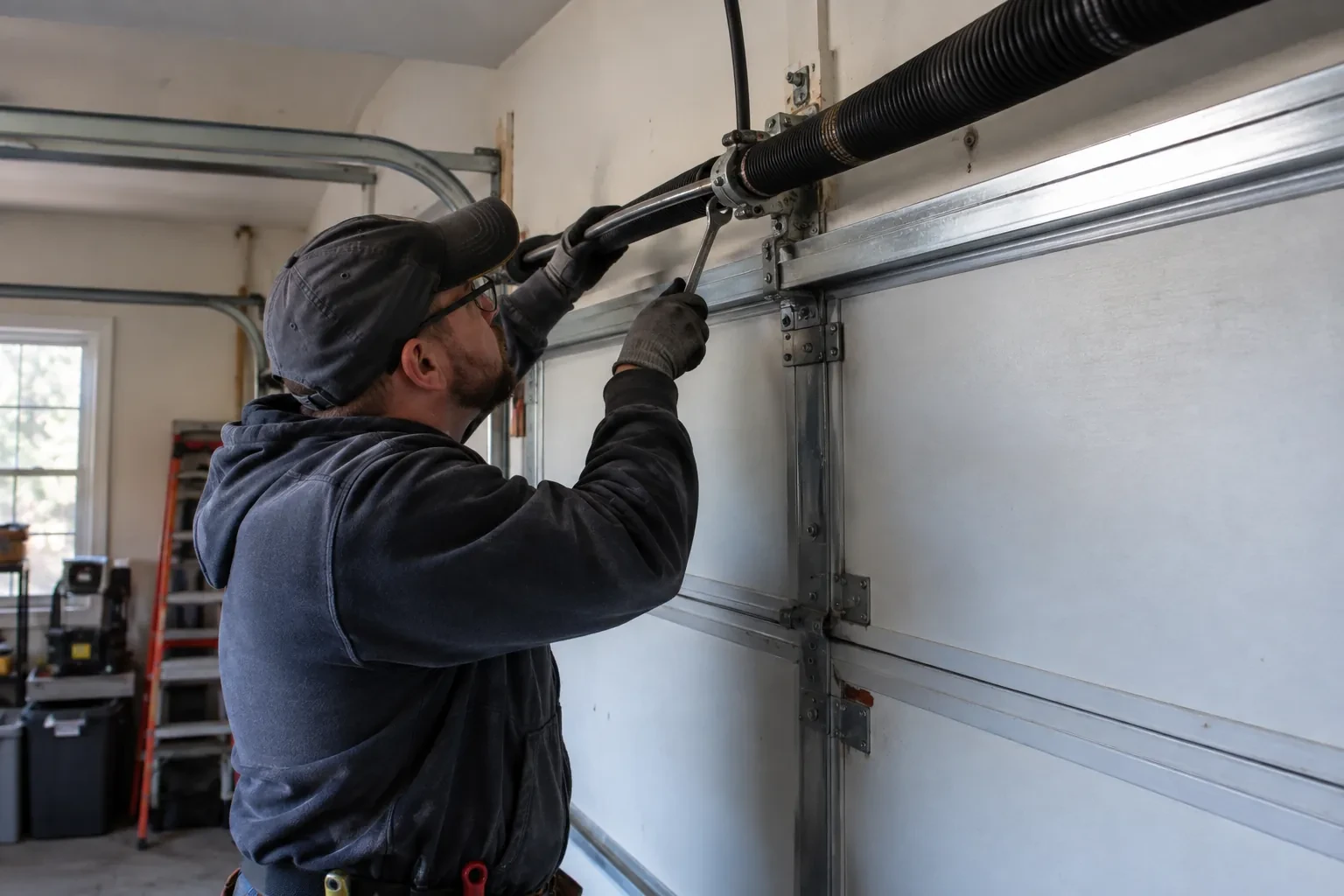
With the door clamped and the opener disconnected, the technician unloads the torsion springs. Two solid winding bars sized to the cone holes are used in turn: one holds the cone while the set screws are loosened, then the spring is let down a quarter turn at a time, bar over bar, until the coil is relaxed and the shaft turns freely. Every turn released is counted, because the same number goes back on later. On an extension door the technician instead raises the door fully and clamps it, which lets the springs hang slack. Once the tension is off, cables, drums and brackets can be handled like any other hardware.
A door that runs level and quiet
The first thing you notice is a door that rises squarely, with both bottom corners leaving the floor together and the top section staying flat as it turns into the horizontal track. The bottom seal meets the slab along its whole length, so the draft and the strip of daylight at one corner are gone. The opener sounds calmer, because it is moving a balanced door rather than dragging a crooked one, and it stops reversing for no apparent reason. If you lift the door by hand with the opener released, it moves with light effort and holds where you leave it. That is what a correctly cabled door feels like.
Garage Door Cable Replacement
In the van
Winding bars
Track clamps or locking pliers
Bottom rollers and hinges
Cable drums, matched pair
Galvanized aircraft-type lift cables
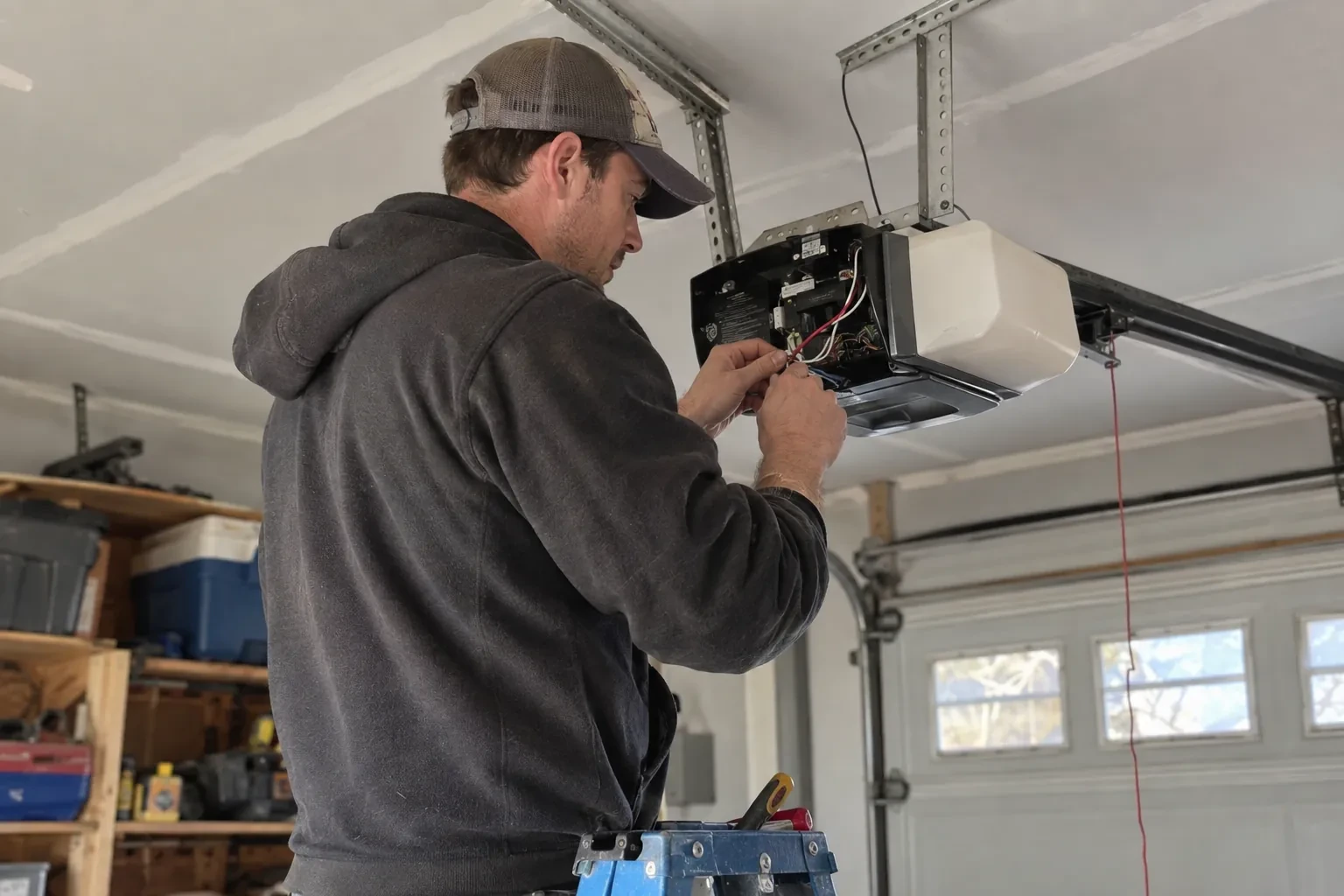
Garage Door Cable Replacement
What affects the quote
Whether a matching part has to be special-ordered
Most drums, brackets and cable sizes are common stock, but an older or uncommon door sometimes needs a part matched to its exact dimensions. When that happens the technician identifies it on the first visit and arranges the part before the return trip.
One cable or the pair
Cables are normally renewed together, and the quote reflects two cables and the work of setting both sides level. Where one side was recently replaced, that is discussed on site.
Access to the spring shaft
Shelving, storage or a low ceiling around the torsion shaft and drums slows the work. Clearing the area beforehand or a tighter working space both affect the time quoted.
What to have ready
- Is the door closed, fully open, or stuck partway?
- Is there one spring above the opening, or springs stretched along the tracks?
- When were the springs last replaced, if you know?
Garage Door Cable Replacement: questions
QuestionsHow long do lift cables usually last?
Cables tend to live about as long as the springs they work with, often ten years or more on a door used a few times a day, and less on a door that sees heavy use or a wet, salty floor every winter. Rather than a calendar, watch the condition: fraying, rust near the loop or a slack side are the signs the set is due.
Should both cables be replaced when only one has failed?
Yes, as a rule. The two cables were fitted together, have flexed around their drums the same number of times and have sat in the same slush, so the survivor is close to the end of its life. A new cable beside a stretched one also makes it harder to set the door level. Two matched cables give an even lift and one visit instead of two.
Do I need new cables when the springs are replaced?
Often it is sensible. Cables and springs are similar in age, and with the counterbalance already unloaded the extra work of fitting new cables is small. The technician inspects them and advises: cables with bright, tight strands and clean loops can stay and simply be re-tensioned, while cables with any fraying or rust at the bottom are better renewed now than in a separate visit later.
Related services
- Garage Door Hinge ReplacementThe roller at the top of the second panel is leaning outward and only half of the wheel is still in the track.
- Garage Door Track Repair or ReplacementHalfway up, the door lurches and one roller rides onto the lip of the channel.
- Torsion Spring ReplacementYou heard a sharp bang from the garage, and now the opener hums for a second and gives up.