New Doors · Petersburg
New-Construction Garage Door Installation in Petersburg
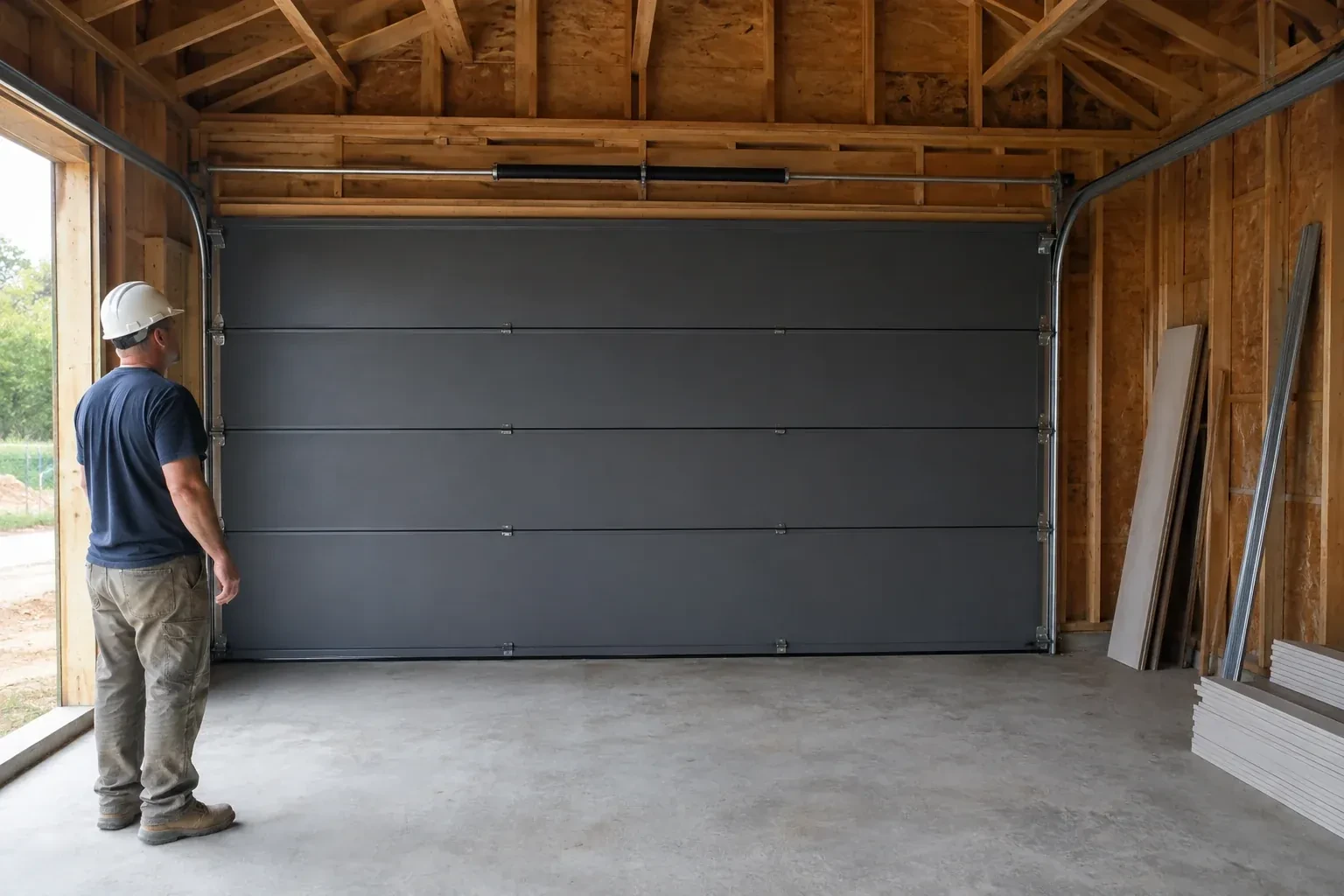
This garage will be heated and used beyond parking, so the opening needs more than a basic closure.
In plain words
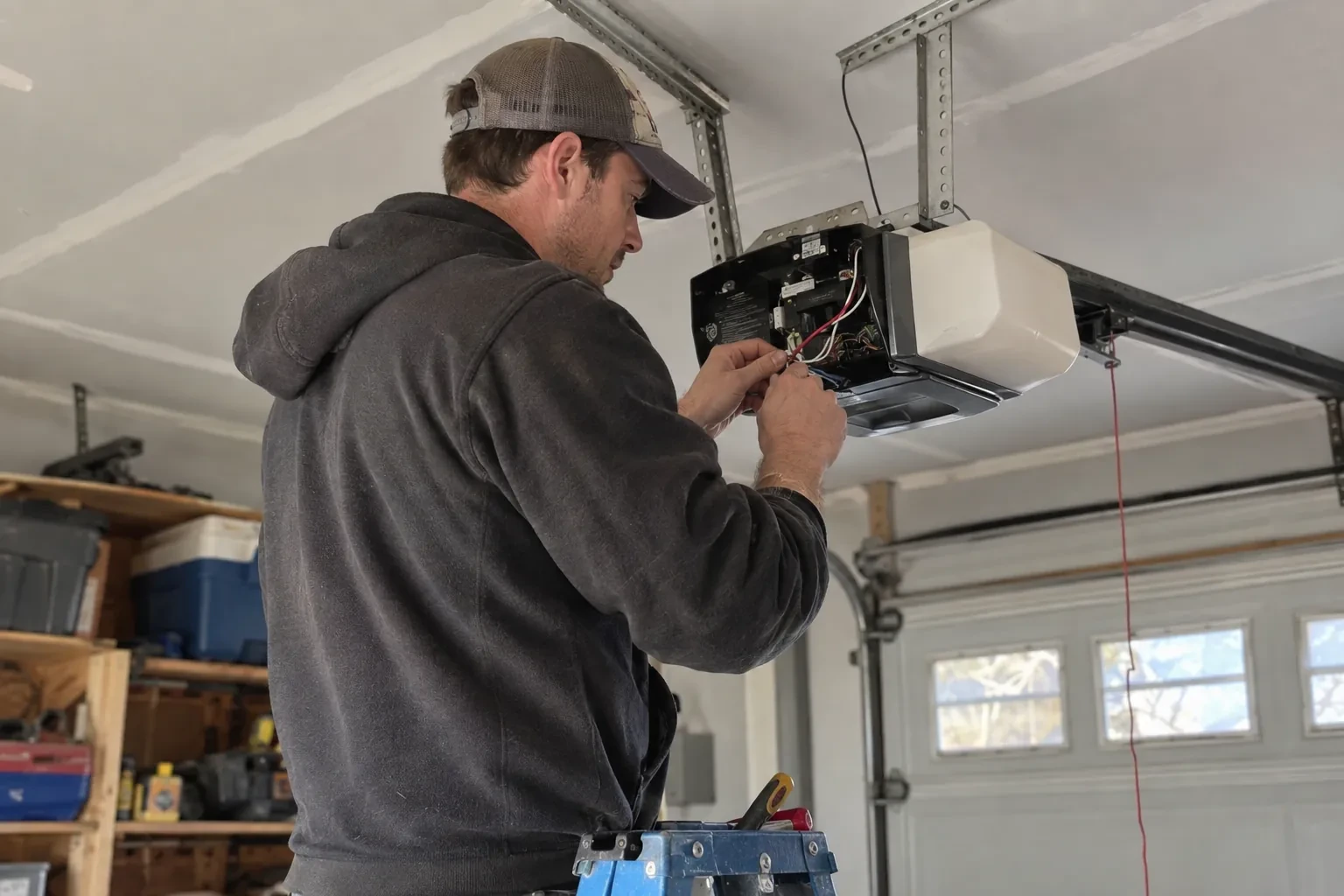
On a busy building project, this service provides a defined handoff between trades. Framing and finished-opening dimensions are accepted, electrical and ceiling conditions are confirmed, and exterior trim details are identified before installation begins. The door team then installs the sections, track, counterbalance hardware, seals and selected controls. At completion, measurements, installed components and test results can be recorded so the builder and owner know what belongs to the door system and how it operates.
How the visit goesThis garage will be heated and used beyond parking, so the opening needs more than a basic closure. Insulated sections, perimeter seals and careful contact at the finished floor matter from the first installation.
New-Construction Garage Door Installation
How the visit goes
Reading the floor and driveway transition
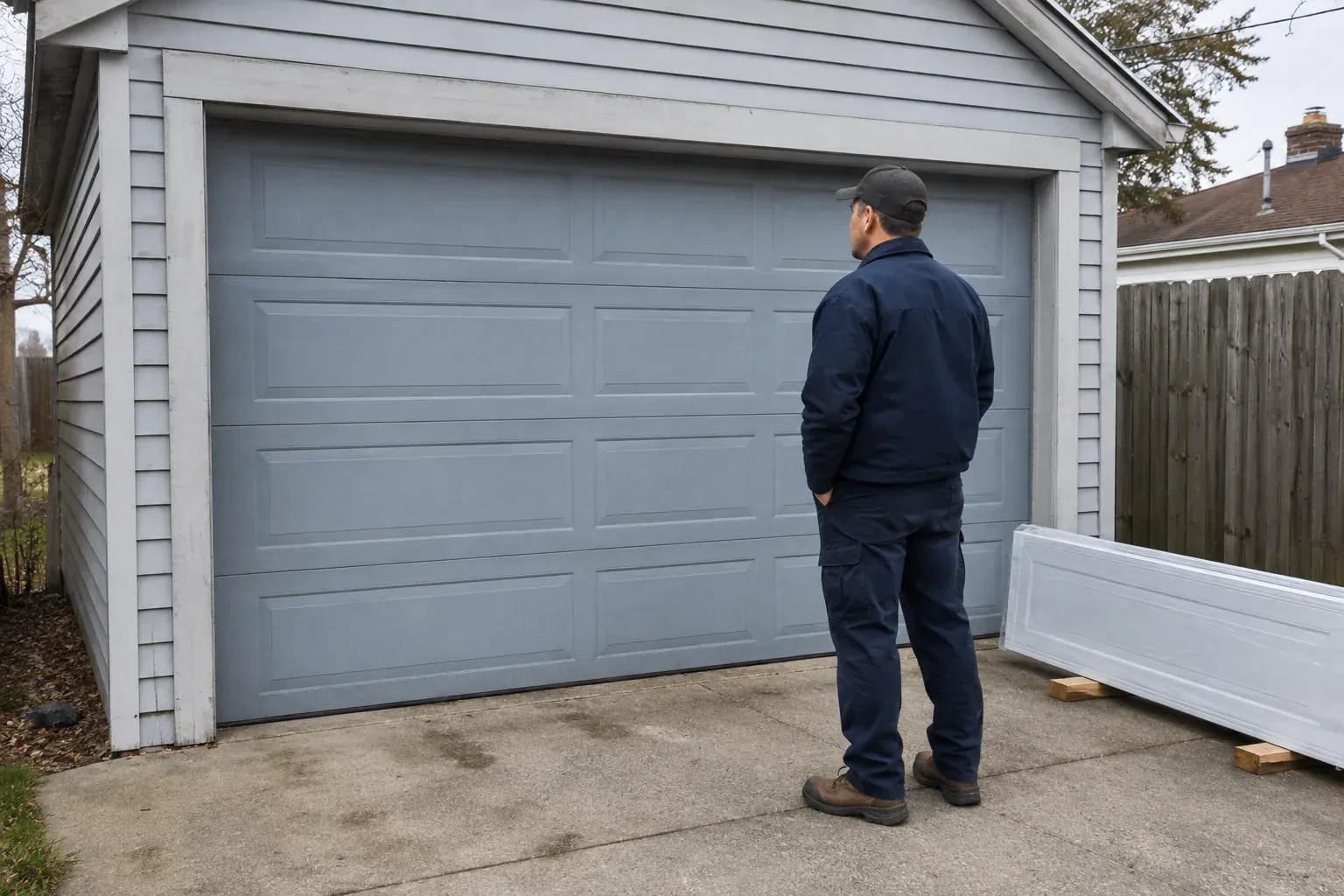
The bottom seal can only follow the surface beneath it, so final floor conditions matter. The installer checks whether the slab is complete, where its high and low points sit, and how the interior floor meets the exterior approach. Drainage slope, coatings and planned finishes are discussed if they will change the landing elevation. This establishes the opening height and shows whether the seal can make even contact across the width. It also prevents a temporary construction surface from becoming the permanent reference for door position and travel limits.
Building the guided track path
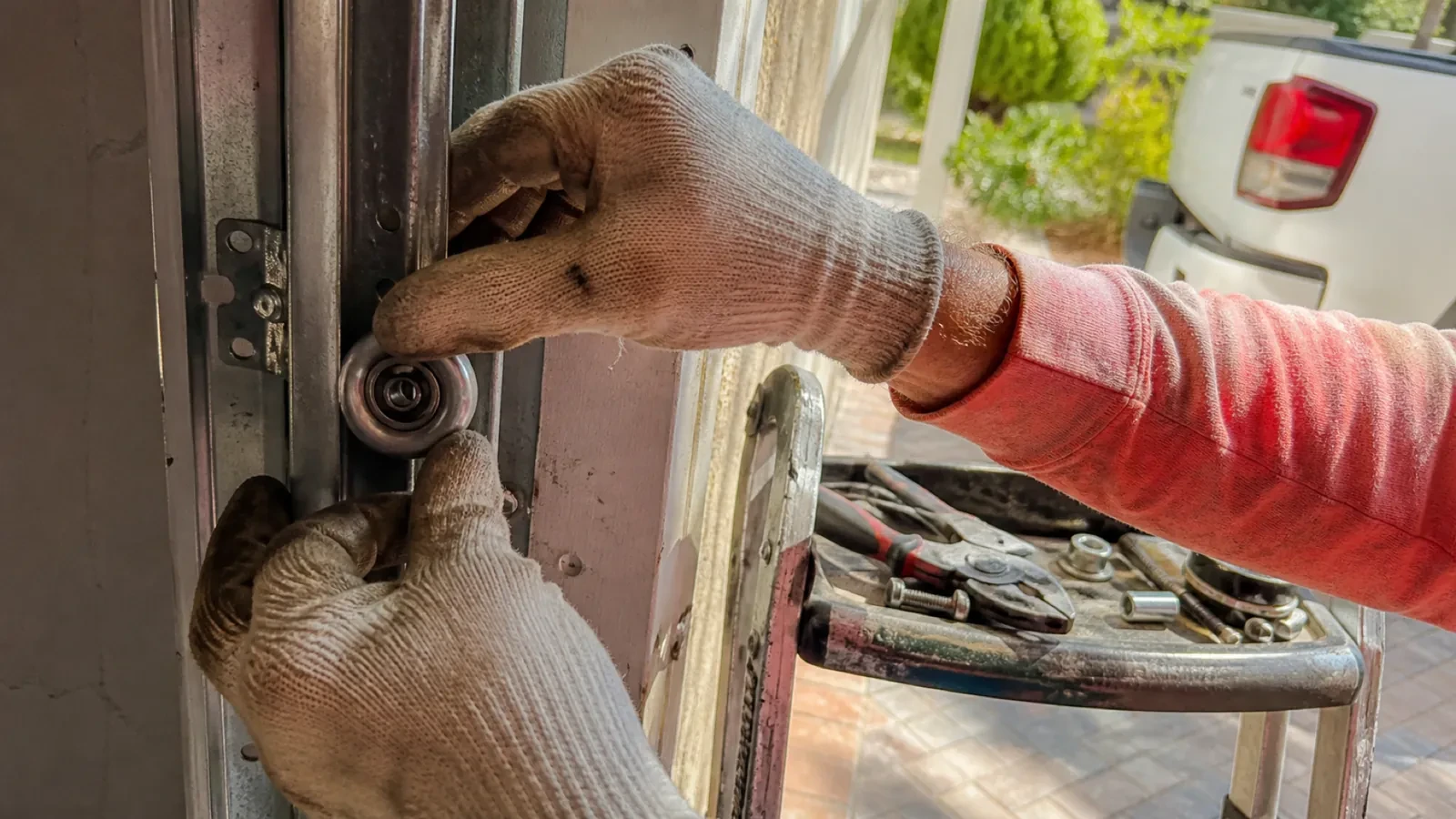
Vertical tracks are positioned at the jambs with consistent spacing for the rollers and sections. Curved pieces lead into the horizontal runs, which are set to the door manufacturer's specified level or slight upward pitch, aligned and supported from suitable overhead structure with braced hangers. The installer checks track separation and the top section's trajectory through the curve, making small alignment changes before final tightening. A well-built path lets rollers guide rather than drag the door. It also provides a stable reference for fitting the sections, setting top fixtures and locating the operator relative to the centre of travel.
Simple observations that support long service
Routine care starts with looking and listening. Owners can keep tracks free of stored items, wipe dirt from photoelectric sensor lenses and watch cables, rollers, hinges and seals from a safe position. A new scrape, uneven gap, frayed cable or change in balance is useful information for a technician. Fasteners, spring tension, lift cables and bottom brackets remain professional service items because they belong to the loaded moving system. Product-specific lubrication and inspection guidance in the manuals provides the maintenance reference for the exact door and operator.
New-Construction Garage Door Installation
In the van
Bottom and perimeter seals
Graduated hinges
Track hangers and bracing
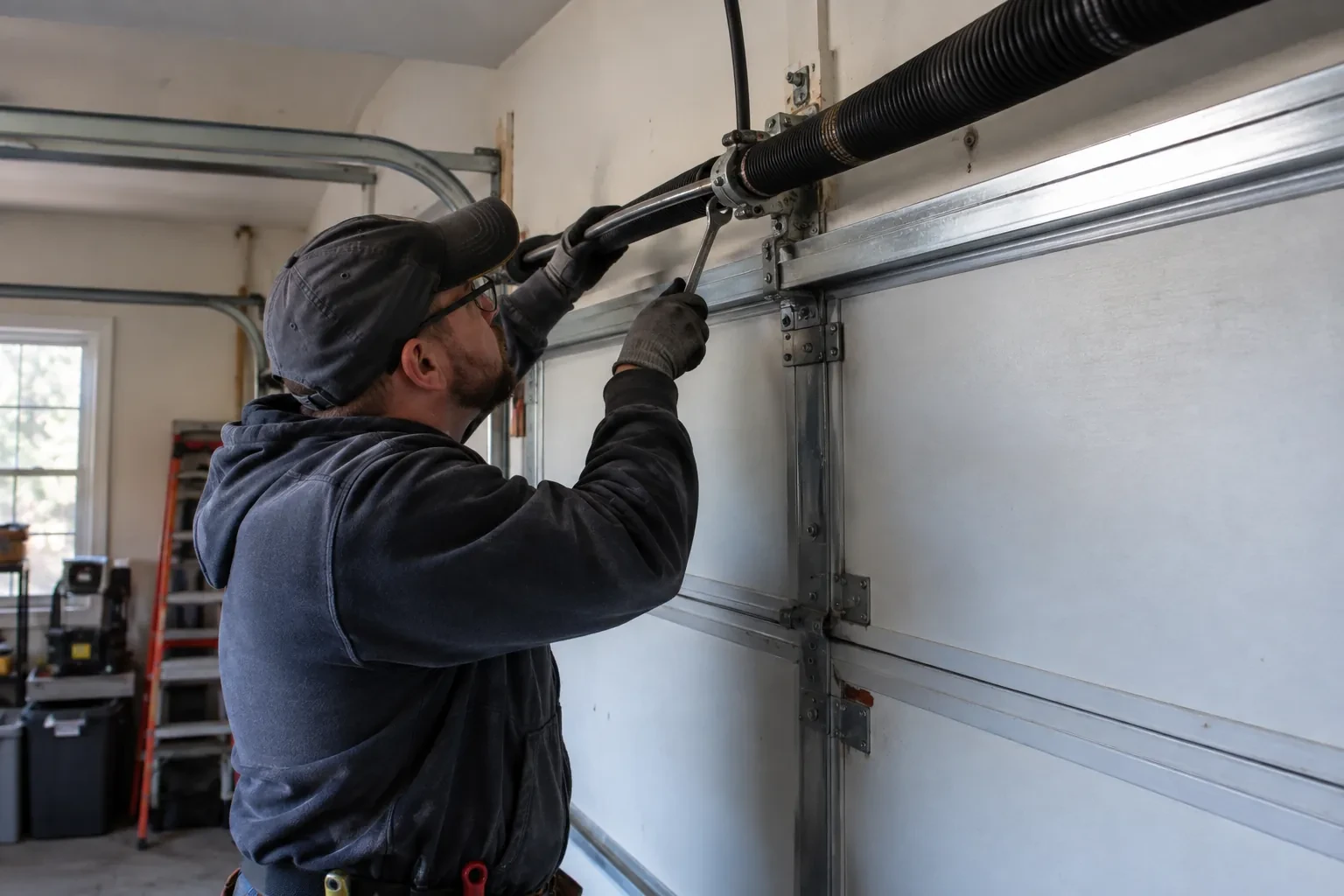
Counterbalance springs
Vertical and horizontal tracks
New-Construction Garage Door Installation
What affects the quote
Available overhead clearance
Tight space around beams, trusses, ducts or lighting increases measurement and coordination needs. Clear headroom and backroom allow a more direct layout than a crowded ceiling zone.
Track configuration
Standard, low-headroom, high-lift and roof-following arrangements use different track pieces, supports and setup. Ceiling geometry and the desired door path determine which configuration belongs in the quote.
Electrical preparation
The location and readiness of power, control wiring and sensor routes affect coordination. Electrical work outside the door install remains a clearly identified project responsibility.
What to have ready
- How many garage door openings are included in the project?
- What headroom, sideroom and backroom are available around each opening?
- Which panel design, colour, insulation and window layout were selected?
New-Construction Garage Door Installation: questions
QuestionsWho handles permits or inspections for the garage door work?
Responsibility depends on the project, municipality and the wider building scope, so it should be named in the construction documents or proposal. The builder can confirm what approvals cover the opening, framing, electrical work and installed door. The door installer supplies relevant product and installation information for their scope. Keeping these roles explicit prevents an inspection assigned to one party from being assumed by another.
Which tests are performed before project handover?
The installer observes manual balance, level travel, roller guidance, cable tracking and how the closed door meets its seals. Track supports, fasteners and counterbalance attachments are reviewed. If powered operation is included, full cycles confirm travel limits and control response, followed by reversal and photoelectric protection tests. Manual release is also demonstrated. Results and any separate project items can then be recorded for closeout.
How can the installed door be protected during remaining construction?
Keep masonry, paint, plaster, floor coatings and abrasive dust away from sections, seals, tracks and rollers. Other trades should avoid leaning materials against the door or using horizontal tracks for storage or support. Controls can be managed so the system is operated only by authorized project personnel before handover. If protective covering is used, it should avoid trapping moisture or adhesive against the finished surface.
Related services
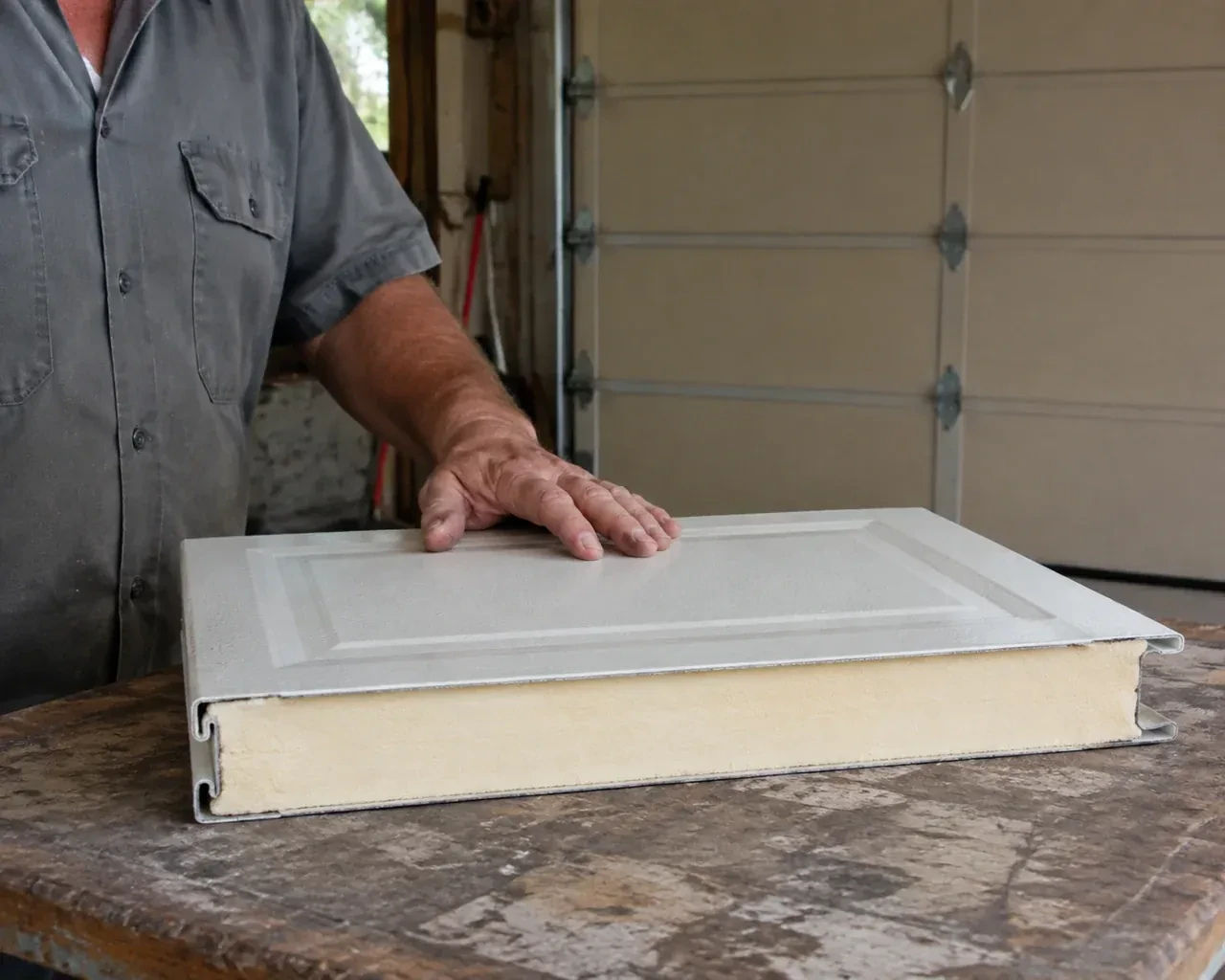
- Insulated Steel Garage Door InstallationDaylight appears beside the closed door and powdery snow collects just inside after windy weather.
- Wind-Rated Garage Door ReplacementA recent wind event left one section slightly creased, a strut twisted, and several track fasteners loose.
- Carriage-House Garage Door InstallationThe existing door has reached the point where panels, rollers and finish all look tired.