Garage Doors in Petersburg, OntarioQuiet doorsfor early risers.
When the bedroom sits above the garage, every rattle at six in the morning is personal. For households in Petersburg we track each sound to its source: dry rollers, a loose hinge, a chain that has stretched, an opener rail rubbing the ceiling. Fix those and the door becomes something you stop noticing. Calls from Schindelsteddle are covered too.
When the bedroom sits above the garage, every rattle at six in the morning is personal. For households in Petersburg we track each sound to its source: dry rollers, a loose hinge, a chain that has stretched, an opener rail rubbing the ceiling. Fix those and the door becomes something you stop noticing. Calls from Schindelsteddle are covered too.
The garage door people.
We keep things plain for people in Petersburg. No jargon in the explanation, no surprises on the invoice, no work started before you have agreed to it. The technician shows you the problem, prices the options on the spot, and gets on with the repair once you say yes.
If you live in Petersburg and your garage door has let you down, you are in familiar territory for us. Our vans pass through the neighbourhood regularly, so the drive is short and the streets are known. We repair springs, cables, rollers and openers, install new doors, and take the time to explain each step so you understand what was done and why.
11years in business
24/7open every day
Real explanations. Every recommendation comes with the reason behind it, in words that make sense to someone who has never opened an opener.
Care in your space. We work around bikes, tools and vehicles carefully, protect what needs protecting, and leave the garage clean.
No pushing. You hear the choices once, clearly. Whether to go ahead, wait or take a different route is yours to decide.
Whatever brought you to this page from Petersburg, a door that stopped, a noise that started or a plan for a new door, the services below explain what we do about it. Repairs and maintenance, springs and hardware, openers and remotes, and new door installation are each covered in detail.
About 41% of homes in Wilmot were built in 1980 or earlier, according to the 2021 Census.
In a mixed neighbourhood, some garages are detached with plenty of side room and others are tucked under a bedroom with little headroom, so opener and spring choices vary from house to house. Measuring at the door, rather than assuming, is how the right hardware is chosen.
Single-detached houses make up about 79% of homes in Wilmot (2021 Census).
Mostly houses
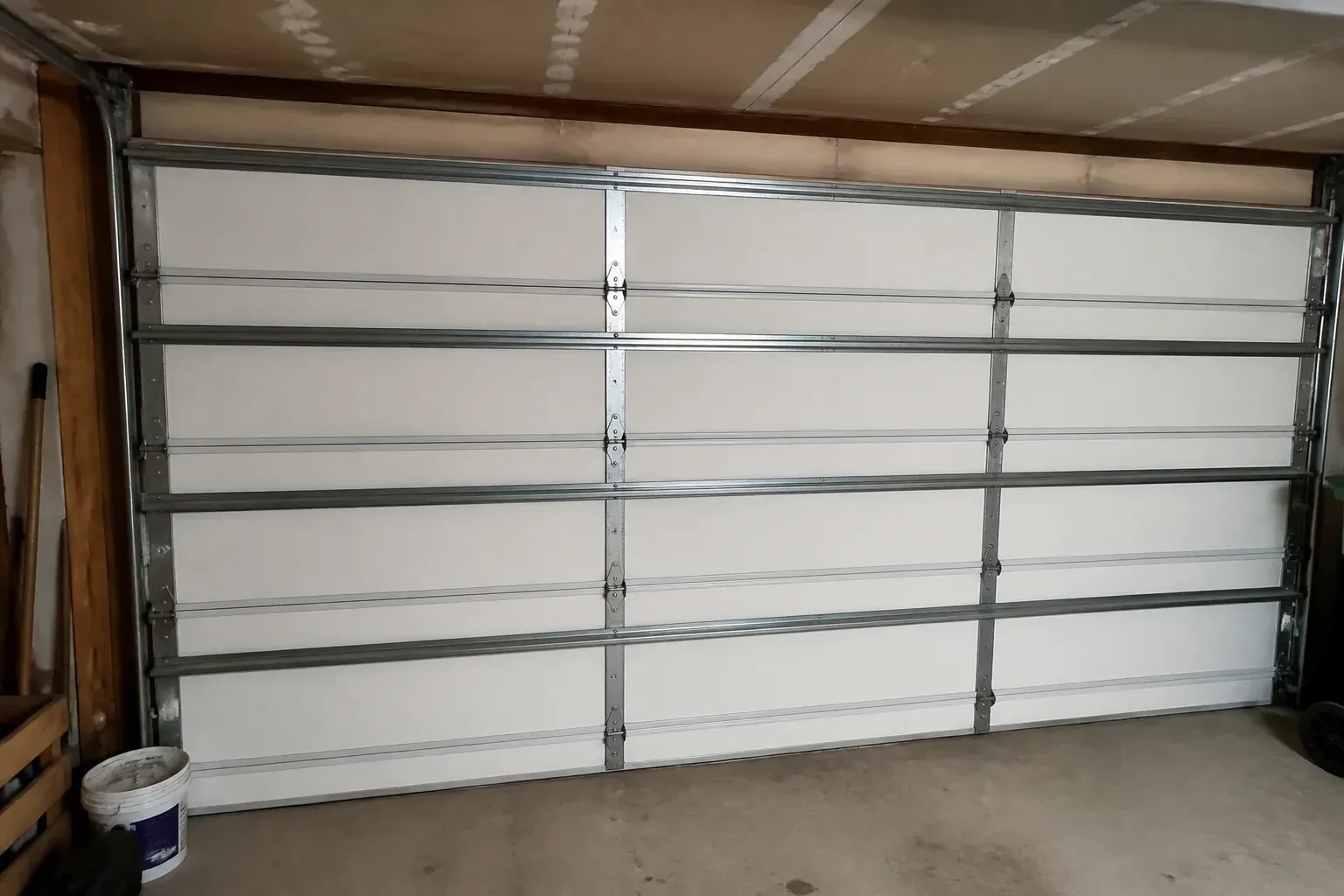
Detached houses commonly have attached two-car garages with a wide double door, which is a heavy door on a pair of torsion springs. Spring and cable work on these doors is done as a matched set so the door lifts level and the opener carries only its intended load.
A crooked door is a hardware door. One cable has stretched or slipped, a drum has let go, or a spring on one side has weakened. These are the parts we look at first, and the services here put them right.
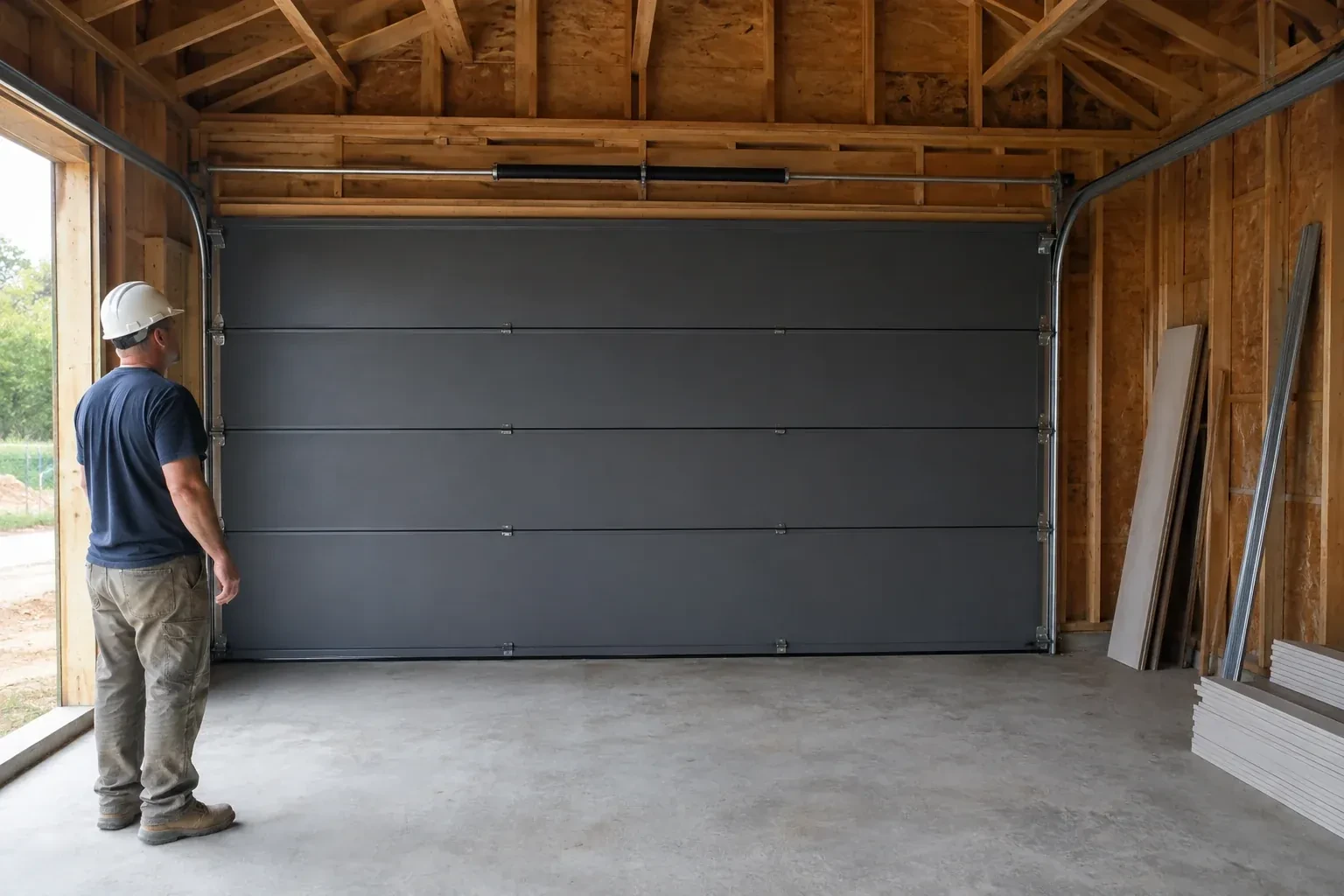
Some doors have given everything they had. When that is the case, a new one installed carefully, balanced properly and paired with a matching opener is the right investment, and this is how we do it.
The door goes up perfectly. Coming down is the trouble: partway to the floor it stops, climbs back to the top, and the light on the opener blinks at you.
It is minus twenty in the detached garage and the door climbs in jerks, the belt stiff as a board. By the afternoon, when the sun has been on the door, it runs almost normally again.
The bedroom above the garage shakes every morning at six when the chain drive fires up. Everyone in the house knows the moment someone leaves for work.
Since shelving went up along the garage wall, the door will not close and both sensor lights are dead. A screw or staple may have gone through the thin wire that runs from the opener to the sensors.
Since the new door went in, the red handle has hung just below the ceiling, a stepladder's height above anyone in the household. During last week's blackout your daughter stood under it with a broom, unable to hook it down.
Which fix fits?
During the power outage you pulled the red cord and tried to lift the door by hand.
WhyThe track is the pair of steel channels that guide every roller on a sectional garage door: a vertical run fixed to each jamb, a curve overhead, and a horizontal run hung from the ceiling.
Someone left the snow shovel leaning in the opening and the door came down on it.
WhyWhen permit drawings or a building designer specify wind criteria, the replacement is planned from those documents rather than from appearance alone.
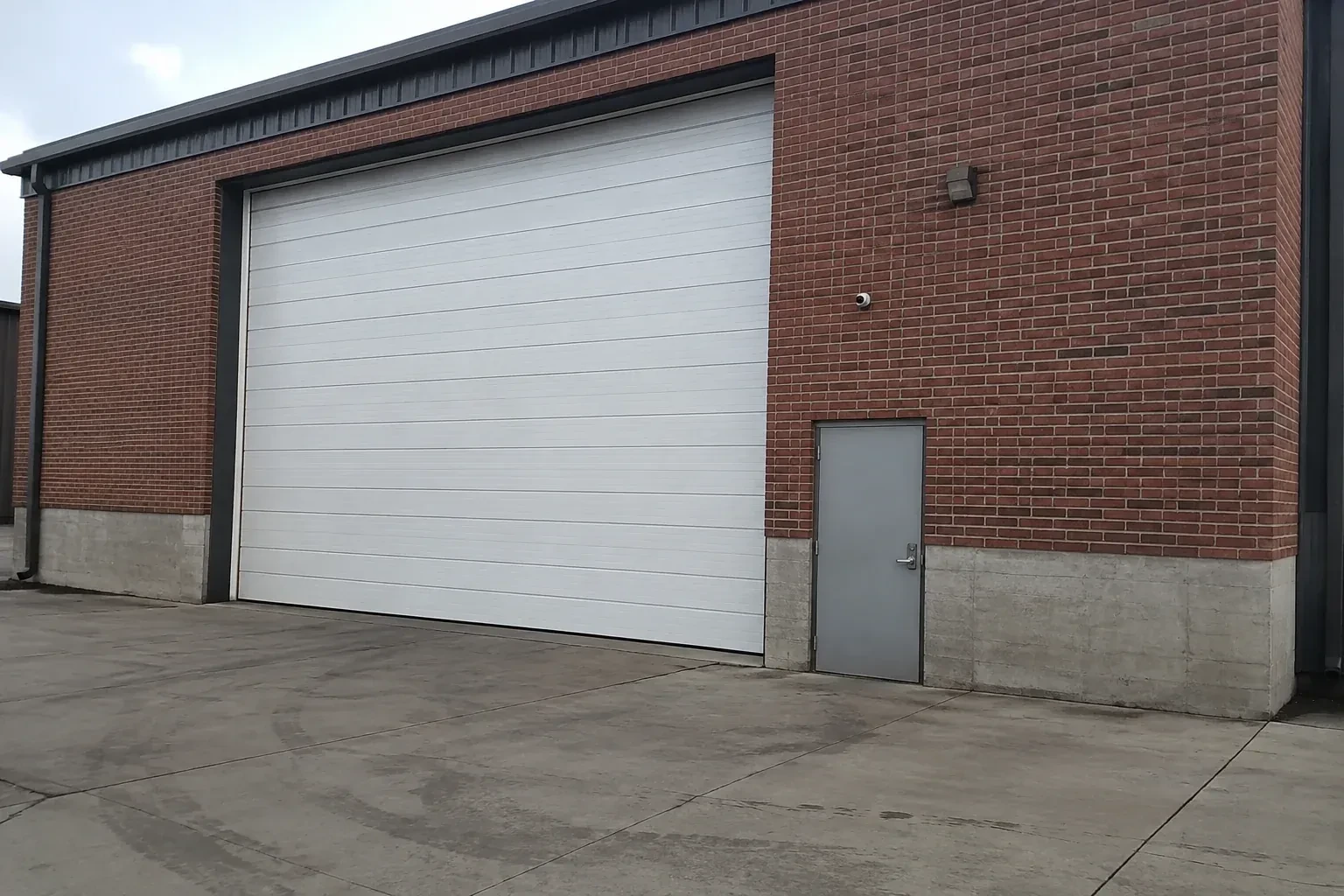
This garage will be heated and used beyond parking, so the opening needs more than a basic closure.
WhyHigh lift sits between standard lift and full vertical lift.
An entrance. Not an afterthought.
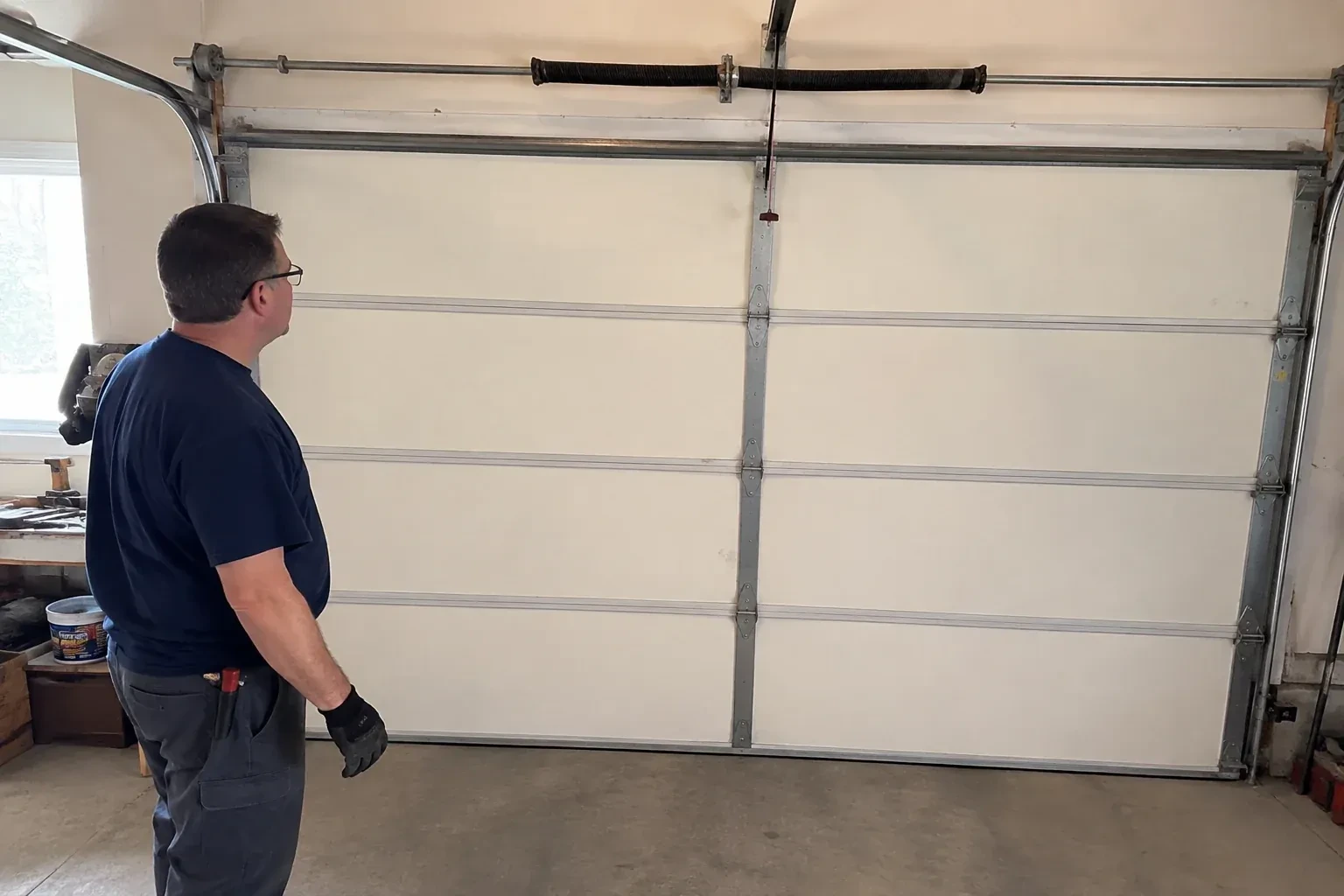
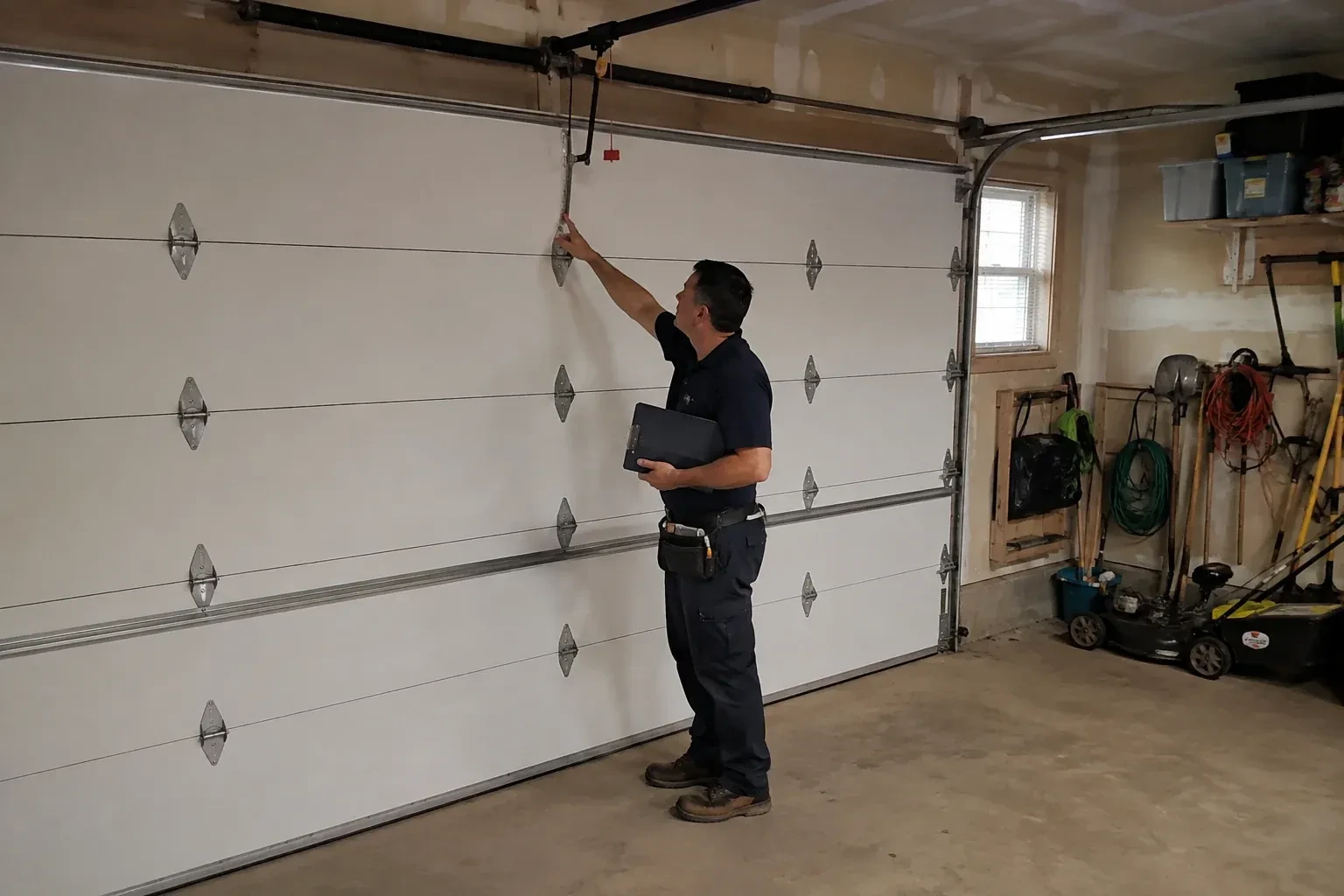
1/10Garage Door Safety Inspection
During the power outage you pulled the red cord and tried to lift the door by hand. It felt like lifting a piano, and when you let go part-way it sank back toward the floor on its own.
The morning after a thaw the opener groaned, the door stayed stuck to the icy floor for a second, then lurched up crooked. It stopped halfway with a grinding scrape and has not moved since.
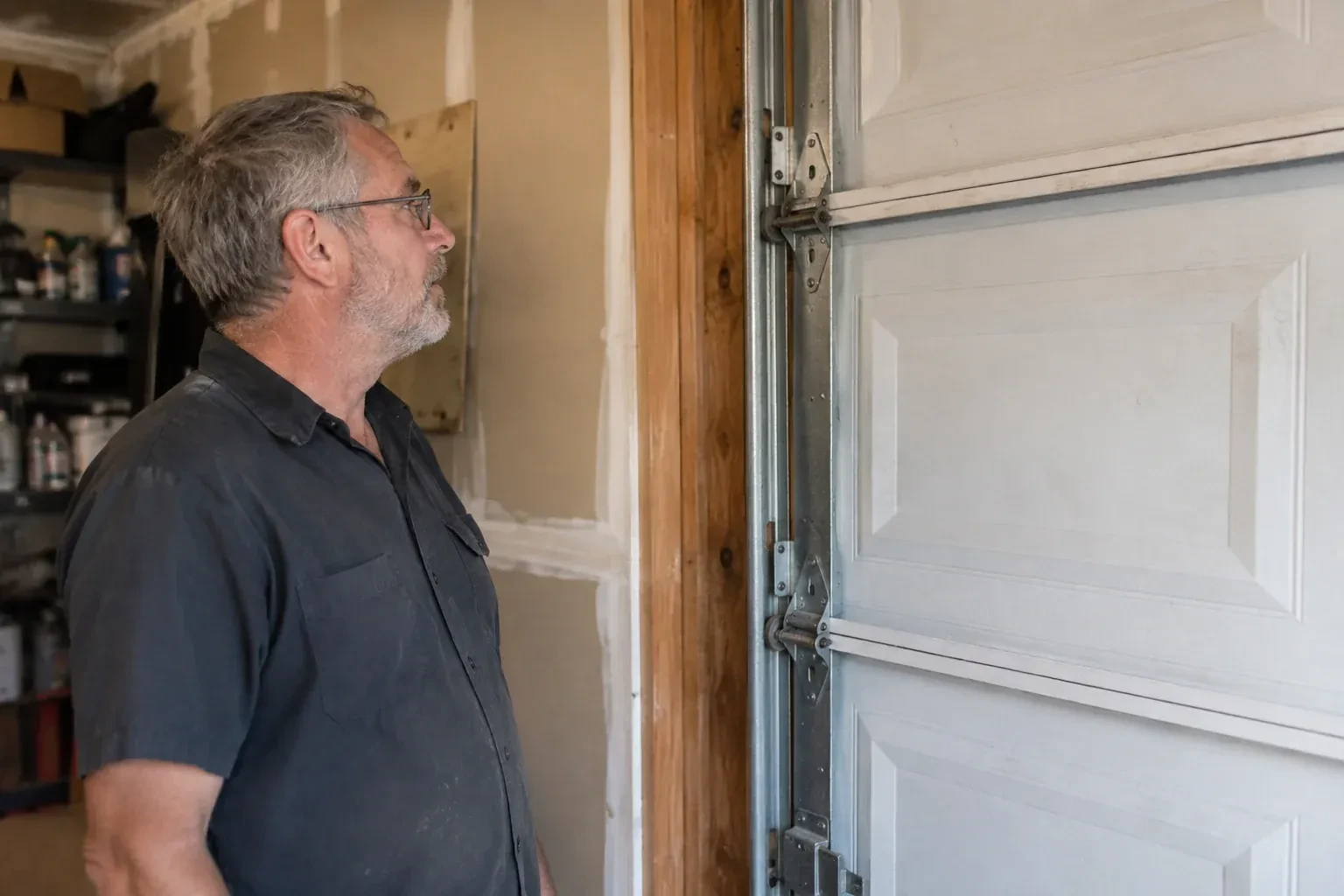
Halfway up, the door lurches and one roller rides onto the lip of the channel. Near the curve the track looks wider than the rest, and the door hesitates in the same place on the way down.
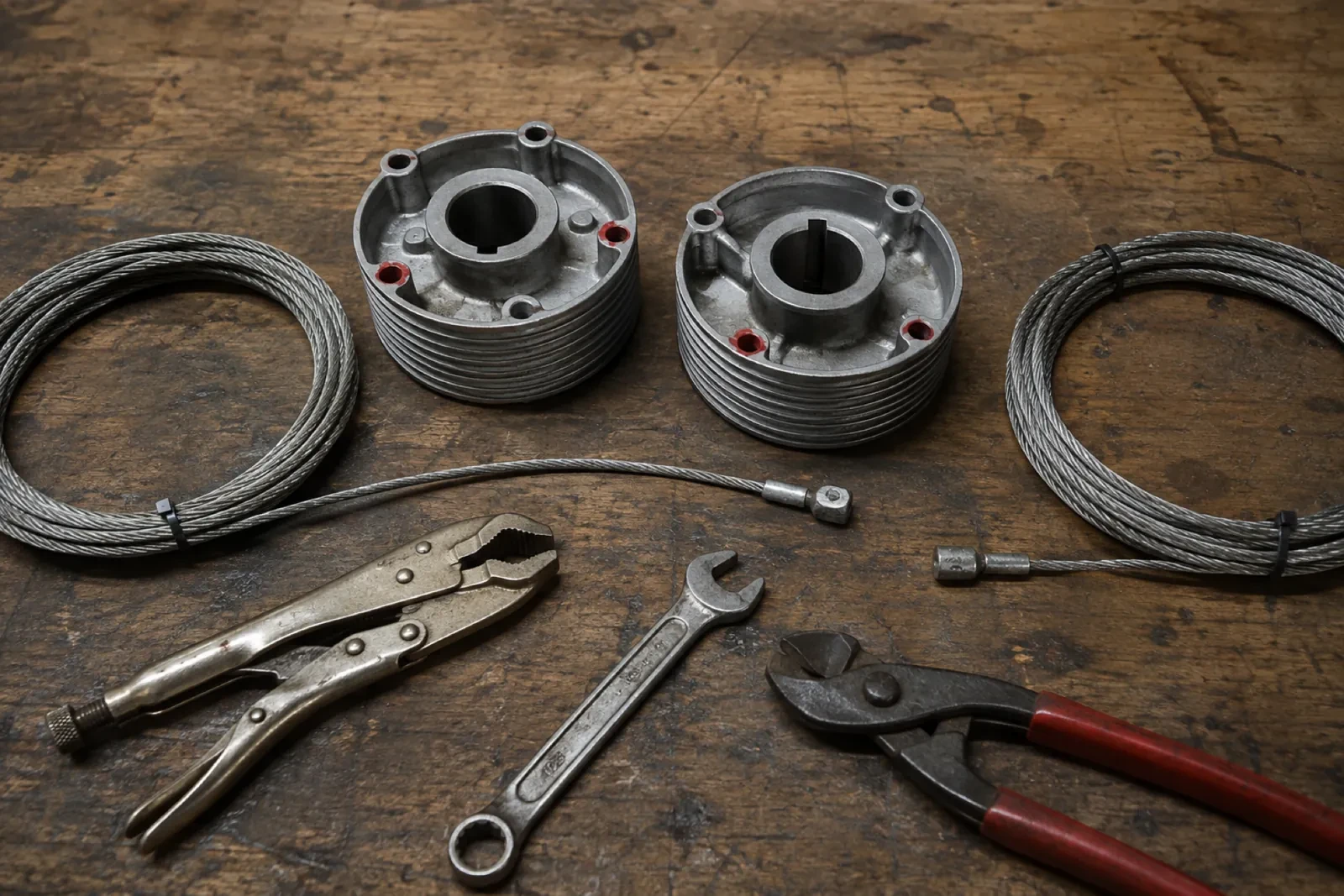
Someone left the snow shovel leaning in the opening and the door came down on it. Now a loop of steel cable hangs loose beside the track and the door refuses to close the last few inches.
The door drops the last stretch to the floor rather than settling, and when you stop it halfway by hand it slides down instead of staying put. Balance has drifted, and the spring is no longer holding its share of the weight.
New windows would improve the door's appearance, but they also change the section layout and reinforcement pattern. You need a wind-rated configuration designed with the chosen glazing instead of treating the windows as a later addition.
This garage will be heated and used beyond parking, so the opening needs more than a basic closure. Insulated sections, perimeter seals and careful contact at the finished floor matter from the first installation.
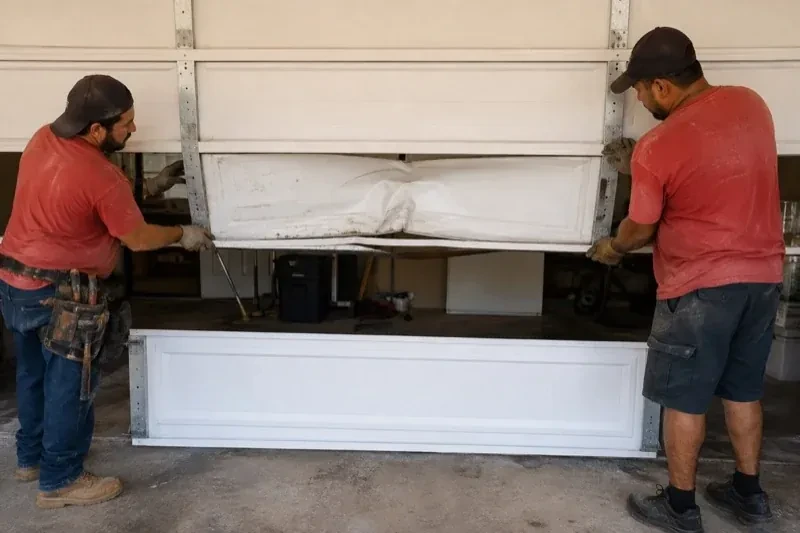
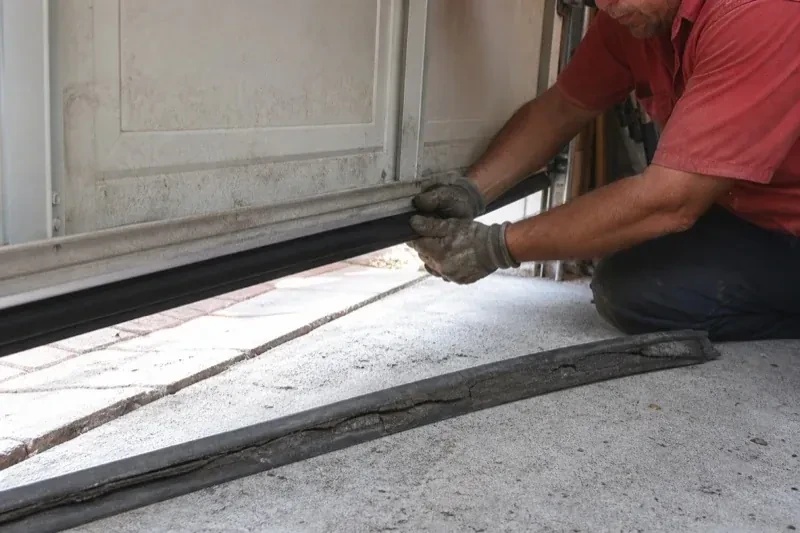
Cold weather has exposed a widening gap below the closed door. The bottom retainer is bent, the rubber seal is split, and uneven seating lets drafts and slush enter the work area.
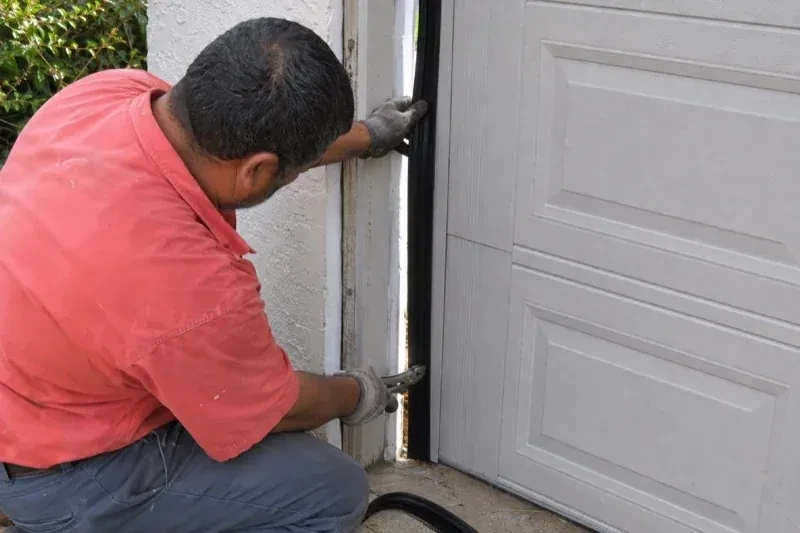
Cold-weather moisture has frozen the bottom seal to the sill, and salty grit has collected along the guide entrances. The door chatters during its first cycle and leaves a visible gap after it reaches the closed limit.
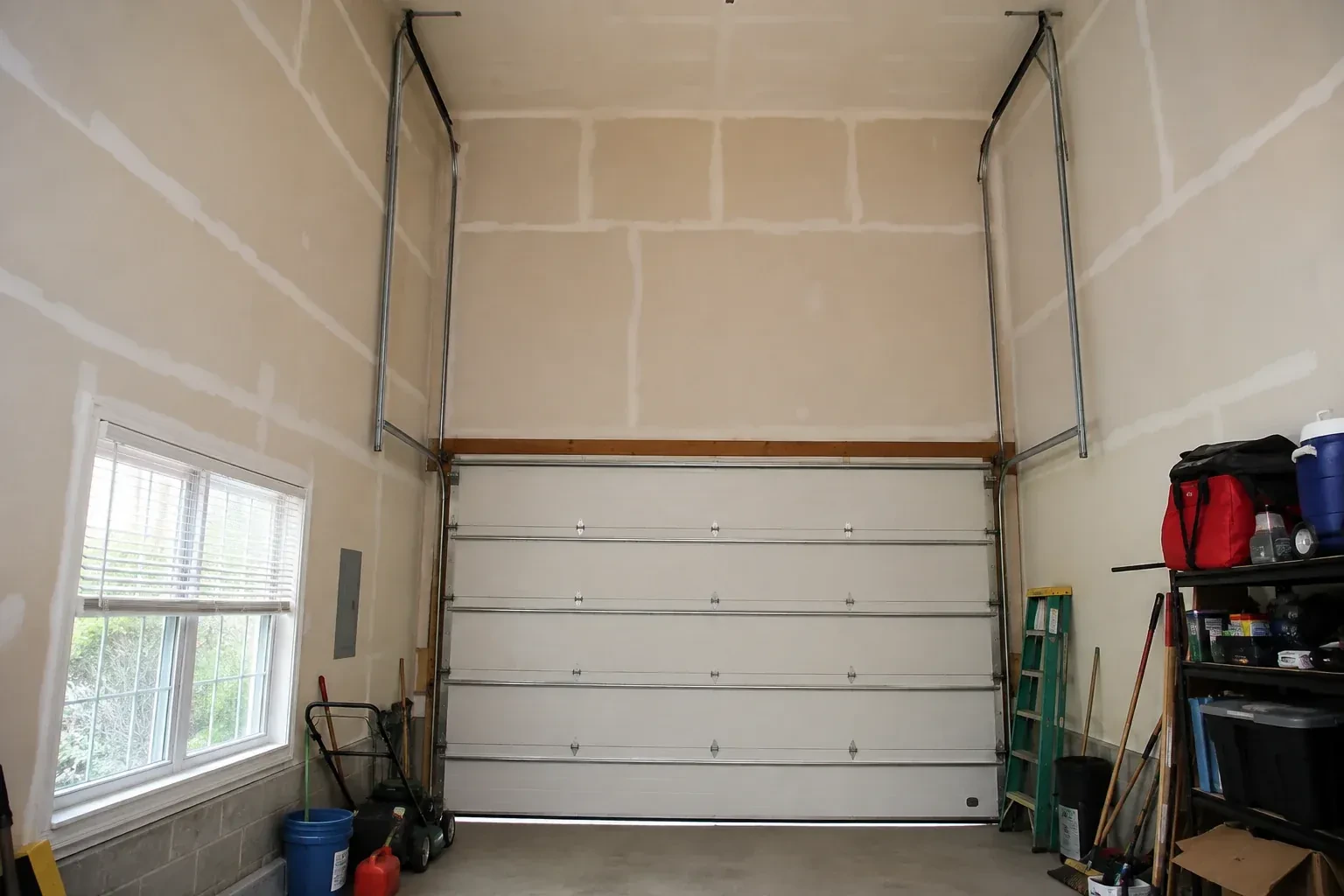
The door works well, although the open panels sit far beneath a sloped or raised ceiling. You are exploring whether the track, counterbalance and operator can be redesigned to follow the room more closely.
What exactly gets looked at during the inspection?
The whole system, not just the opener. Sections, hinges, rollers, tracks and their fasteners; springs, cables, drums and bottom brackets; the bottom seal and perimeter weatherstrip; the opener head, rail, arm and mounting; the photo eyes, contact reversal, wall control, remotes, keypad and manual release; and the warning labels. Each is examined, and the door is tested both by hand and under power.
Can an off-track door fall?
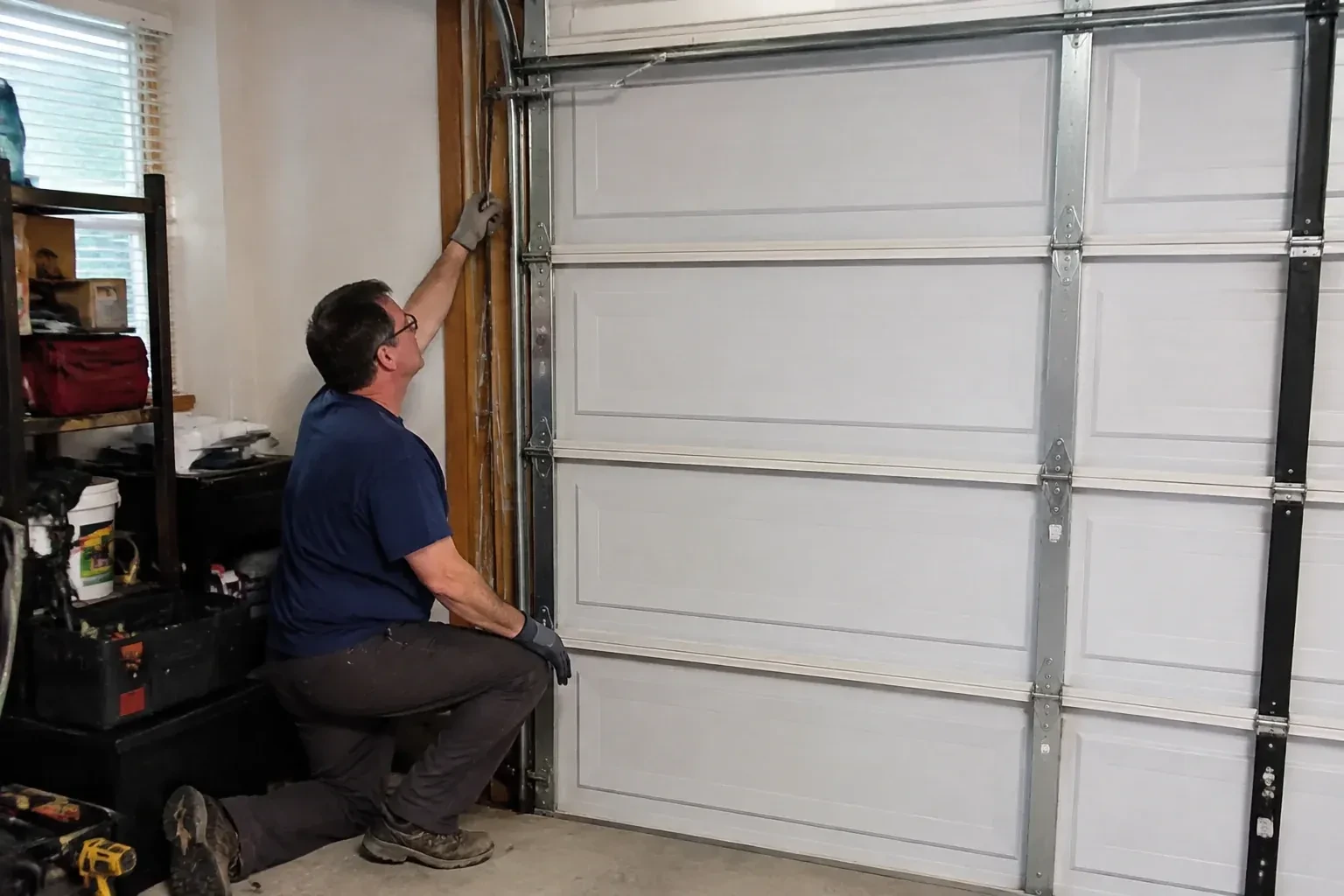
A door with one cable slack and the springs still pulling on the other side is being held by parts that are not sharing the load, and it can shift or drop without warning, whether or not anyone touches it, if the second cable lets go or a roller gives way. That is why the visit begins with clamps on the track and support under the sections, and why people, pets and vehicles stay clear of the opening until that support is in place.
Will track work involve the springs?
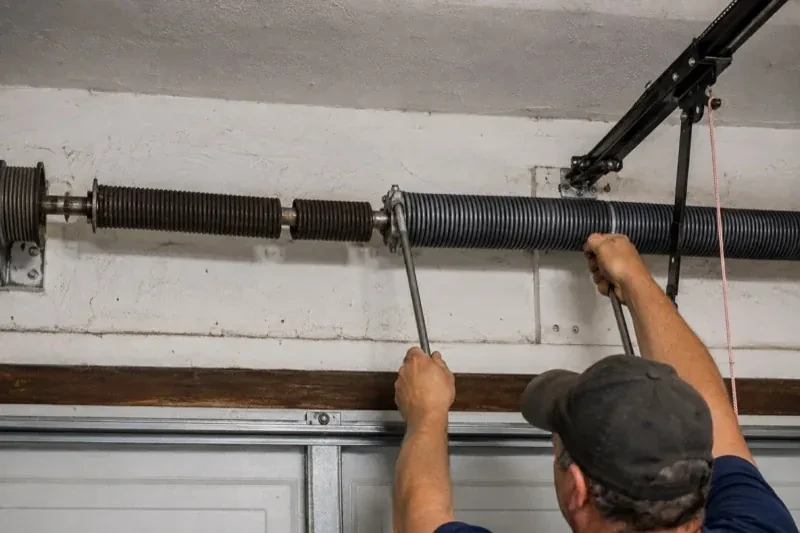
Sometimes. The flag bracket at the top of the vertical track usually carries the bearing for the torsion shaft, so if that bracket or the curve has to move, the springs are unloaded first with winding bars and rewound afterwards to the same turns. Simple work on the vertical run below the curve, or on the horizontal hangers, can often be done with the springs left alone. Either way the door is balance-tested at the end.
Should both cables be replaced when only one has failed?
Yes, as a rule. The two cables were fitted together, have flexed around their drums the same number of times and have sat in the same slush, so the survivor is close to the end of its life. A new cable beside a stretched one also makes it harder to set the door level. Two matched cables give an even lift and one visit instead of two.
Can a spring be adjusted rather than replaced?
A spring that is intact but has relaxed slightly can be given a little more tension, within limits, to restore balance; this is a normal adjustment on a door that has settled. A spring with a broken coil is replaced as a unit, since the wire has reached the end of its life. The technician checks the condition of the steel and recommends whichever restores a balanced, safe door.
Will a reinforced door be heavier than my old one?
It may be. Added struts, different section construction, glazing, and heavier hardware can change the total door weight. The counterbalance springs are selected for the finished assembly, and the opener is checked for compatibility and correct attachment. With proper balance, the door should still move in a controlled way by hand and under power.
Which tests are performed before project handover?
The installer observes manual balance, level travel, roller guidance, cable tracking and how the closed door meets its seals. Track supports, fasteners and counterbalance attachments are reviewed. If powered operation is included, full cycles confirm travel limits and control response, followed by reversal and photoelectric protection tests. Manual release is also demonstrated. Results and any separate project items can then be recorded for closeout.
How are springs and cables handled during repair?
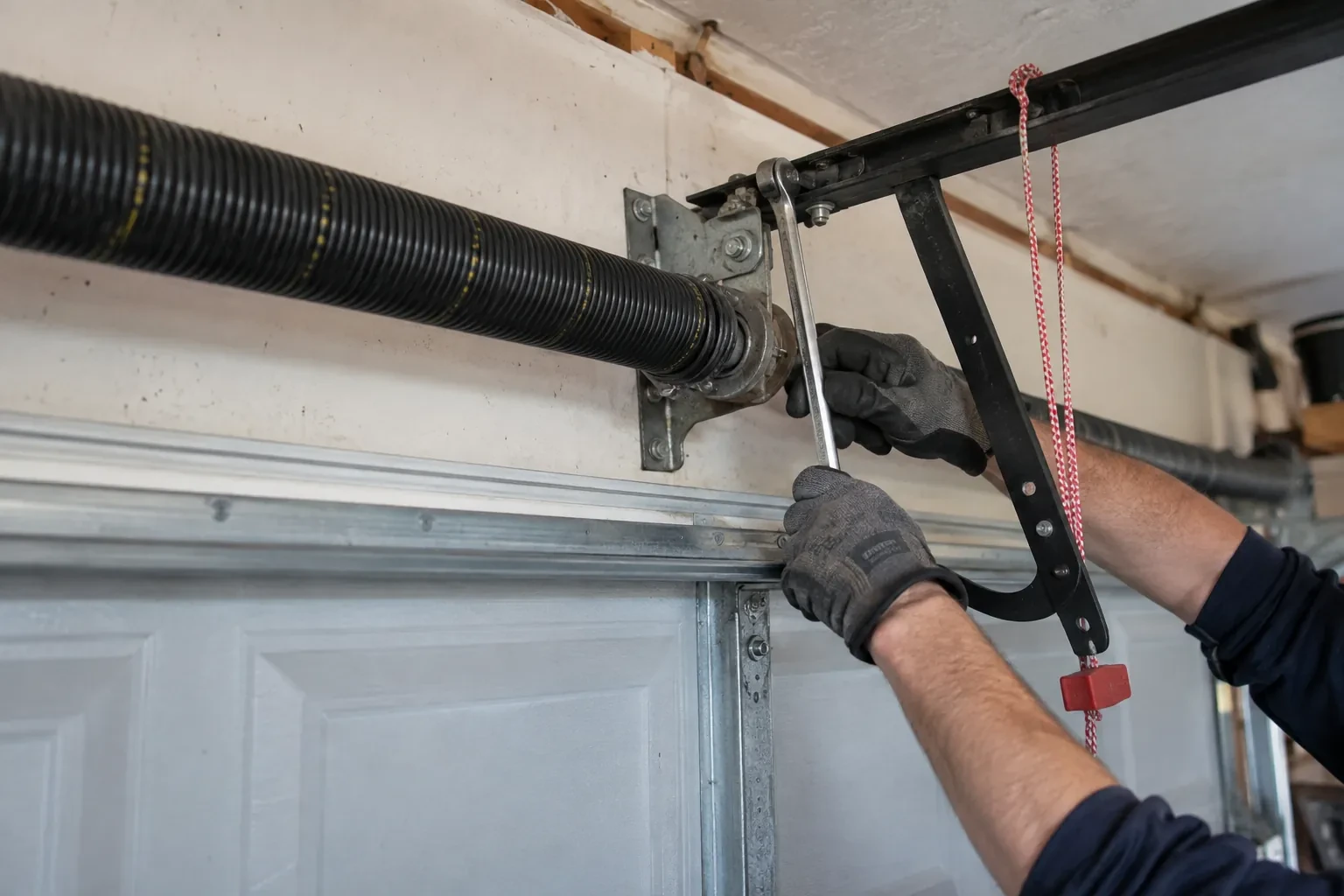
The technician first controls the door's weight and position with suitable supports or clamps. Stored spring energy is then managed with proper winding tools and a defined sequence before connected parts are loosened. Cables, drums and springs are matched to the door and lift geometry, installed with the system secured, and checked for level tension through controlled movement.
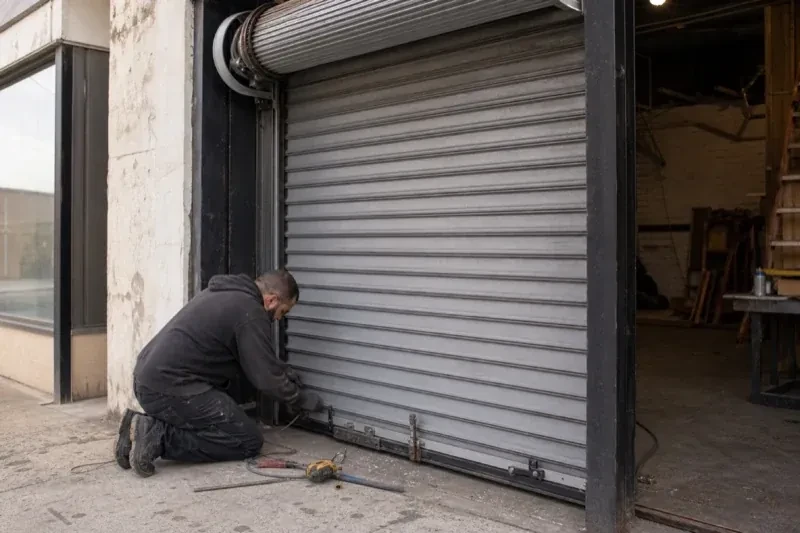
Why is there a grinding or clattering sound near the hood?
Noise at the head can come from worn barrel bearings, loose brackets, misaligned drive chain or sprockets, shifting slats, an uneven coil or hardware contacting the hood. The pattern matters: once per revolution suggests something different from continuous guide scrape. Controlled observation locates the source before a specific part is selected.
What should be moved before the installation visit?
Clear vehicles, shelving contents, loose tools and stored items from the opening, side walls and overhead work zone identified during assessment. Provide access to power controls and the operator. If a vehicle lift is already present, leave it in the agreed position and share its operating dimensions. A tidy bay supports safe equipment placement and accurate alignment work.
Request a visit
We keep things plain for people in Petersburg. No jargon in the explanation, no surprises on the invoice, no work started before you have agreed to it. The technician shows you the problem, prices the options on the spot, and gets on with the repair once you say yes.