Openers · Wilmot
Emergency Release Repair
Since the new door went in, the red handle has hung just below the ceiling, a stepladder's height above anyone in the household.
In plain words
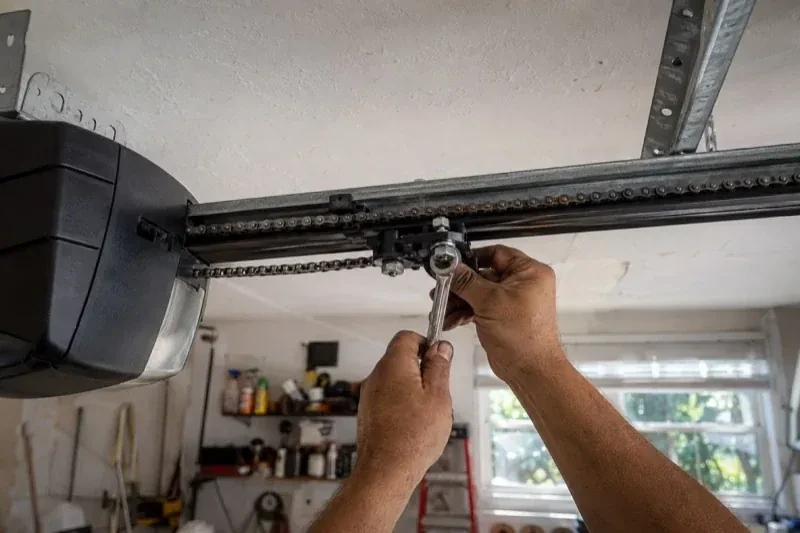
Emergency release repair puts the manual disconnect on an opener into working order. That disconnect is the red handle on a cord below the rail, the spring-loaded lever it pulls, and the trolley that lets go of the door when the lever is thrown and grips it again when the two are brought back together. When any of those parts is missing, bent, worn or set at the wrong height, moving the door by hand in an outage becomes a struggle and reconnecting it afterwards a puzzle. The technician fits parts made for that opener, sets the handle where it belongs, and proves the sequence from disconnect to reconnect.
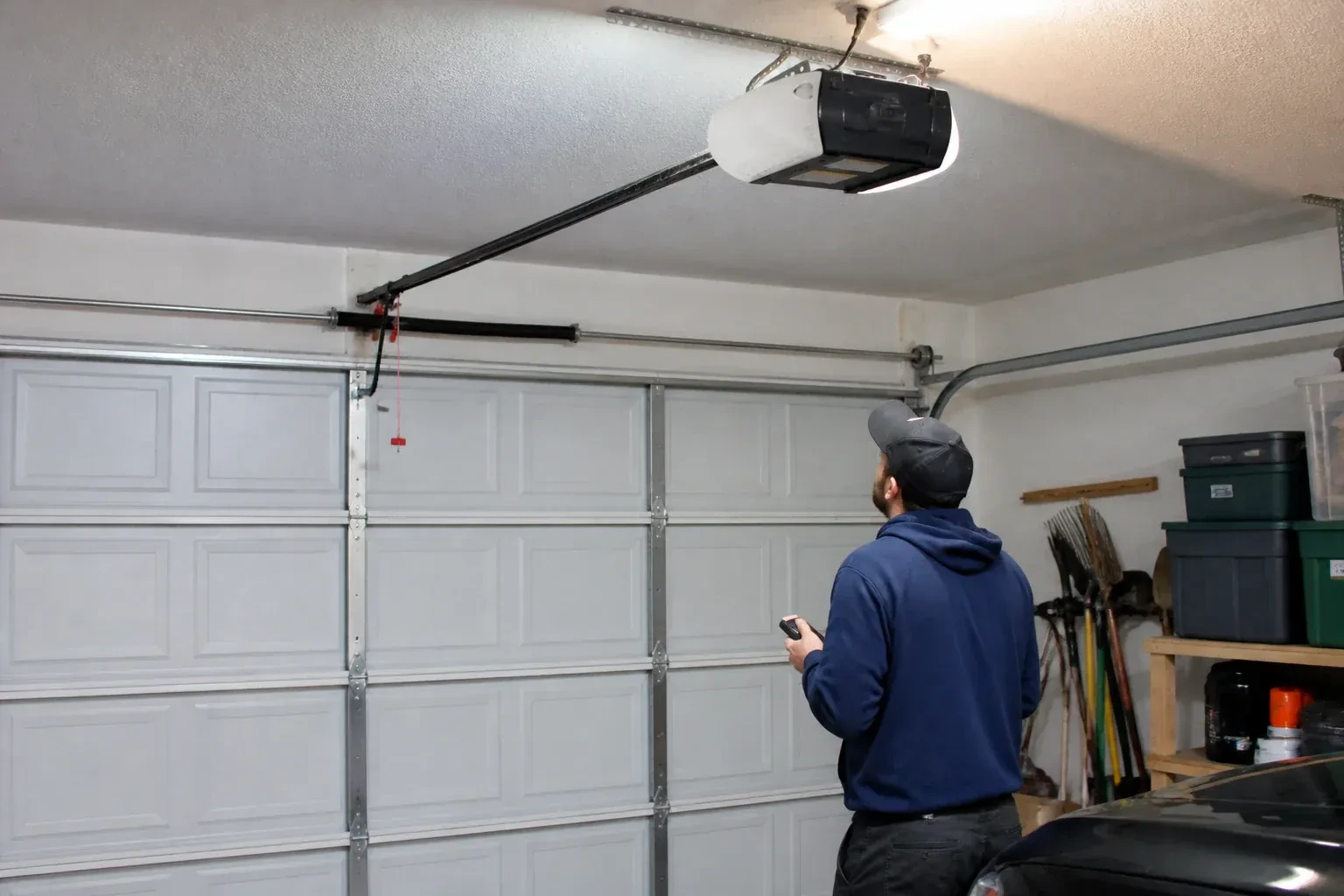
How the visit goesSomeone pulled the cord last spring to get a car out during an outage, and the door has never properly rejoined the opener. Press the button and the trolley glides along the rail by itself while the door stays exactly where it is.
Emergency Release Repair
How the visit goes
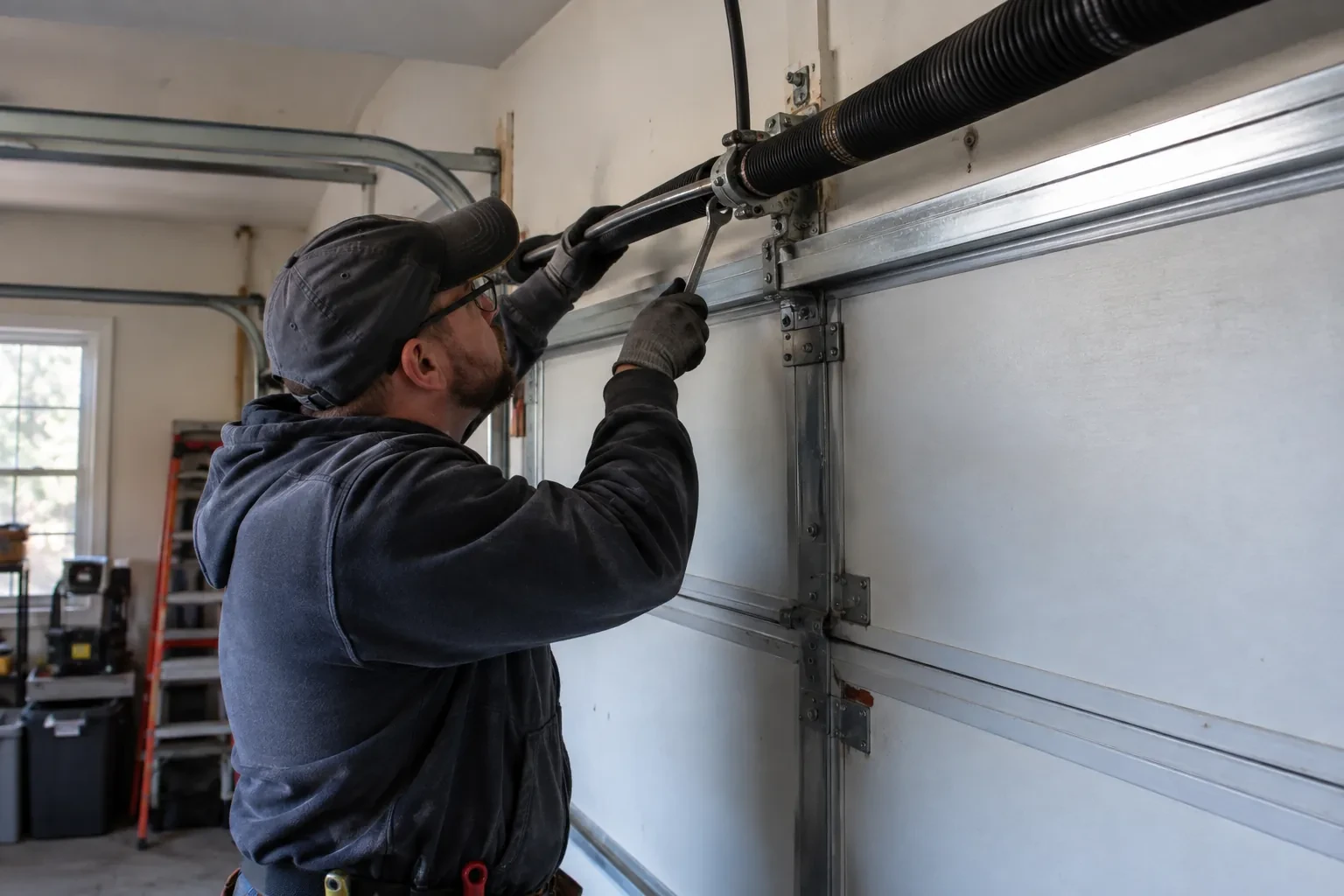
Why the trolley will not latch
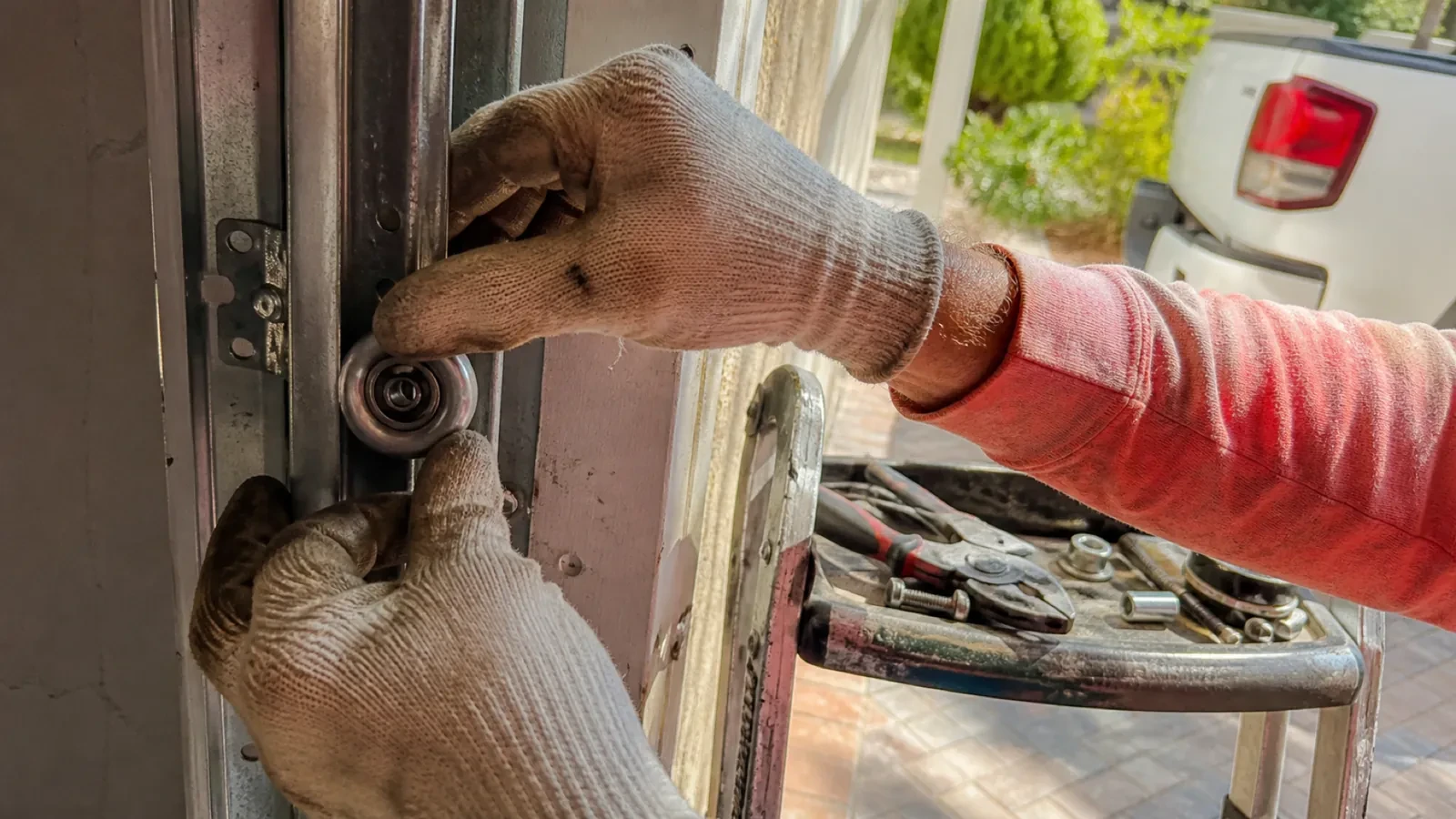
When the complaint is a trolley that runs but never reconnects, the technician looks for the usual reasons. The cord may have been pulled back toward the opener, which on many rails deliberately holds the lever out for repeated manual use, and simply never returned. The trolley may have been driven into the stop bolt or stop tab at the end of the rail after the travel limits drifted, so it sits jammed with the motor humming. The latch teeth may be worn, or the release arm bent so it can no longer drop into place. Each of these has a different fix, and telling them apart takes a minute with the cover off.
Door work first when the balance test fails
When the disconnected door proves heavy, drifts or binds, the technician changes the order of the visit. The opener stays disconnected, and the door side is put right first: springs re-tensioned or replaced with winding bars by a technician trained for tensioned hardware, frayed cables replaced, dry rollers and hinges lubricated, a bent track straightened. Only when the door lifts and holds by hand is the release work finished and the trolley reconnected. This keeps the release honest: it is meant to hand you a door you can move, and it can only do that once the springs are carrying the weight.
A handle you can find in the dark
You are left with a red handle hanging at a height an adult can reach from the floor, clear of the car and visible from the door into the house. Nothing is tied around the rail, nothing is stacked beneath it. If the garage is dark in an outage, the handle is where your hand expects it. Keep it that way: when shelving, bikes or a storage platform go in, leave the space under the trolley open. Once a season, glance at the cord for fraying where it meets the lever, since sun through a window and winter cold both age rope.
Emergency Release Repair
In the van
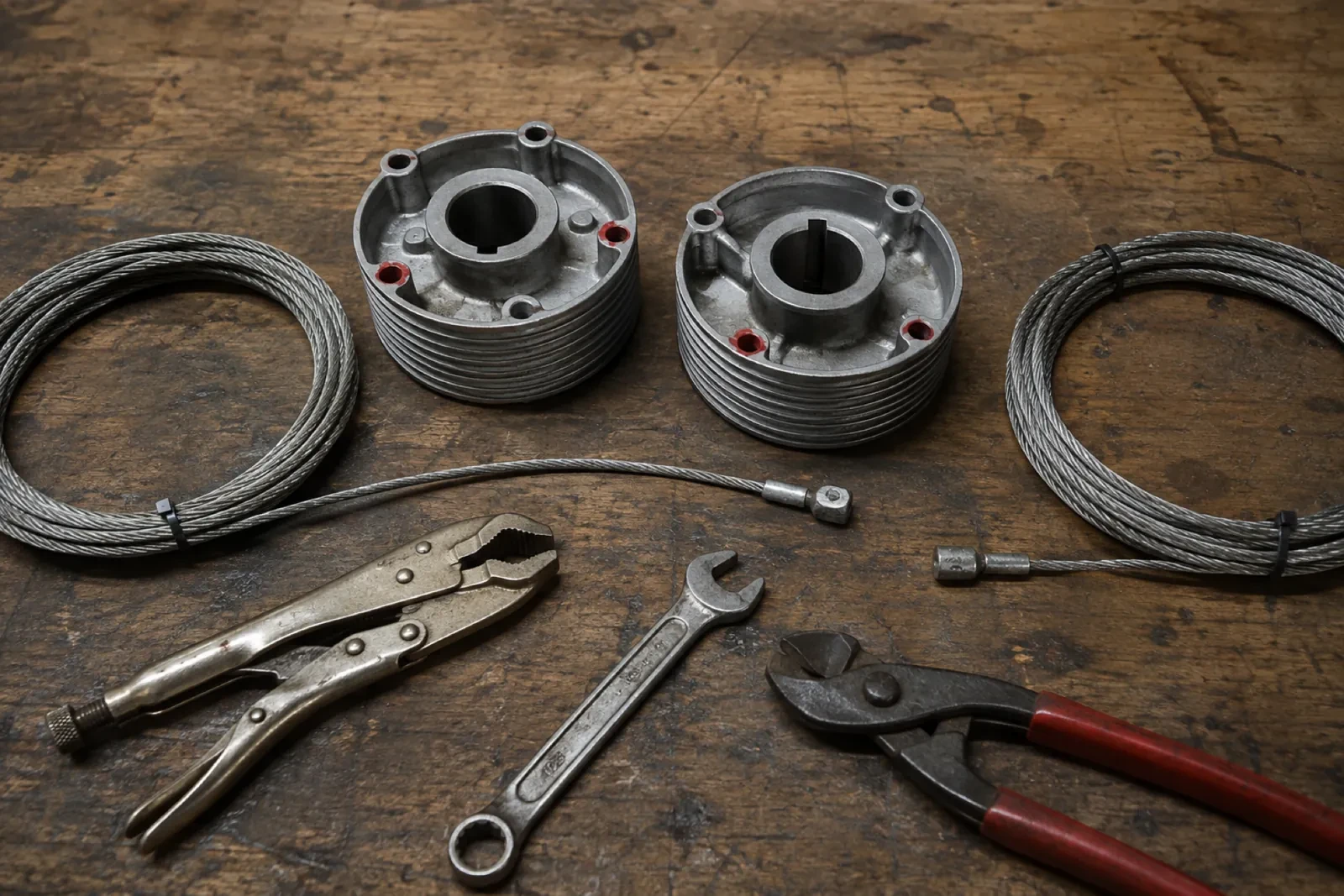
Rope and red handle kit
Outside key release kit (lock, cable, keys)
Trolley and carriage assembly
Track clamps to hold the door
Release lever and spring
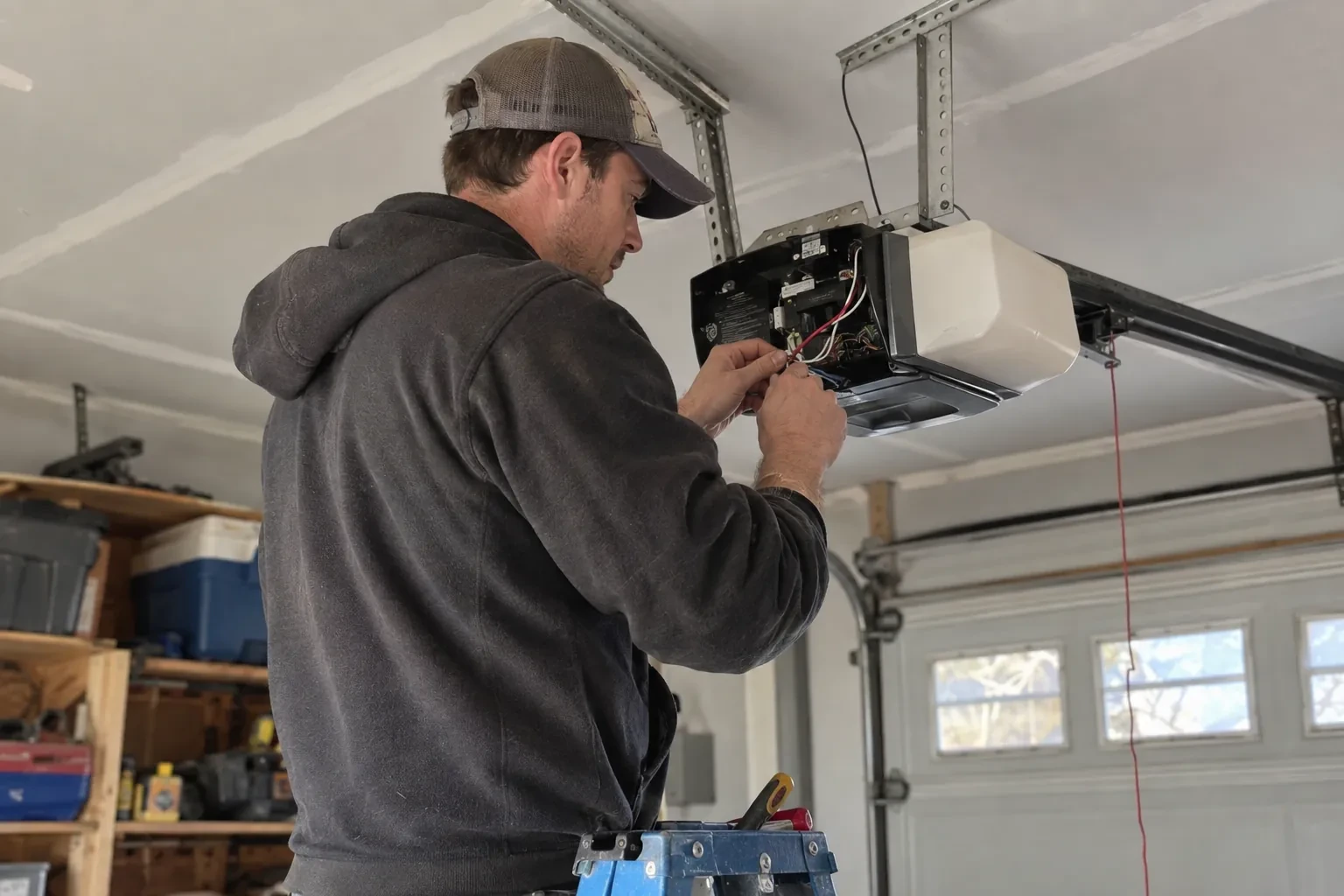
Emergency Release Repair
What affects the quote
Demonstration and labelling
Walking the household through the release, fitting a fresh warning and instruction label near the wall control, and adding handles or gripping points to the door are small tasks that are itemized when they are part of the visit.
Ceiling height and access
A standard garage puts the trolley in easy reach from a step ladder. High ceilings, a storage loft, a high-lift track or a car that cannot be moved add setup time.
Time of the call
A weekday daytime visit and an evening, weekend or holiday one cost the same amount for freeing or repairing an emergency release. The exact figure is confirmed once the technician has seen the trolley, the cord or lever, and how the door was left.
What to have ready
- Has the door or the opener been replaced since the release was last used?
- Is the red handle still there, or is only the cord left?
- Where was the door when the release was pulled, and where is it now?
Emergency Release Repair: questions
QuestionsHow high should the release handle hang?
No more than about 1.8 metres above the floor, so an adult standing on the slab can reach it, and high enough to clear the roof of the car parked beneath it. It should also be plainly visible and red. If a new door or a rail change left the cord short, or a previous owner tied it up around the rail, the technician cuts a fresh rope to the right length and moves any obstruction out of the way.
The outside release lock froze. How do I stop that happening again?
Salt spray and meltwater get into the keyway during a thaw and freeze overnight, the same way they do in a house lock. Keep the cylinder face clear of slush, give it a puff of dry lock lubricant before the cold sets in, and carry a small de-icer through the winter. A weather cap over the cylinder helps on a door that faces the road. The technician cleans and treats the cylinder as part of any outside release repair.
How do I keep the door in manual mode during a long outage?
On many rails, pull the cord straight down and then back toward the opener; the lever stays in the released position until you return it, so the trolley will not catch the door on its own. On others the trolley simply stays free until the opener is run. Lift and lower the door by its handle and use the slide bolt or manual lock to hold it shut. When power returns, reconnect first, then use the wall control.