Springs · Wilmot
Extension Spring Replacement in Wilmot
One of the springs beside the track is hanging loose at the front end, its pulley dangling, and a length of cable lies slack along the top of the door.
In plain words
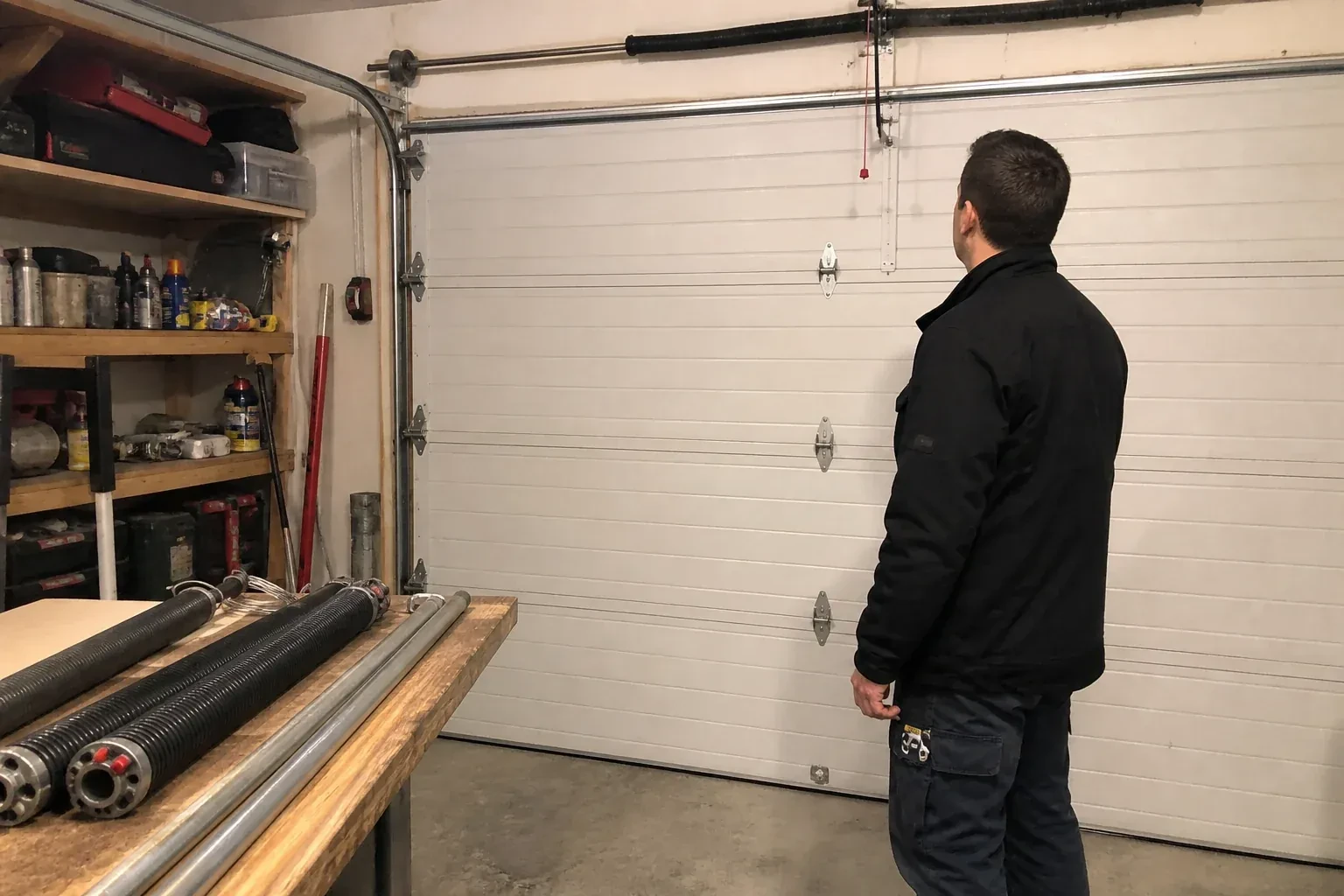
Garage doors are balanced by one of two spring systems, and the extension kind is the one you find on many single-car doors and older detached garages. Instead of a spring wound on a shaft above the opening, an extension system uses two springs stretched along the horizontal tracks, working through pulleys and cables. It needs less headroom, which is why it suits garages with a low ceiling. Replacing these springs is its own service with its own parts: springs chosen by door weight, pulleys, S-hooks and containment cables. A technician confirms which system is on your door before any part is chosen.
How the visit goesA bang like a dropped toolbox came from the garage last night. This morning one of the long springs beside the track hangs in two pieces, and the door will only rise a few inches before the opener gives up and stops.
Extension Spring Replacement
How the visit goes
Pulleys, cables and the hooks that set them
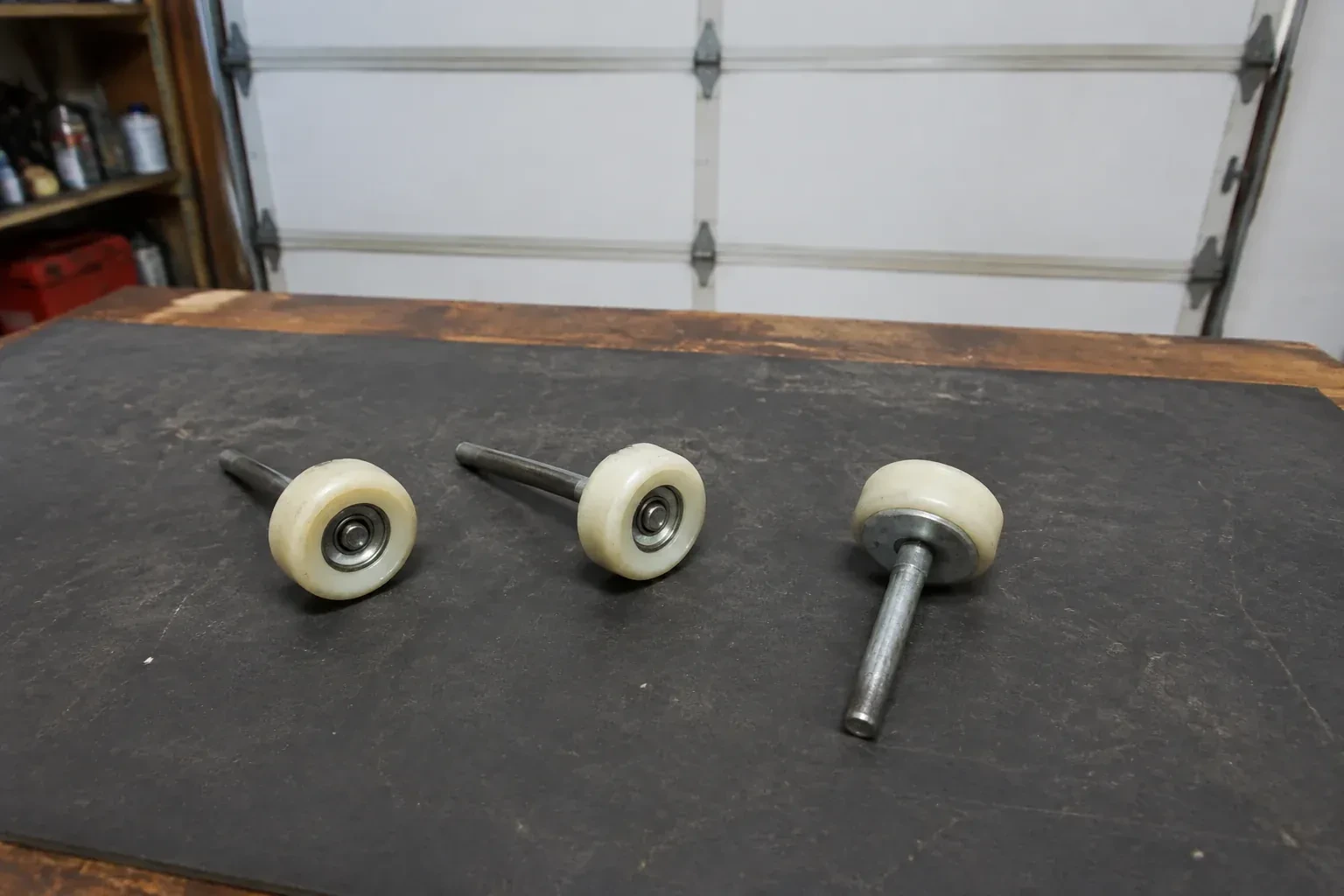
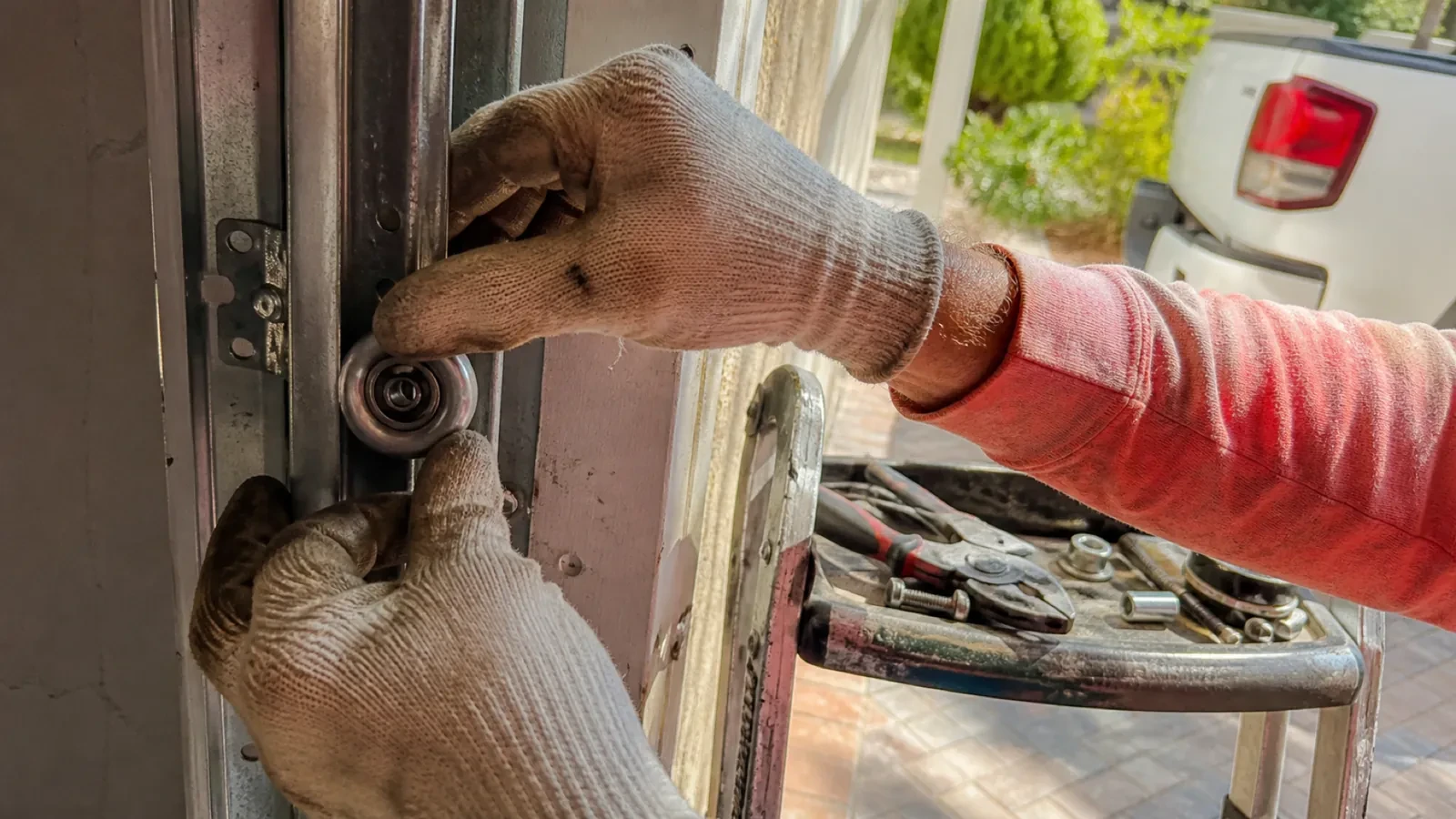
Each side of an extension system has two pulleys, one on the moving end of the spring and one fixed at the front of the horizontal track, and a lift cable that runs from the bottom bracket over both to an S-hook or clip on the track hanger. Each pulley is spun to feel for a rough bearing and looked at for a wheel worn to a sharp groove or wobbling on its bolt. The cables are followed for fraying, rust at the bottom loop and a wrap that has slipped off a pulley. Worn pulleys and cables are renewed with the springs, since a seized pulley is often what shortened the old spring's life.
Threading the containment cables
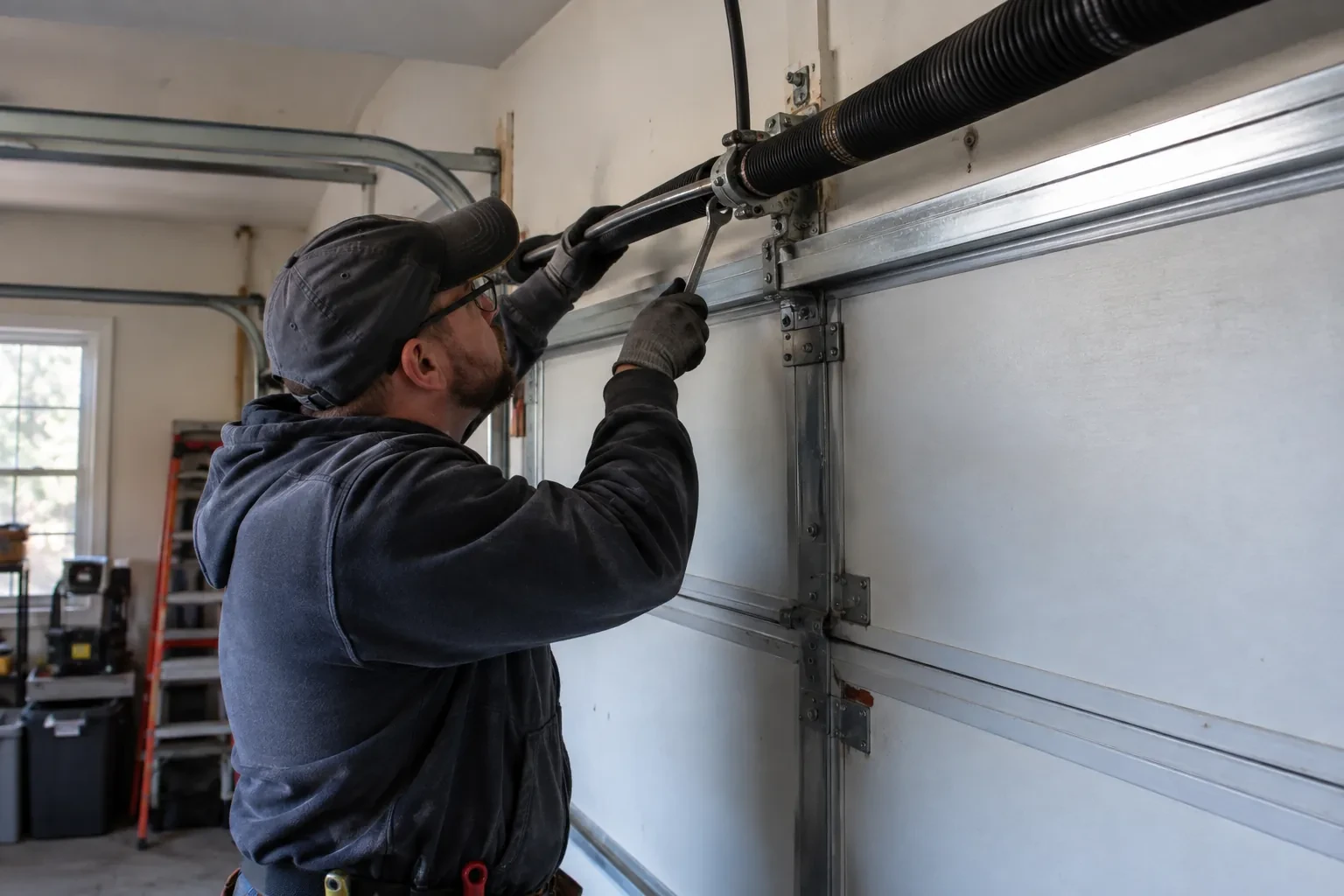
Before a spring is hung, a containment cable is fed through the centre of its coil. One end is anchored at the rear, to the hanger or the framing behind it, and the other is run forward past the pulley and fixed to the bracket at the front of the track or to the wall, with enough slack that the cable never carries load while the spring works. The cable is checked to be clear of the pulley wheel and the lift cable so nothing rubs. Both sides are done the same way, whether or not the old installation had them. A spring that breaks in future is held on the cable rather than crossing the garage.
A clear threshold and an honest opener
Two habits protect the new springs from the shocks that shorten a spring's life. The first is the floor: a door that comes down on a bin, a bike wheel or a ridge of packed snow stops short while the springs and cables are still pulling, and the jolt can throw a cable off its pulley. Keep the opening clear and scrape the ice ridge off the threshold before running the door in winter. The second is the opener's force setting. It was set for the newly balanced door; if the door ever seems to need more push, that is the springs asking for attention, not a reason to turn the force up.
Extension Spring Replacement
In the van
Containment (safety) cables
Extension springs, matched pair
Lag screws and hanger bolts
S-hooks and adjusting clips
Lift cables
Extension Spring Replacement
What affects the quote
Hangers and anchor points
A rear hanger that has loosened, a front bracket bent by a jumped cable, or framing that needs a new anchor point adds fasteners, angle iron and a little time.
Getting the van to the garage
A detached garage down a shared laneway, a rural property or a building with the bay behind a gate takes more time to reach and set up in, and the quote allows for that.
Opener adjustment and testing
Resetting the opener's force and travel to the newly balanced door and running the reversal tests is a short task that the quote names when it applies.
What to have ready
- Do the springs run along the tracks beside the door, or is there one spring above the opening?
- Is the door closed, fully open, or stuck partway?
- Has insulation, glass or a wood facing been added to the door?
Extension Spring Replacement: questions
QuestionsWhat happens during the visit?
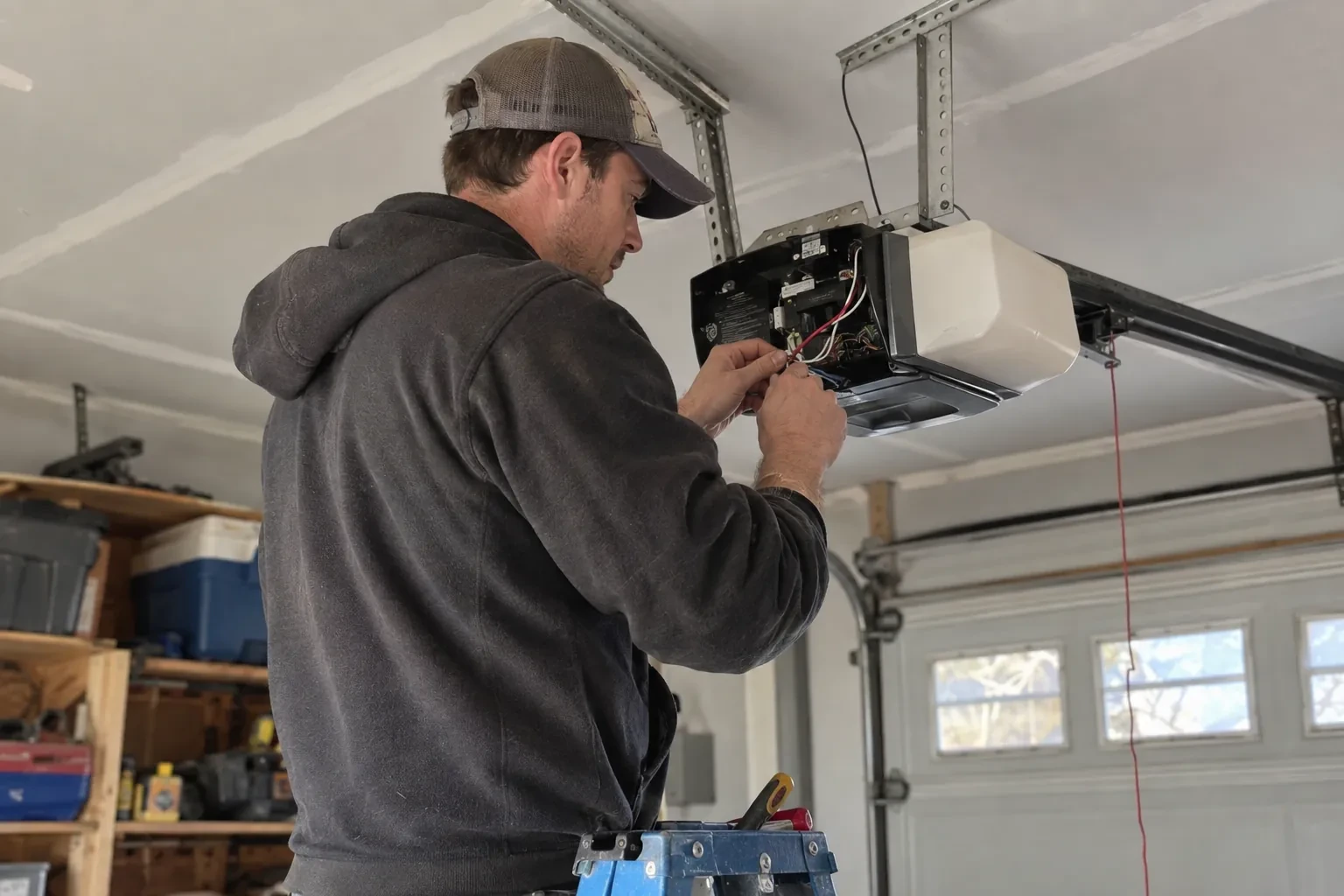
The technician releases the opener, opens the door fully and clamps it so the springs go slack, then inspects springs, pulleys, cables, hangers and containment cables and weighs the door. The old springs come off, a matched pair goes on with containment cables through them, the lift cables are routed over the pulleys and the two sides are set to matching hook positions. The door is balanced by hand, the opener reconnected and its reversing tested with you watching.
Should I try to open the door by hand before the technician arrives?
No need, and it is easier on the door if you leave it. With a spring broken or slack, the door is unbalanced and heavy, and lifting it can let it drop or twist a section in the track. If the door is stuck partway, leave it there and keep people and the car away from the opening. The technician brings clamps and props, and the door is secured before it is moved at all.
What information helps when I call?
Whether the springs run along the tracks or sit above the door; whether one is broken, hanging loose or just looks stretched; whether the door is closed, open or stuck partway and level or crooked; roughly how wide and tall the door is and what it is made of; and whether there is a cable running through each spring. A photo taken from inside with the door closed answers most of that at once.
Related services
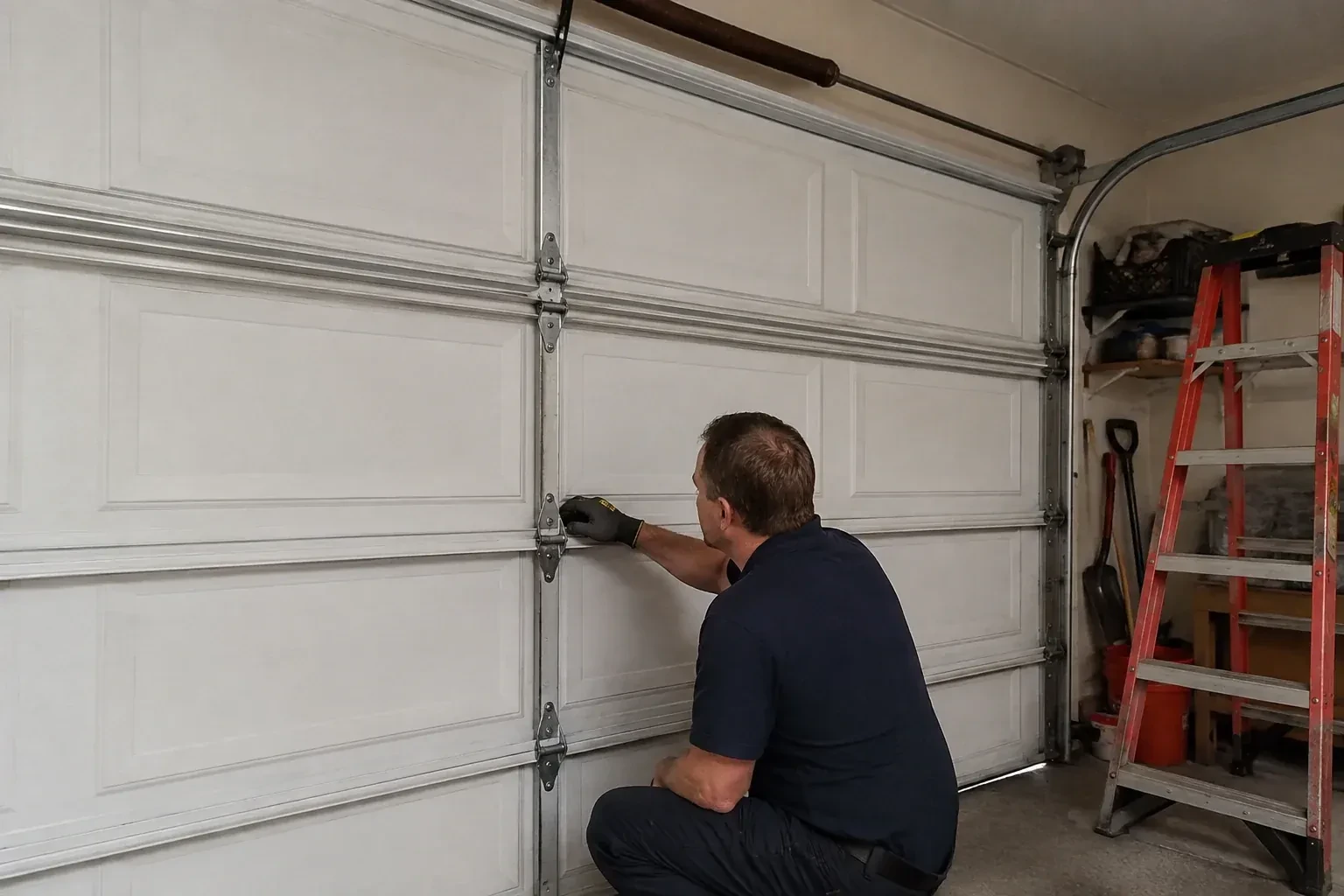
- Garage Door Hinge ReplacementThe roller at the top of the second panel is leaning outward and only half of the wheel is still in the track.
- Garage Door Track Repair or ReplacementHalfway up, the door lurches and one roller rides onto the lip of the channel.
- Garage Door Cable ReplacementThe cable has wrapped itself around the shaft above the door instead of sitting on its drum.