Repairs · Wilmot
Garage Door Manual Lock Repair in Wilmot
Someone slid the inside lock across before bed, and in the morning someone else pressed the remote.
In plain words
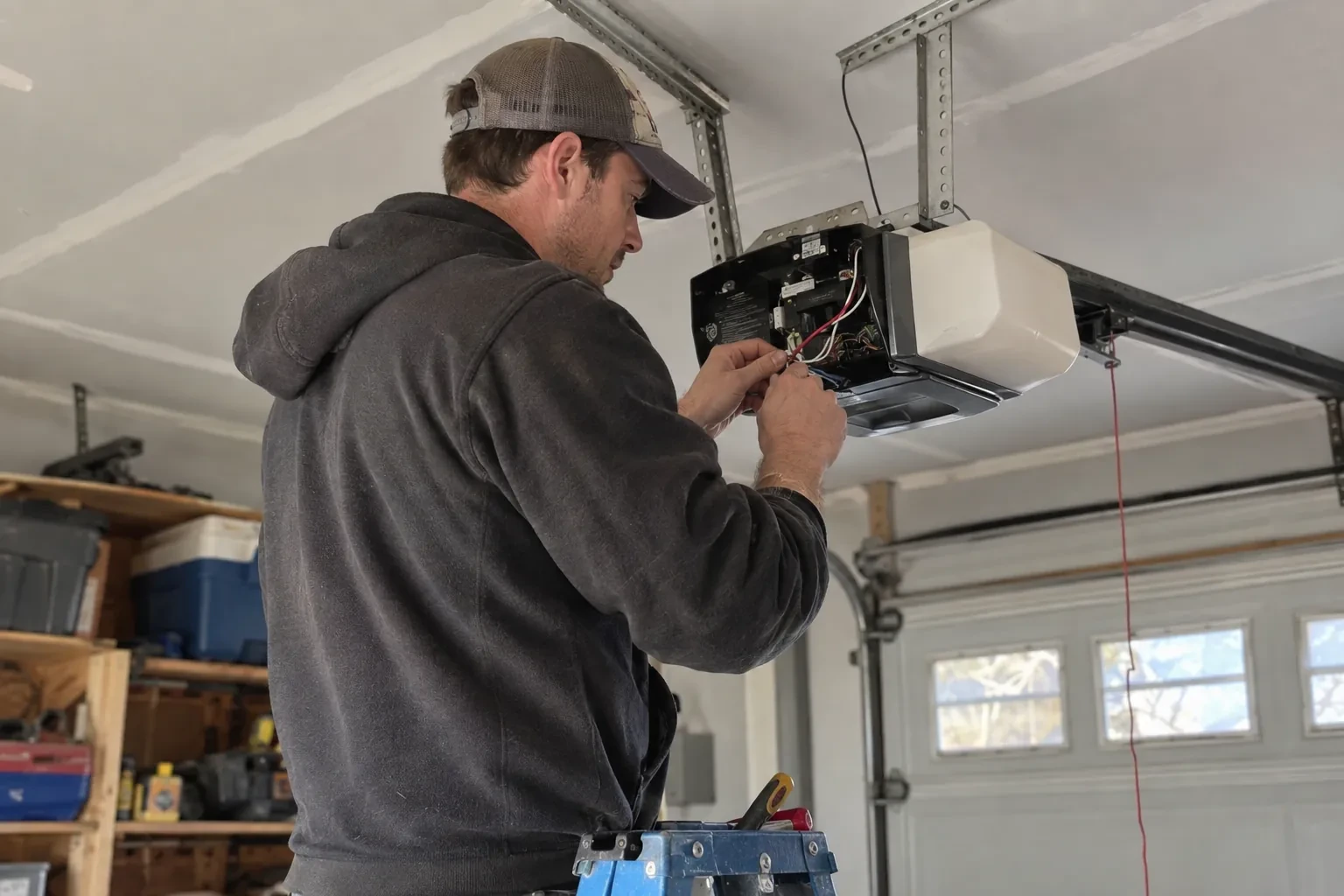
When an automatic opener is on the door, the manual lock and the motor have to be kept from meeting. Opener makers ask for the lock to be disabled or removed when the machine is installed, and the door industry's own guidance says the same, because a motor pulling against an engaged bar bends the bar, loosens the lock and strains the opener. Lock repair on a powered door therefore includes a decision: keep the lock removed or disabled and rely on the opener's own lock-out feature, or fit a manufacturer-approved interlock if the household wants the lock available when the power is off.
How the visit goesOn the old wooden door out back, one lock bar hangs loose from a rusted guide and the other is bent at an angle, so the handle turns but the door can still be lifted a hand's width from outside.
Garage Door Manual Lock Repair
How the visit goes
What the household wants the lock for
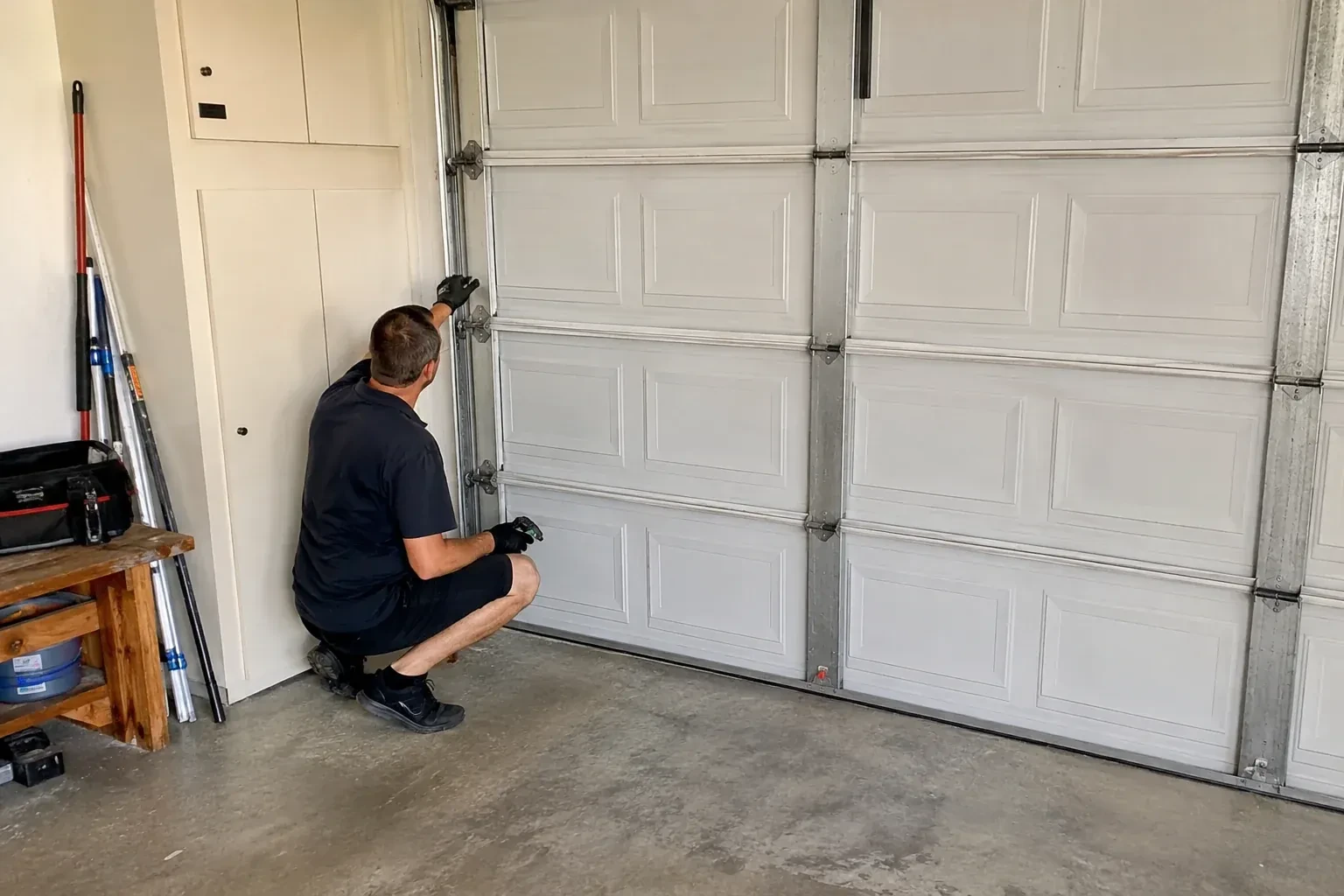
The last part of the first look is a conversation. Some people want a lock that is used every night; others want it only for power outages and holidays; others want a keyed handle they can open from the driveway when the remote is in the other car. Some want the garage keyed to the house key, and some want the lock gone and the opener's own lock-out used instead. Where a locked door has to be opened without a key, the technician also confirms the caller's connection to the property, a courtesy every neighbour benefits from. Knowing the intended use shapes which parts are fitted, how many keys are cut and what the handover covers.
Anchoring the lock in tired material
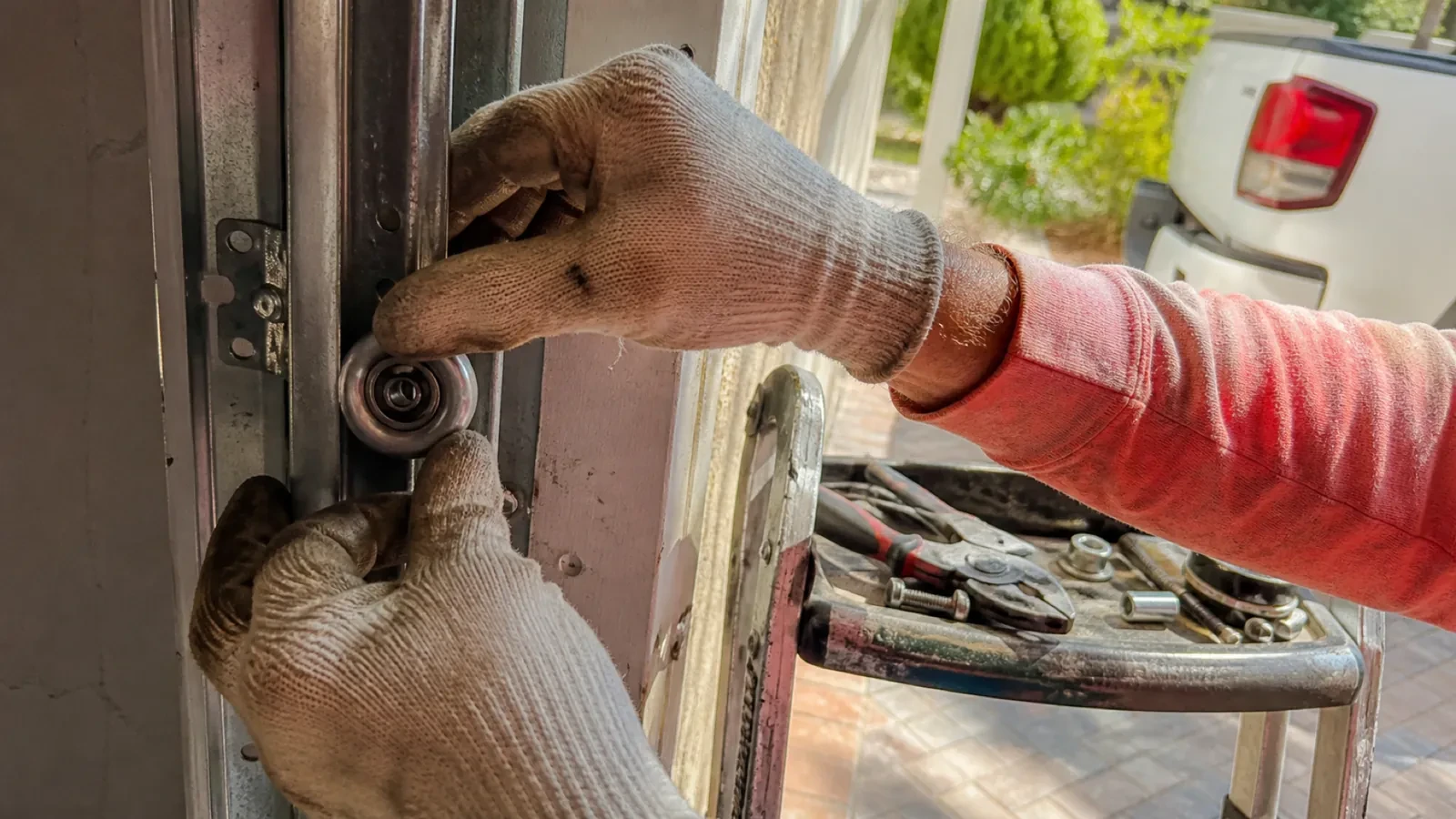
A lock is only as sound as what it is screwed to. Where screws have pulled through a thin steel skin and left oval holes, the technician fits carriage bolts through the section with a backing plate on the inside, spreading the load across a wide patch of metal. On a wooden door with softness around the handle or along the stile, the decayed wood is cut back and a hardwood filler block or backing plate is let in, and the lock and guides are fixed to that. Holes that have grown are plugged and redrilled. The result is a handle that turns without rocking and guides that hold the bar where it was set.
Keys, spares and who holds them
If the cylinder was rekeyed or replaced you leave with new keys cut from the fresh pinning, usually two or three, each tested in the handle. Decide now who in the household carries one and where a spare lives; a lockbox or a trusted neighbour beats a hook inside the garage, since the door you are trying to open is the one the spare is behind. If the garage was keyed to match the house, test the shared key in every door before the technician goes. Note the cylinder type and keyway on the record, so future keys can be cut or the lock re-pinned without guesswork.
Garage Door Manual Lock Repair
In the van
Track lock-slot punch
Dry graphite or PTFE lubricant
Centre lock body and return spring
Inside turn handle and spindle
Carriage bolts and backing plates
Garage Door Manual Lock Repair
What affects the quote
Related hardware noticed on the way
Worn rollers, a loose track bracket or a tired bottom seal seen while the door is being aligned are pointed out and offered as optional items, since they are easy to do in the same visit.
Adding a lock where none existed
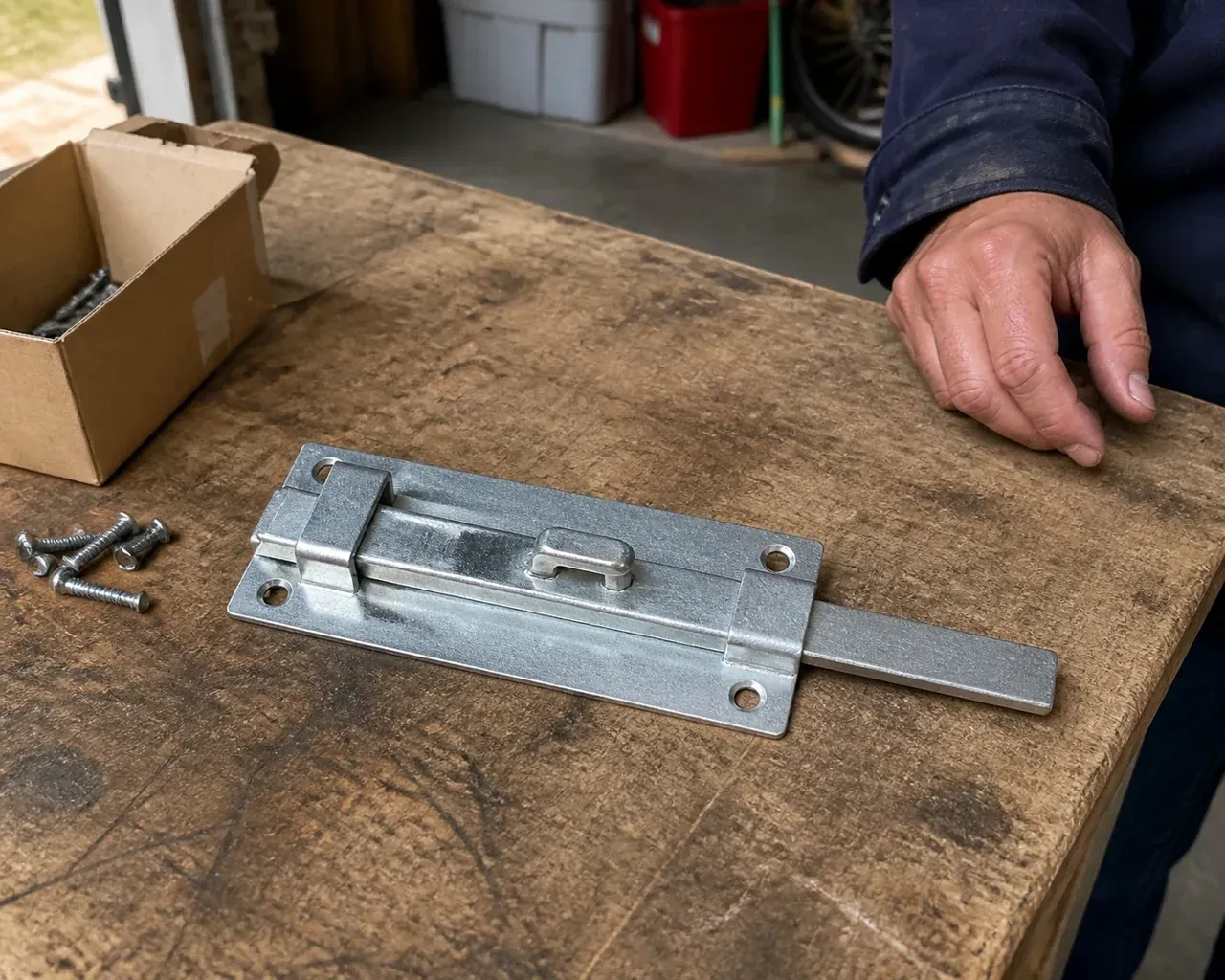
Fitting a new slide bolt or a keyed handle to a door that never had one includes punching track slots, a section cutout for a handle and running bars to both tracks.
Cylinder work and the number of keys
Rekeying, a new cylinder and each key cut are separate items. Keying the garage to match the house key adds a little pinning time and is listed on its own.
What to have ready
- Is the door steel, wood or aluminum, and roughly how old is it?
- Does the key go in and turn, or is it stiff or spinning freely?
- Is there an automatic opener on this door?
Garage Door Manual Lock Repair: questions
QuestionsWhat is an automatic garage door lock, and does it replace the manual one?
It is a motorised deadbolt, offered as an accessory by some opener makers, that slides a bar into the track each time the door closes and withdraws it before the door opens, all controlled by the opener. It gives the physical security of a manual lock without the need to remember it. It can sit alongside a manual lock kept for outages, or take its place entirely.
Why should the opener never run with the manual lock engaged?
Because the opener is strong enough to lift a door heavier than a person, and it has no way of knowing a bar is in the track. It pulls, the bar bends, the lock body tears at its screws, the section can crease and the opener's gear or trolley takes the shock. Opener makers ask for manual locks to be disabled or removed when a motor is installed for exactly this reason.
Does lock work involve the springs or cables?
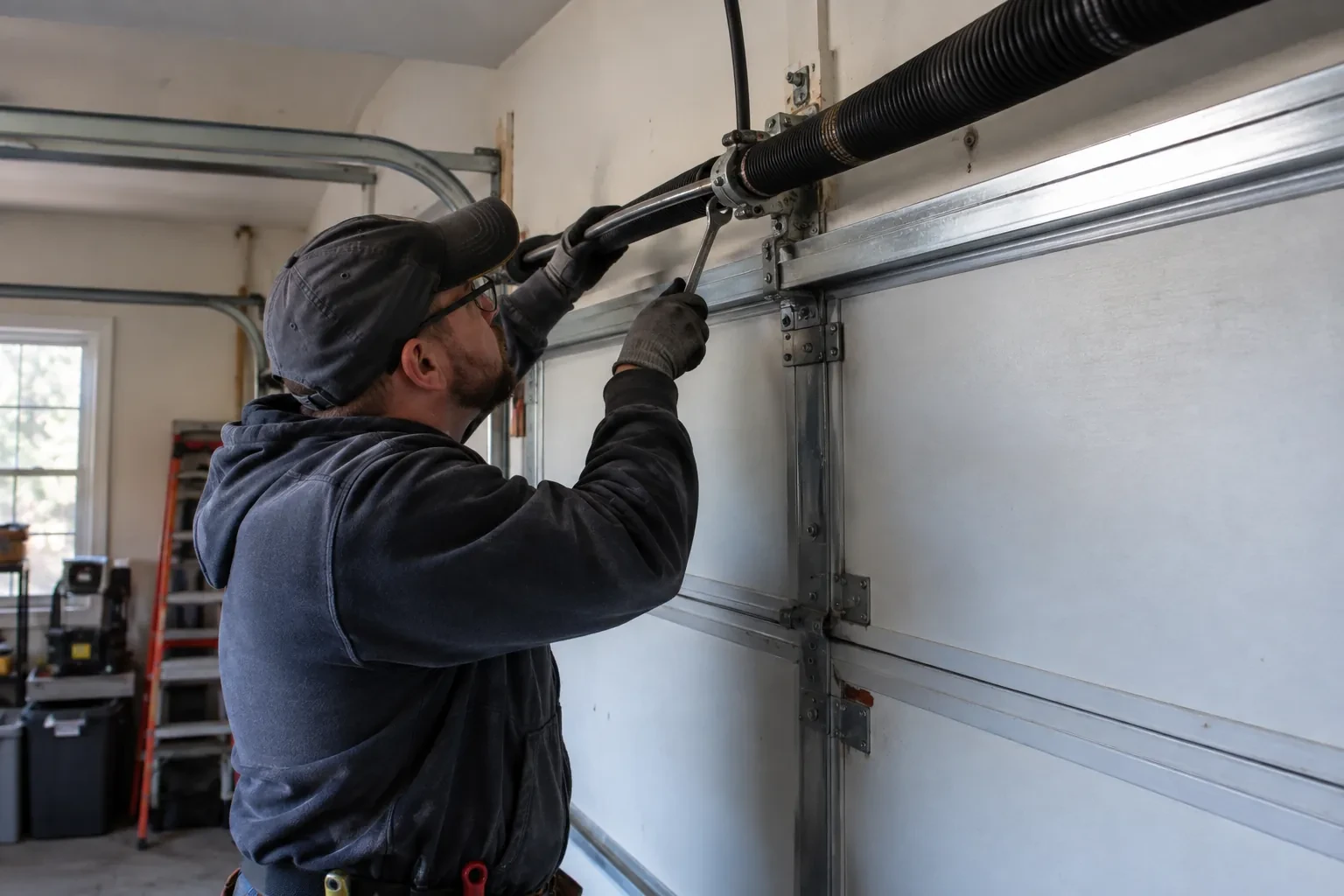
The lock, its bars and its guides all live on the door sections and the tracks, well away from the counterbalance, so the visit involves no winding or unloading of springs. Where a lock misses its slot because the door hangs crooked or sits high, the door's balance or a cable may be part of the story, and the technician points that out so it can be dealt with properly.
Related services
- Garage Door Tune-UpEvery morning the door announces itself to the whole street: a long metallic squeal as it climbs, a rattle at the top, and a groan on the way back down.
- Off-Track Garage Door ResetThe door came down fine but with a scraping noise, and now the vertical track on one side is bowed away from the wall.
- Garage Door Panel ReplacementYou misjudged the last metre of the driveway and felt the bumper meet the door.