Openers · Wilmot
Garage Door Remote and Keypad Programming in Wilmot
The remote opens the door only when you are almost underneath it.
In plain words
Older openers set their code with a row of tiny switches inside the remote and the receiver, and once those remotes stop being made the door seems stranded. It is not. An add-on receiver wires to the same two terminals as the wall button and plugs into the ceiling outlet, giving the old motor a modern rolling-code radio along with new remotes and a keypad. The door mechanics stay as they are, provided the opener already has photo eyes near the floor. Where it has none, the conversation turns to a new opener, and the reasons are explained plainly.
How the visit goesThe opener is an older one with a row of tiny switches inside the remote. The last remote finally died, the maker stopped selling that model years ago, and the door itself still runs perfectly from the wall button.
Garage Door Remote and Keypad Programming
How the visit goes
Range, bulbs and the antenna
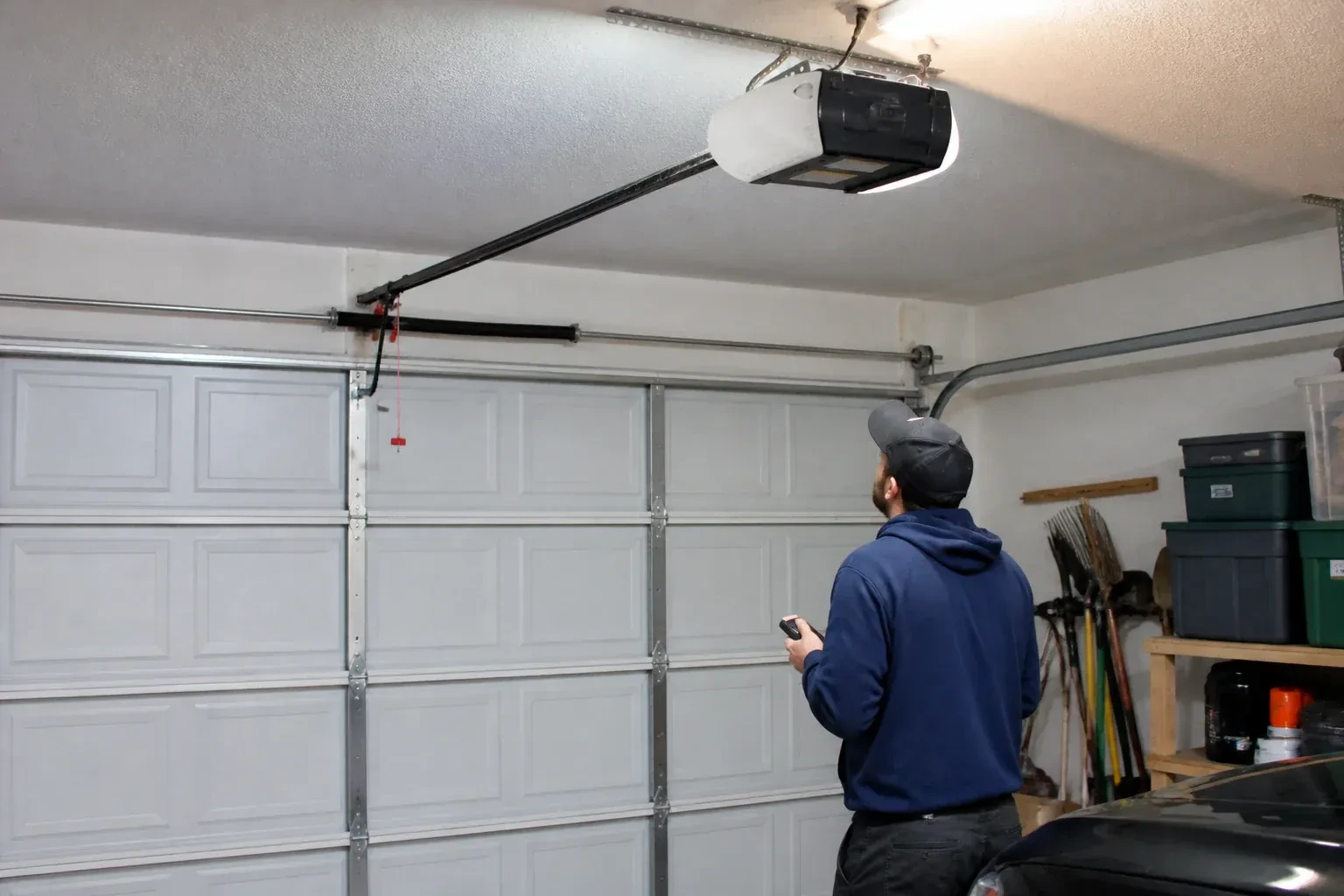
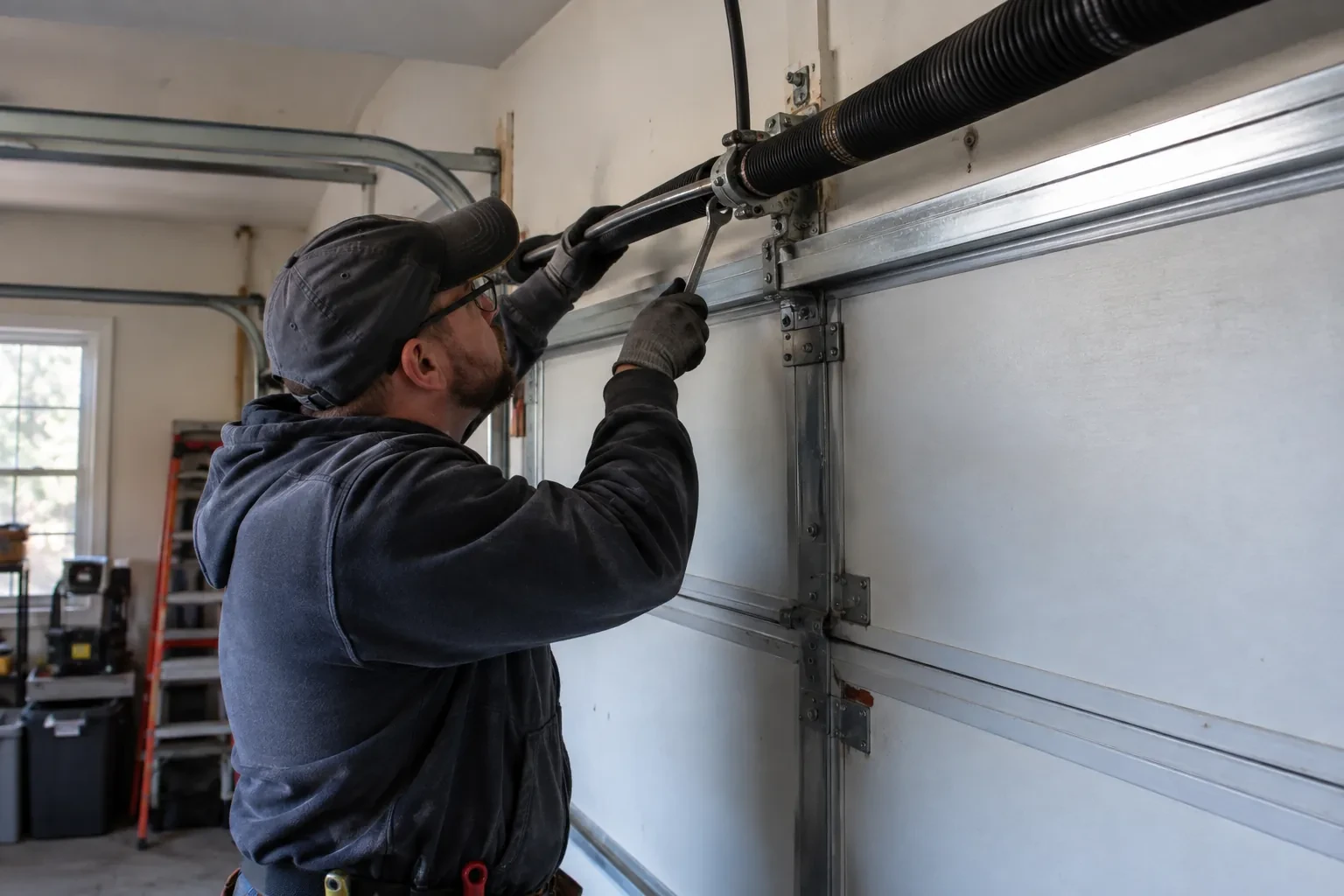
When remotes work only from directly beneath the opener, the technician checks the radio environment. LED bulbs, especially ones screwed into the head unit's own sockets, can emit noise that swamps the receiver, and swapping in a different bulb often restores range on the spot. The antenna wire should hang straight down from the head unit, not be coiled up or tucked behind the cover. Nearby electronics, a new metal shelving unit or a car parked with its own transmitter can also matter. A range test with a fresh remote at set distances puts numbers on the problem before any part is blamed.
Bringing a fixed-code opener into the present
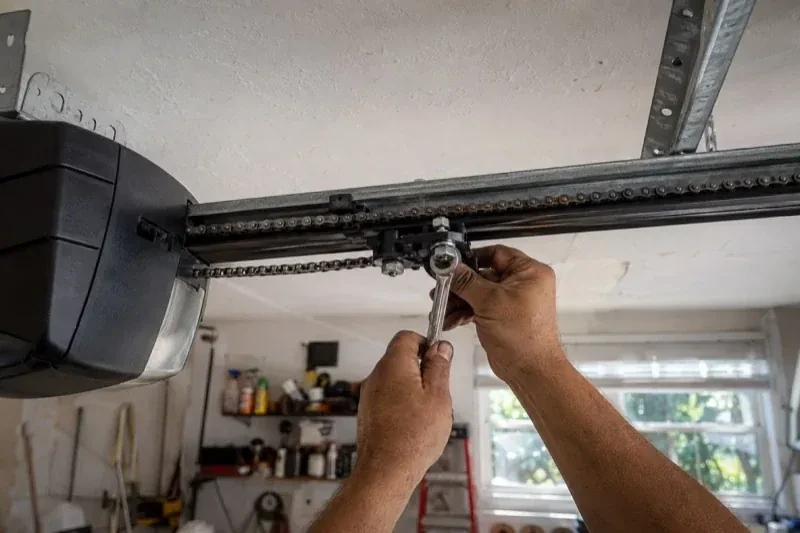
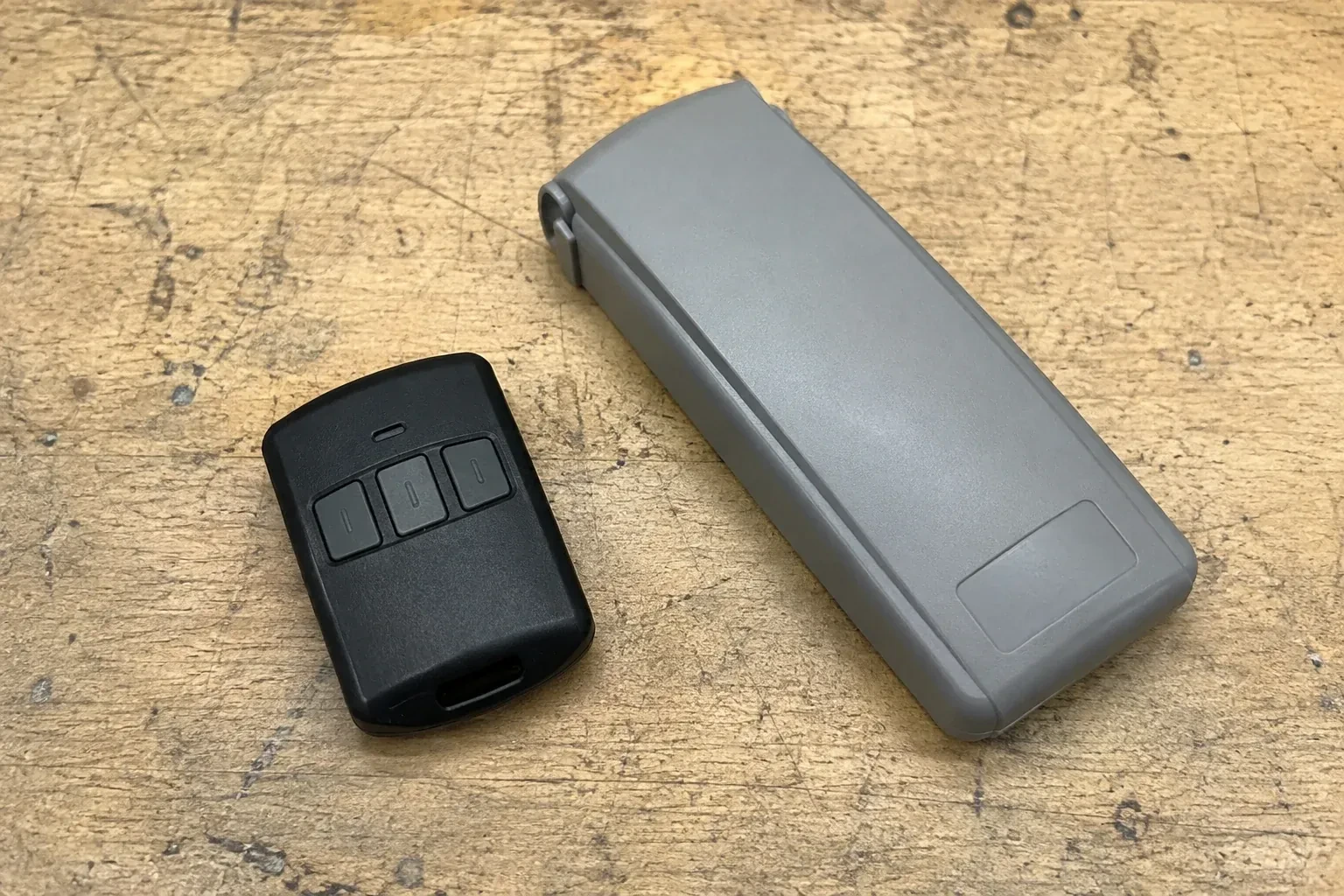
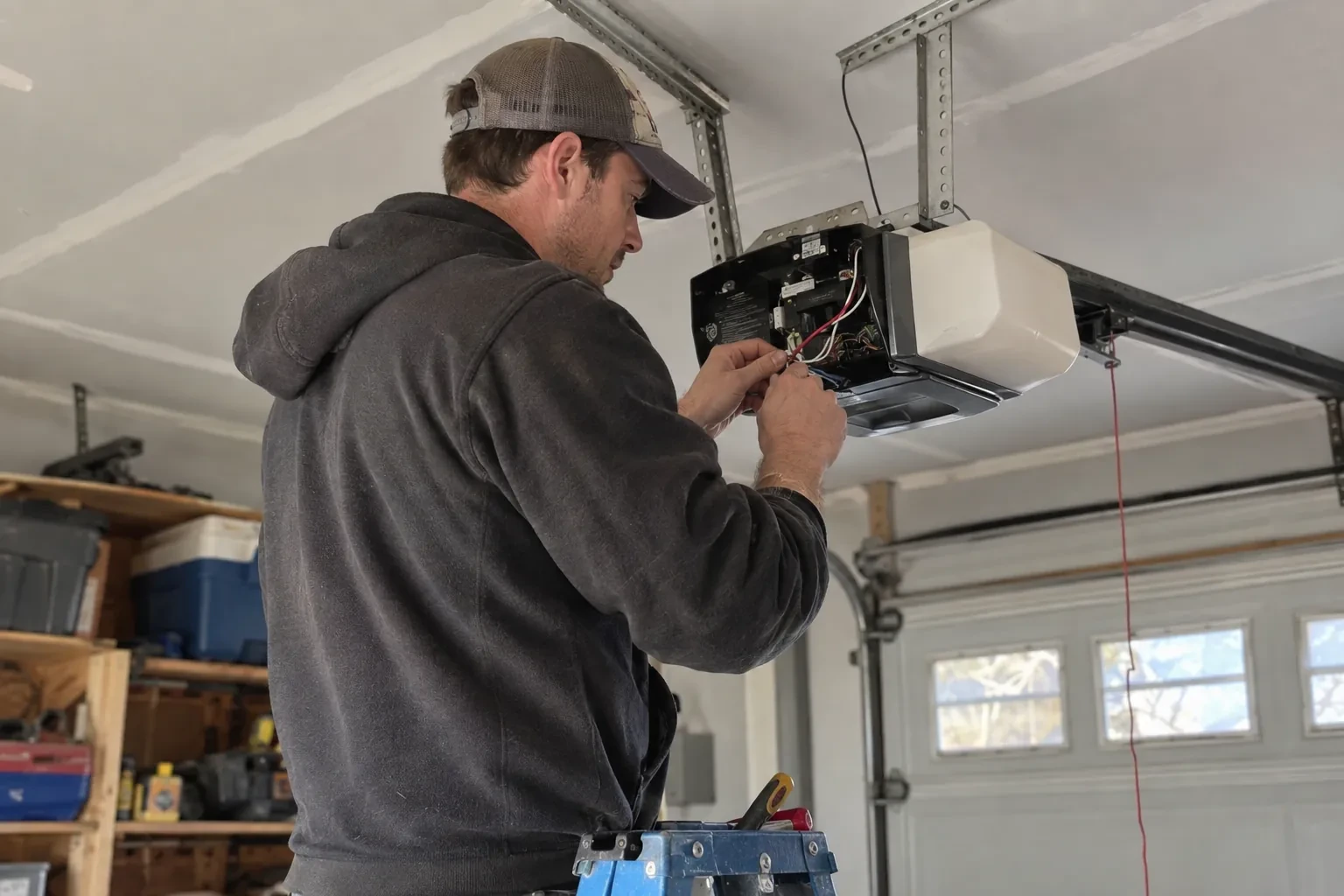
For an older opener whose remotes were set by rows of small switches and are no longer made, the work is a receiver upgrade rather than a pairing. The technician mounts a compact rolling-code receiver near the head unit, wires its two conductors to the same terminals that serve the wall button, and plugs its transformer into the ceiling receptacle beside the opener. The opener now has a modern radio and can store a handful of new remotes and a keypad. This route is used only when the opener already has photo eyes at the floor; without them, the recommendation is a new opener.
Range you can rely on
If range was part of the problem, you leave with a remote that works from the street rather than from under the door, and with the reason explained: the bulb that was swapped, the antenna that now hangs free, the cell that was replaced. Keep the antenna wire uncoiled and clear of the light cover when bulbs are changed, and choose bulbs marked as suitable for garage door openers. If range shrinks again over the coming months, the first suspects are a fading battery and a new electronic device in the garage, in that order.
Garage Door Remote and Keypad Programming
In the van
In-vehicle compatibility bridge module
Universal multi-generation remote
CR2032 and CR2016 coin cells
Contact cleaner and fibreglass brush
Low-interference replacement bulbs
Garage Door Remote and Keypad Programming
What affects the quote
Opener check-up before programming
Confirming power, lock mode, sensors and door travel is included; any repair those checks reveal is discussed and quoted before it is done.
Connected features
Linking or unlinking a phone app, or checking that a previous owner's account is removed, is quoted as its own step alongside the remotes and keypad.
Number of controls
Each remote, keypad and vehicle button is programmed and tested individually, so a single replacement remote and a household with three cars, two keypads and a gate are different visits.
What to have ready
- Is the light on the wall control blinking steadily?
- Have the bulbs in the opener been changed to LEDs recently?
- Roughly how old is the opener, and can you read its model label?
Garage Door Remote and Keypad Programming: questions
QuestionsHow many remotes can one opener store?
It depends on the unit. Older head units and add-on receivers hold a handful of devices, often fewer than ten, while newer openers store dozens of remotes, keypad codes and vehicle buttons. When a memory is full, the oldest entry may be overwritten or the new device refused. Taking stock of which controls are still in use, and clearing the ones that are not, keeps space for the devices that matter.
My older car's button will not learn my new opener. Why?
Some in-car systems from earlier model years cannot hear the newest opener radios directly. The usual answer is a small compatibility bridge module that pairs with the opener and relays the car's signal, or a handheld remote clipped to the visor. The technician identifies the car's system and the opener's generation and chooses whichever gives a reliable result.
What is rolling code and why does it matter for programming?
Most openers made from the mid-1990s on change their code every time a remote is pressed, choosing from billions of possibilities, so a copied code is usually useless next time; the technician confirms the actual system from the model, not age. Programming matters because the opener has to learn each remote's sequence at the learn button; a remote cannot simply be set to match. Older fixed-code openers, set by small switches, can be upgraded with an add-on rolling-code receiver.